Letter-sound association Normal Alphabet Worksheets for Ages 3-8
7 filtered results
-
From - To
Enhance your child's literacy skills with our "Letter-Sound Association Normal Alphabet Worksheets" designed for ages 3-8. These engaging worksheets help children connect letters with their corresponding sounds, laying a strong foundation for reading. Featuring colorful visuals and interactive activities, kids will enjoy learning through fun exercises that promote active participation. Each worksheet is crafted to cater to different learning paces, ensuring that every child can master the basics of phonetics. Ideal for classroom use or at home, our worksheets support early education and literacy development, making learning an exciting journey. Start building your child's reading skills today!
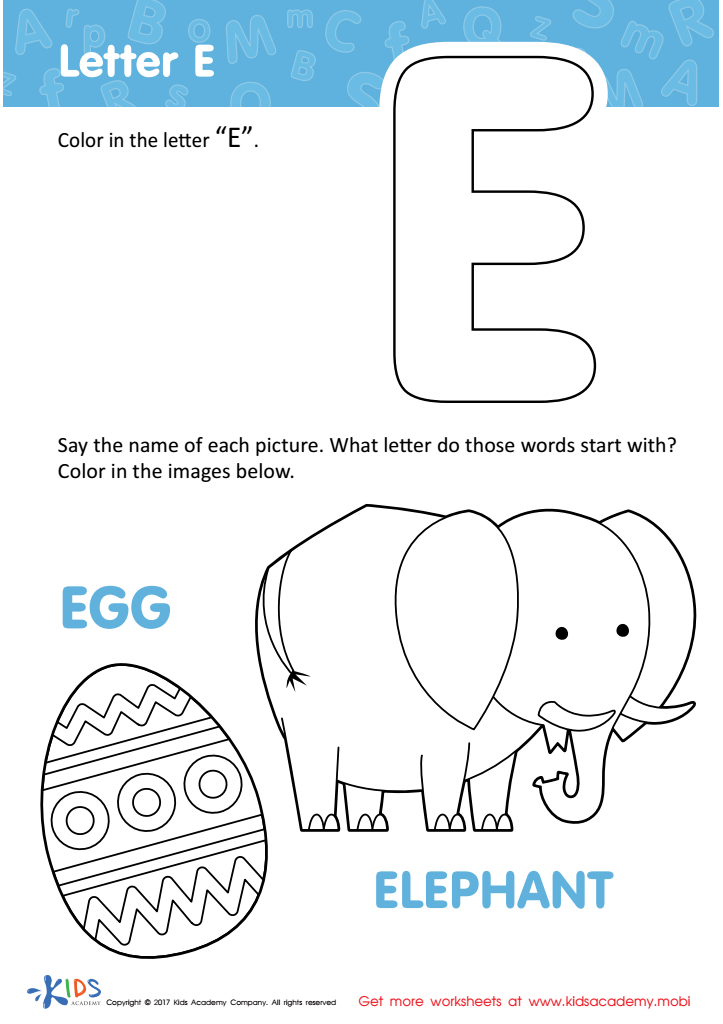
Letter E Coloring Sheet
 Assign to My Students
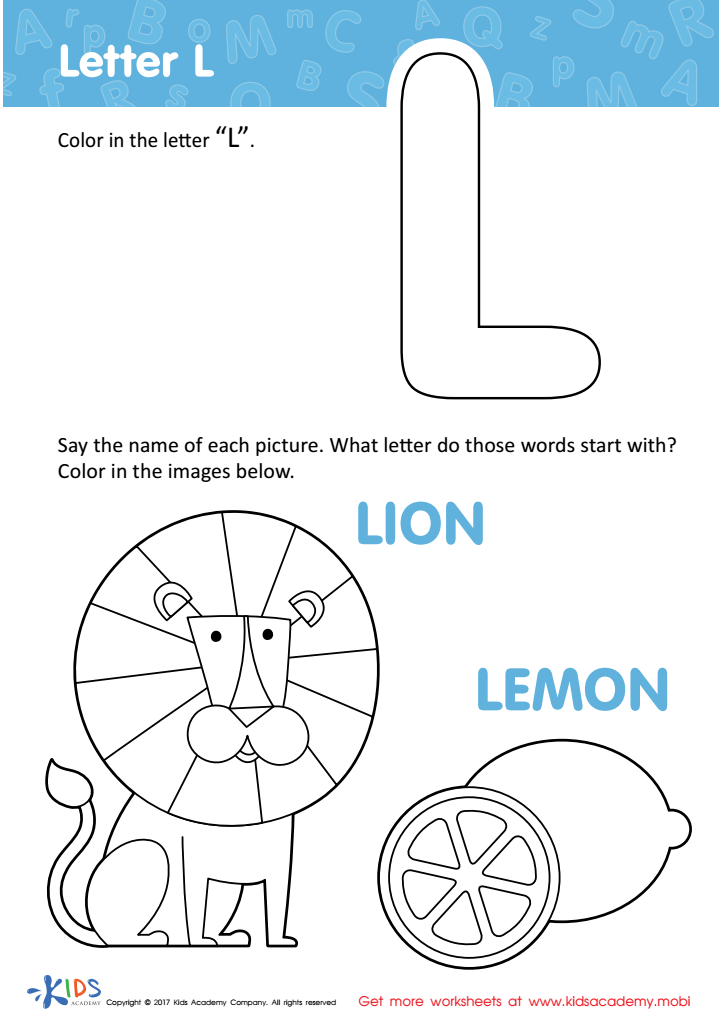
Letter L Coloring Sheet
Assign to My Students
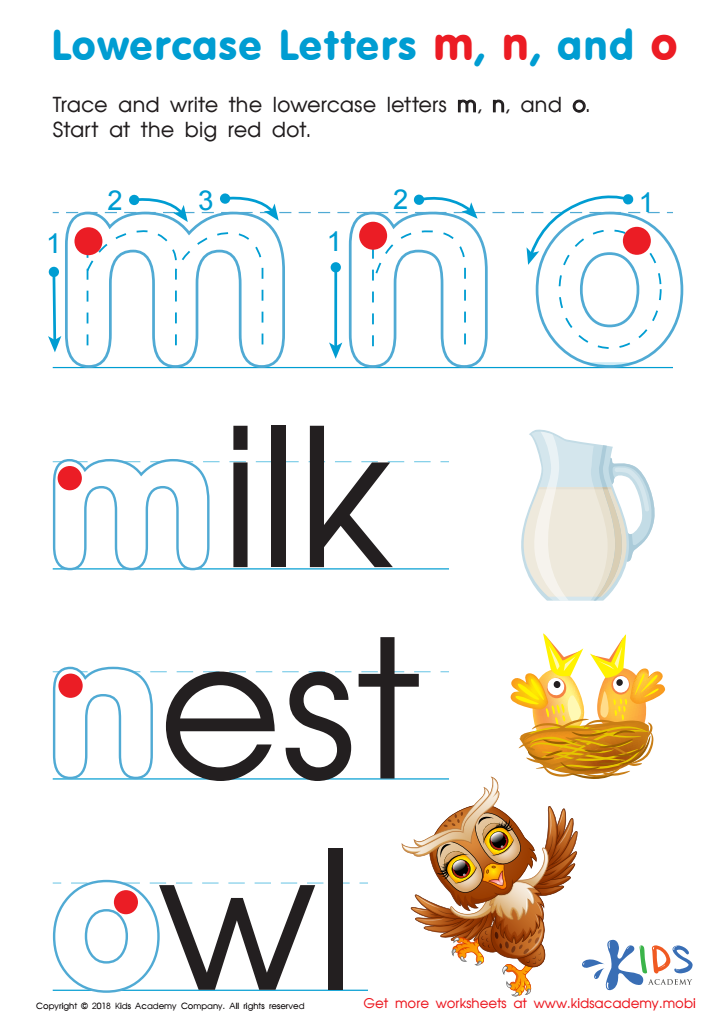
Lowercase Letters m n o Worksheet
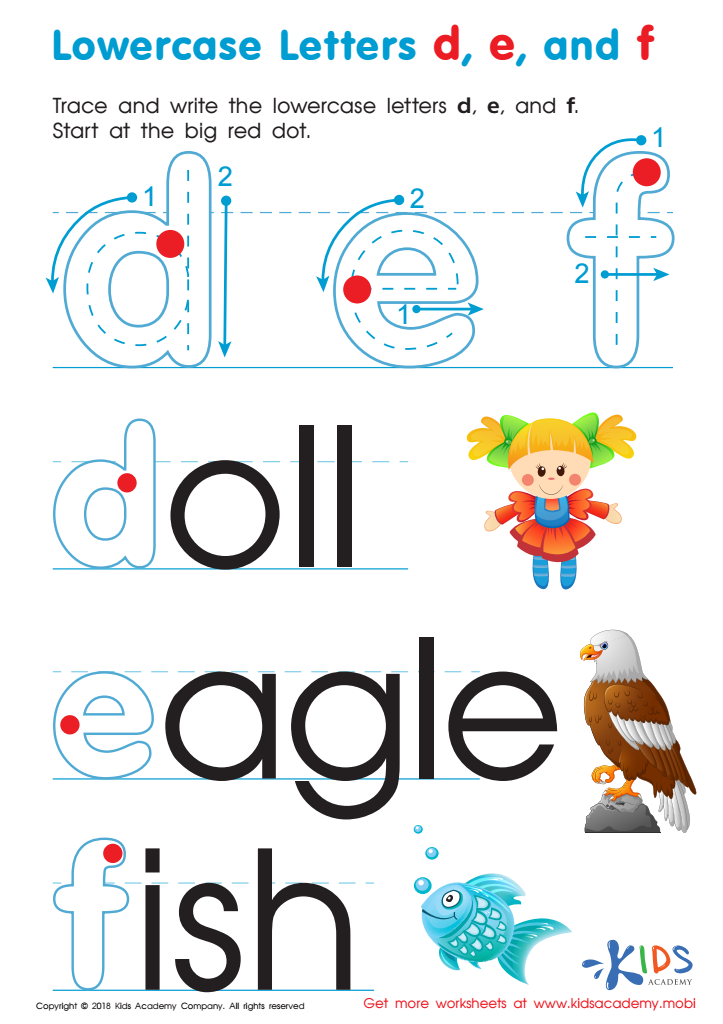
Lowercase Letters d e f Worksheet
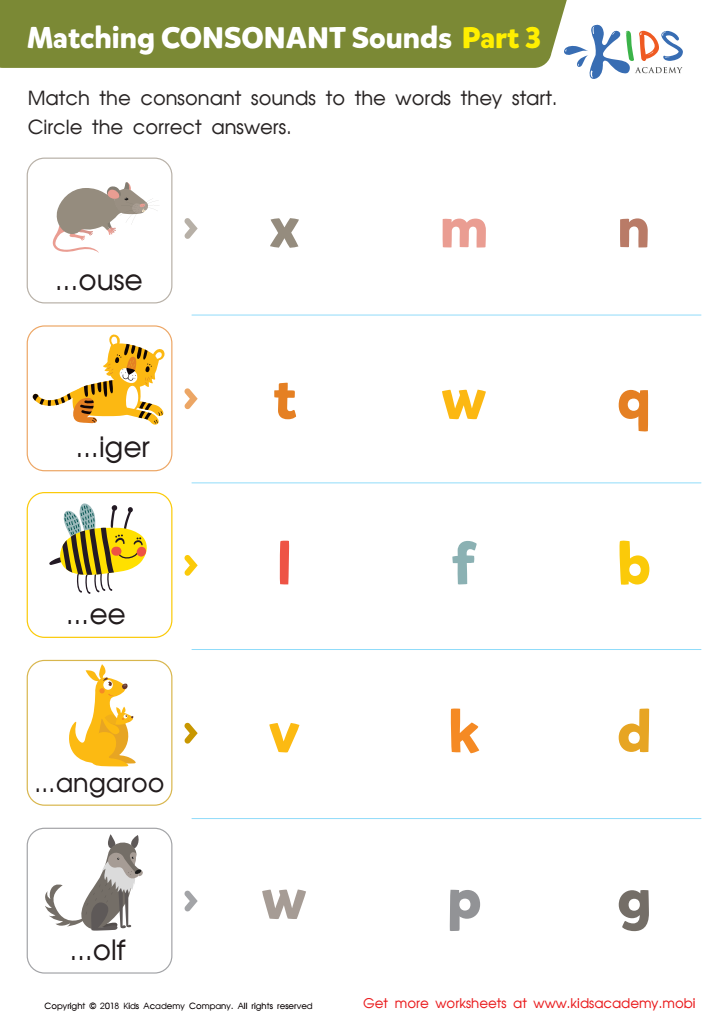
Matching Consonant Sounds: Part 3 Worksheet
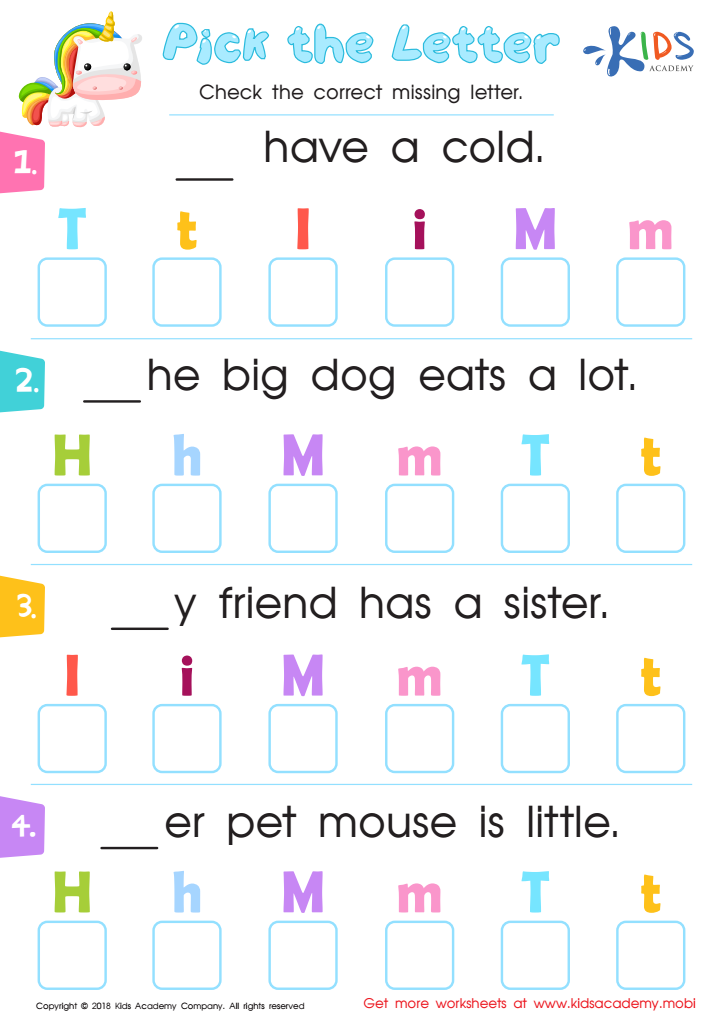
Pick the Letter Worksheet
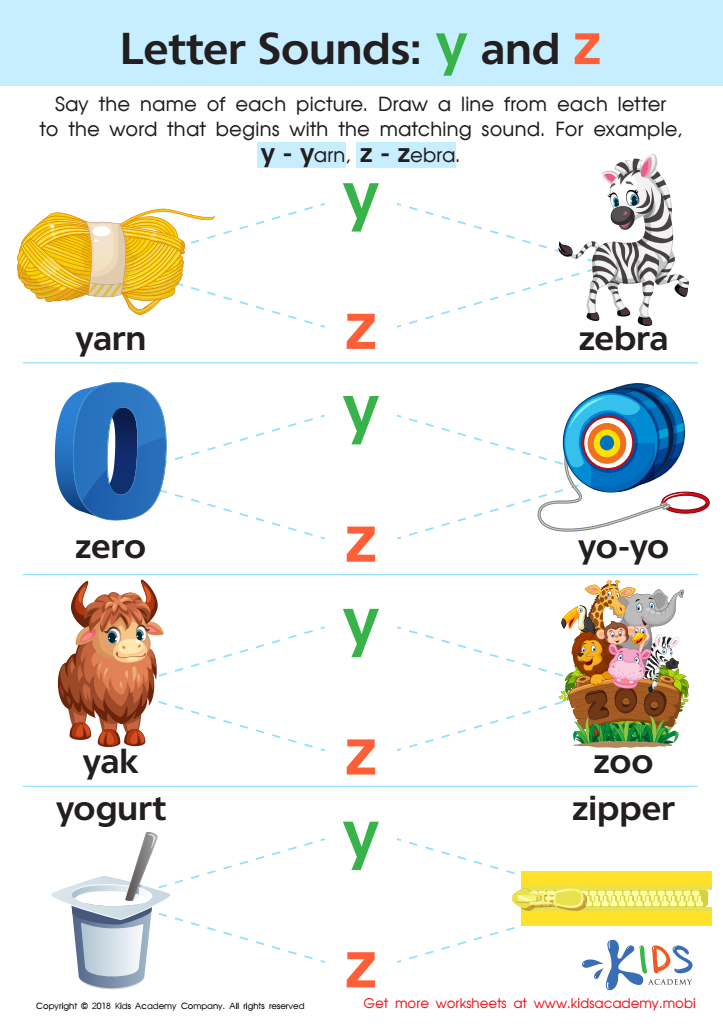
Letter Y and Z Sounds Worksheet








Letter-sound association, or phonics, is a crucial building block for literacy among children ages 3-8. During these formative years, children begin to develop the foundational skills necessary for reading and writing. Understanding the relationship between letters and their corresponding sounds enables children to decode words, paving the way for improved reading fluency and comprehension.
Parents and teachers should care about fostering letter-sound associations because they directly influence a child’s confidence and success in literacy. Early phonetic skills support vocabulary acquisition, enhance spelling abilities, and facilitate effective communication. Moreover, a solid grasp of letter-sound relationships helps in reducing frustration and building motivation as children navigate through increasingly complex texts.
Additionally, developing these skills early on can combat literacy challenges in later stages. Children who fail to establish strong letter-sound associations may struggle with reading, leading to diminished academic performance and a lack of interest in learning.
By prioritizing letter-sound associations, parents and teachers can provide children with the tools they need to thrive in school and beyond, fostering a lifelong love for reading and learning. Ultimately, strong phonics knowledge is critical for nurturing competent, confident, and engaged learners.







