Sound-letter association Normal Alphabet Worksheets for Ages 3-8
3 filtered results
-
From - To
Enhance early reading skills with our Sound-Letter Association Normal Alphabet Worksheets, designed specifically for children aged 3-8. These fun and engaging printable worksheets help young learners connect alphabet letters with their corresponding sounds, building a solid foundation for reading and writing. Our worksheets are perfect for both classroom use and at-home practice, fostering phonemic awareness through interactive activities. Tailored to suit various learning styles, each worksheet encourages children to recognize, pronounce, and write letters while associating them with sounds. Boost your child's literacy journey with these essential, skill-building resources from Kids Academy.
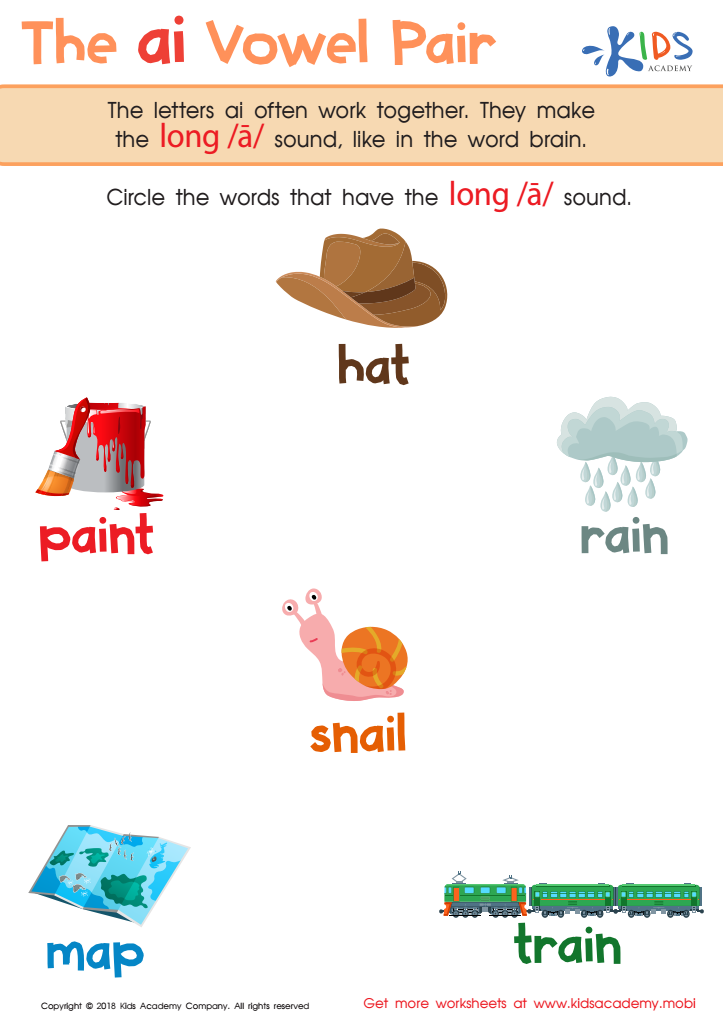
The AI Vowel Pair Worksheet
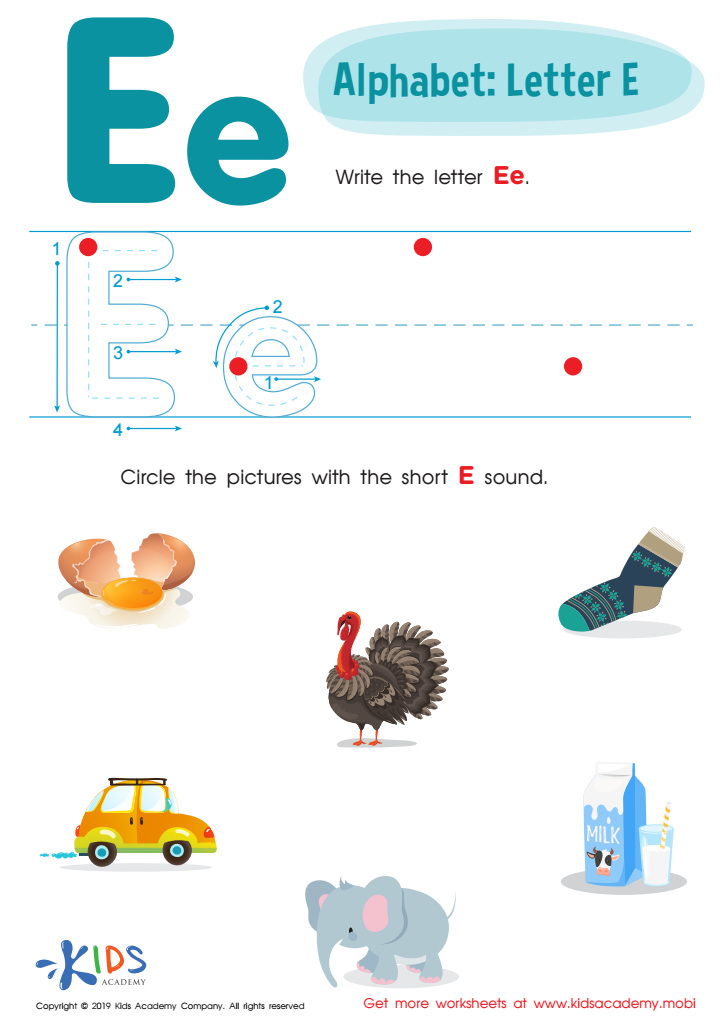
Letter E Tracing Worksheet
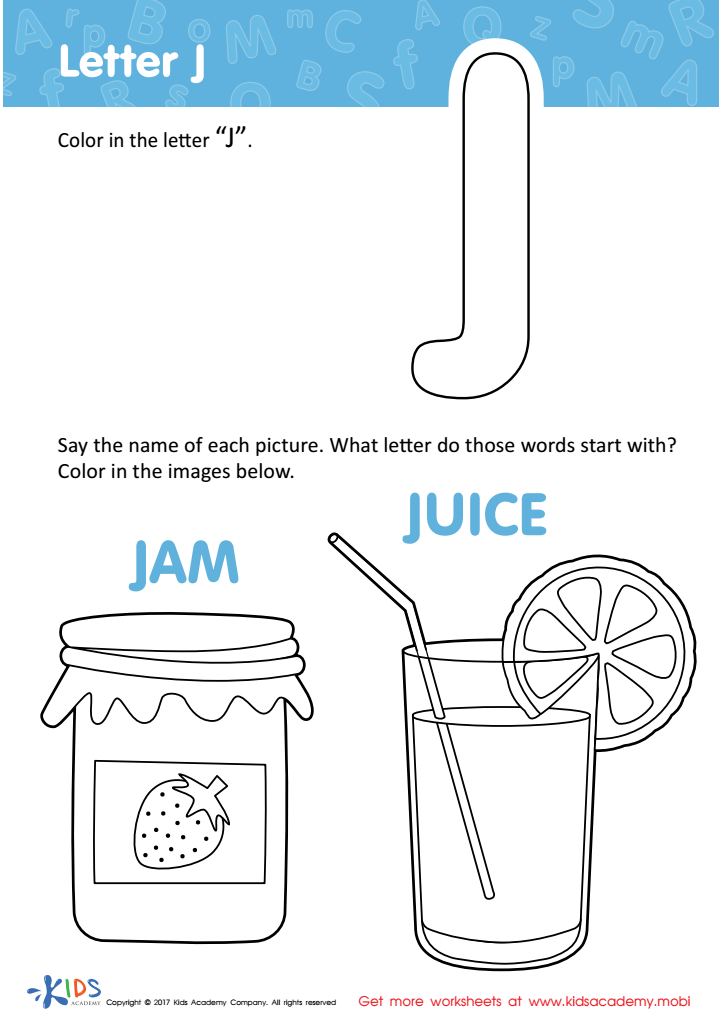
Letter J Coloring Sheet
 Assign to My Students






.jpg)
Sound-letter association, or phonemic awareness, is a fundamental skill for young children between the ages of 3-8. Parents and teachers should prioritize it because it forms the foundation of reading and writing. In the early years, children are naturally primed to absorb languages, and mastering the connection between letters and their sounds can significantly enhance literacy development.
Understanding sound-letter association helps children decode new words, which boosts their reading confidence and fluency. When children know that the letter "b" makes the "buh" sound, they can start blending sounds to form words like "bat" or "ball." This skill is essential for comprehension, as it enables kids to recognize words quickly and read without stumbling.
Moreover, strong phonemic awareness supports spelling skills. Children who can associate letters with a particular sound are more likely to spell words correctly, making their writing more understandable and effective.
Lastly, literacy is linked to academic success across all subjects. Early proficiency in reading and writing equips children with the tools they need for understanding math problems, grasping scientific concepts, and engaging with social studies materials. By focusing on sound-letter associations, parents and teachers set children on the path for future learning and lifelong curiosity.







