Filters

7 filtered results

Clear all filters
Favorites
With answer key
Interactive

7 filtered results

Difficulty Level

Grade


Explore our engaging Phonics Skills Normal Letter Sounds Worksheets designed for children ages 3-8. These worksheets provide a fun and interactive way to help young learners master the sounds associated with each letter of the alphabet. Through various activities, children enhance their phonemic awareness, essential for reading and writing success. Our resources are crafted to accommodate different learning styles, making learning individualized and enjoyable. With colorful illustrations and easy-to-follow instructions, these worksheets are perfect for both classroom settings and home practice. Empower your child’s early literacy journey with our captivating phonics skills worksheets today!

Check out this FREE Trial Lesson on Letter Sounds for age 3-8!

Letter Sound Relationship X-Y-Z

Favorites
With answer key
Interactive
  • 3-8
  • Phonics Skills
  • Letter Sounds
  • Normal
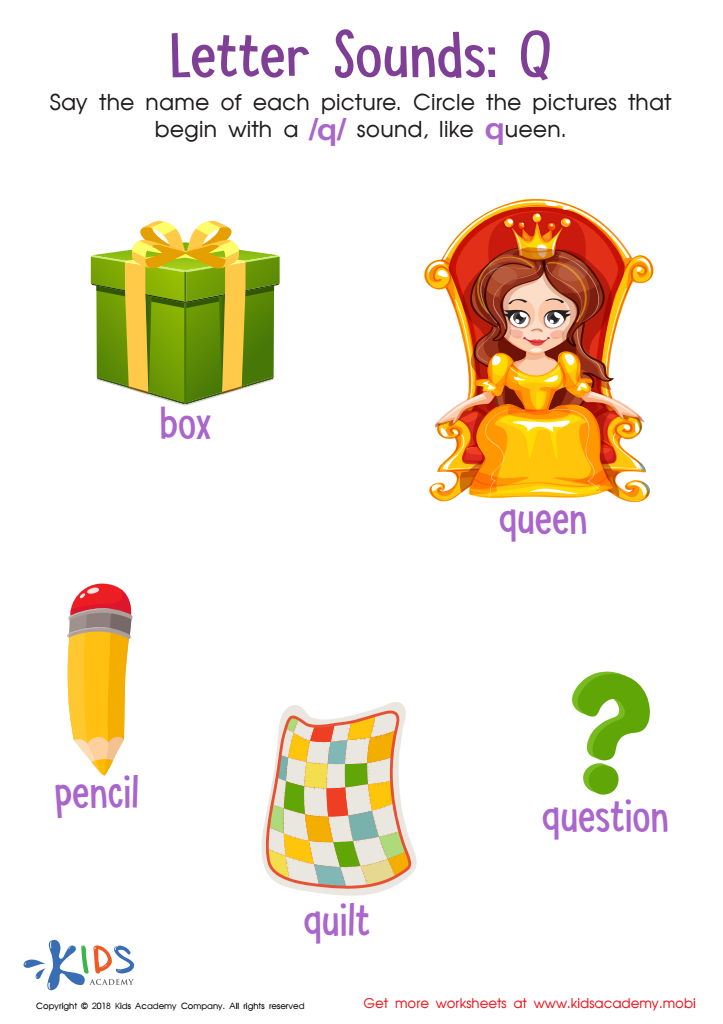
Letter Q Sounds Worksheet

Letter Q Sounds Worksheet

Kids can get confused between "K" and "Q" sounds. Help them learn with this phonics worksheet. They'll name each image and read the word underneath. Point out that words with "Q" also have a "U" which affects how it sounds. Have them circle the matching pictures and watch as they learn this unique letter sound.
Letter Q Sounds Worksheet
Worksheet
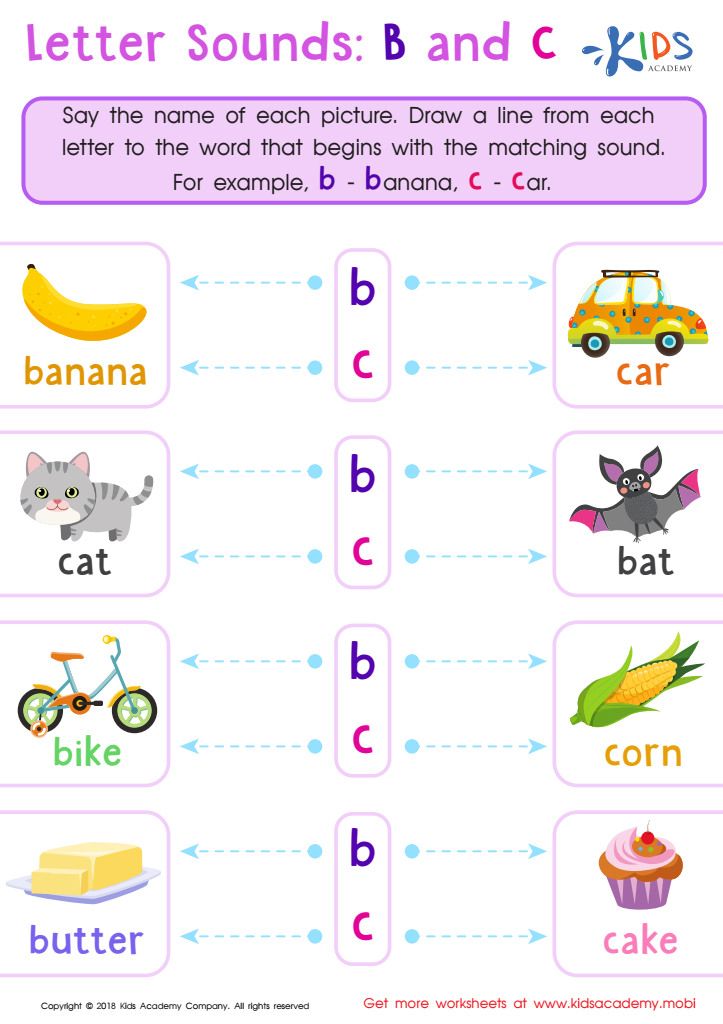
Letter B and C Sounds Worksheet

Letter B and C Sounds Worksheet

This fun worksheet offers bright, engaging pictures and helps kids learn to distinguish between the sounds of "B" and "C". With the use of pictures and familiar items, kids will trace lines to the correct initial consonant sound, while also developing fine-motor skills. It's a great way to build decoding ability!
Letter B and C Sounds Worksheet
Worksheet
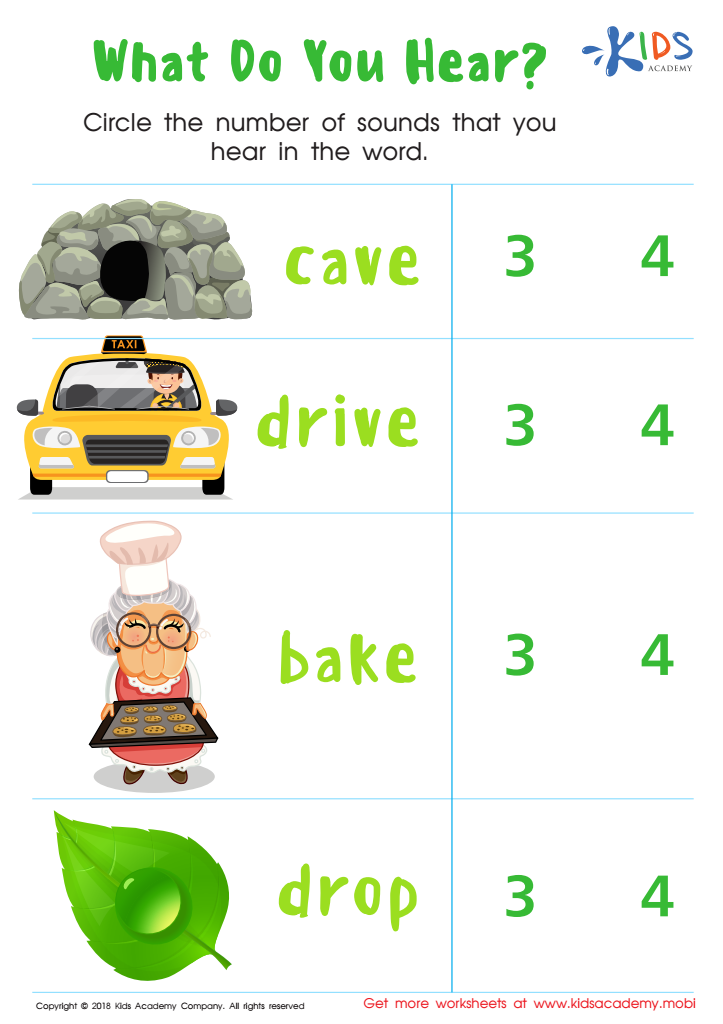
What Do You Hear? Worksheet

What Do You Hear? Worksheet

New readers can develop phonological awareness with this fun worksheet. They'll isolate sounds in words and count them, then circle the number of sounds heard. It'll help build their auditory discrimination and decoding skills, leading to more fluent reading. Without even knowing it, their reading skills are improving!
What Do You Hear? Worksheet
Worksheet
3 Sounds Worksheet
3 Sounds Worksheet

3 Sounds Worksheet

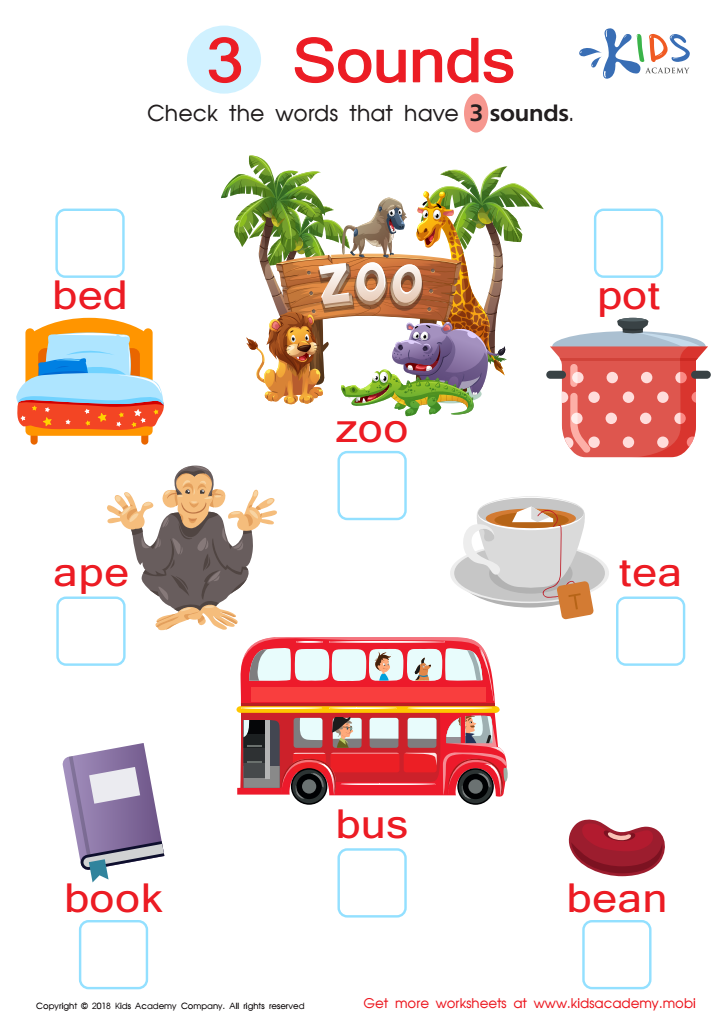
Kids will love learning with this free, colorful worksheet. It's full of familiar words they can name and sound out with three distinct sounds. This helps build decoding skills, plus they get to check off words they read. It's a fun way to teach children to identify and use sounds.
3 Sounds Worksheet
Worksheet
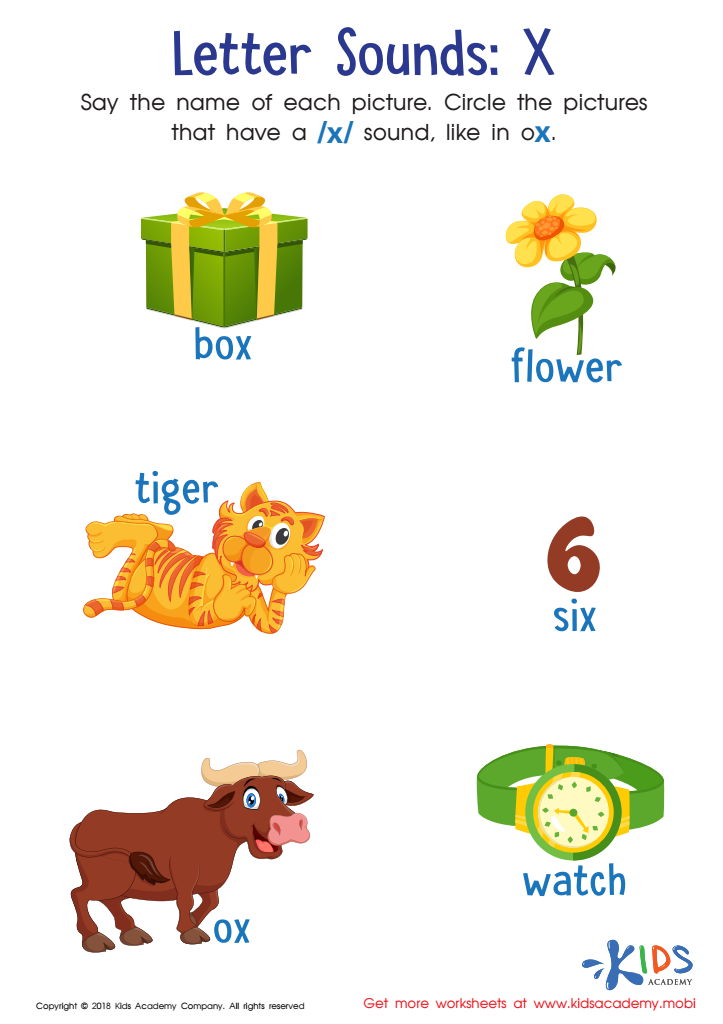
Letter X Sounds Worksheet
Letter X Sounds Worksheet

Help your early learner master the letter X sound with this fun, illustrated phonics worksheet. Have kids name the pictures, listening for the pronunciation of each. Have them circle only the pictures with the X sound, then double check by looking for the letter in the word below.
Letter X Sounds Worksheet
Worksheet
Finding the Sounds Worksheet

Finding the Sounds Worksheet

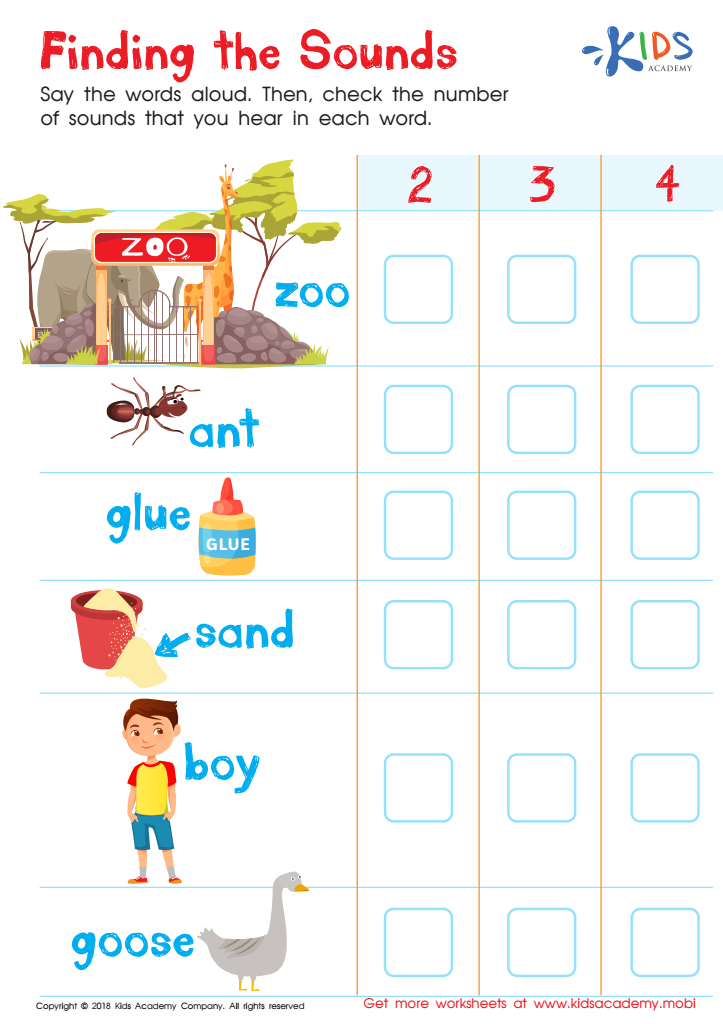
This free colorful worksheet assists children in learning words and breaking them down into sounds. It boosts auditory discrimination, phonological awareness and fine motor skills. Picture clues help them read confidently, and they can check the appropriate boxes to practice their reading skills.
Finding the Sounds Worksheet
Worksheet
Letter l and M Sounds Worksheet


Letter l and M Sounds Worksheet

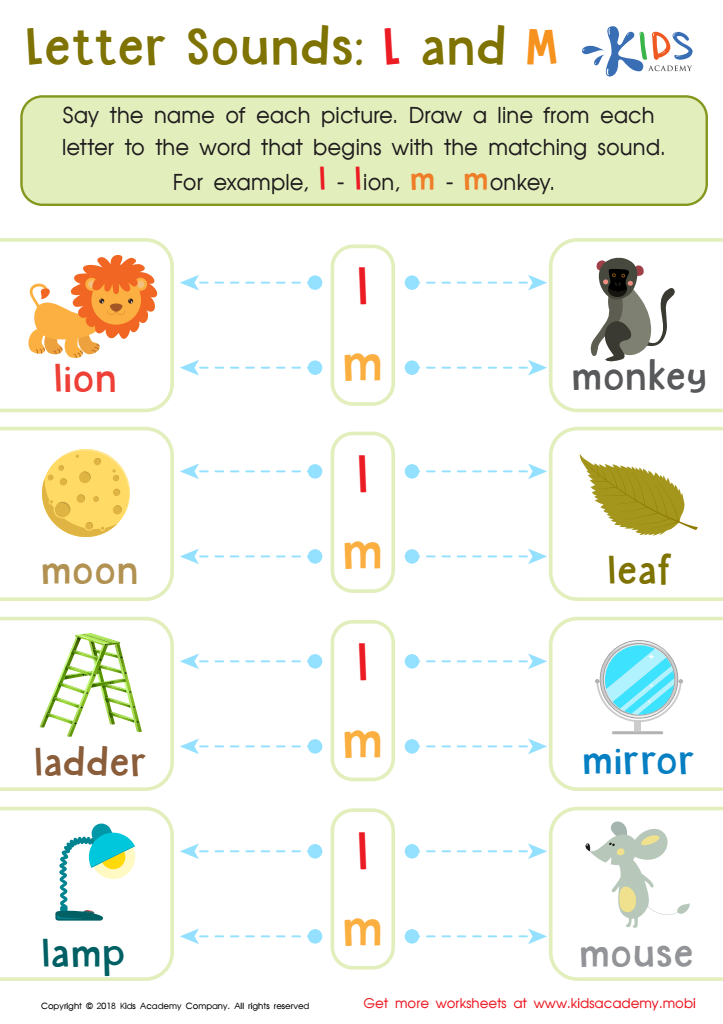
Our Kids Academy phonics practice pages give clear instructions and captivating pictures to pique children's interest. This fun worksheet helps kids identify a picture, then match its beginning sound. Listen and say each word - does it start with "L" or "M"? Trace the dotted line from the letter to the correct match and listen closely to the sound it makes.
Letter l and M Sounds Worksheet

Worksheet


Phonics skills, particularly the understanding of normal letter sounds, are foundational for literacy and language development in children ages 3-8. During these critical early years, young learners undergo significant cognitive and social growth, making it essential for parents and teachers to prioritize phonics education. Mastering letter sounds helps children decode words and form a base for reading fluency, enabling them to read independently and comprehend texts effectively.

Learning phonics at an early age fosters confidence in emerging readers. As children begin to recognize letter sounds, they feel empowered to tackle new words, ultimately enhancing their motivation to read. Good phonics skills also reinforce spelling and writing ability, as children become familiar with the sounds that make up words.

Moreover, phonics instruction aids in the development of vocabulary and comprehension skills, laying the groundwork for academic success across subjects. Parents and teachers who engage in phonics activities with children—like games, songs, and reading together—create interactive and enjoyable learning experiences. This collaborative effort not only promotes literacy but also nurtures a love for reading, setting children on a path toward lifelong learning. Overall, supporting phonics skills is crucial for developing competent, confident readers.