Phonological awareness Normal Phonics Worksheets for Ages 3-8
3 filtered results
-
From - To
Unlock the wonders of reading with our Phonological Awareness Normal Phonics Worksheets designed for children ages 3-8! These engaging and interactive resources help young learners develop critical listening and comprehension skills through a variety of fun activities. Each worksheet focuses on essential phonological concepts, such as rhyme recognition, syllable segmentation, and sound blending, ensuring a solid foundation for early literacy success. Perfect for home or classroom use, these worksheets promote confidence in reading and spelling while making learning enjoyable. Dive into an exciting world of phonics with our thoughtfully designed materials to inspire a lifelong love for reading!
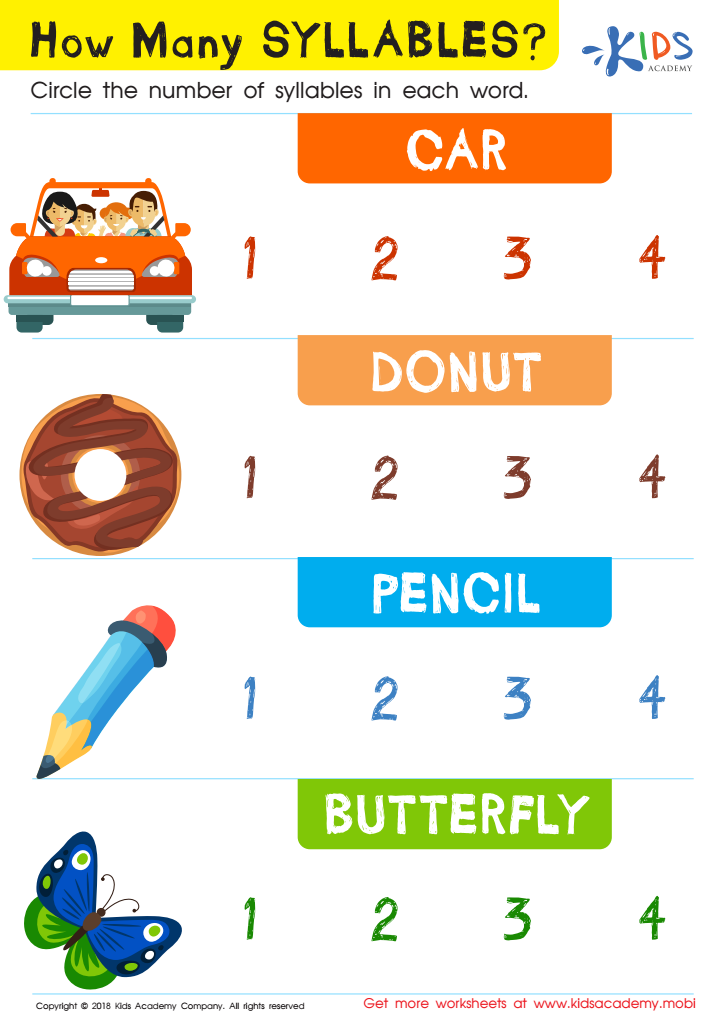
How Many Syllables? Worksheet
 Assign to My Students
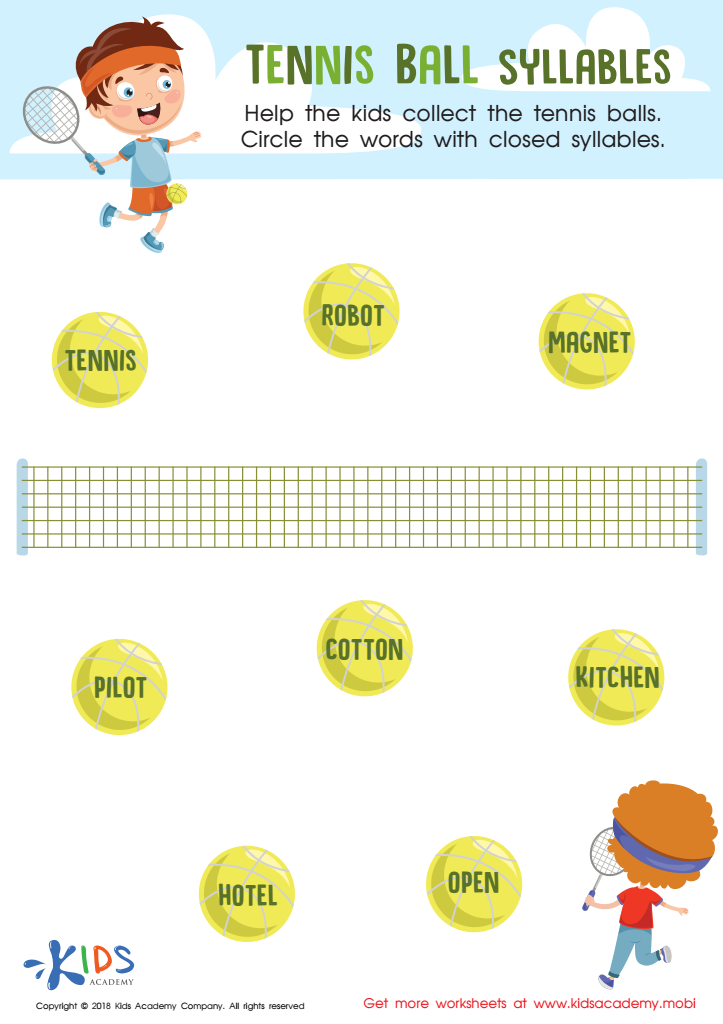
Tennis Ball Syllables Worksheet
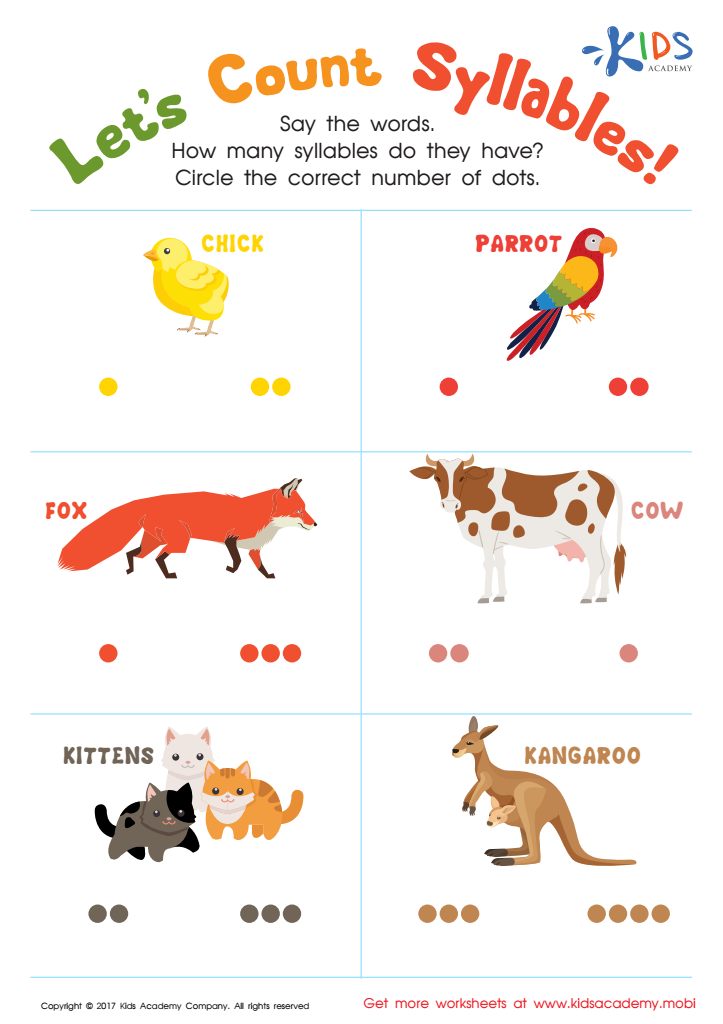
Lets Count Syllables Worksheet








Phonological awareness and phonics are foundational skills for early literacy development in children aged 3 to 8. Understanding and recognizing sounds within spoken language (phonological awareness) empowers children to comprehend the structure of words, which enhances their reading and spelling skills. These skills are critical as they lay the groundwork for successful literacy; children who struggle with phonological awareness may face challenges in their reading journey later on.
Teachers and parents should prioritize these skills early, as research shows a strong link between phonological awareness and academic success. By introducing activities that promote sound recognition, rhyming, and syllable segmentation, adults can foster a child’s ability to decode words, ultimately fostering greater confidence and enjoyment in reading.
Furthermore, incorporating phonics practices, which connect letters to their corresponding sounds, aids in a child’s ability to read fluently and understand written language. Engaging in these practices nurtures cognitive development and helps children develop critical thinking skills.
Ultimately, taking the time to nurture phonological awareness and phonics not only prepares children for academic success but also instills a lifelong love for reading that can positively influence their educational journey and overall development.







