Phonics Skills Normal Vowel Team Worksheets for Ages 3-8
9 filtered results
Difficulty Level
Grade
Age
-
From - To
Subject
Activity
Standards
Discover engaging Phonics Skills Normal Vowel Team Worksheets designed for children ages 3-8! These interactive resources help young learners master the concept of vowel teams, crucial for developing reading fluency. Our worksheets feature fun illustrations and diverse activities that make practicing phonics enjoyable. From identifying vowel pairs to completing word exercises, children will build a strong foundation in phonics while enhancing their vocabulary. Perfect for both classroom and home learning, these worksheets aim to create confident readers. Start your child’s reading journey today and watch them thrive with our carefully crafted vowel team activities that cater to early learners!
Favorites
With answer key
Interactive
Vowel team ee Worksheet
Revised:
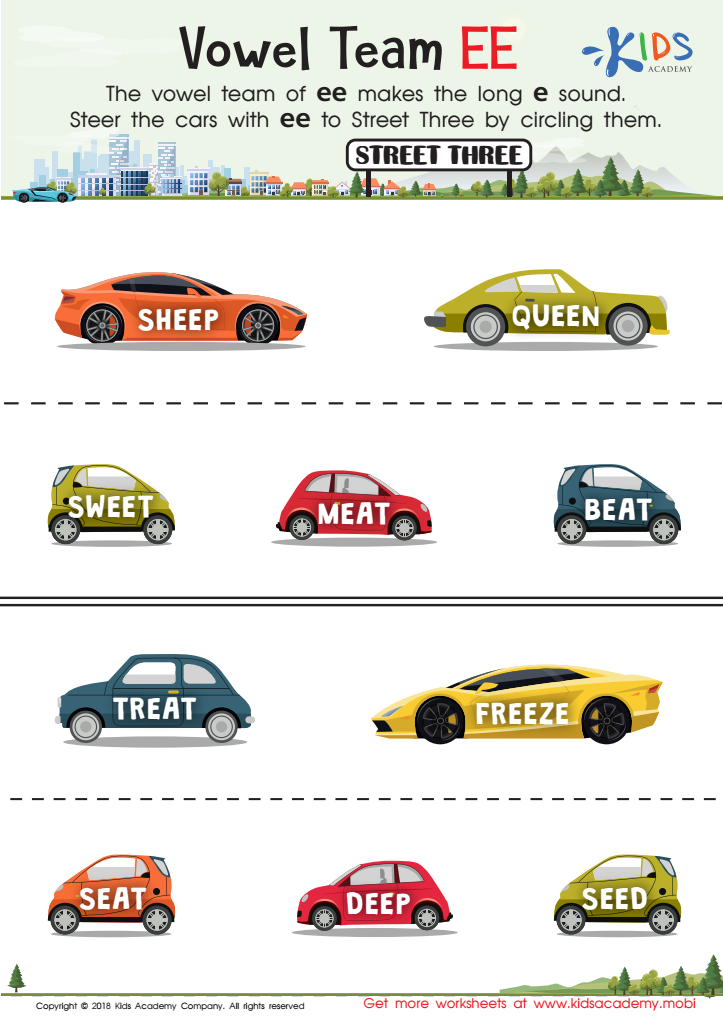
Kids will have a blast steering cars with the -ee digraph towards Street Three! This fast-paced worksheet reinforces that -ee makes the long -e sound while boosting fine motor skills. Kids will love the bright colors and stay engaged with this fun printable. Get ready for hours of off-road excitement!
Vowel team ee Worksheet
Worksheet
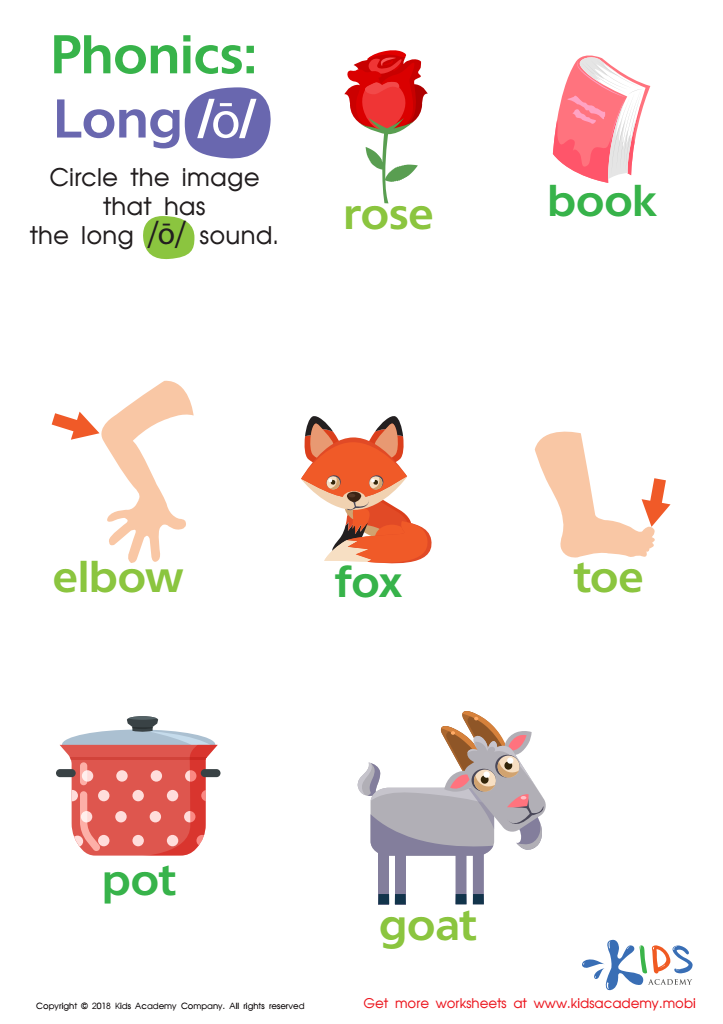
Phonics Long O Reading Worksheet
Are you ready to help your child learn the phonics long «o» sound? This worksheet is designed to aid them in getting familiar with the sound. After completing the exercise, your child should be able to differentiate letters, and recognize words with the long «o» sound. Encourage them to circle the images that have the sound.
Phonics Long O Reading Worksheet
Worksheet
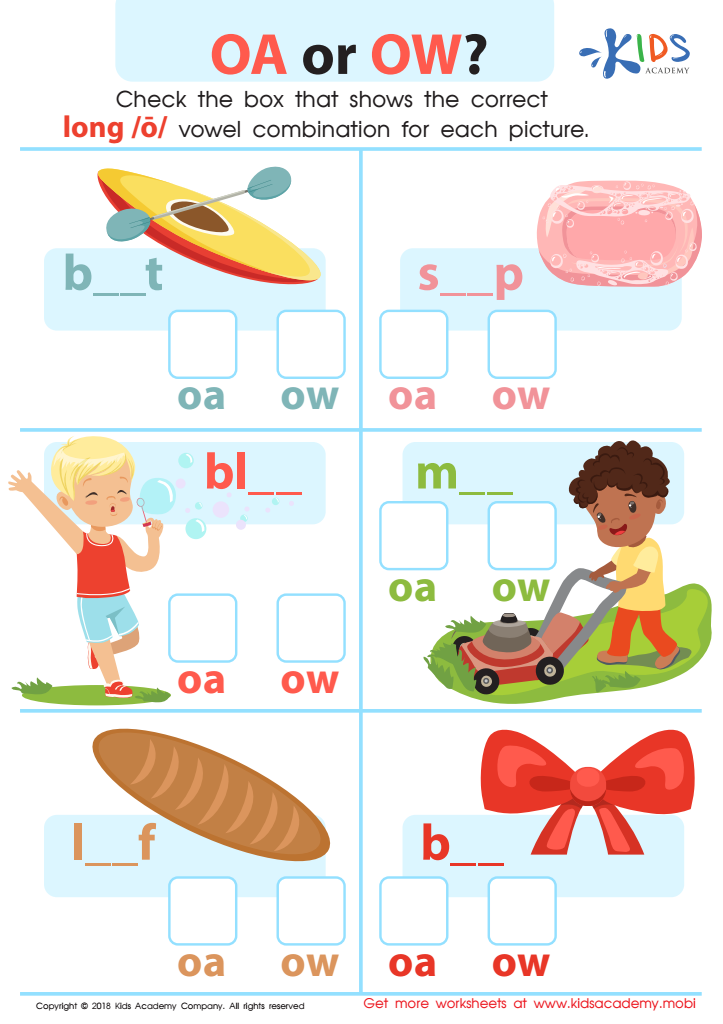
Reading: OA or OW Worksheet
This printable worksheet helps young and emergent readers with decoding words and understanding digraphs (two letters with one sound). It requires students to complete the spelling for each word based on the picture, focusing on /oa/ and /ow/ spellings. It's ideal for a reading classroom and for spelling practice.
Reading: OA or OW Worksheet
Worksheet
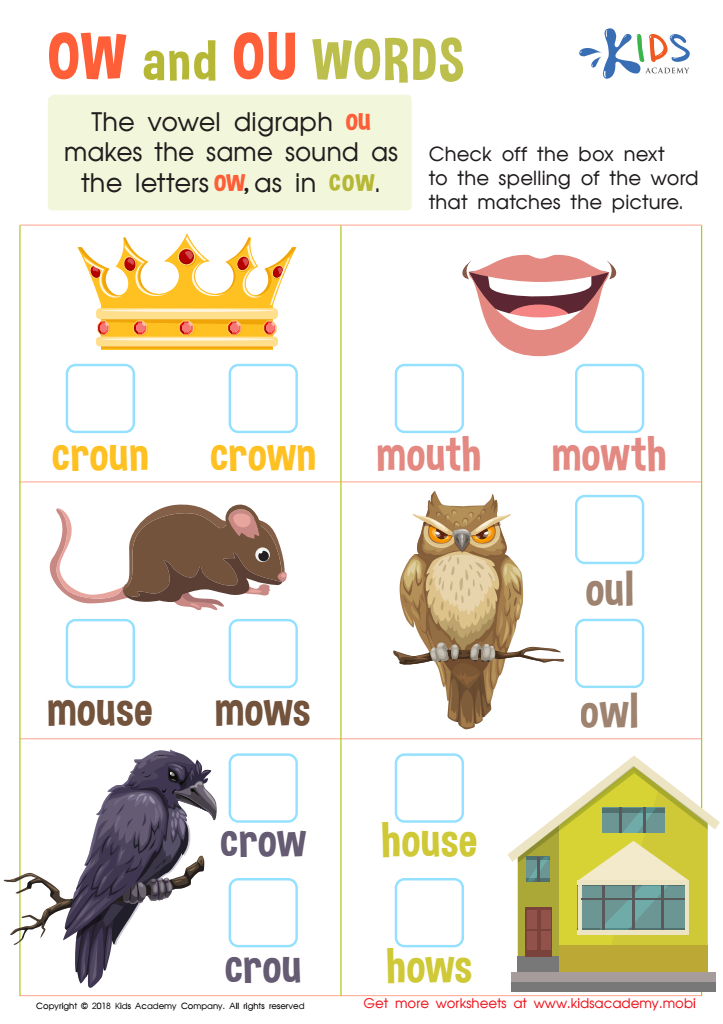
Reading: OW and OU Words Worksheet
Help your kids learn phonetics! Explain the different sounds and long/short variations. Emphasize that some vowel sounds are the same, e.g. ou = ow in cow. For practice, have them read aloud the words in the worksheet and check the box next to the spelling that matches the picture.
Reading: OW and OU Words Worksheet
Worksheet
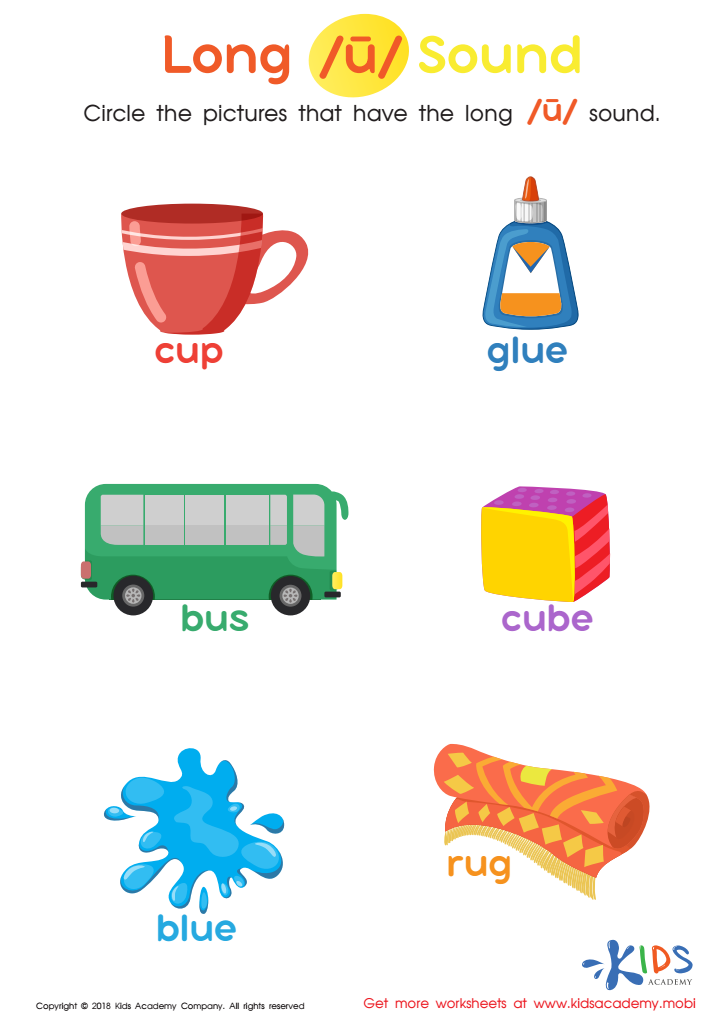
Long «u» Sound Worksheet
This fun and engaging free PDF worksheet teaches kids to differentiate between long and short «u» sounds. Through tracing circles around the correct words, they'll practice their fine motor skills while also recognizing patterns (silent-e for «ū» sound) in closed-syllable words. Bright and cheery pictures make it a great confidence booster for new readers!
Long «u» Sound Worksheet
Worksheet
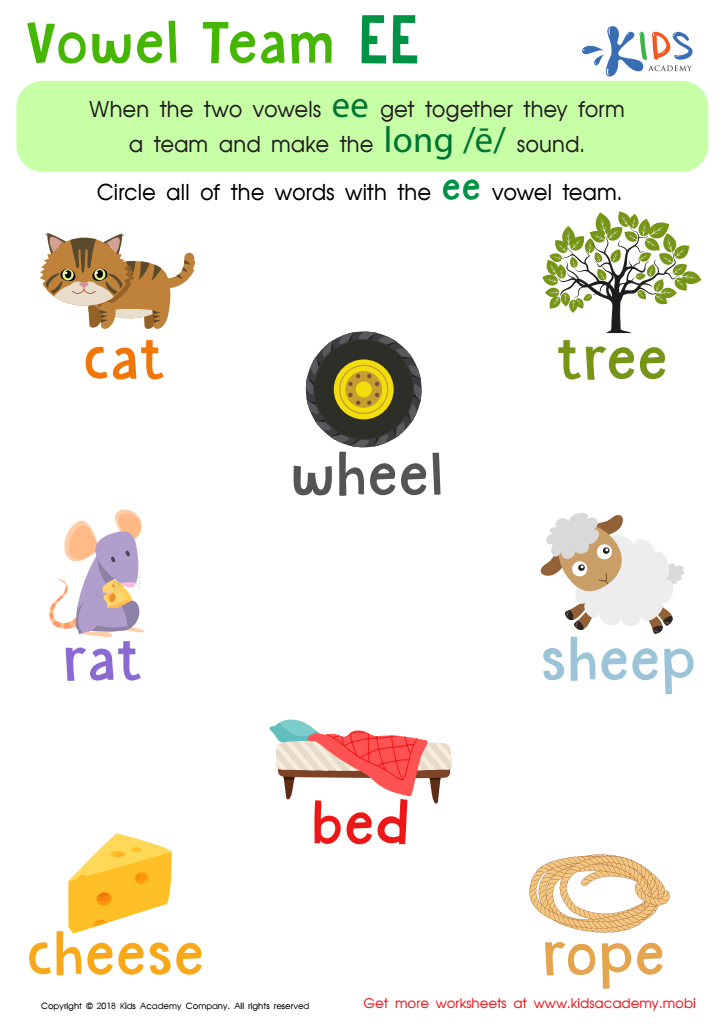
Reading: Vowel Team EE Worksheet
This worksheet is perfect for helping young learners master the /ee/ vowel team. It shows the first vowel with a long sound and the second vowel silent. It also provides pictures for unfamiliar words for readers of all levels. It's an ideal resource for teaching phonics skills.
Reading: Vowel Team EE Worksheet
Worksheet
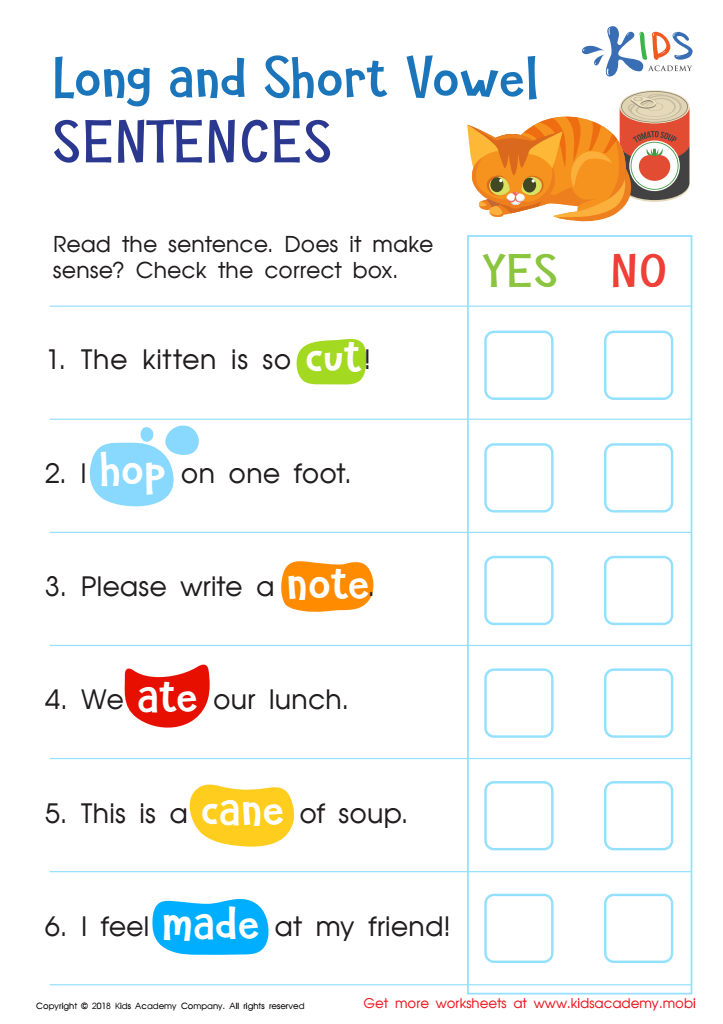
Long and Short Vowel Sentences: Assessment Worksheet
This printable worksheet helps kids practice differentiating between short and long vowel sounds. They'll use context clues to figure out which words make sense in simple sentences. A great way to build reading and writing skills!
Long and Short Vowel Sentences: Assessment Worksheet
Worksheet
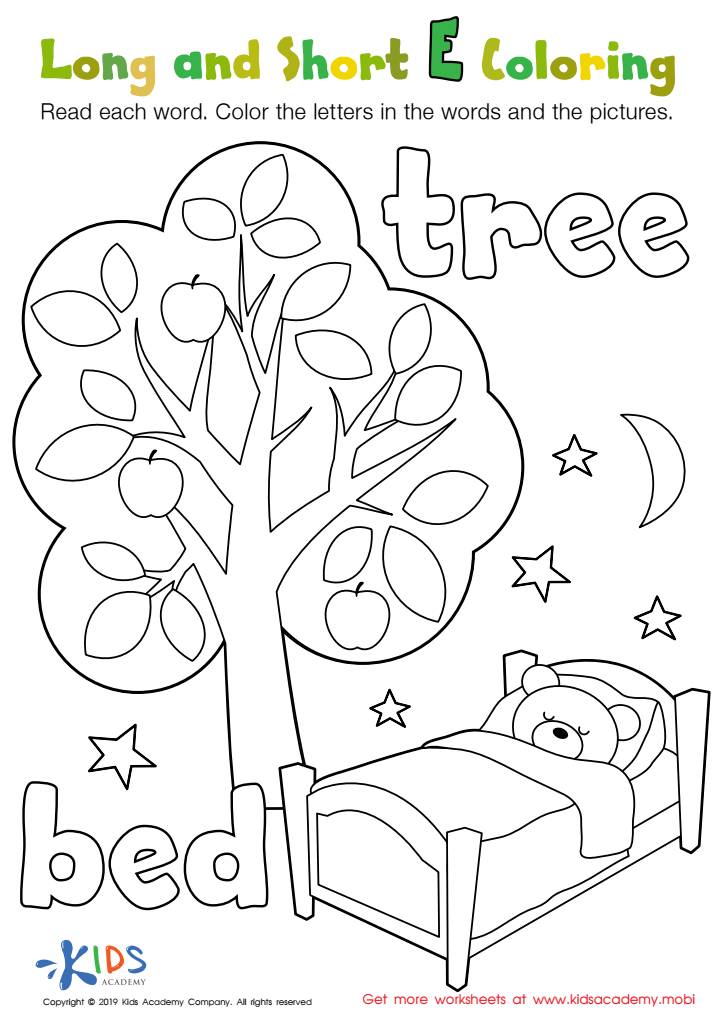
Long and Short E Worksheet
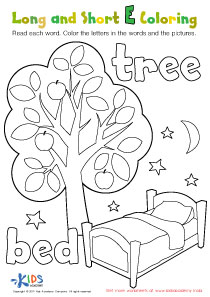
This fun printout makes learning phonics enjoyable for Grade 3 students. Get them to read the words “tree” and “bed” to recognize the different sounds of the letter “E”. After hearing the words they can color the words and the pictures to understand differences between long and short vowels.
Download (PDF)
 Assign to My Students
Assign to My Students
Long and Short E Worksheet
Worksheet
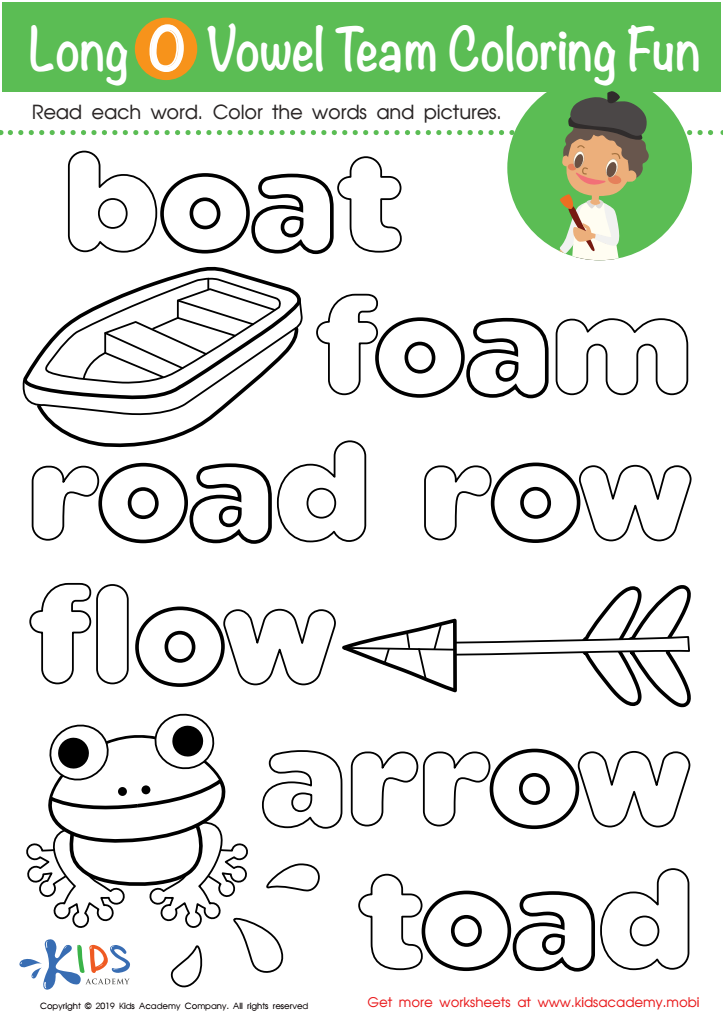
Long O Vowel Team Coloring Worksheet
Divide your class into teams and have them work together to identify and pronounce the long O sound in words like "boat" and "flow". As they read aloud, have the rest of the class listen attentively. Then let teams color in the words and matching pictures, reinforcing the lesson. This simple printout is perfect for phonics lessons and a fun way to energize your class.
Download (PDF)
Assign to My Students
Assign to My Students
Long O Vowel Team Coloring Worksheet
Worksheet
Join Kids Academy for Free
Who is primarily going to use this learning content?



Phonics skills, particularly understanding normal vowel teams, play a vital role in early literacy development for children aged 3-8. Vowel teams, such as "ai," "ee," or "ou," represent the way sounds combine to create meaningful words, significantly impacting reading fluency and comprehension.
For parents and teachers, fostering phonics skills is essential because these foundational skills provide children with the tools they need to decode words independently. As children learn to recognize and sound out vowel teams, they gain confidence in their reading abilities, which encourages a love for reading. This confidence crucially lays the groundwork for their future academic success.
Moreover, as children become skilled in recognizing vowel teams, they develop better spelling skills. Understanding how different vowels work together not only enhances their writing but also decreases frustration when encountering new words.
Encouraging phonics education also supports auditory processing and listening skills, laying the groundwork for a variety of language abilities. Therefore, acknowledging the importance of phonics skills, especially normal vowel teams, is crucial for parents and teachers to build a robust reading foundation that empowers children as lifelong learners. Engaging in phonics activities nurtures balance between play and structured learning, influencing their overall educational journey positively.