Normal Vowels and Consonants Worksheets for Ages 3-8 - Page 2
26 filtered results
-
From - To
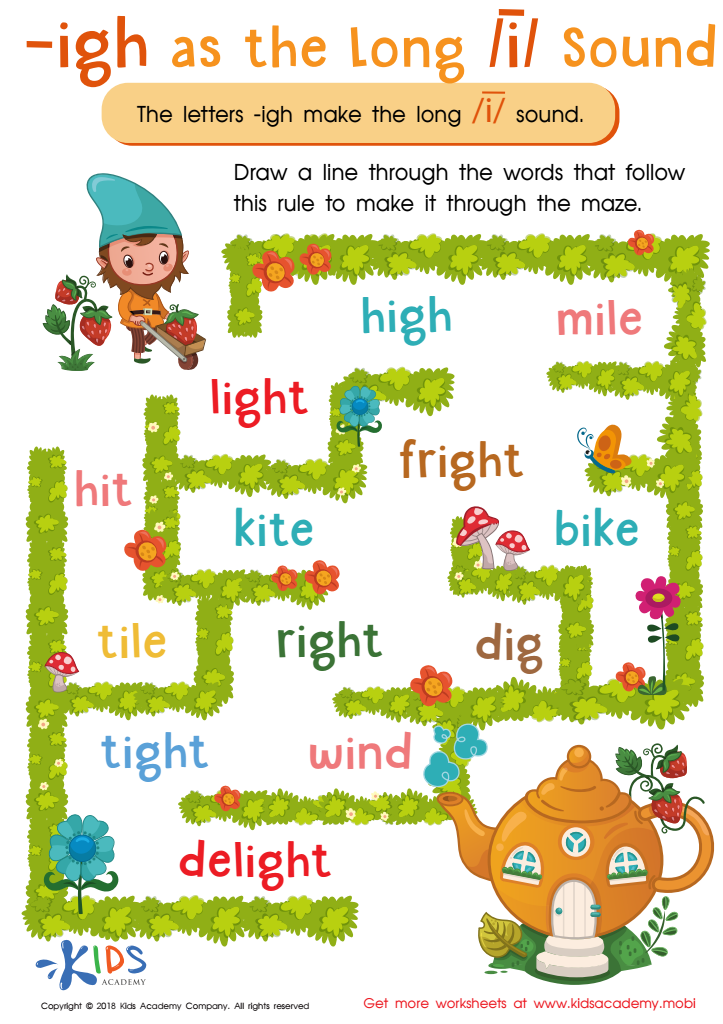
Reading: IGH as Long I Worksheet
 Assign to My Students
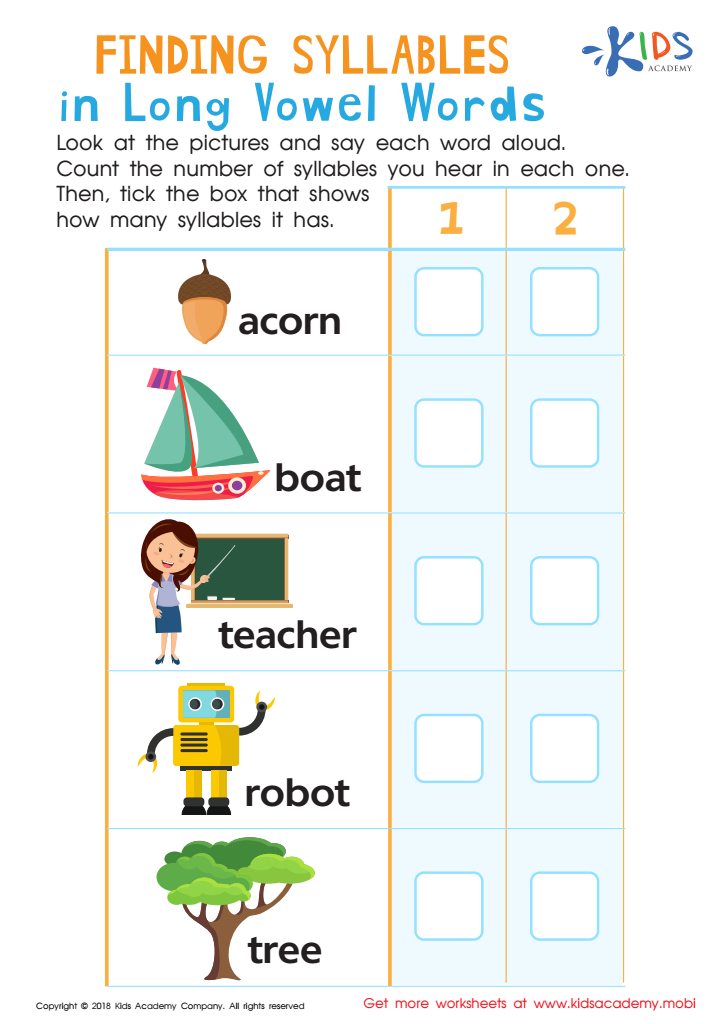
Finding Syllables in Long Vowel Words Worksheet



Understanding normal vowels and consonants is crucial for the language development of children aged 3 to 8. Parents and teachers play an essential role in fostering this development, as these sounds are the building blocks of literacy and communication. Normal vowels and consonants help children decode words and develop phonemic awareness, which is foundational for reading skills.
At this age, children are typically learning to identify sounds, blend them to form words, and differentiate between similar phonemes. Recognizing and articulating vowels and consonants effectively aids in improving their speaking and listening skills, influencing their confidence in communication. Moreover, by introducing children to these sounds through playful activities, parents and teachers can make learning engaging and enjoyable.
When adults prioritize the exploration of normal vowels and consonants, they create an enriched language environment that nurtures curiosity and fosters a love for reading. This focus supports multilingual development in children, allowing for better cognitive growth and cultural literacy. Ultimately, a strong phonetic foundation not only leads to successful reading and writing skills but also equips children to express their thoughts and feelings clearly, setting the stage for academic and social success.






