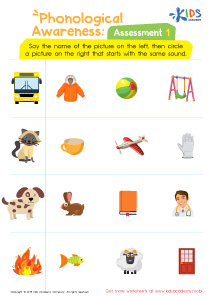
Reading proficiency Normal Vowels Worksheets for Ages 3-8
5 filtered results
-
From - To
Unlock your child's reading potential with our engaging Normal Vowels Worksheets designed for ages 3-8! Tailored to enhance reading proficiency, these worksheets focus on essential vowel recognition and sound blending to foster early literacy skills. Each worksheet is thoughtfully crafted to be fun and interactive, promoting phonemic awareness and encouraging a love for reading. Parents and educators will appreciate the ease of use and the variety of activities that cater to different learning styles. Perfect for home use or classrooms, our Normal Vowels Worksheets provide the foundation for confident readers. Start your child’s reading journey today and watch their skills flourish!
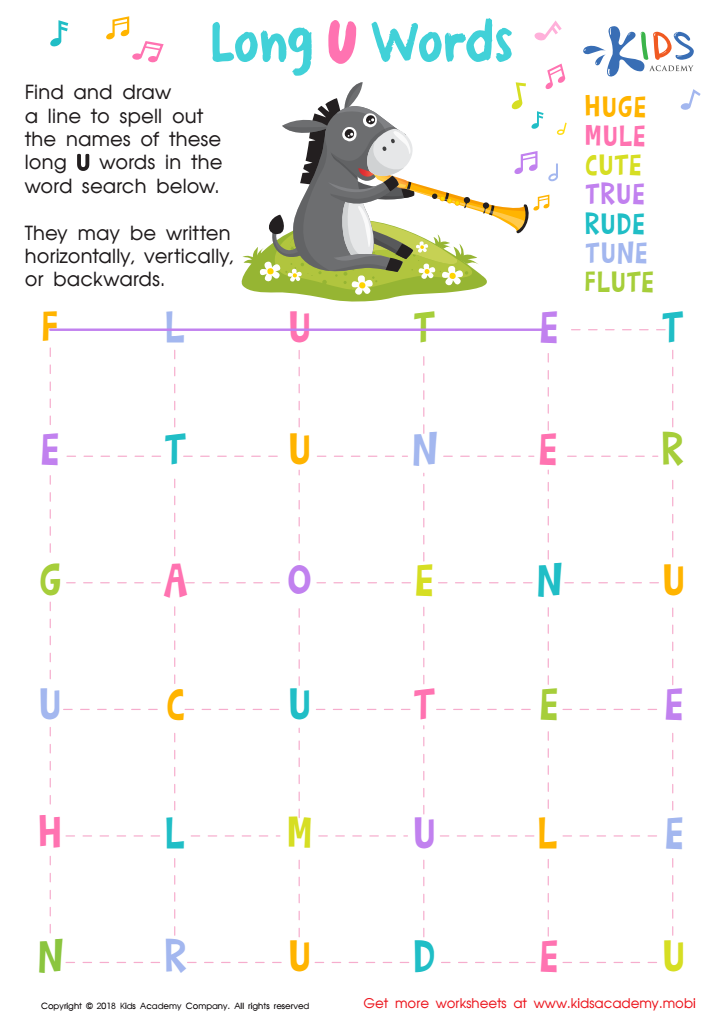
Long /u/ Words Worksheet
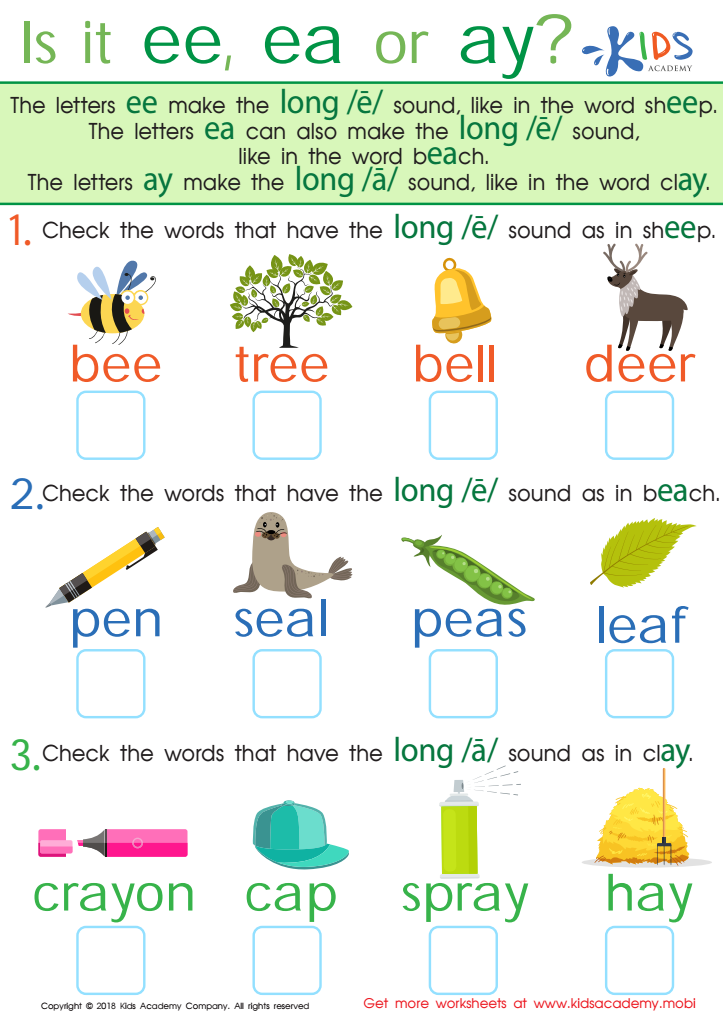
Is It EE, EA, or AY? Worksheet
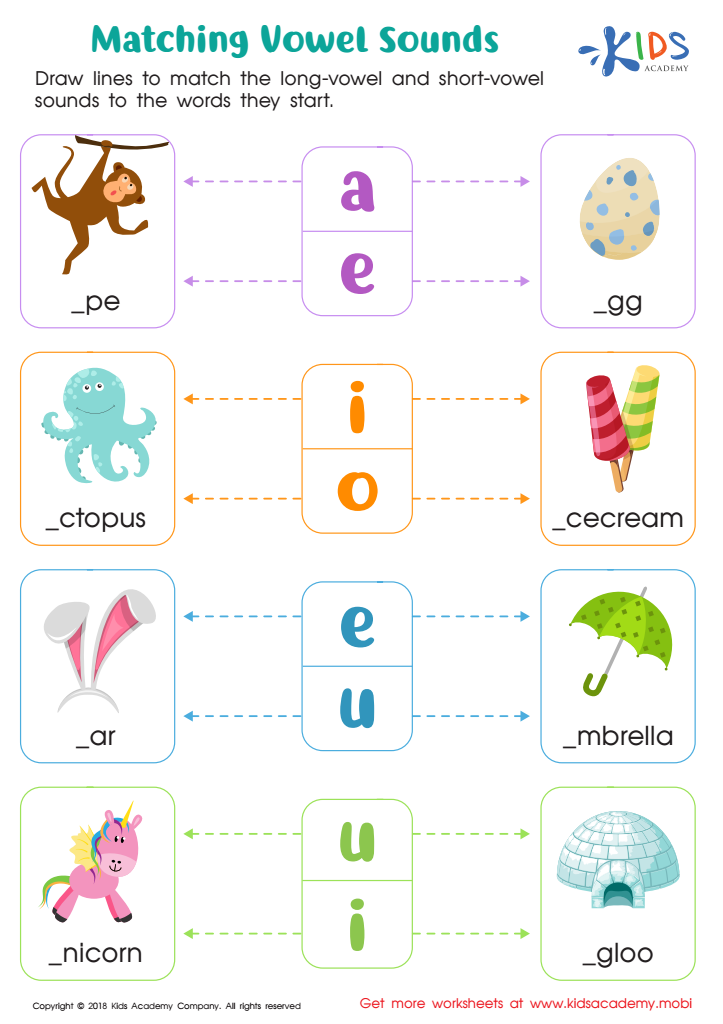
Matching Vowel Sounds Worksheet

Long and Short U Worksheet
 Assign to My Students
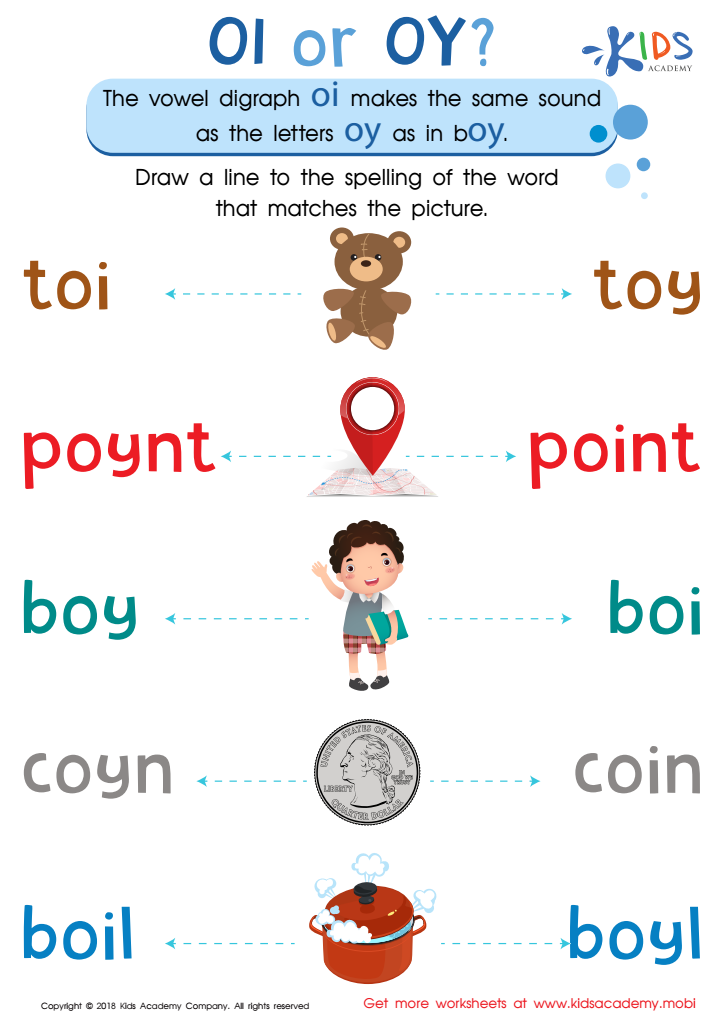
Reading: OI and OY Worksheet





Parents and teachers should prioritize reading proficiency in normal vowels for children ages 3-8 because it lays the foundation for lifelong literacy and learning. Early literacy skills, including understanding vowel sounds, are crucial as they contribute to phonemic awareness — the ability to hear, identify, and manipulate sounds in spoken words.
Children who master vowel sounds tend to excel in reading fluency, spelling, and comprehension as they progress through their education. Proficiency in normal vowels helps young learners decode words, making it easier to grasp more complex language structures as they advance.
Moreover, reading skills are closely linked to academic achievement in various subjects. A strong foundation in reading enables children to engage with narratives, follow instructions, and develop critical thinking—essential skills not just in language arts but across the curriculum.
Additionally, fostering reading proficiency enhances confidence and motivation, encouraging children to explore literature independently. In cultivating a love for reading, parents and teachers form a crucial partnership that nurtures curiosity and a desire to learn, ultimately shaping well-rounded, literate individuals capable of succeeding in school and beyond. Therefore, investing time and resources in early reading skills is an investment in a child’s future.