Basic measurement concepts Normal Worksheets for Ages 3-8
3 filtered results
-
From - To
Explore the world of basic measurement concepts with our engaging worksheets designed for children aged 3-8. These printable resources introduce young learners to fundamental measurements such as length, weight, and volume through fun activities and colorful visuals. Our worksheets cater to various learning styles, making it easy for children to grasp essential concepts while enjoying the process. Perfect for teachers and parents alike, these materials foster early math skills and encourage hands-on learning. Start your child's journey to mastering measurements today and watch their confidence grow! Visit our site for more activities and resources tailored to support their learning adventure.
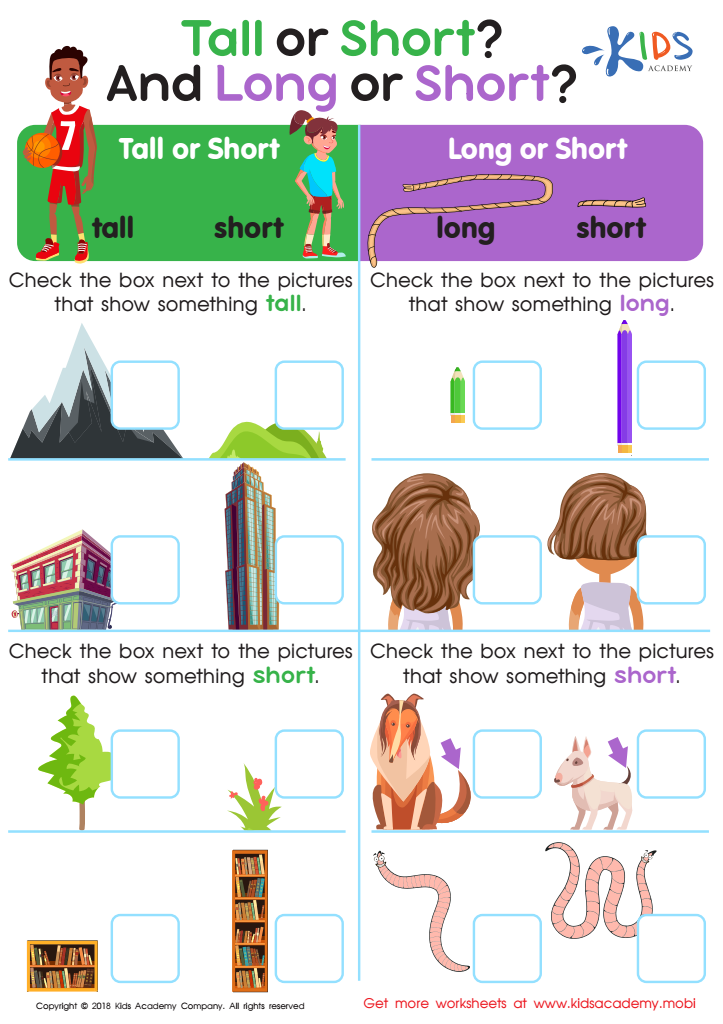
Tall or Short and Long or Short? Worksheet
 Assign to My Students
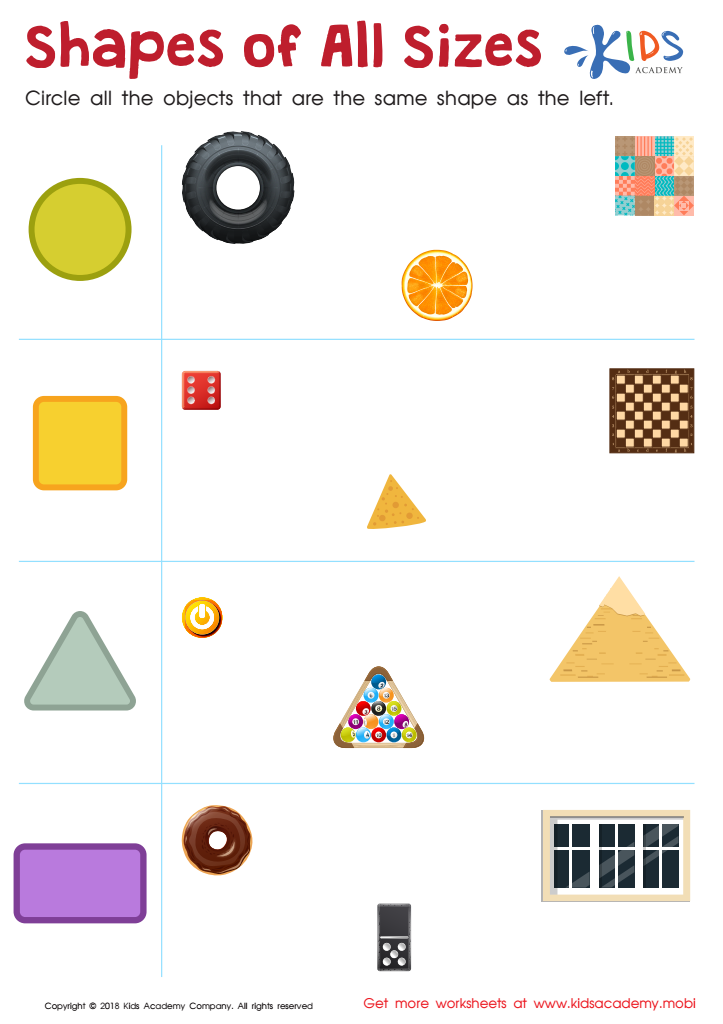
Shapes of All Sizes Worksheet
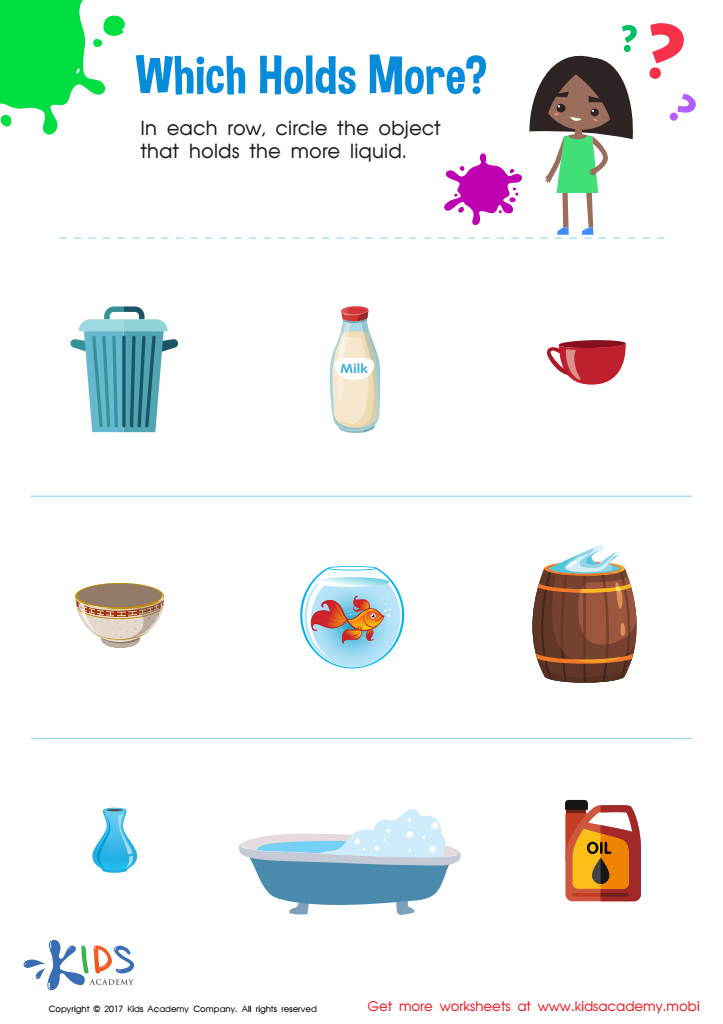
Which Holds More: Capacity Worksheet







Understanding basic measurement concepts is crucial for children ages 3-8, and parents and teachers should prioritize this learning for several reasons. First, measurement lays the foundation for mathematical skills. Early exposure helps children grasp concepts of length, weight, time, and volume, which are fundamental not only in math but also in daily life. When children learn to measure, they develop critical thinking skills as they compare and quantify objects.
Additionally, these concepts encourage children to make observations, ask questions, and engage in problem-solving. For instance, measuring ingredients while cooking reinforces numerical understanding and the importance of following steps. It enhances their communication skills as they describe size or distance, promoting vocabulary development.
Learning about measurement also integrates play, a vital component of early childhood education. Activities like using rulers, measuring cups, or comparing heights can make learning enjoyable and interactive, which is essential for young children’s development.
Ultimately, when parents and teachers emphasize measurement, they equip children with the skills necessary for STEM fields, foster confidence in their abilities, and encourage a lifelong love of learning. By nurturing these skills early on, we set the stage for future academic success and practical life skills.








