Basic subtraction skills Normal Worksheets for Ages 3-8
3 filtered results
-
From - To
Welcome to our "Basic Subtraction Skills Worksheets" for ages 3-8! These engaging and age-appropriate resources are designed to help young learners grasp essential subtraction concepts. Our carefully curated worksheets feature colorful illustrations and simple, clear instructions perfect for early education. Children will practice fundamental skills through fun exercises that build confidence and encourage a love for math. Whether it's through visuals, interactive questions, or basic equations, every activity aims to make learning enjoyable. Best of all, our downloadable worksheets allow for easy access and printing at home or in the classroom. Start your child's math journey today!
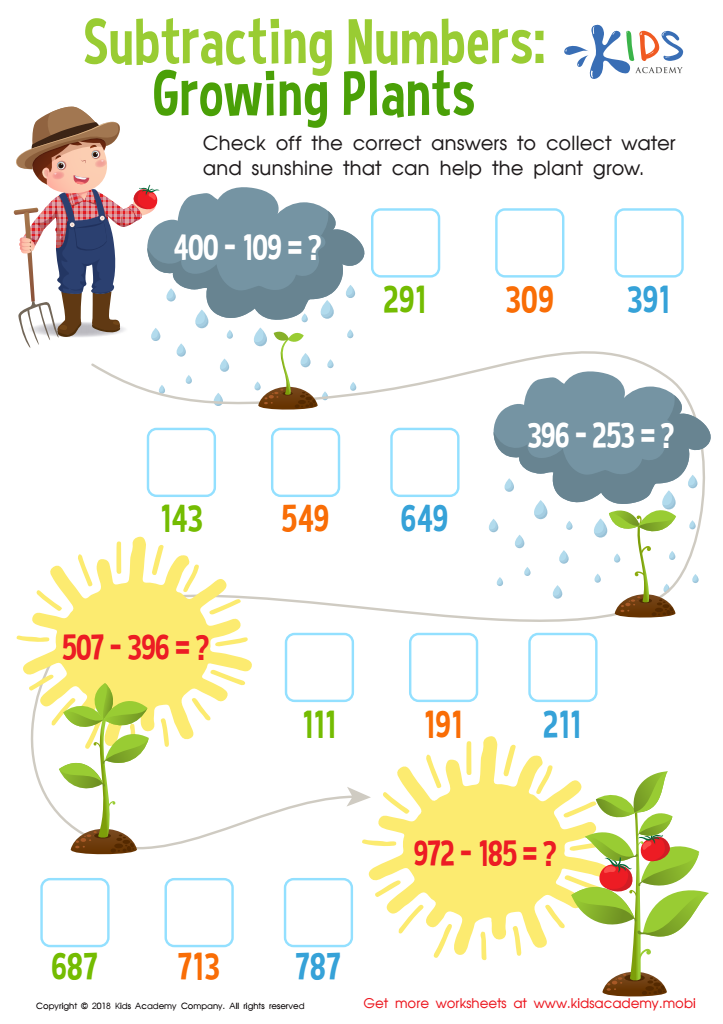
Subtracting Numbers: Growing Plants Worksheet
 Assign to My Students
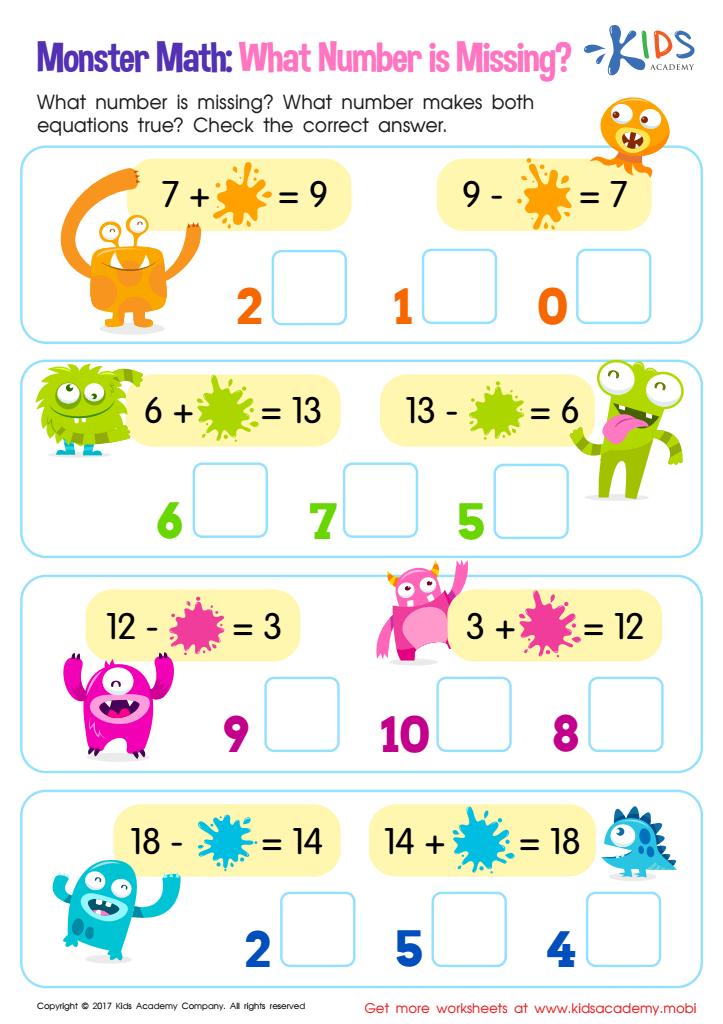
Missing Number: Monster Math Worksheet
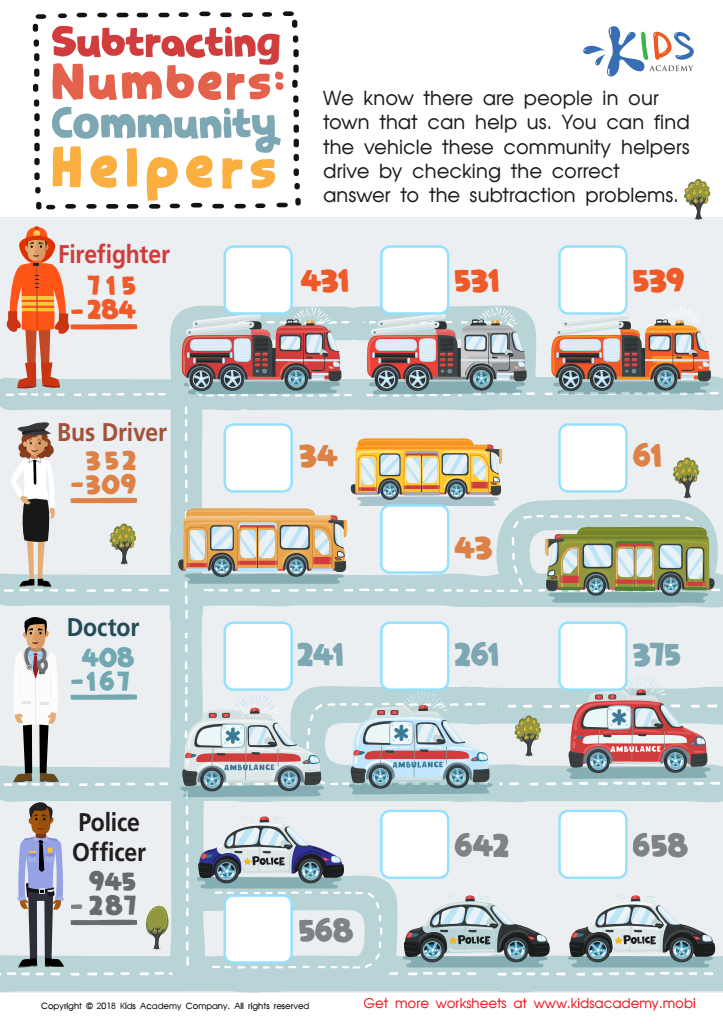
Subtracting Numbers: Community Helpers Worksheet






Basic subtraction skills are essential for children aged 3-8, as they form the foundation for more complex mathematical concepts later in life. Mastering subtraction helps young learners develop critical thinking and problem-solving abilities, which are vital across academic subjects and real-world situations.
First, subtraction fosters number sense—a child's ability to understand, relate, and manipulate numbers. This understanding is crucial for recognizing patterns and relationships in mathematics. Enhanced number sense can lead to improved confidence in a child's mathematical abilities and reduce math anxiety.
Furthermore, practicing subtraction through engaging activities aligns with cognitive development at this age. Young children learn best through play and hands-on experiences, so integrating subtraction into games helps maintain their interest and promotes a positive attitude towards math.
Socially and emotionally, the ability to combine and separate quantities is fundamental for everyday tasks, such as sharing and playing in groups. Parents and teachers can facilitate collaborative activities that include subtraction, helping children develop teamwork skills.
In short, prioritizing basic subtraction skills during these formative years equips children with essential tools for future learning, emotional growth, and real-world applications. Parents and teachers play a vital role in nurturing these skills, creating a strong basis for a child's educational journey.








