Capitalization rules Normal Worksheets for Ages 3-8
3 filtered results
-
From - To
Explore our engaging Capitalization Rules Normal Worksheets designed specifically for children aged 3-8. These worksheets provide a fun and interactive way to introduce young learners to essential capitalization principles. Activities are tailored to reinforce the understanding of when to capitalize letters, enhancing reading and writing skills. With colorful illustrations and age-appropriate exercises, your child will enjoy practicing proper nouns, sentence beginnings, and more. Perfect for home or classroom use, these worksheets foster early literacy development while keeping learning enjoyable. Download now and help your child master capitalization rules in an exciting and creative way!
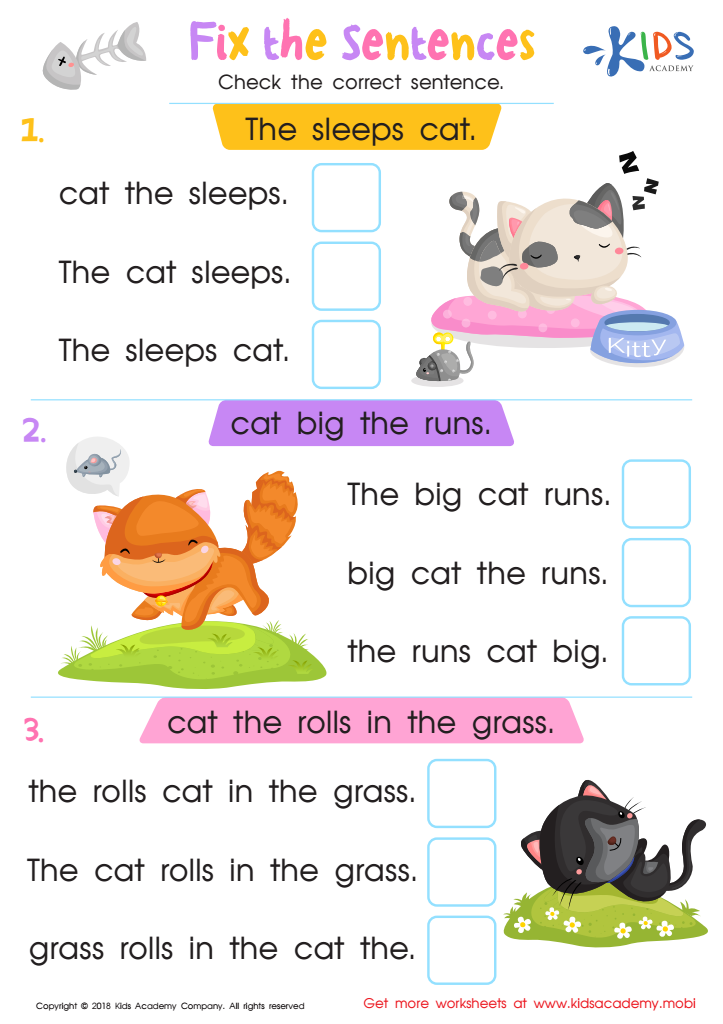
Fix the Sentences Worksheet
 Assign to My Students
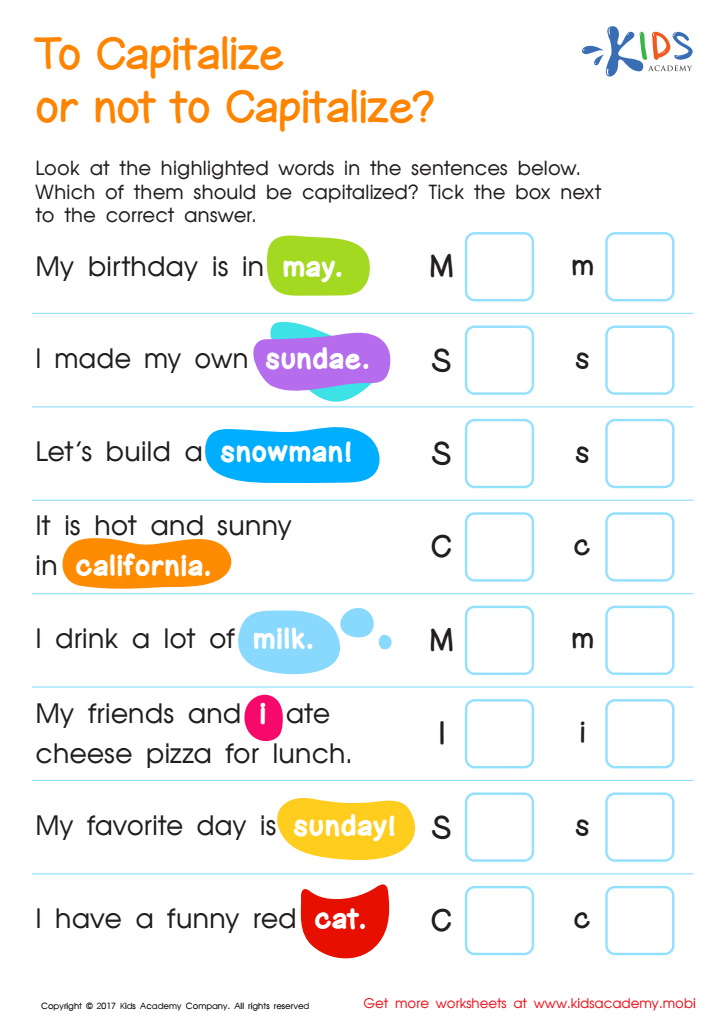
Capitalization: To Capitalize or Not? Printable
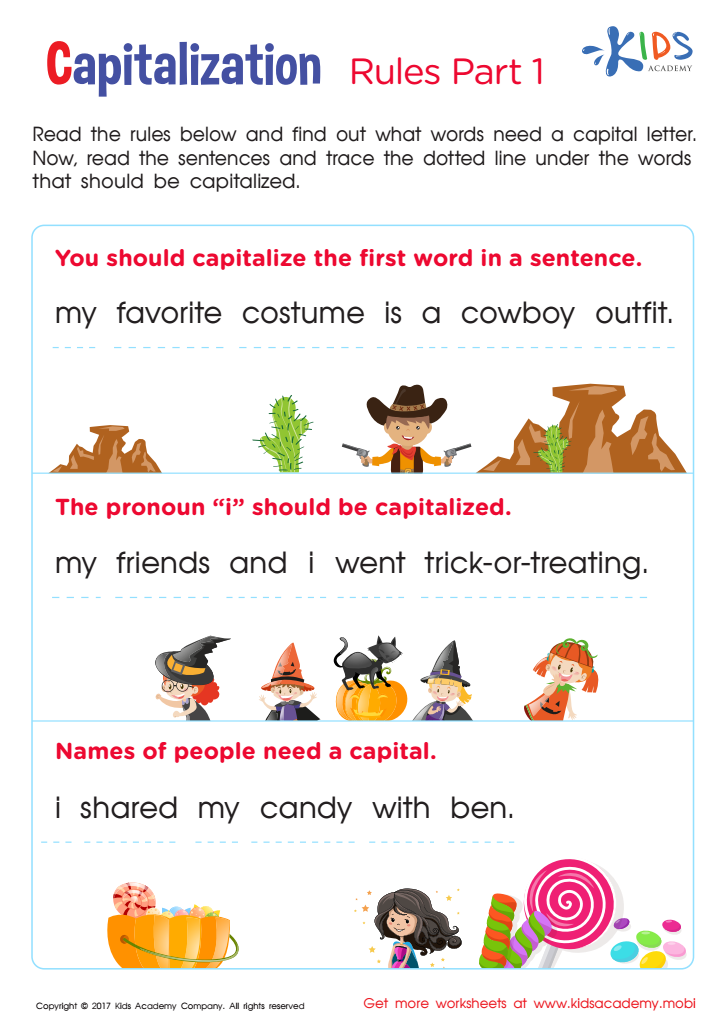
Capitalization Rules: Part 1 Worksheet








Capitalization rules are fundamental for young children's literacy development and communication skills, making it essential for parents and teachers to emphasize their importance for ages 3 to 8. Firstly, understanding capitalization helps children recognize the distinction between common and proper nouns, enhancing their vocabulary and comprehension of language nuances. This foundational skill fosters improved reading and writing abilities, crucial at this early stage.
Additionally, mastering capitalization rules encourages children to take pride in their writing. When students see their work properly formatted, they grow more confident in their abilities and more motivated to express themselves. This reinforcement promotes a positive attitude towards learning and builds essential literacy habits.
Furthermore, consistency in capitalization aligns with the formal rules of language as students progress in their education. The transition to more complex writing and reading tasks is smoother when children have a strong grasp of basics, preventing frustration later on.
Finally, capitalizing letters plays a pivotal role in effective communication, making messages clearer and more engaging. Therefore, when parents and teachers talk about capitalization thoughtfully and consistently, they are equipping children with vital skills that will benefit them throughout their academic journey and beyond.








