Boost your child's learning with our Contextual Understanding Normal Worksheets for ages 3-8! Specifically designed to develop crucial comprehension skills, these engaging and colorful exercises encourage young learners to understand language in context, improving their ability to follow stories and instructions. Packed with age-appropriate challenges, each worksheet builds on previous knowledge, promoting critical thinking and problem-solving. Perfect for home or classroom use, these activities make learning fun and interactive. Help your child excel by enhancing their ability to grasp the meaning behind words and sentences with our expertly crafted educational resources.

Check out this FREE "Contextual understanding" Trial Lesson for age 3-8!

Let's Go to School!

Favorites
With answer key
Interactive
  • 3-8
  • Contextual understanding
  • Normal
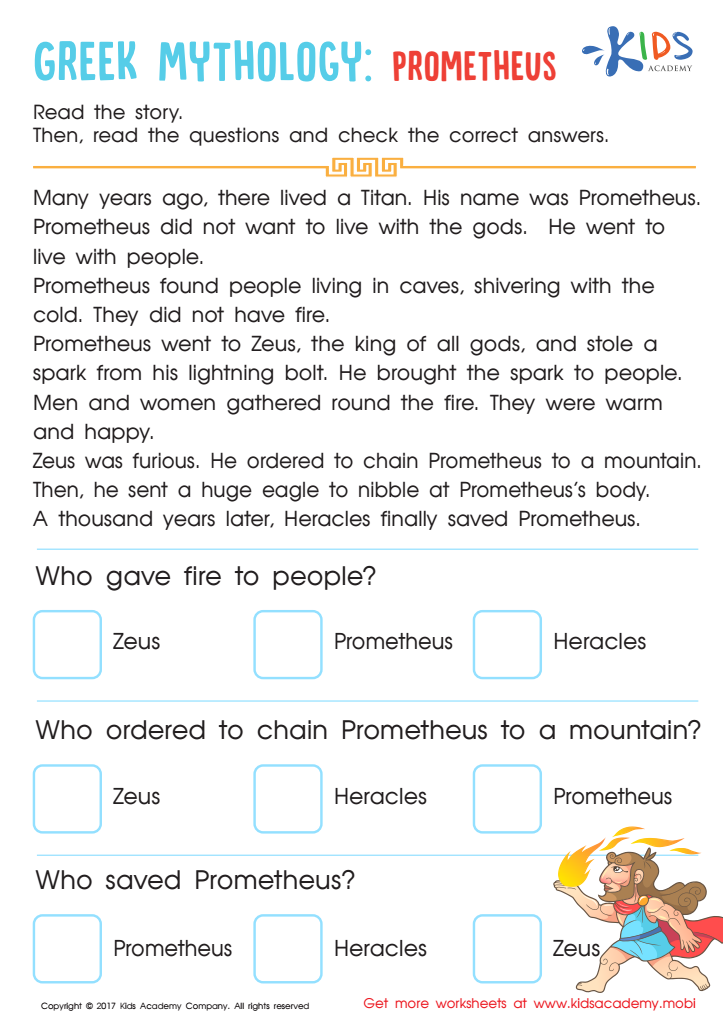
Prometheus story worksheet

Prometheus Story Worksheet

Help kids improve reading comprehension with this Prometheus story worksheet! Learn about this classic mythological tale and break down the plot into understandable parts. By doing so, children will understand the story each step of the way.
Prometheus Story Worksheet
Worksheet
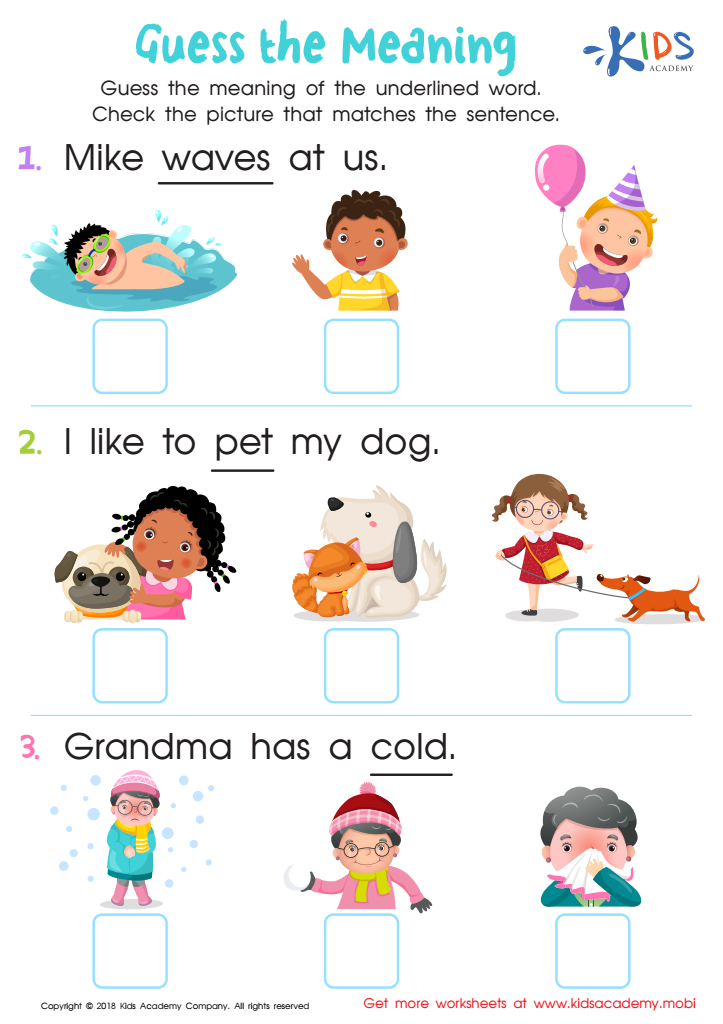
Guess the Meaning Worksheet

Guess the Meaning Worksheet

Help your child learn the meanings of words in different contexts by using this colourful, free worksheet. What is the meaning of the underlined words in each sentence? Look at the images and pick the one that accurately describes the word's context.
Guess the Meaning Worksheet
Worksheet
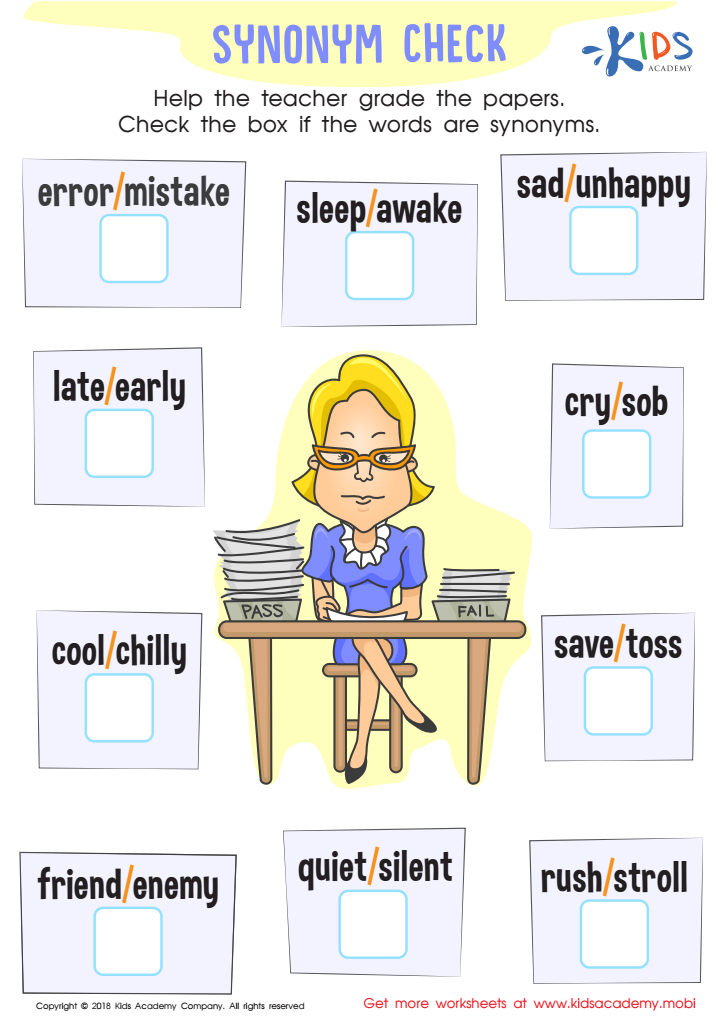
Synonym Check Worksheet

Synonym Check Worksheet

Ask your kids what a synonym is, and listen to their definitions. If needed, explain it's a word that has a similar meaning to another. Give examples, then ask them to do the same. For this worksheet, get them to help grade the papers. Have them check the boxes if the words are synonyms.
Synonym Check Worksheet
Worksheet
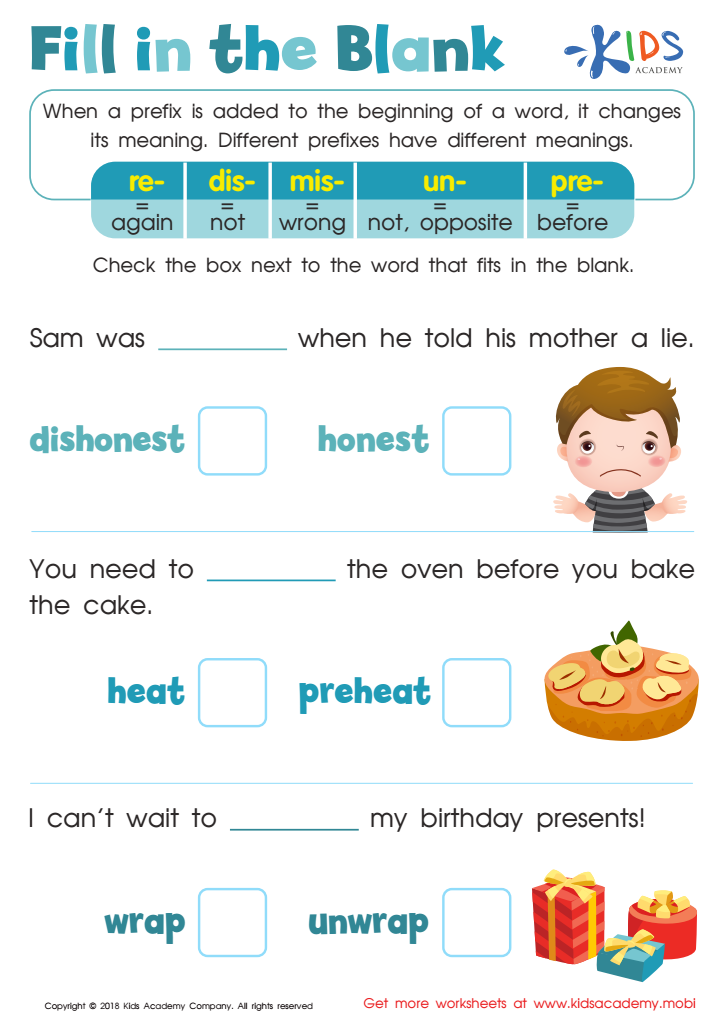
Reading: Fill in the Blank Worksheet

Reading: Fill in the Blank Worksheet

Students can practice understanding the meaning of common prefixes with this worksheet. They read sentences and pick the correct word with the appropriate prefix to complete it. Downloadable and a great addition to reading and vocabulary resources, this helps improve comprehension with mastery of the skill!
Reading: Fill in the Blank Worksheet
Worksheet
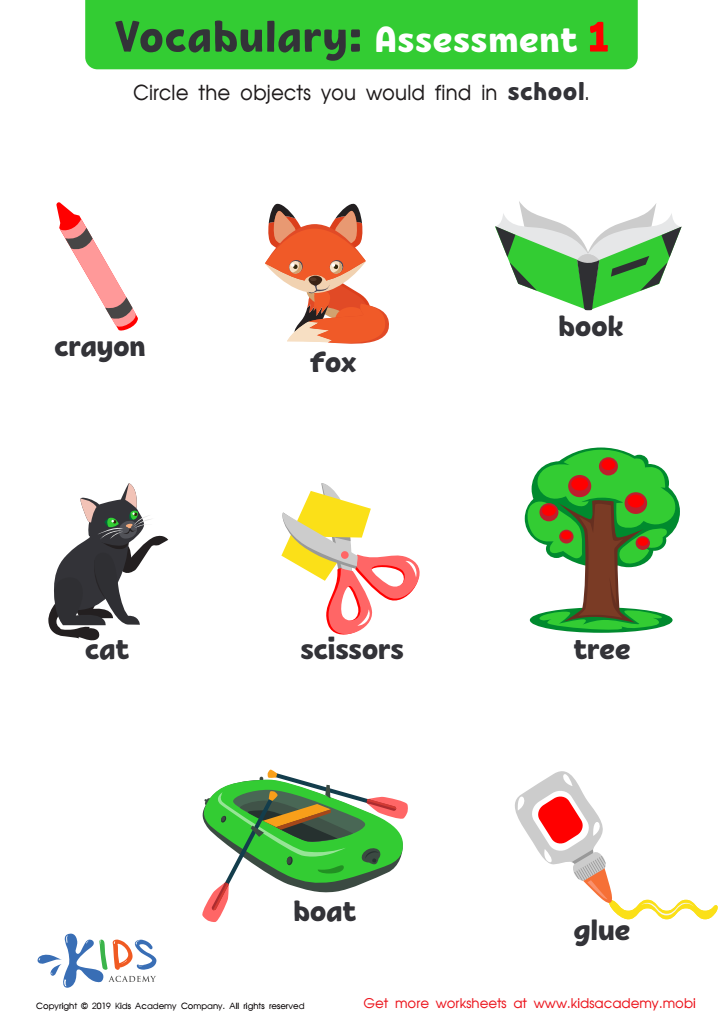
Vocabulary: Assessment 1 Worksheet

Vocabulary: Assessment 1 Worksheet

Want to check your child's vocabulary? This worksheet has kids identify objects from school through picture clues. It reinforces reading and fine motor skills, while providing an assessment of their reading growth and needs.
Vocabulary: Assessment 1 Worksheet
Worksheet
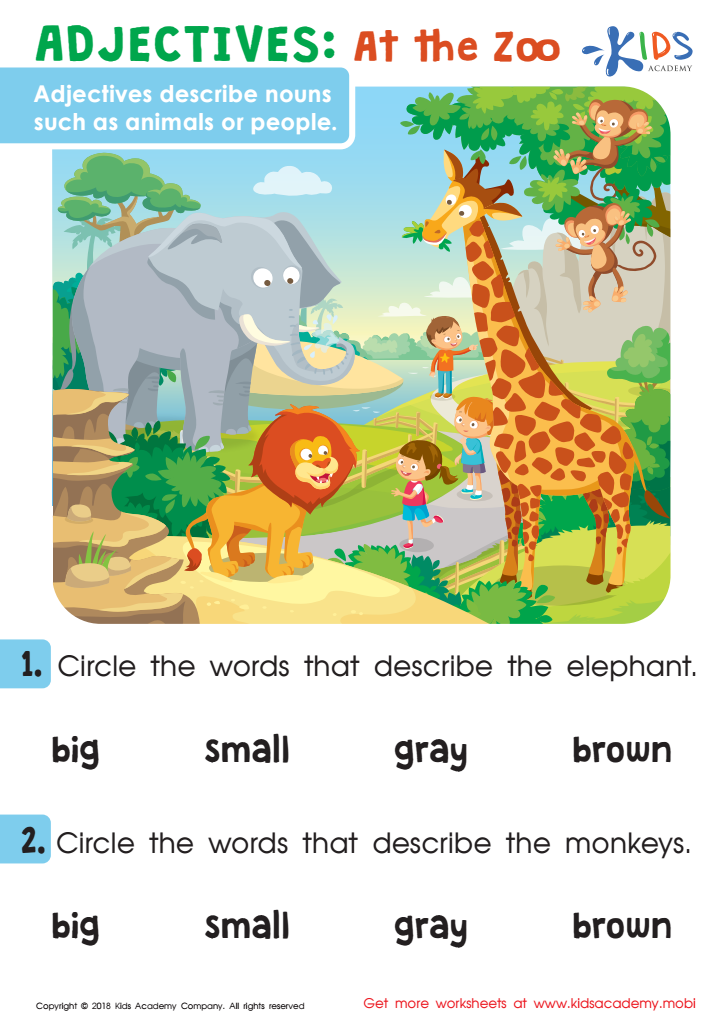
Adjectives: At The Zoo Worksheet

Adjectives: At The Zoo Worksheet

Take your kids to the zoo and ask them about their favorite activities and animals. This worksheet is a great way for kids to learn about adjectives. Explain that adjectives describe nouns like people or animals (e.g. big, tall, dark). Look at the printout with your kids and help them circle words that describe the animals in the picture.
Adjectives: At The Zoo Worksheet
Worksheet
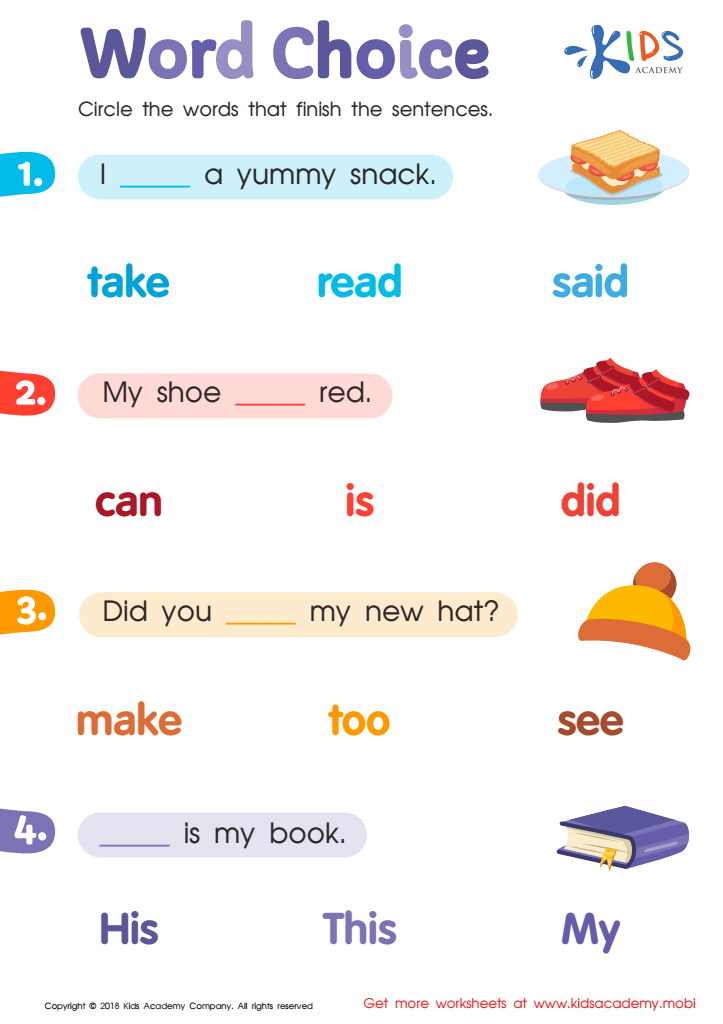
Word Choice Worksheet

Word Choice Worksheet

This worksheet can help your children become better readers. By now, you should have an idea of their reading level. Read the incomplete sentences aloud and point to the missing piece. Have your students pick the correct word they think best fits the sentence out of the options given.
Word Choice Worksheet
Worksheet


Contextual understanding is crucial for children aged 3-8 because it forms the foundation for effective learning and social development. At this critical age, children are developing their abilities to comprehend not just the literal meaning of words, but also how those words fit into broader contexts such as conversations, stories, and real-world situations. When parents and teachers focus on contextual understanding, they help young children make connections between new and existing knowledge, thereby deepening comprehension.

For example, understanding the context in a story allows children to infer the meaning of new vocabulary and grasp complex ideas. It aids in problem-solving and critical thinking, as kids learn to consider the broader circumstances influencing an event or action. In social settings, contextual understanding helps children interpret social cues and understand the perspectives of others, facilitating better communication and interpersonal relationships.

Moreover, encouraging contextual learning boosts engagement and motivation; children are more likely to be interested in material they can relate to real-life experiences. It transforms abstract concepts into concrete understanding, making learning more relevant and exciting. By prioritizing contextual understanding, parents and teachers equip children with the cognitive tools necessary for lifelong learning and adaptability in various situations.