Conversion skills Normal Worksheets for Ages 3-8
3 filtered results
-
From - To
Enhance your child's learning journey with our Conversion Skills Normal Worksheets designed for ages 3-8. These engaging, printable resources introduce young learners to essential conversion concepts through fun exercises and interactive activities. Perfect for parents and teachers alike, our worksheets support a deeper understanding of measurement conversions, making learning enjoyable. Tailored to different age groups, each worksheet is crafted to build confidence and competence in math skills. Foster early numeracy while encouraging critical thinking and problem-solving. Explore our collection today and equip your child with the vital skills they need for academic success and everyday life!
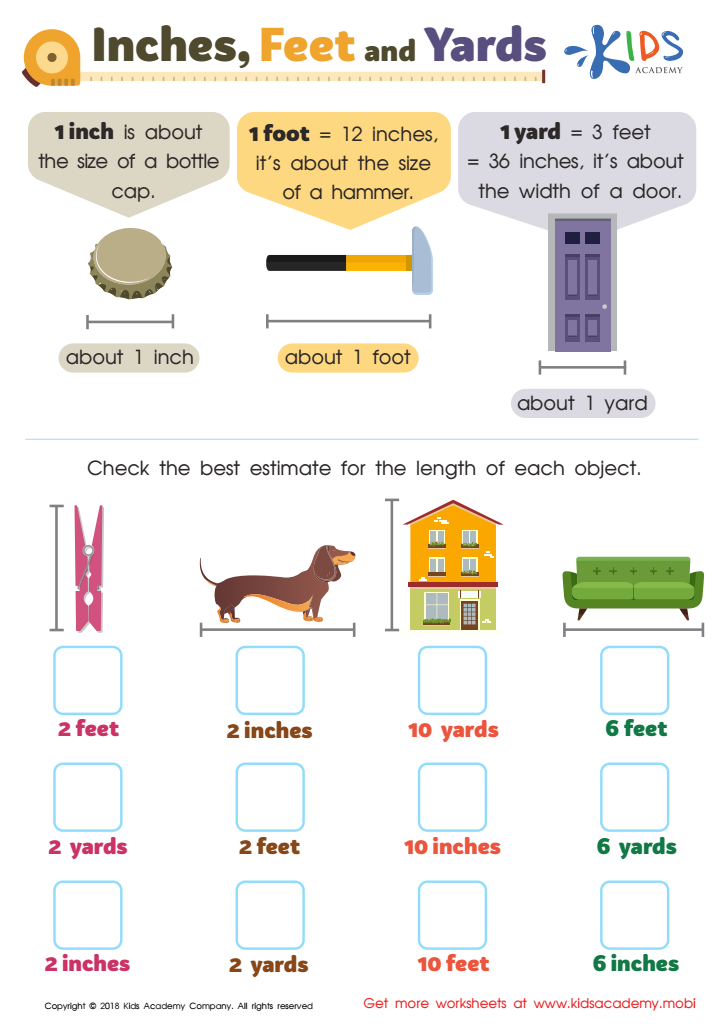
Inches, Feet and Yards Worksheet
 Assign to My Students
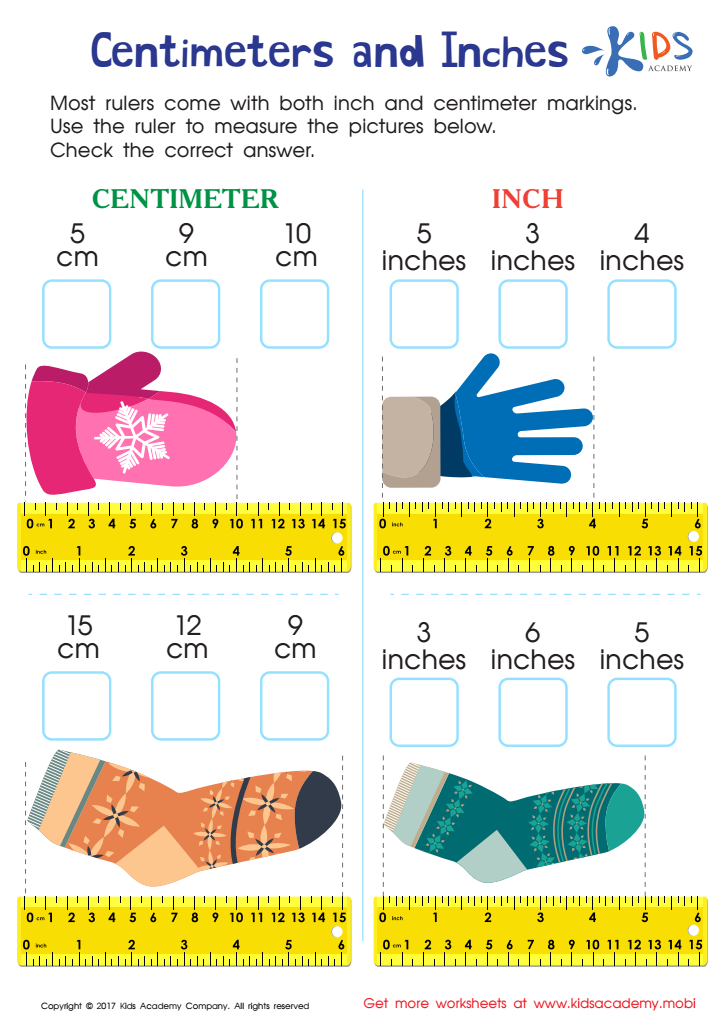
Centimeters and Inches Worksheet
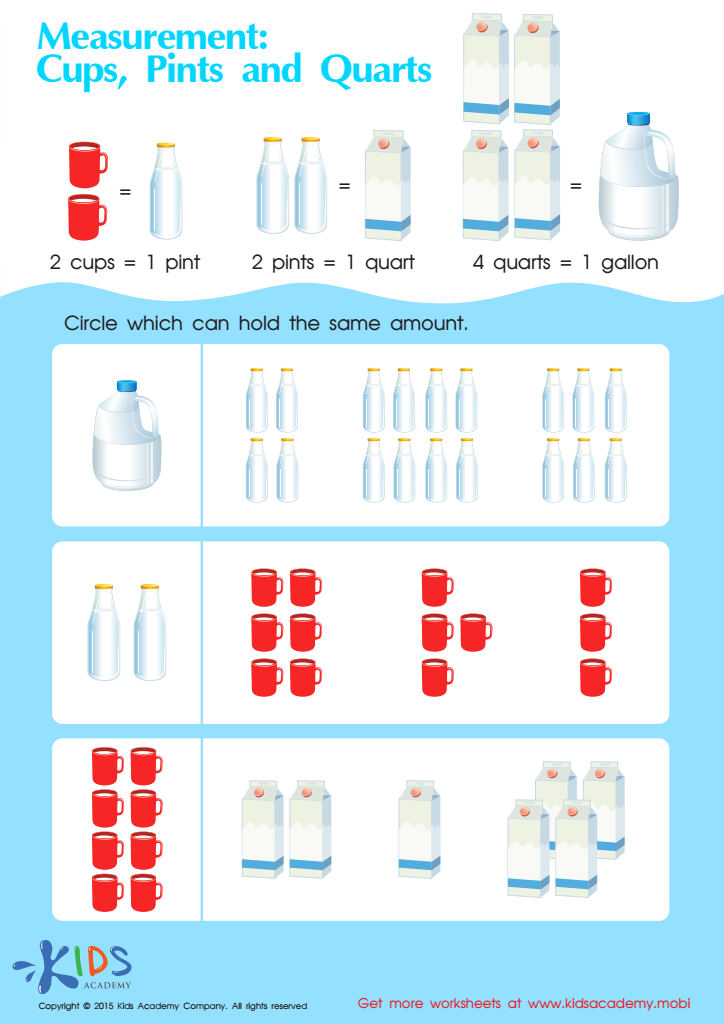
Cups, Pints and Quarts 2 Worksheet






.jpg)

Conversion skills are vital for children aged 3-8 as they form the foundation for more complex mathematical understanding. These skills include the ability to convert between different units of measurement, understand fractions and percentages, and grasp basic mathematical concepts. Developing these skills early on enables children to connect various mathematical concepts, fostering deeper comprehension and confidence in their abilities.
Parents and teachers should prioritize conversion skills, as they aid in everyday problem-solving and critical thinking. For example, when cooking, children learn to adjust ingredient amounts, helping them practice addition and multiplication. Understanding conversions nurtures logical reasoning, which is integral not only for math but for everyday activities.
Furthermore, strong conversion skills can enhance a child’s performance in standardized tests and future academic pursuits. Cultivating these abilities at a young age sets the stage for success in advanced mathematics, applying knowledge to real-world scenarios. By emphasizing conversion skills, adults can help children develop a love for math, turning it into a fun, engaging subject rather than a source of anxiety.
In conclusion, focusing on conversion skills in early education empowers children with essential tools for lifelong learning, problem-solving, and critical thinking. This investment in their education yields lasting benefits.








