Geography skills Normal Worksheets for Ages 3-8
3 filtered results
-
From - To
Discover our engaging Geography Skills Normal Worksheets, specifically designed for children ages 3 to 8. These worksheets provide a fun and interactive way for young learners to explore the world around them. Through colorful activities and age-appropriate challenges, kids will develop essential geography skills such as map reading, understanding spatial concepts, and learning about different places. Ideal for home or classroom use, our resources promote critical thinking while sparking curiosity about the environment. Join us on this educational adventure and watch your child's geographical knowledge grow in an enjoyable and captivating way! Perfect for early childhood educators and parents alike.
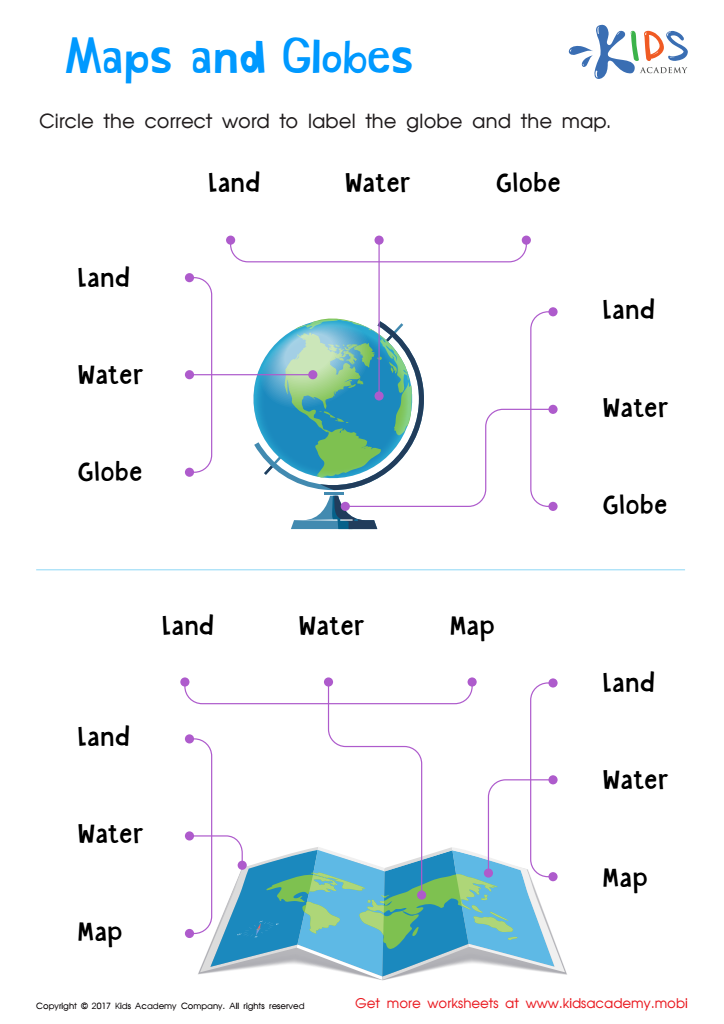
 Assign to My Students
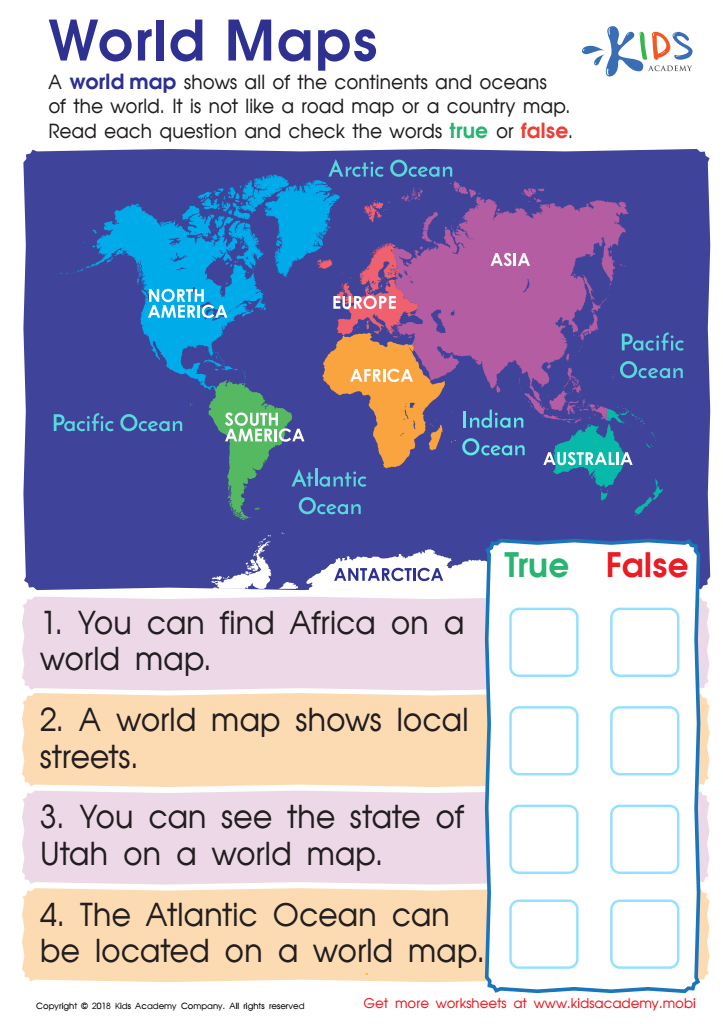
World Maps Worksheet
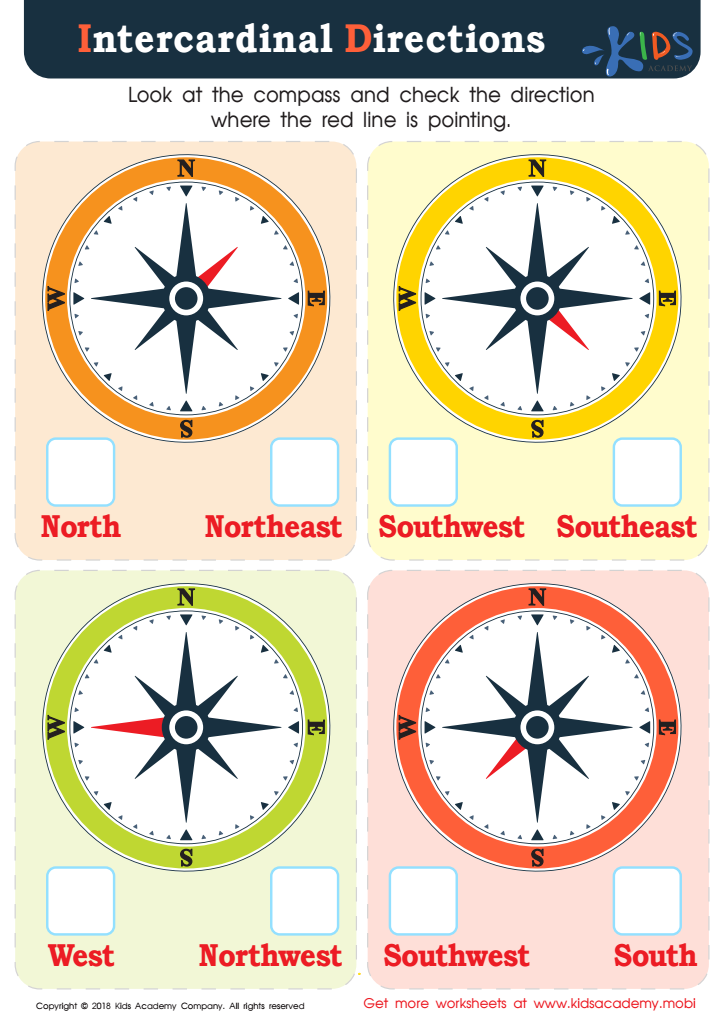
Intercardinal Directions Worksheet





.jpg)


Geography skills are essential for children aged 3-8 as they lay the foundation for understanding the world around them. At this early stage, children are naturally curious about their surroundings, and teaching geography nurtures that curiosity by helping them make connections between places, cultures, and the environment. Involving parents and teachers in this process is crucial because they play a significant role in shaping young minds.
Developing geography skills fosters critical thinking and spatial awareness. Children learn to identify landmarks, understand maps, and recognize different terrains, which enhances their problem-solving prowess and creativity. It encourages children to ask questions like “Where are we?” or “What does this place look like?” Consequently, this curiosity can lead to a greater appreciation of diversity and cultural differences.
Moreover, geography promotes social studies skills, facilitating conversations about community, identity, and belonging. As children map their neighborhoods, they develop a sense of place, enhancing their emotional and social development. Engaging in geographical activities—both inside and outside the classroom—encourages explorative learning and collaboration. Ultimately, fostering geography skills helps young children grow into informed and empathetic global citizens, aware of their role in a diverse world.








