Geometry understanding Normal Worksheets for Ages 3-8
3 filtered results
-
From - To
Discover an engaging collection of Geometry Understanding Worksheets designed for children aged 3-8. Our expertly crafted resources aim to introduce young learners to essential geometric concepts such as shapes, patterns, and spatial awareness. Each worksheet is tailored to foster critical thinking skills through fun, interactive activities that enhance a child's ability to recognize and manipulate various shapes. Suitable for home or classroom use, these worksheets support curriculum standards and promote early math skills in a playful way. Boost your child's confidence in geometry and watch them thrive while learning with our dynamic and captivating worksheets. Perfect for early grade teachers and parents alike!
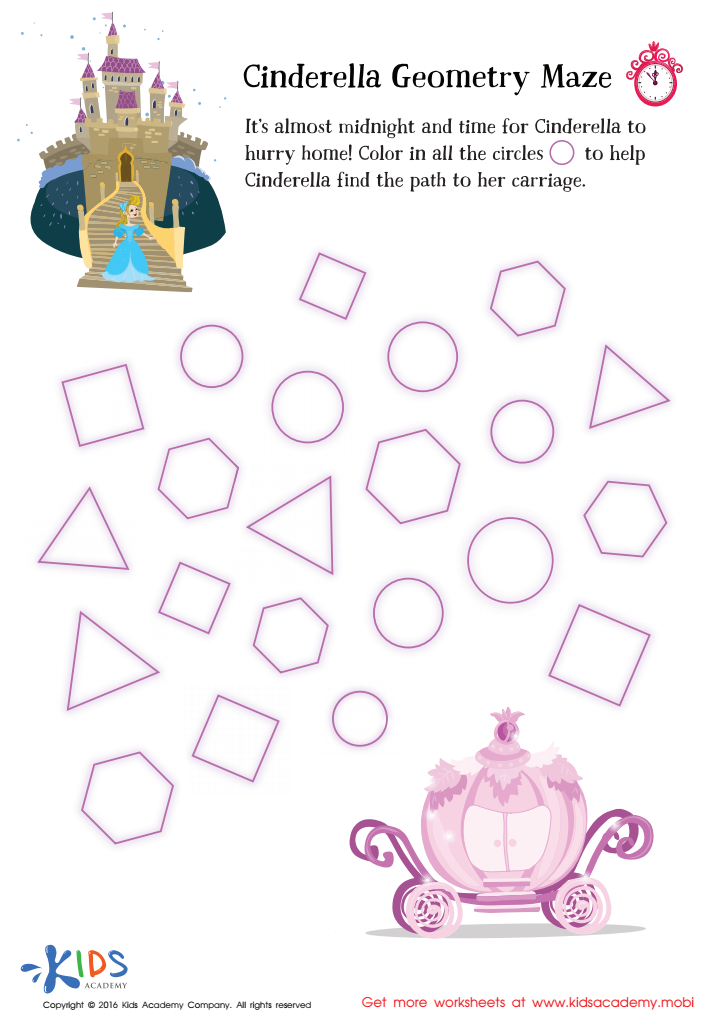
Cinderella Geometry Maze Worksheet
 Assign to My Students
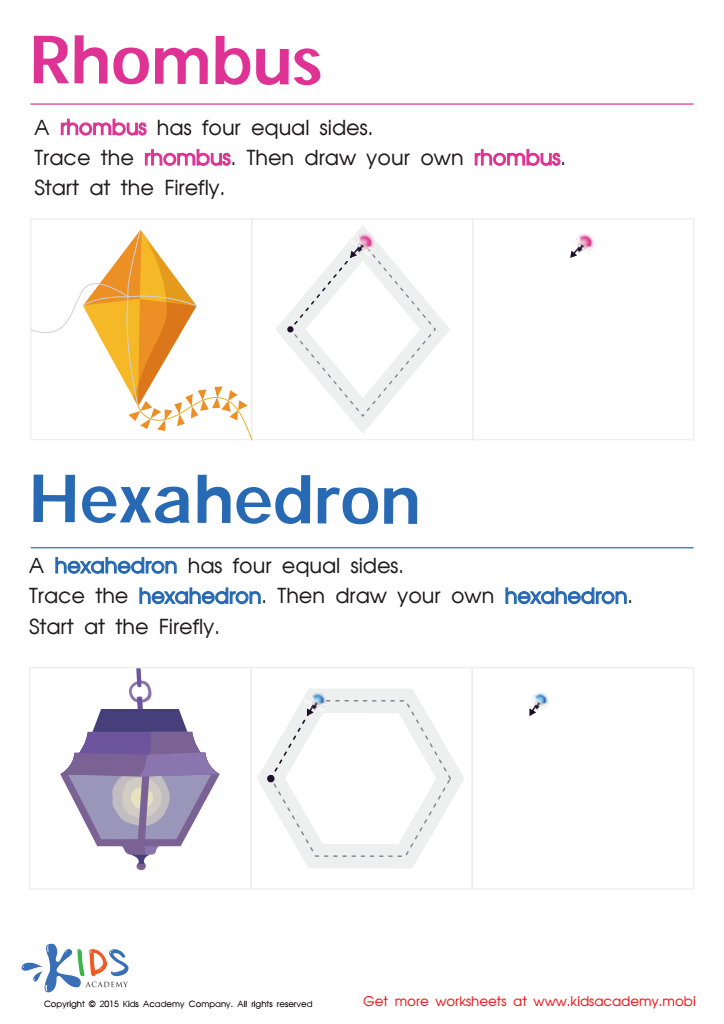
Draw a Rhombus And a Hexahedron Printable
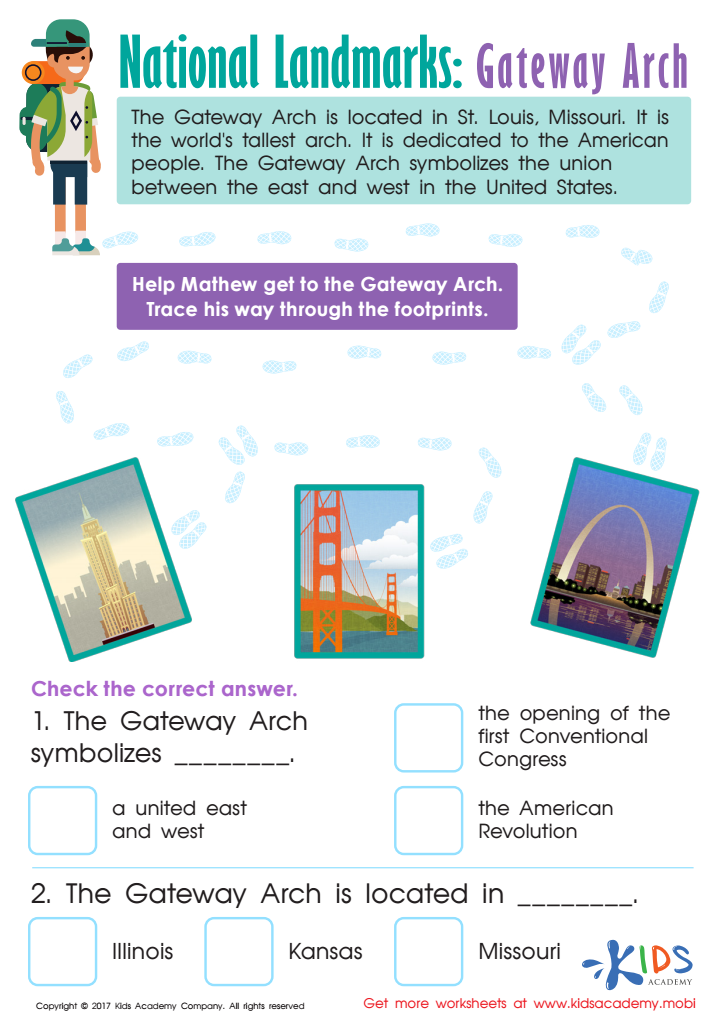
Gateway Arch Printable Worksheet





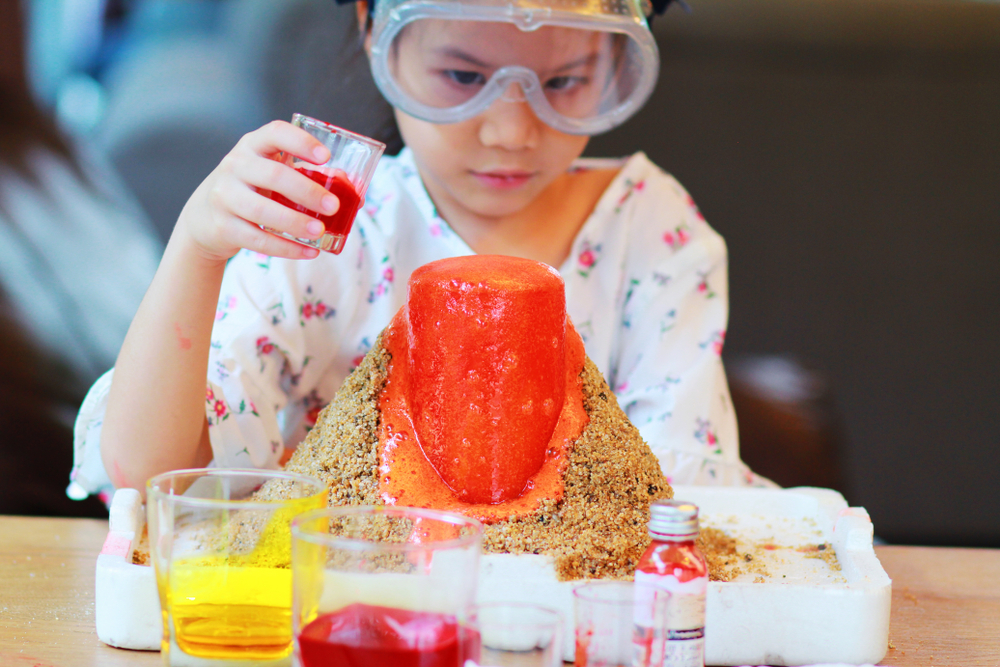

Geometry understanding is crucial for children aged 3-8 for various reasons. At this stage, children are naturally curious and eager to explore their environment, making it the ideal time to introduce geometric concepts. Engaging young learners in geometry helps develop spatial awareness, which is foundational for problem-solving and critical thinking. As children identify shapes, sizes, and positions, they improve their ability to visualize and manipulate objects, which supports future math skills like measurement and algebra.
Additionally, geometry encourages creativity. Through activities like drawing, building, or even playing with blocks, children express themselves while internalizing geometric principles. This hands-on exploration fosters their analytical skills and promotes expressive communication, as they describe and categorize their findings.
Moreover, understanding geometry cultivates a sense of order and predictability, essential components for cognitive development. Introducing concepts like symmetry, patterns, and spatial relations helps children connect mathematics to their daily lives, making learning more relevant and enjoyable.
In summary, parents and teachers should prioritize geometry learning for young children as it lays the groundwork for mathematical competence, nurtures creativity, improves spatial awareness, and enhances overall cognitive development. This foundational learning is essential for future academic success.








