Identifying story elements Normal Worksheets for Ages 3-8
3 filtered results
-
From - To
Discover engaging and educational worksheets designed for children aged 3-8 at Kids Academy! Our "Identifying Story Elements" worksheets help young learners grasp key concepts such as characters, setting, and plot. Through fun, interactive activities, children boost their comprehension and storytelling skills, laying a solid foundation for future reading success. With age-appropriate tasks and colorful designs, these worksheets make learning an enjoyable adventure. Ideal for parents and teachers, our resources are perfect for home or classroom use. Foster a love for reading and storytelling in your child today with Kids Academy’s expertly-crafted worksheets!
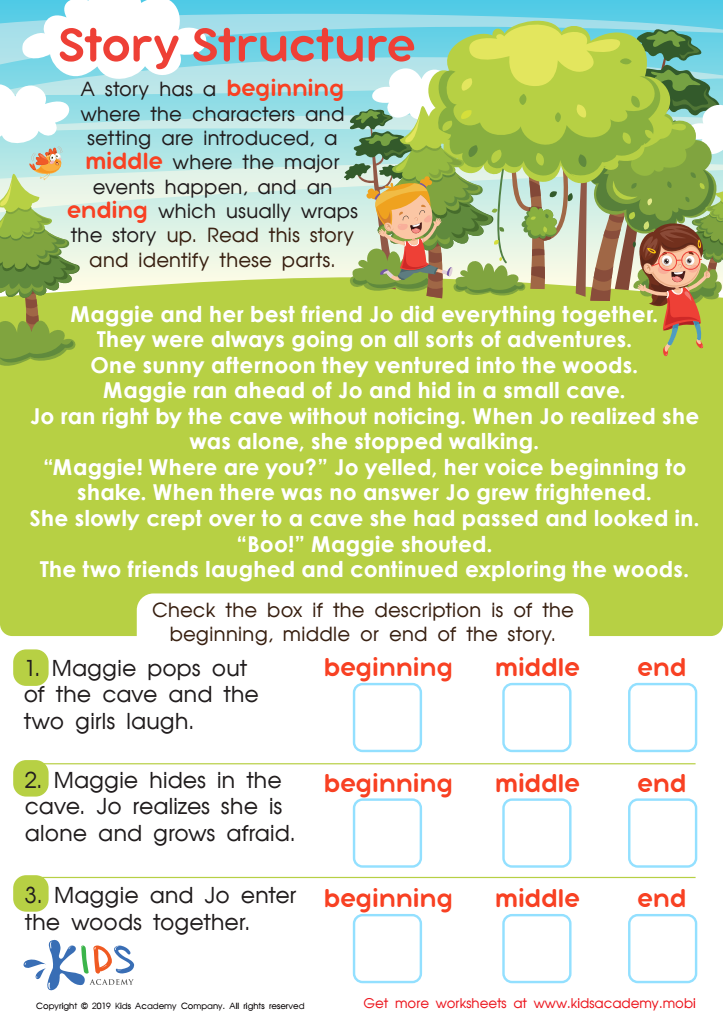
Story Structure Worksheet
 Assign to My Students
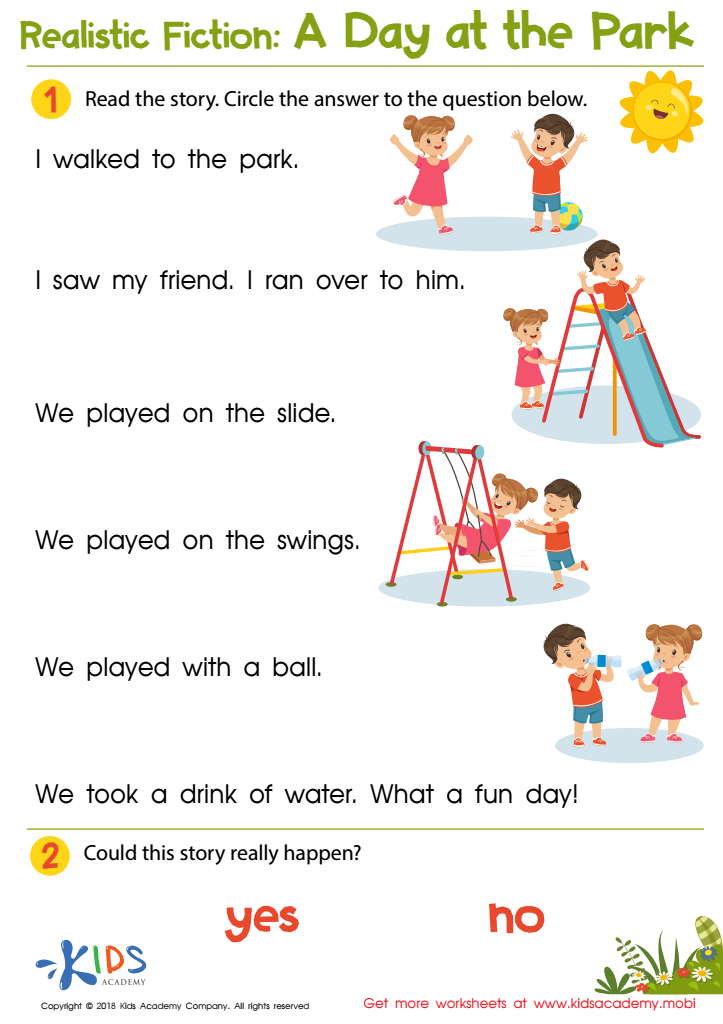
A Day at the Park Worksheet
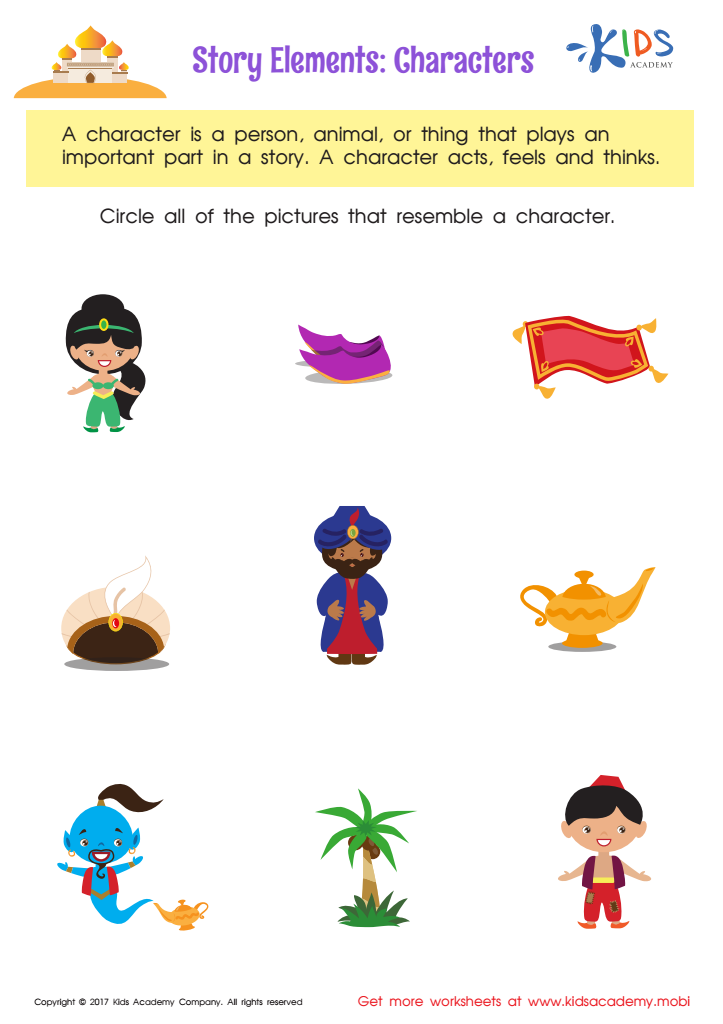
Story Elements Printable


.jpg)





Understanding and identifying story elements such as characters, setting, plot, conflict, and resolution is crucial for young children ages 3-8 as it lays the foundation for reading comprehension and critical thinking skills. Parents and teachers should care about these aspects because they help children to not only follow a narrative but also to make sense of their world through text.
Firstly, recognizing these elements enhances a child's ability to predict and understand story flow, which in turn builds their confidence and interest in reading. It nurtures a love for storytelling by enabling them to discuss and retell stories, fostering both oral language skills and imagination. Moreover, identifying characters and settings allows children to make personal connections, promoting empathy and social development.
Teachers and parents who emphasize these elements also give children the tools to analyze and dissect stories, an essential skill in all academic areas. When children can identify conflicts and resolutions, they learn problem-solving strategies and understand consequences, which influences their decision-making in real life.
In summary, caring about story elements equips young learners with the foundational skills necessary for academic success, emotional intelligence, and a lifelong love of reading, making it a vital focus in early education.








