Explore our engaging "Letter-Sound Association Normal Worksheets" designed for children ages 3-8! These worksheets provide a fun and interactive way for young learners to develop essential phonemic awareness by matching letters to their corresponding sounds. Each activity is thoughtfully crafted to enhance early literacy skills, making learning enjoyable and effective. Perfect for homeschooling, supplementary practice, or classroom settings, these worksheets support cognitive development and encourage a love for reading. With a variety of activities that cater to different learning styles, children will build a strong foundation in reading and writing. Get started on your literacy journey today!

Check out this FREE "Letter-sound association" Trial Lesson for age 3-8!

L

Favorites
With answer key
Interactive
  • 3-8
  • Letter-sound association
  • Normal
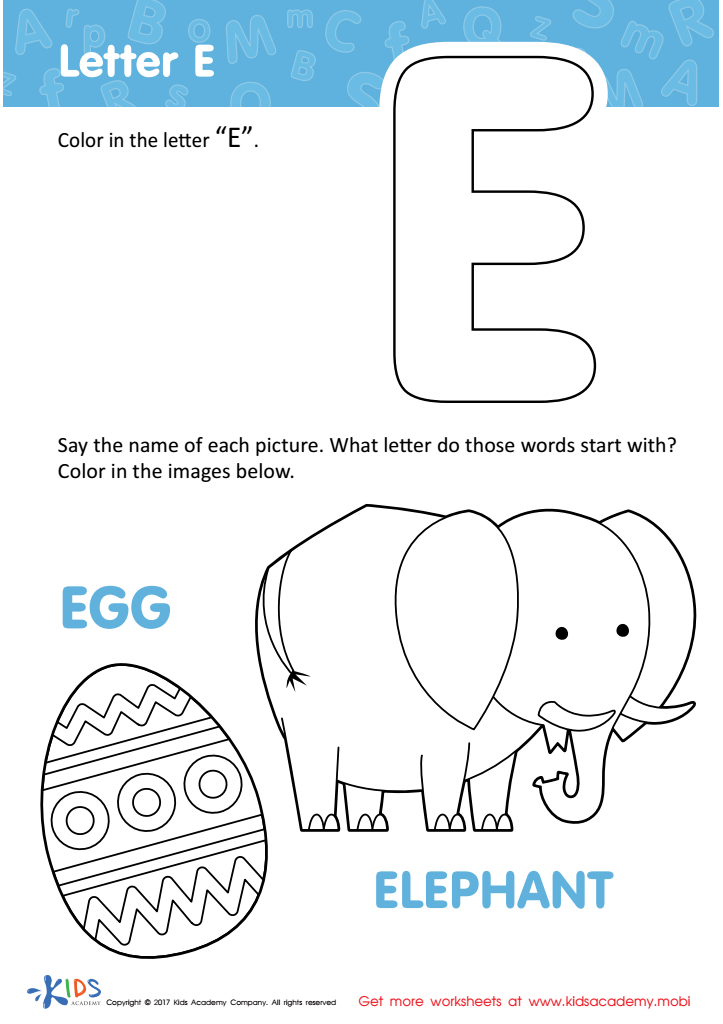
Letter E Coloring Page

Letter E Coloring Sheet

Coloring pages are great for teaching kids the alphabet and words! This "E" page features a cute elephant and Easter egg. Kids will love it and learn the letter "E" at the same time. 80 words
Download (PDF)
Assign to My Students
Letter E Coloring Sheet
Worksheet
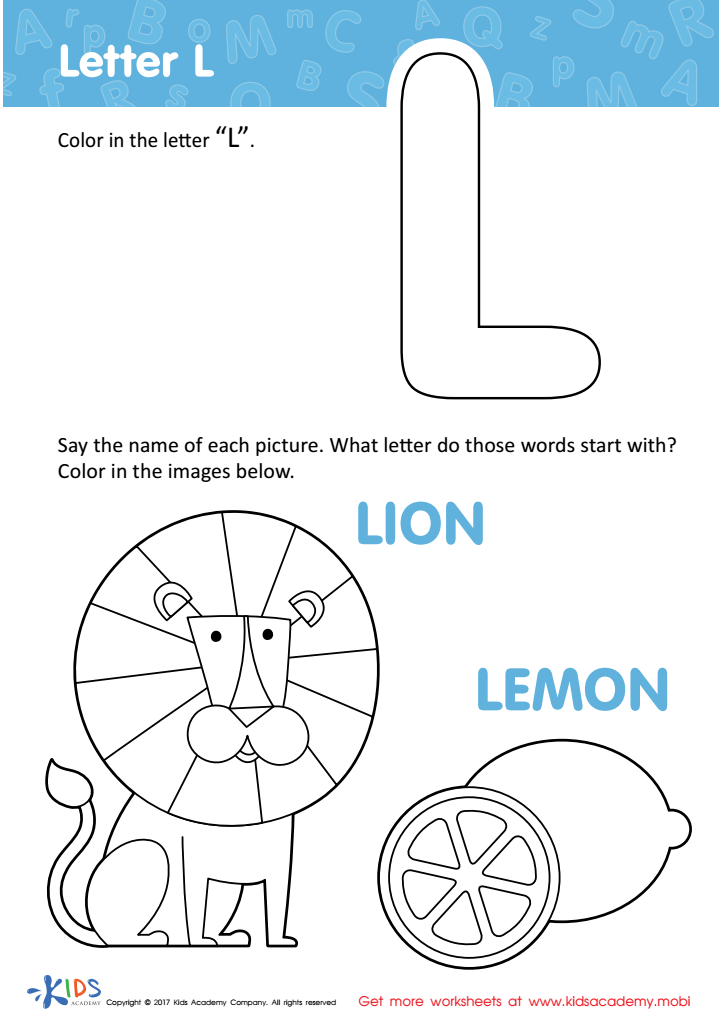
Letter L Coloring Page

Letter L Coloring Sheet

Kids often struggle to say "L" and love it because so many things they love start with it! This coloring page combines the letter and fun images like a lemon and lion to teach and entertain!
Download (PDF)
Assign to My Students
Letter L Coloring Sheet
Worksheet
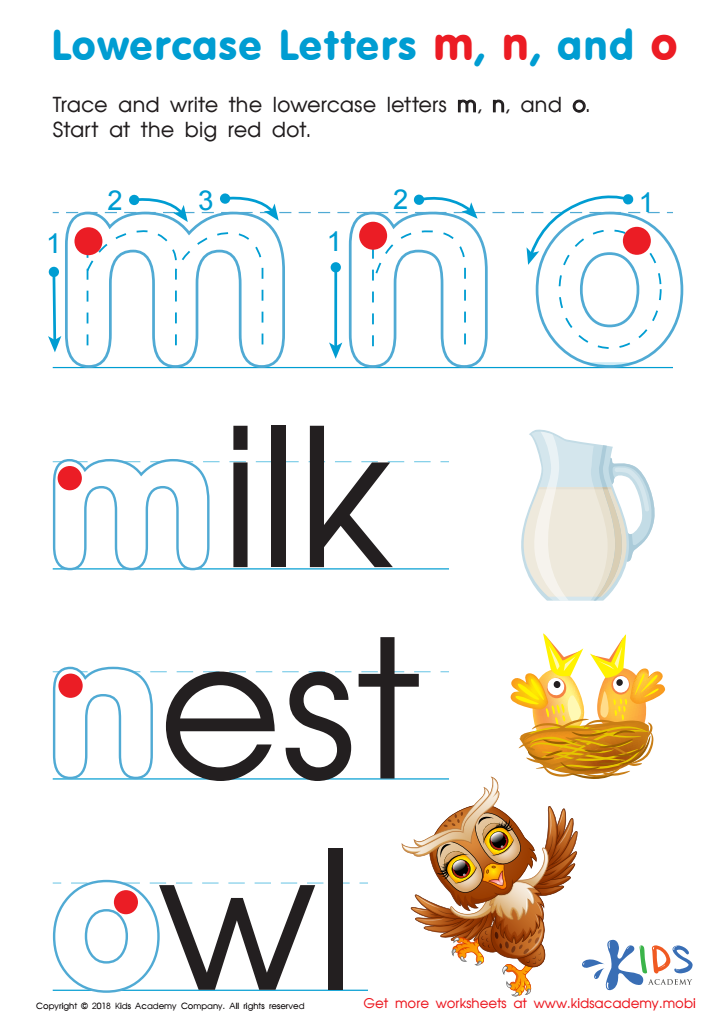
Lowercase Letters m n o Worksheet

Lowercase Letters m n o Worksheet

Help your child learn the alphabet with letter tracing. Show them the difference between uppercase and lowercase letters by working through this free worksheet, tracing and writing lowercase m, n and o.
Lowercase Letters m n o Worksheet
Worksheet
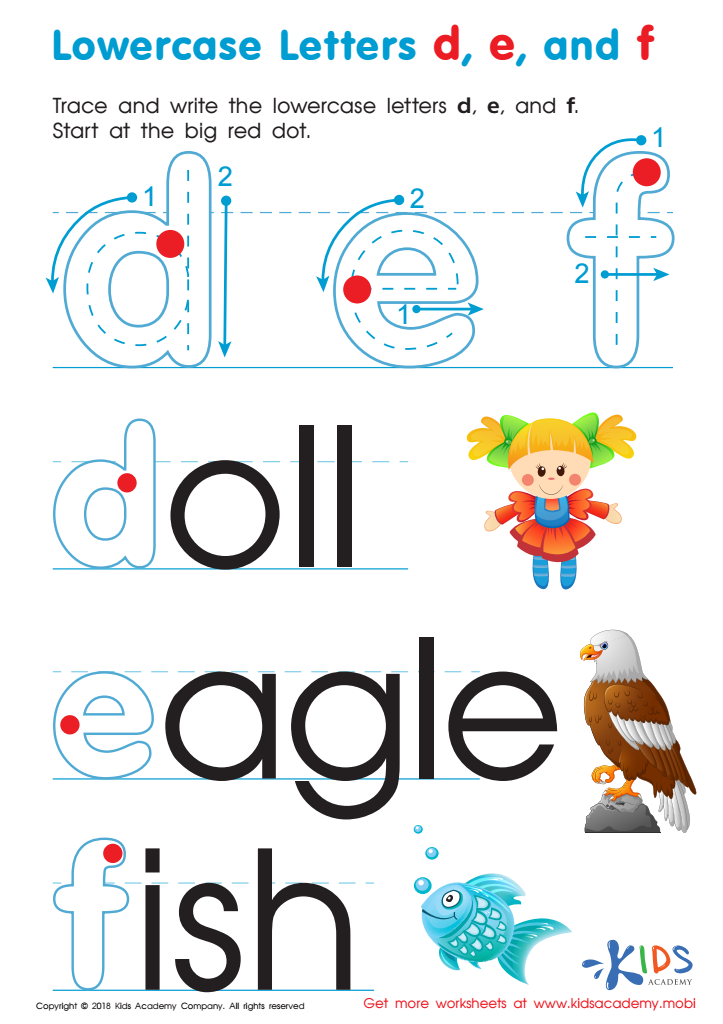
Lowercase Letters d e f Worksheet

Lowercase Letters d e f Worksheet

Help your child learn the alphabet letters by tracing and writing the lowercase letters d, e, and f. Begin at the big red dot and follow the dots. This worksheet will help your little one gain a better understanding of the letters.
Lowercase Letters d e f Worksheet
Worksheet
Matching Consonant Sounds - Part 3 Worksheet Preview

Matching Consonant Sounds: Part 3 Worksheet
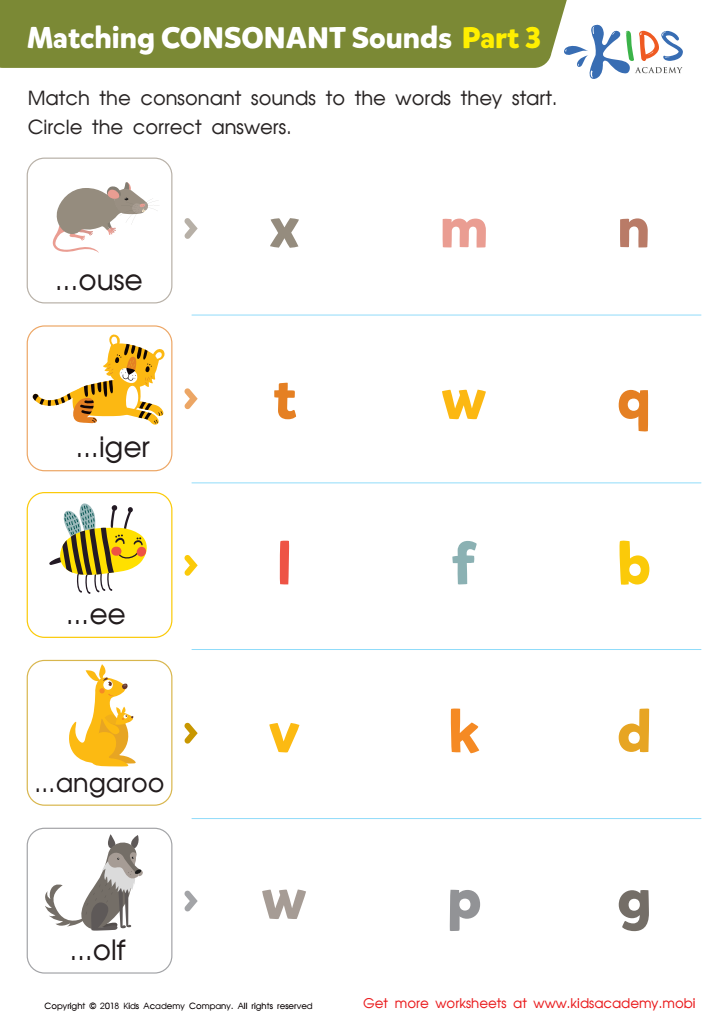
Help your early learner match consonant sounds to words with this fun worksheet! Have them name the pictures and try out each letter in the corresponding column. When they hear the sound that matches, circle it. Have them write the letter in the box to complete the word. Work their way down the page until the critters' names all match with consonants!
Matching Consonant Sounds: Part 3 Worksheet
Worksheet
Pick the Letter Worksheet

Pick the Letter Worksheet

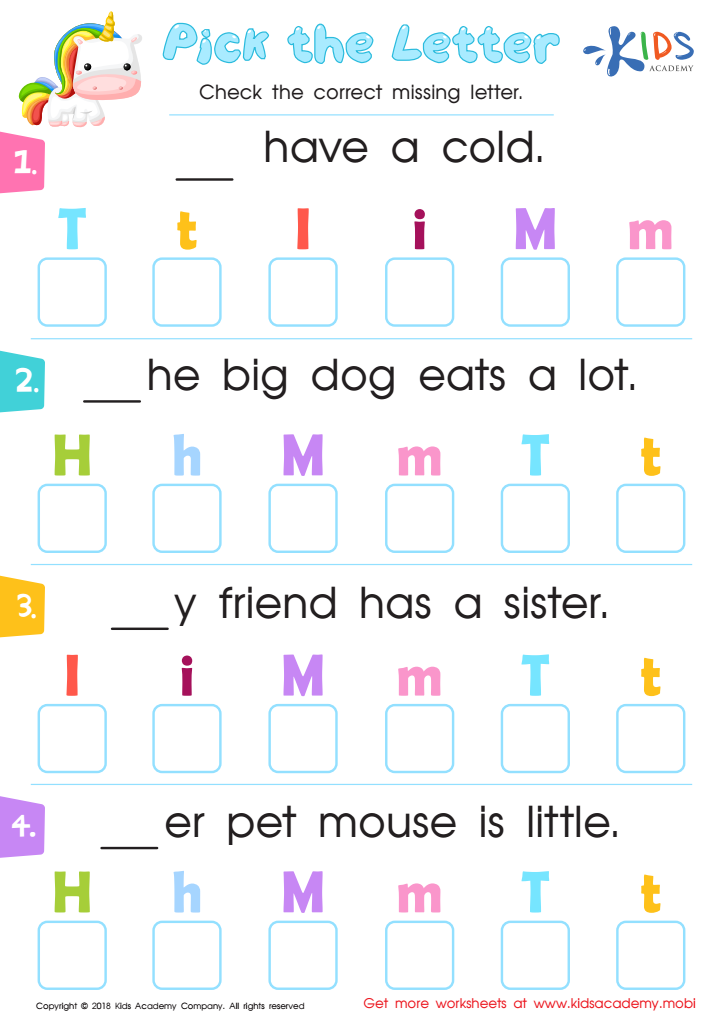
Put your child's capitalization and reading skills to the test with this missing letter worksheet! Have them look at each sentence, note the blank and review the letters below. Find the uppercase letter that should start each sentence and check the boxes to complete. Fun and colorful, this worksheet is sure to keep your child engaged!
Pick the Letter Worksheet
Worksheet
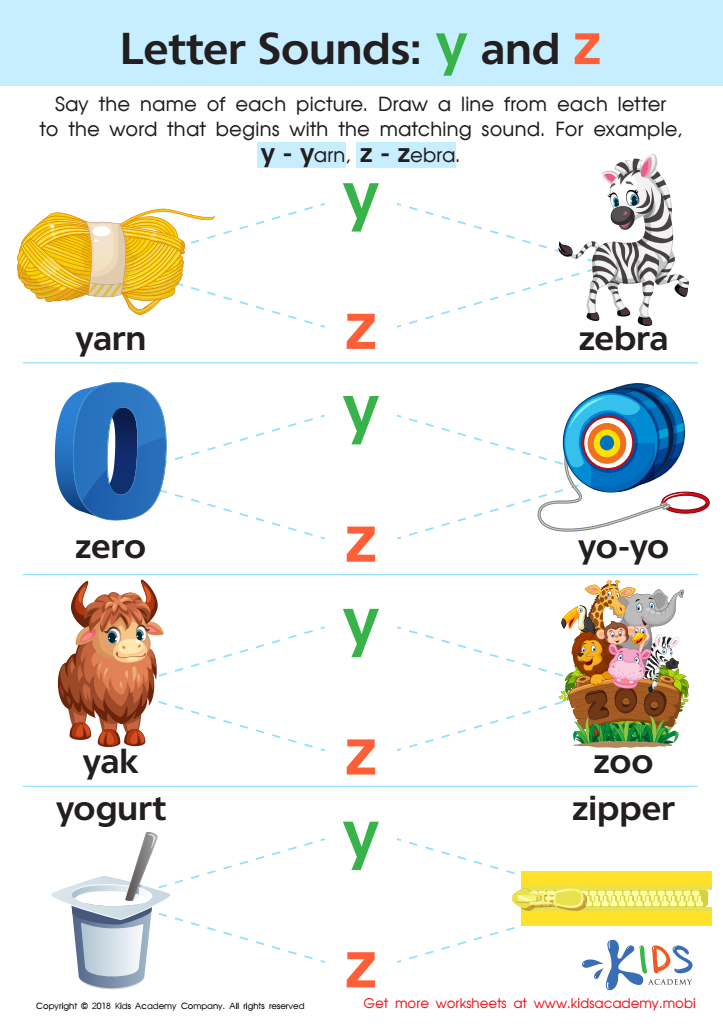
Letter Y and Z Sounds Worksheet


Letter Y and Z Sounds Worksheet

Y and Z can be tricky for kids to learn. Kids Academy has the answer with a great worksheet. "Yo-yo", "yak" and "zebra" help kids recognize, say and trace each letter. Plus, they can read the words and match them to images! Let your child try and help them master phonics at the end of the alphabet.
Letter Y and Z Sounds Worksheet

Worksheet


Letter-sound association is crucial for children aged 3-8 as it forms the foundation of their reading and writing skills. Understanding that letters represent specific sounds allows young learners to decode words, supporting their journey toward literacy. This skill not only enhances their ability to read independently but also fosters a love for reading, which is integral for academic success.

For parents and teachers, focusing on letter-sound associations can transform a child's educational experience. It promotes phonemic awareness, aiding in sounds blending and segmenting—essential skills for effective communication. Additionally, early mastery helps prevent future learning difficulties, ensuring that children build confidence as they navigate through texts in later years.

Engaging children in activities involving letter-sound association—like games that connect letters with objects, songs, or interactive storytelling—helps make learning fun. Moreover, this foundational skill can aid in language development, enabling children to express their thoughts and feelings coherently.

Ultimately, an emphasis on letter-sound associations provides children with the essential tools they need for academic achievement and lifelong literacy, paving the way for success in all areas of learning and personal development. This makes it a key focus for both parents and educators.