
Letter Tracing Practice Normal Worksheets for Ages 3-8
6 filtered results
Difficulty Level
Grade
Age
-
From - To
Subject
Activity
Standards
Discover engaging Letter Tracing Practice Normal Worksheets designed for children ages 3-8, tailored to enhance handwriting skills and letter recognition. Our worksheets provide clear and fun templates for young learners to practice tracing both uppercase and lowercase letters, promoting fine motor skills and cognitive development. With delightful illustrations and various difficulty levels, these worksheets cater to different learning styles and help keep children motivated. Perfect for homeschooling or classroom activities, our printable resources make learning letters enjoyable and effective. Begin your child's writing journey with these essential tools that foster a strong foundation in literacy skills.
Favorites
With answer key
Interactive
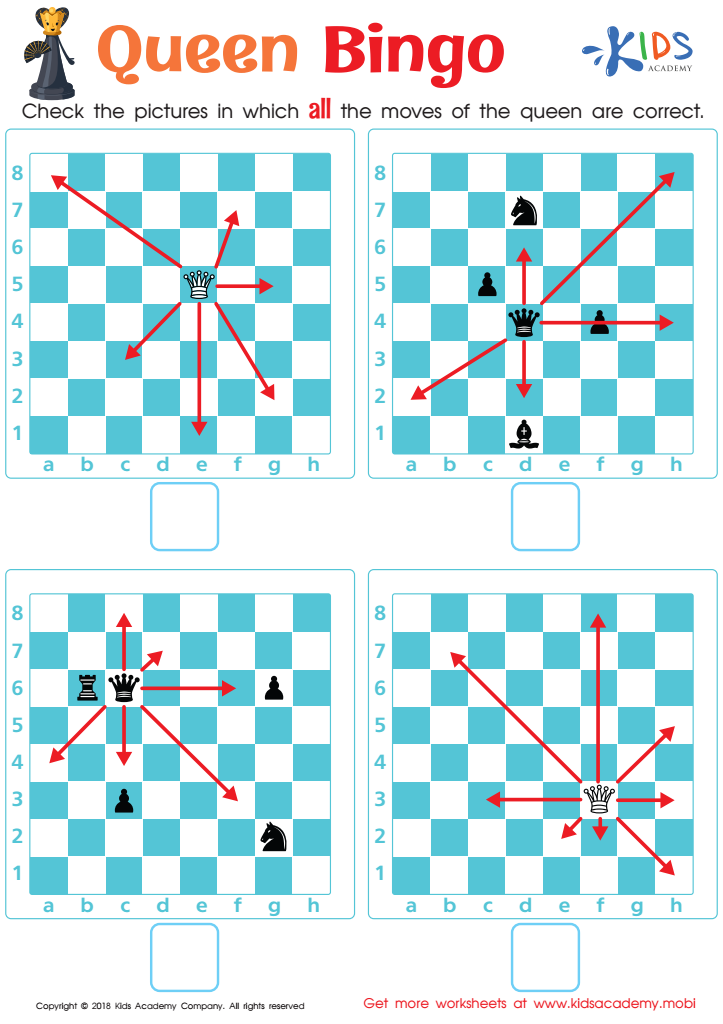
Queen Bingo Worksheet
Test your child's knowledge of chess rules and moves with this free worksheet! Kids look at four pictures and must decide if the queen moves are correct. This exercise helps hone your little one's chess skills!
Queen Bingo Worksheet
Worksheet
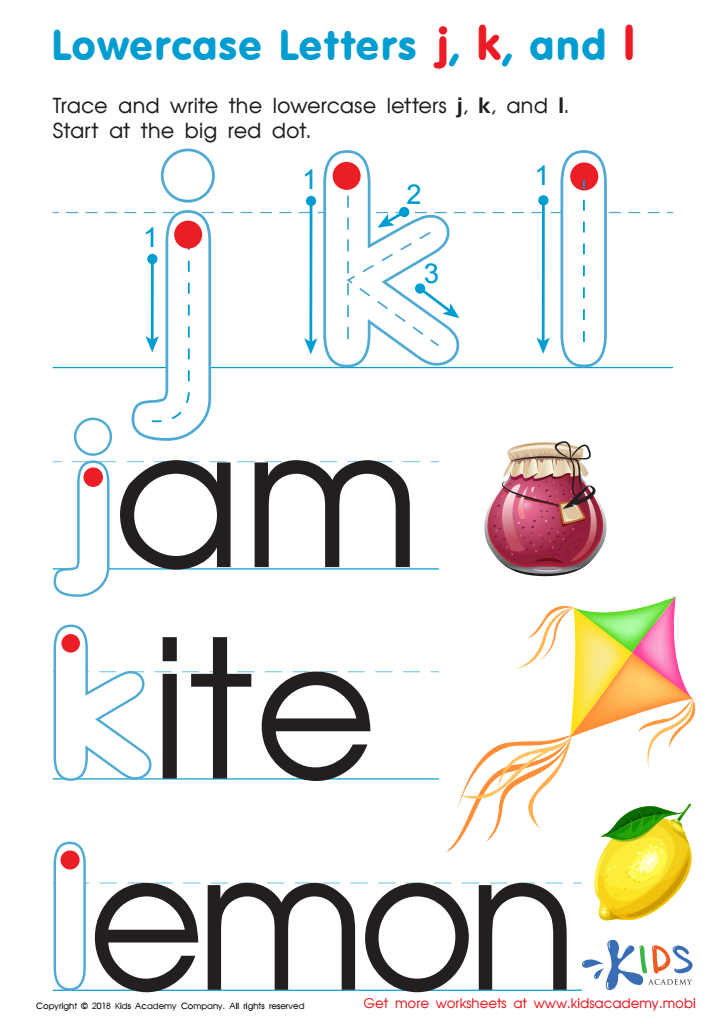
Lowercase Letters j k l Worksheet
Teach your child the difference between uppercase and lowercase letters. Have them trace and write the lowercase letters j, k, and l, starting at the red dot. Guide your child's hand to form the letters correctly.
Lowercase Letters j k l Worksheet
Worksheet
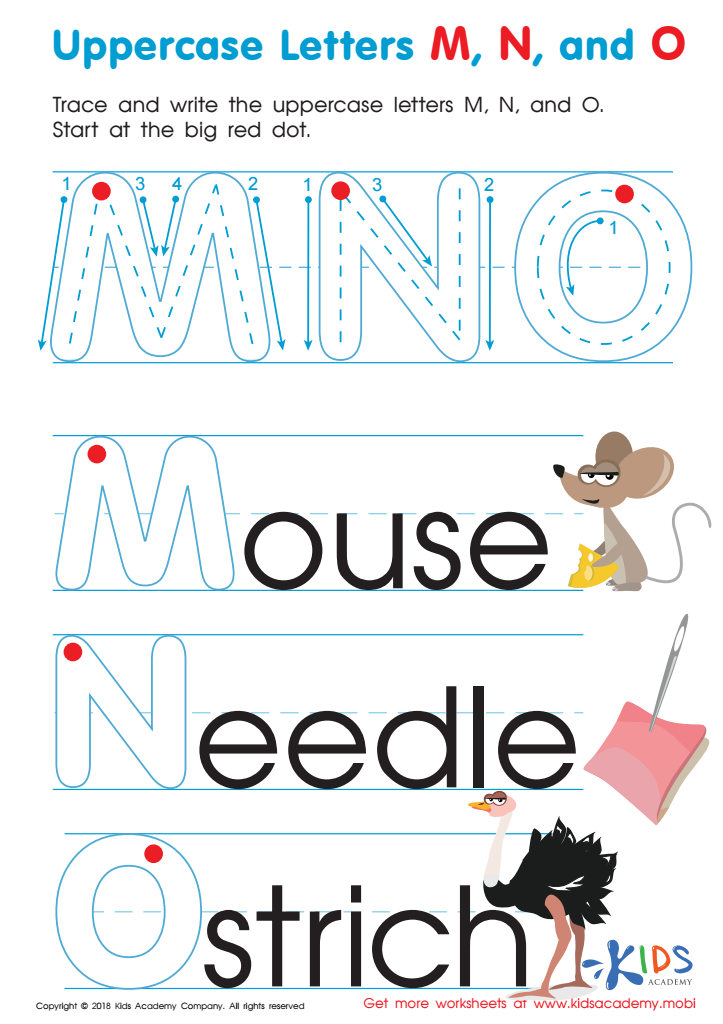
Uppercase Letters M, N, and O Worksheet
Download our easy-to-understand worksheet to help kids write M and N with ease! They'll trace dotted lines and follow arrows as they fill in the letters using a big red dot as a guide. The cute graphics will help them remember sounds too! Get your child writing quickly and confidently with this fun activity.
Uppercase Letters M, N, and O Worksheet
Worksheet
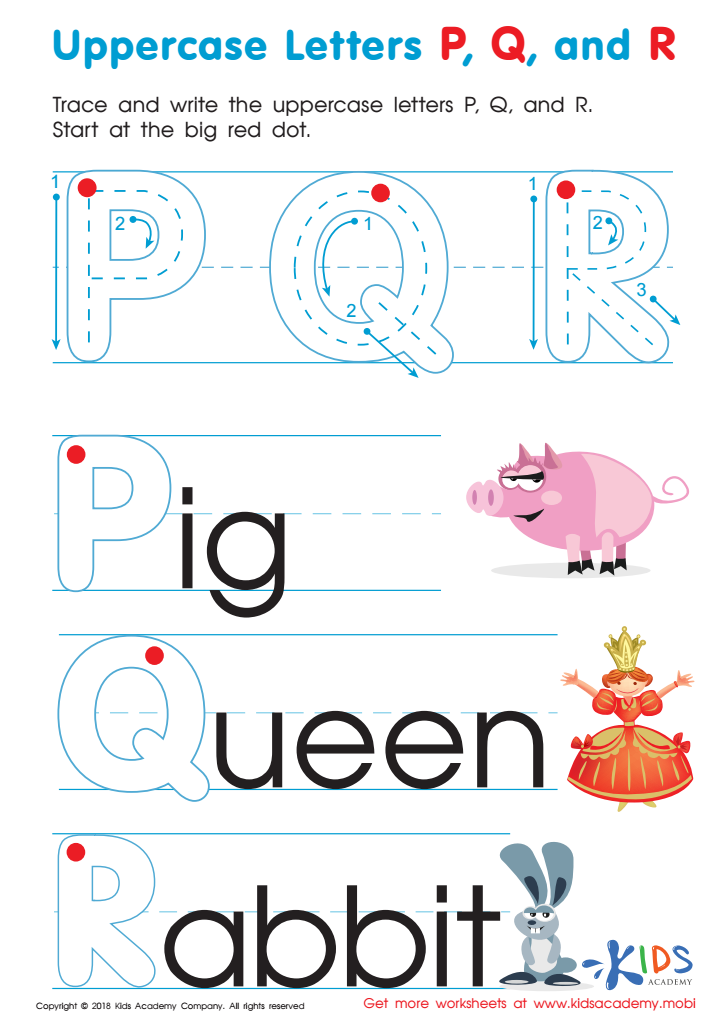
Uppercase Letters P, Q, and R Worksheet
Cute images of a pig, queen and rabbit make it fun to learn letter sounds. Follow the arrows to learn the strokes, then trace each letter from the big red dot. Perfect for kids to learn how to read and write P, Q, and R!
Uppercase Letters P, Q, and R Worksheet
Worksheet
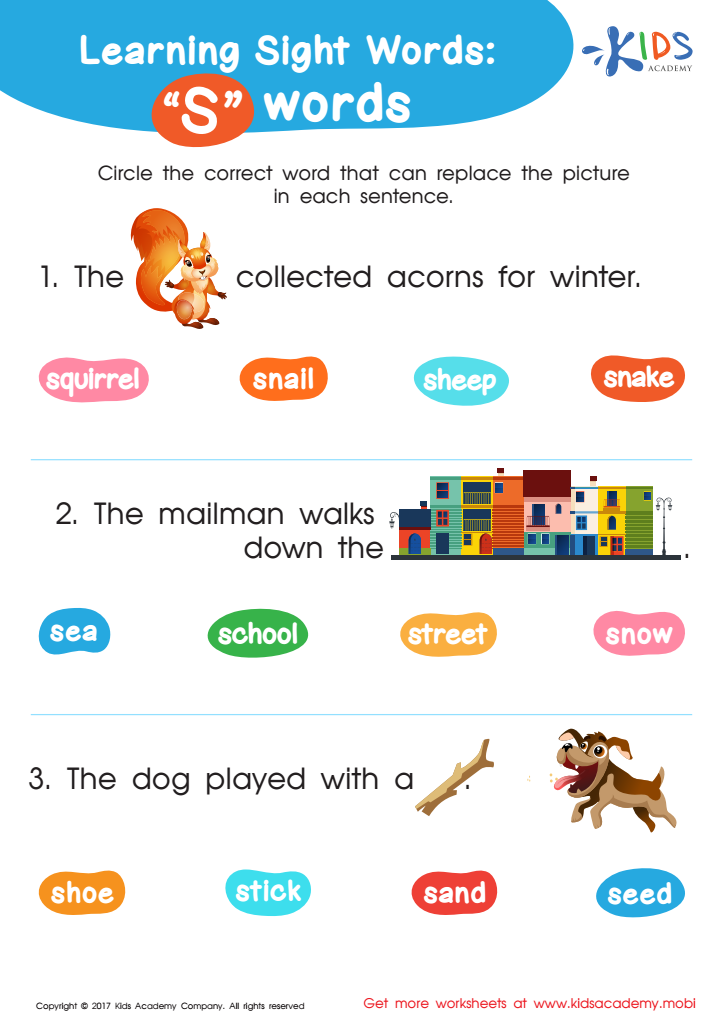
S Words Sight Words Worksheet
This 2nd grade worksheet encourages kids to practice using context clues when identifying sight words that begin with 's'. Engage them with colorful pictures to enhance the learning, helping them to understand the context of each sentence and choose the correct word.
S Words Sight Words Worksheet
Worksheet
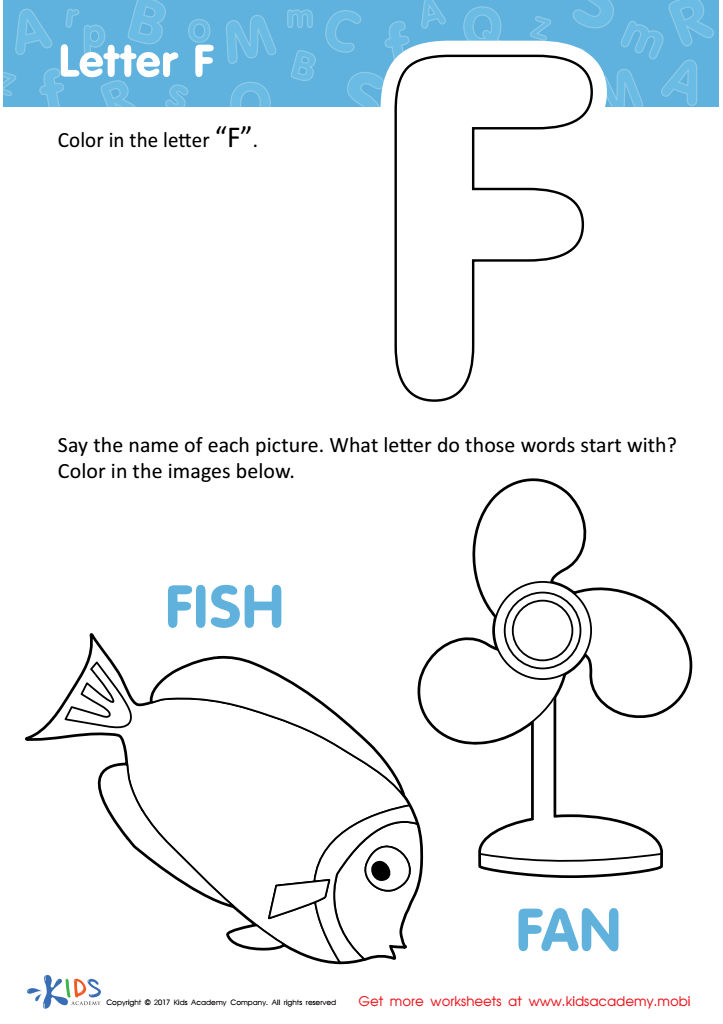
Letter F Coloring Sheet
Coloring pages help kids learn to recognize letters and sounds. Our "F" page has kids color a fish and a fan. It's a great way to introduce them to the letter "F" using words they already know.
Download (PDF)
 Assign to My Students
Assign to My Students
Letter F Coloring Sheet
Worksheet
Join Kids Academy for Free
Who is primarily going to use this learning content?








Letter tracing practice is crucial for children aged 3 to 8 as it lays the foundation for their literacy skills. During this developmental stage, children are mastering fine motor skills and preparing to grasp the mechanics of writing. Tracing letters helps them develop the muscle control necessary to hold a pencil, enhancing coordination and penmanship.
Moreover, letter tracing fosters visual recognition of letters, which is fundamental in learning to read and write. It helps children understand the shape and structure of each character, subsequently boosting their confidence as they begin to create letters independently. Teachers and parents should also recognize that tracing can be a fun and engaging activity for kids, reinforcing their learning through play.
In addition, letter tracing can enhance cognitive skills, such as memory and attention, as children pay close attention to the patterns they are recreating. Establishing strong foundational skills in early childhood promotes a positive attitude toward learning and literacy, contributing to a child's long-term academic success. By participating in or encouraging letter tracing practices, parents and teachers provide essential support on the journey to literacy, ensuring children are well-prepared for future educational challenges.








