Number comparison Normal Worksheets for Ages 3-8
5 filtered results
-
From - To
Introducing our "Number Comparison Normal Worksheets for Ages 3-8," designed to boost your child's foundational math skills in a fun and engaging way. These worksheets focus on comparing numbers using colorful visuals and interactive activities tailored for young learners. Perfect for preschoolers up to early elementary students, each worksheet encourages the mastery of greater than, less than, and equal to concepts. Ideal for both classroom and at-home practice, our worksheets help children build confidence in their math abilities. Enhance your child's learning journey with our expertly crafted resources from Kids Academy!
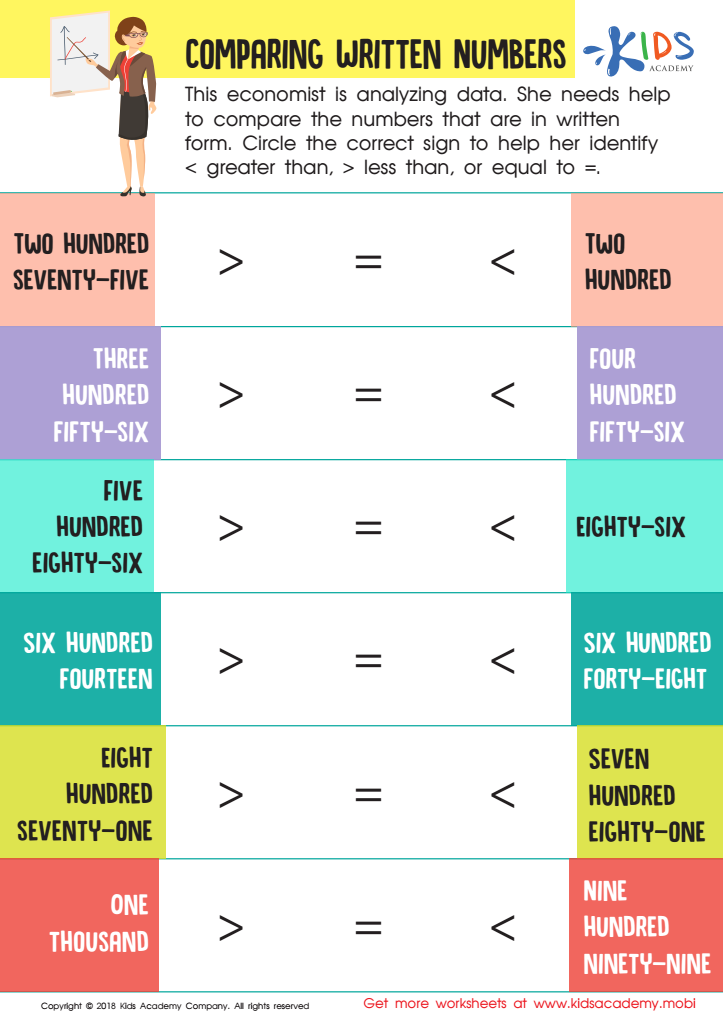
Comparing Written Numbers Worksheet
 Assign to My Students
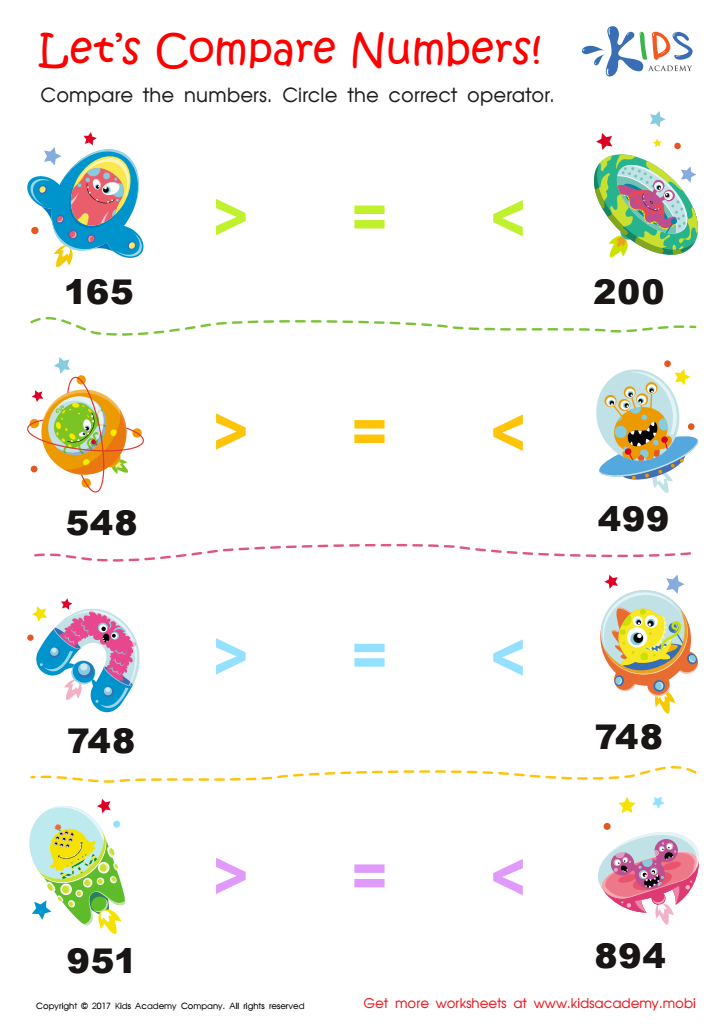
Comparing Numbers Worksheet for 2nd Grade
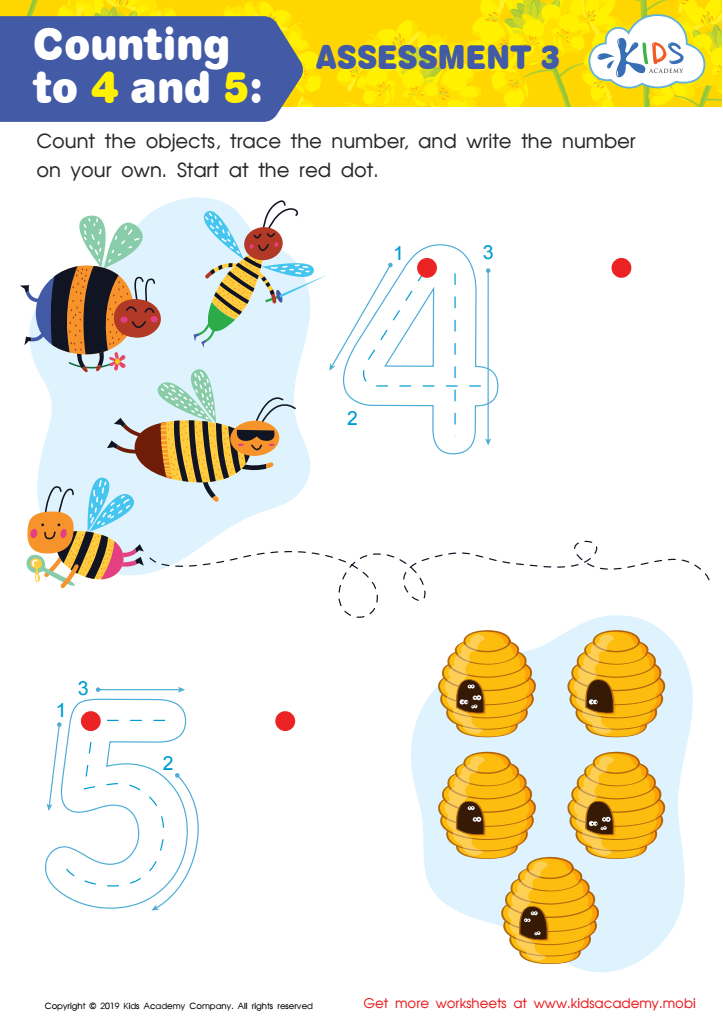
Counting to 4 and 5: Assessment 3 Worksheet
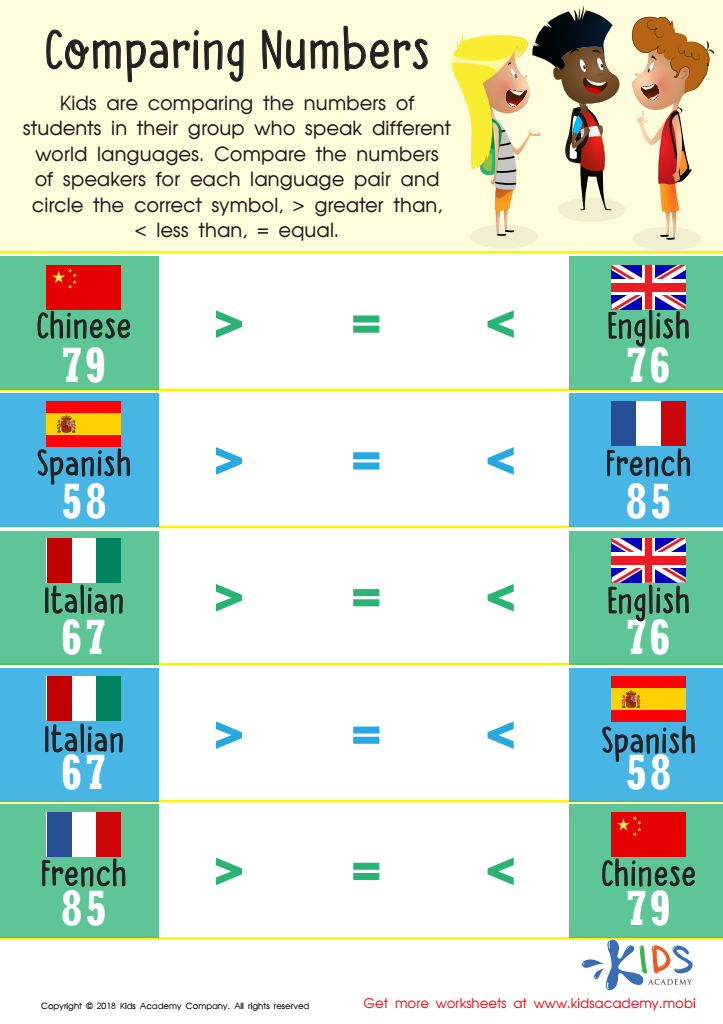
Comparing Numbers Worksheet for 1st Grade
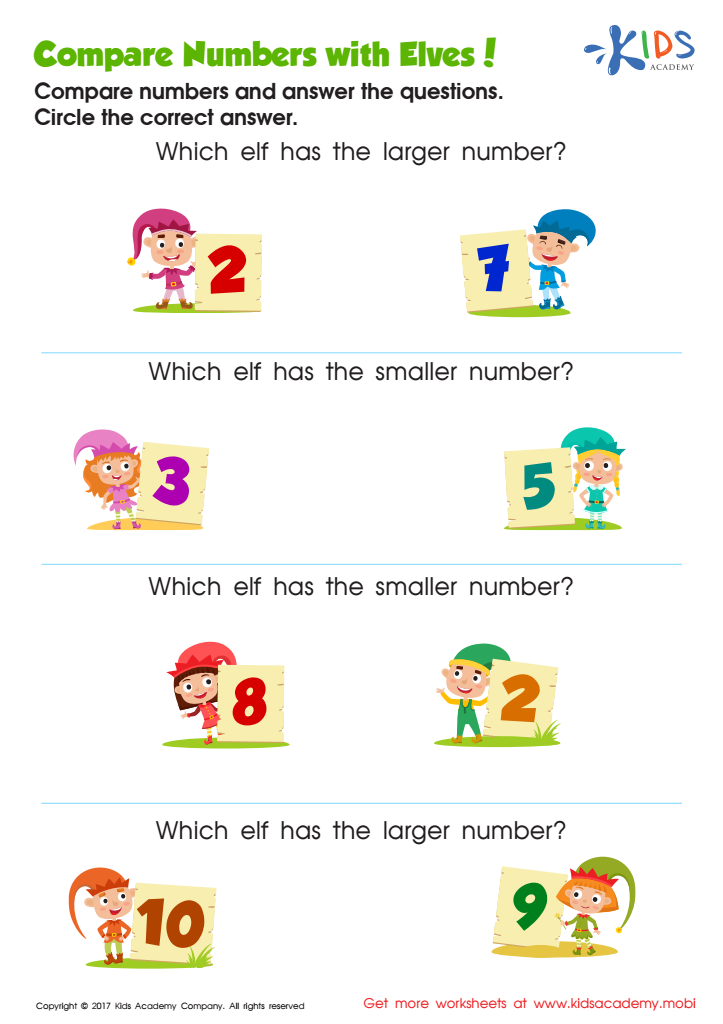
Comparing Numbers Worksheet for Kindergarten






Parents and teachers play crucial roles in the developmental stages of children aged 3-8, and understanding fundamental mathematical concepts, such as number comparison, is essential for early cognitive development. At this tender age, children are sponges, soaking up information and developing the skills they will use throughout their academic and life journeys. Number comparison involves understanding quantities, recognizing differences and similarities, and placing numbers in a meaningful context, which forms the foundation for more advanced mathematical reasoning.
Engaging children in number comparison activities fosters critical thinking and problem-solving abilities. These skills are not only pertinent to mathematics but are transferable to other academic subjects and real-life scenarios, such as decision-making and logical reasoning. Additionally, by practicing number comparison, children also enhance their memory and ability to concentrate, building essential cognitive functions that aid overall learning.
For parents and teachers, it's crucial to develop and nurture these early skills to ensure children are confident and competent in math from the outset. Making learning interactive, enjoyable, and practical can stimulate a child’s interest and positive attitudes towards math. Consequently, this paves the way for academic success and a lifelong appreciation for numeracy, positioning children on a trajectory towards achieving their full potential.








