Phonological awareness Normal Worksheets for Ages 3-8
5 filtered results
-
From - To
Explore our engaging phonological awareness worksheets designed specifically for children aged 3 to 8! These interactive resources help young learners develop essential skills such as rhyme recognition, syllable counting, and sound manipulation. With a variety of fun activities including matching, coloring, and games, children will enjoy mastering the foundational elements of language while building confidence in their reading and comprehension abilities. Perfect for both classroom and home learning, our worksheets cater to diverse learning styles, ensuring an effective and enjoyable experience. Equip your child with the phonological skills they need for future academic success! Start their learning journey today!
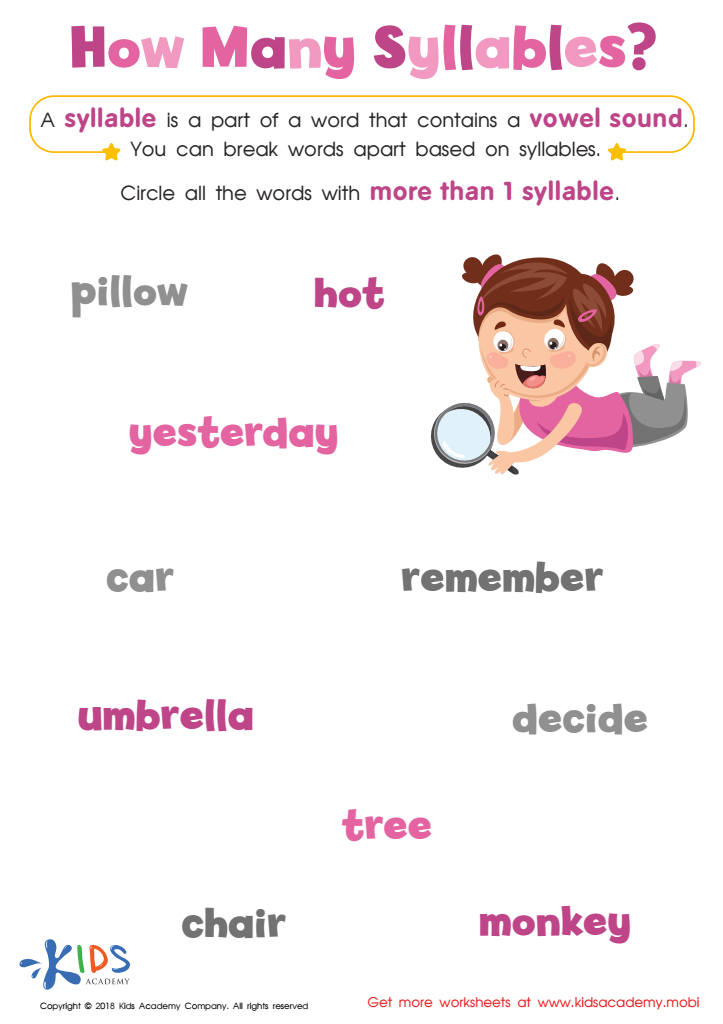
Reading: How Many Syllables Worksheet
 Assign to My Students
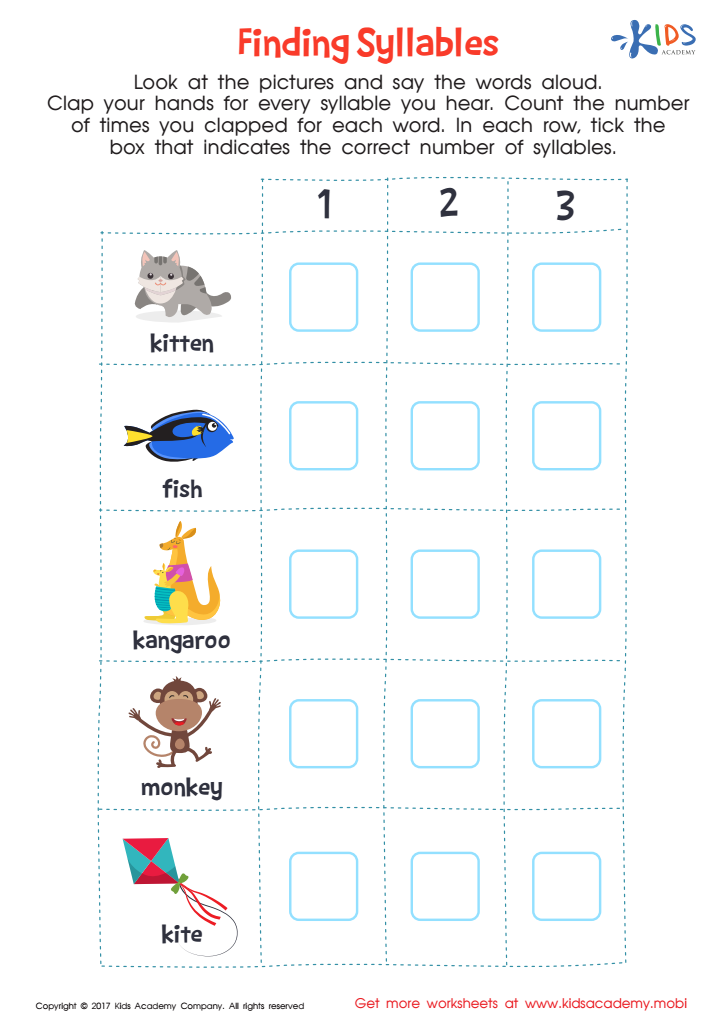
Finding Syllables Word Structure Worksheet
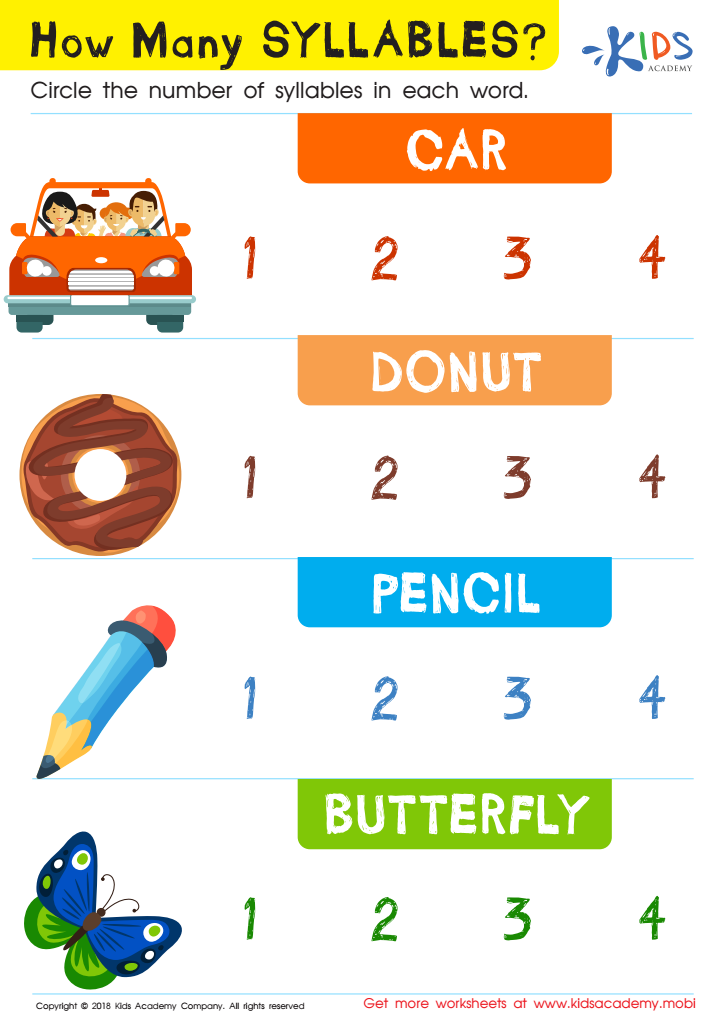
How Many Syllables? Worksheet
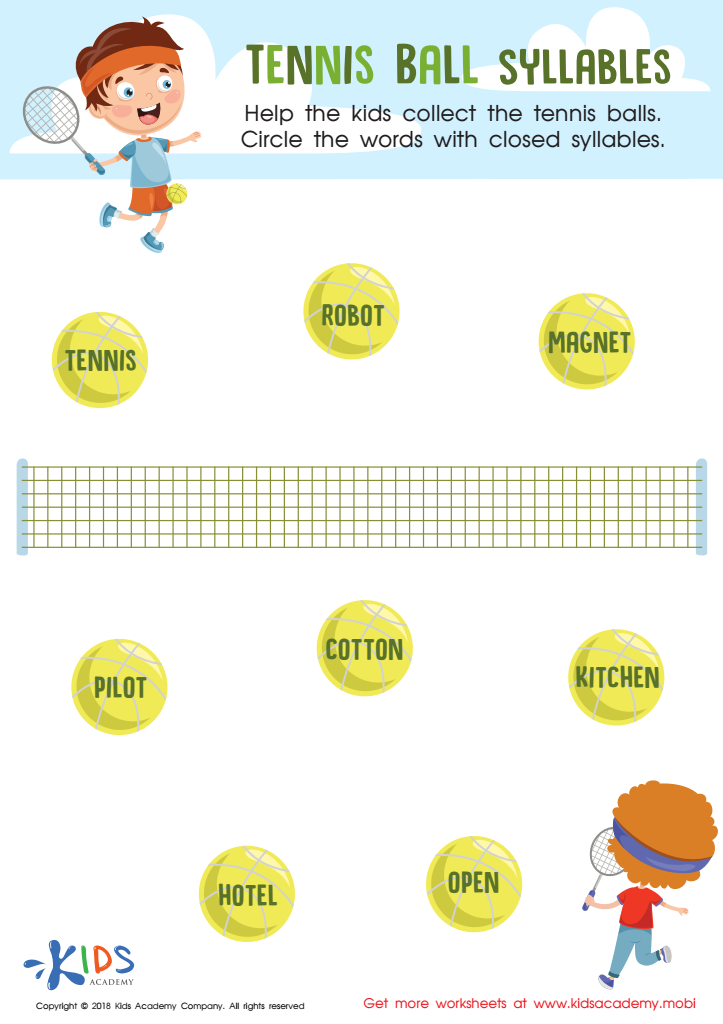
Tennis Ball Syllables Worksheet
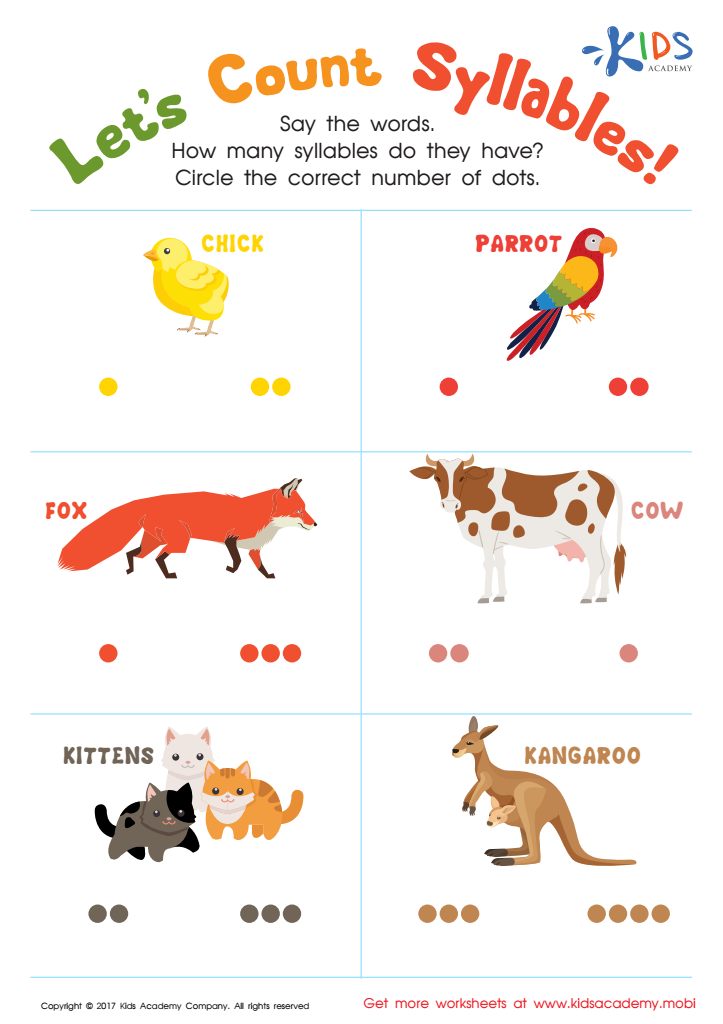
Lets Count Syllables Worksheet






Phonological awareness is a crucial skill for children aged 3-8, as it lays the foundation for reading and language development. This set of skills includes the ability to recognize and manipulate sounds in spoken language, such as identifying rhyme, syllables, and individual sounds (phonemes) in words. Parents and teachers should prioritize phonological awareness because it directly impacts a child's literacy success.
Children with strong phonological awareness skills can more easily decode and encode words, making the transition to reading smoother. Studies have demonstrated that early phonemic awareness is one of the best predictors of a child's future reading ability. By fostering these skills early on, parents and teachers can help children develop confidence and fluency in reading, which are essential for academic success.
Moreover, phonological awareness activities can be engaging and fun, using songs, games, and rhymes to cultivate a love for language learning. Building these skills at an early age not only benefits literacy but also enhances overall cognitive abilities, including memory, listening, and critical thinking. As children navigate their educational journey, strong phonological awareness equips them to tackle more complex reading tasks in the future, setting them up for a lifetime of learning and achievement.








