Reading analog clocks Normal Worksheets for Ages 3-8
3 filtered results
-
From - To
Our Reading Analog Clocks Normal Worksheets for ages 3-8 are designed to help young learners develop essential time-telling skills. These fun, engaging worksheets feature a variety of clock-reading exercises crafted to build your child's confidence and proficiency in telling time using analog clocks. Ideal for preschool to early elementary students, each worksheet fosters critical thinking and reinforces fundamental math skills. With vibrant, kid-friendly designs and incremental difficulty levels, our worksheets ensure an enjoyable learning experience. Trust Kids Academy to support your child’s educational journey with high-quality, curriculum-aligned resources tailored for young minds.
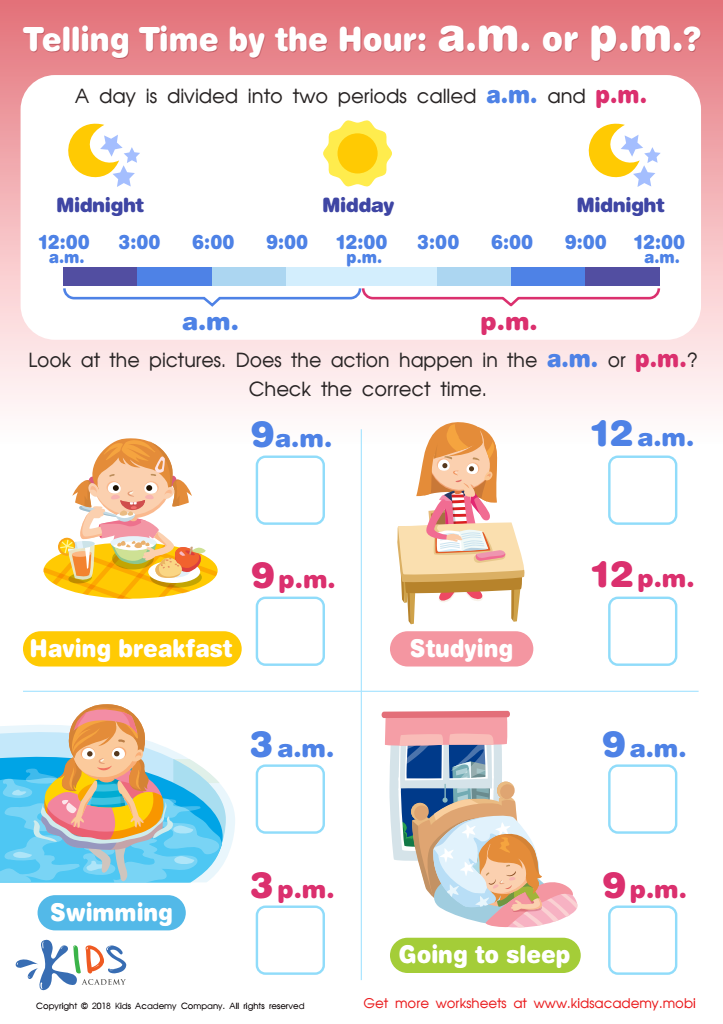
Tilling Time by the Hour: a.m. or p.m.? Worksheet
 Assign to My Students
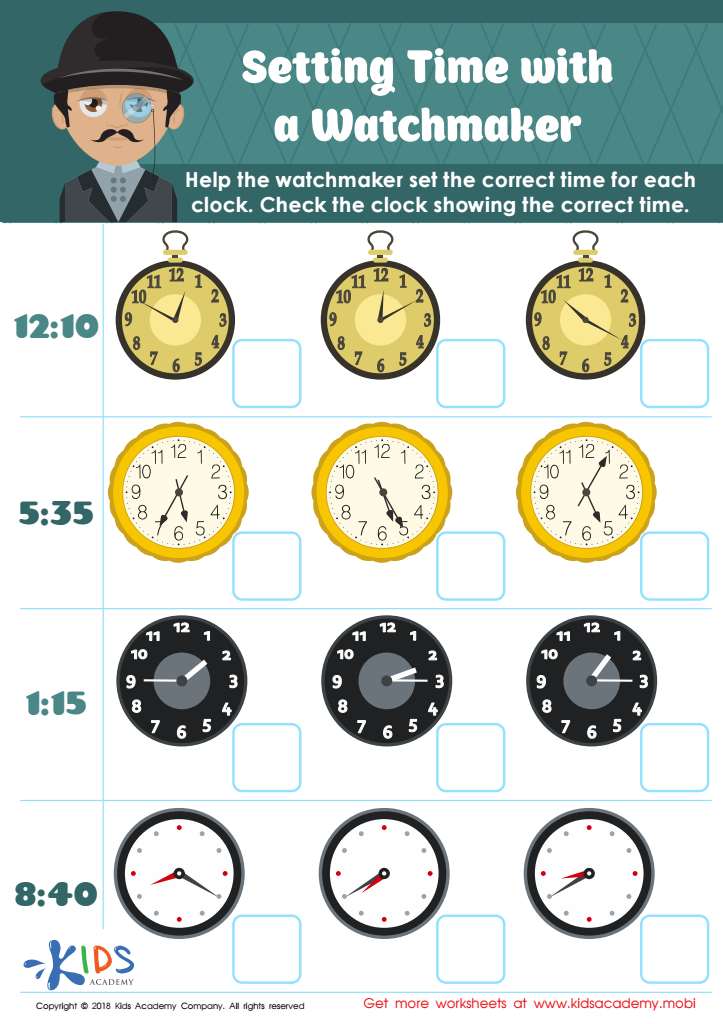
Setting Time with Watchmaker Worksheet
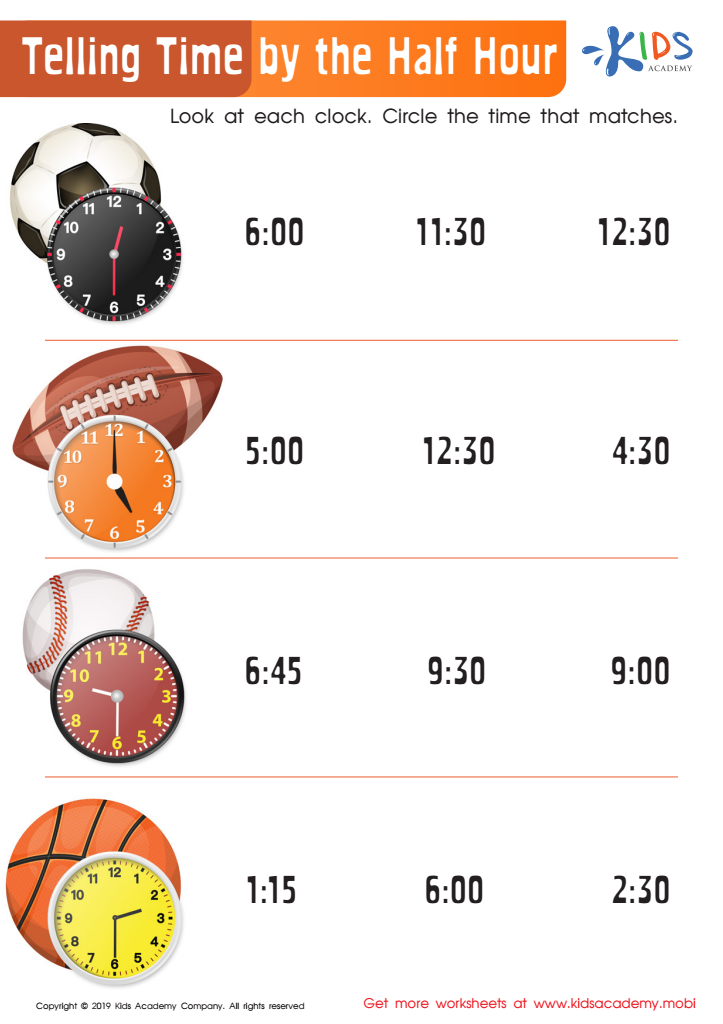
Telling Time by the Half Hour Worksheet







.jpg)
Understanding how to read analog clocks is an important skill for children ages 3-8 because it fosters many developmental benefits that are crucial for their growth. Analog clocks help children grasp the concept of time in a concrete manner, compared to digital clocks which simply display numbers. Learning to read an analog clock teaches kids about the movement of time through visual and hands-on experience with the hour and minute hands.
Additionally, this skill promotes cognitive development. Reading an analog clock requires children to practice counting, addition, and spatial reasoning as they learn about hours, minutes, and how they relate to each other. This not only improves their numerical understanding but also enhances their problem-solving abilities.
Analog clocks also offer a sense of routine and responsibility. By being able to read the time, children are more likely to manage their daily tasks, understand schedules, and develop better time-management skills.
Furthermore, teaching children to read analog clocks can serve as a bonding experience. It provides an opportunity for parents or teachers to actively engage with children in a meaningful, educational activity. These interactions can make learning about time fun and memorable, creating a foundation for strong learning habits in the future.
Therefore, incorporating analog clock reading into early education is crucial for comprehensive cognitive and emotional development.








