Reading clocks Normal Worksheets for Ages 3-8
3 filtered results
-
From - To
Engage your young learners with our Reading Clocks Normal Worksheets, specially designed for children ages 3-8! These fun and interactive worksheets provide a fantastic way for kids to learn about time, develop essential math skills, and boost their confidence in reading analog clocks. With colorful illustrations and age-appropriate exercises, children can practice identifying hours and minutes while enjoying the process of learning. Our worksheets cater to various learning levels, ensuring that every child finds joy in mastering the concept of time. Perfect for classroom use or at-home learning, these resources make teaching clocks easy and enjoyable for both teachers and parents alike!
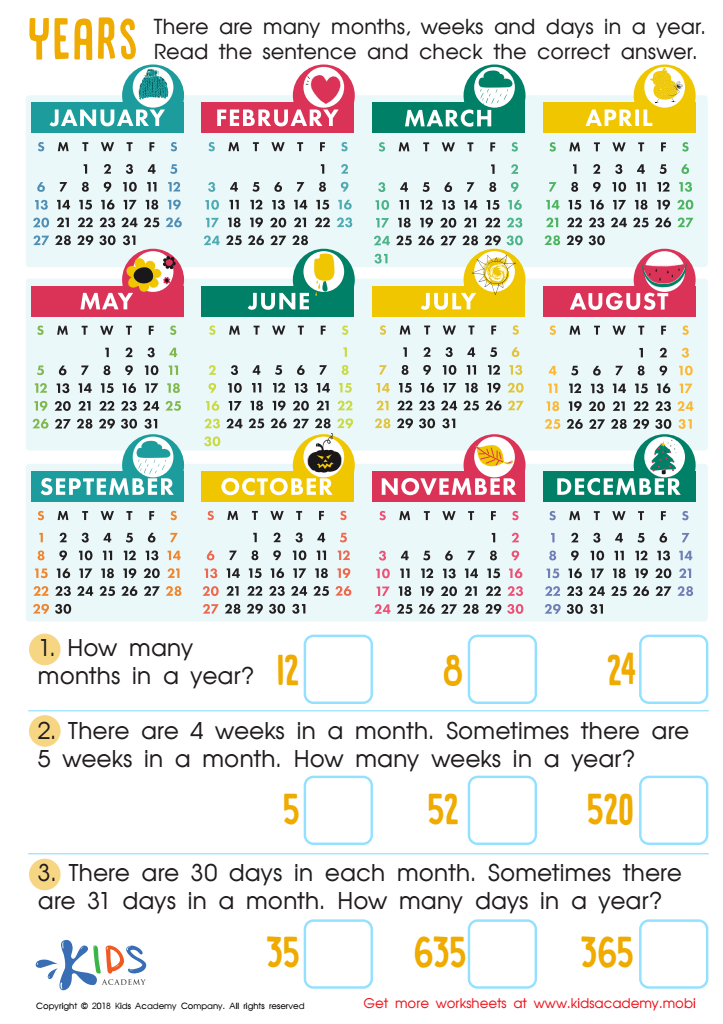
Years Worksheet
 Assign to My Students
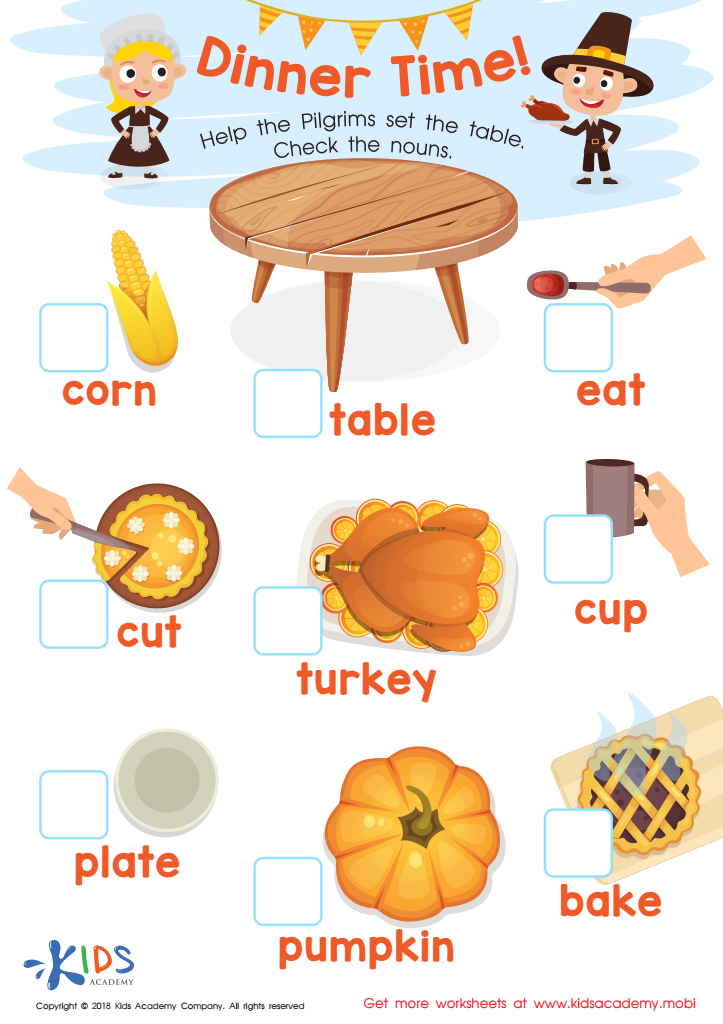
Dinner Time! Worksheet
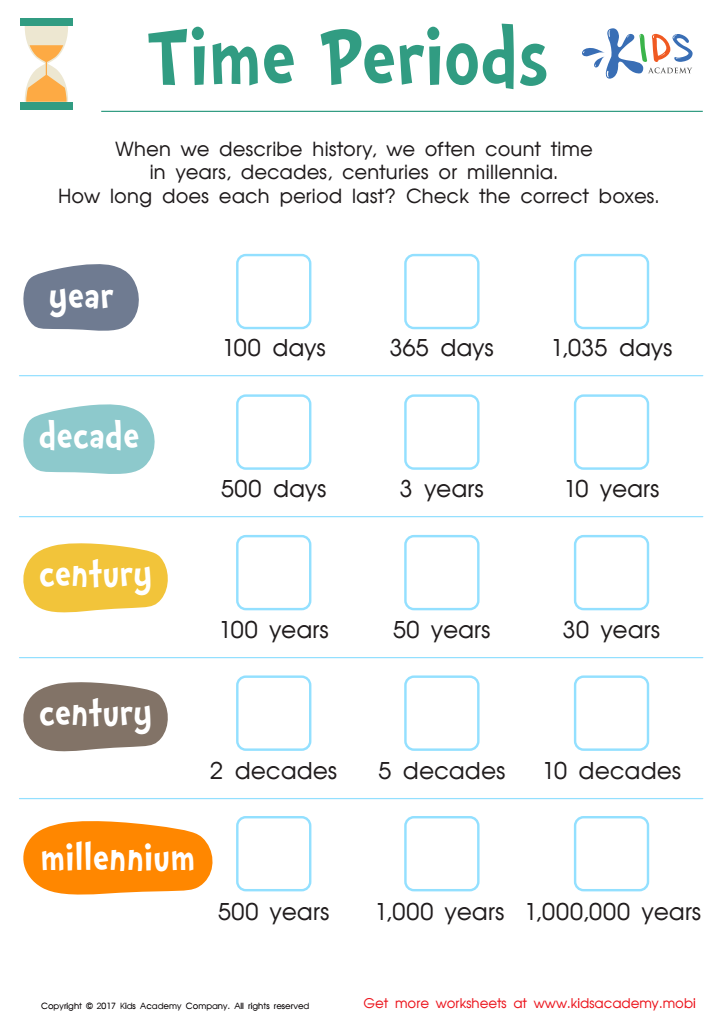
Time Periods Worksheet








Understanding how to read clocks is a vital skill that lays the foundation for time management and daily routines in children aged 3-8. For parents and teachers, fostering this skill is essential for multiple reasons.
Firstly, time comprehension helps children develop a sense of structure in their daily lives. Young learners often benefit from visualizing sequences of events, whether it's understanding when to wake up, eat meals, or engage in playtime. This understanding supports self-regulation and independence.
Secondly, learning to read analog clocks promotes cognitive development. It enhances critical thinking and problem-solving skills, as children must learn to interpret and decode the relationship between the hour and minute hands. This mathematical concept can also forge a connection to other learning areas such as counting and fractions.
Moreover, parental involvement in teaching clock reading cultivates communication and bonding opportunities. Simple games or daily practices can make learning enjoyable and interactive.
Lastly, time-telling skills increase students’ confidence in managing their schedules and responsibilities as they grow. By caring about reading clocks, parents and teachers contribute to nurturing responsible, self-sufficient individuals equipped to thrive in various environments.








