Sound discrimination Normal Worksheets for Ages 3-8
3 filtered results
-
From - To
Discover our engaging Sound Discrimination Normal Worksheets designed for children ages 3-8, perfect for enhancing auditory processing skills. These worksheets promote critical listening through fun activities that help young learners differentiate between various sounds. With colorful illustrations and age-appropriate challenges, kids will enjoy learning while developing their phonemic awareness—a crucial foundation for reading success. Our worksheets can be easily printed to create an interactive learning experience at home or in the classroom. Foster your child’s ability to recognize sound patterns and improve their overall communication skills with our thoughtfully crafted materials. Start building their auditory skills today!
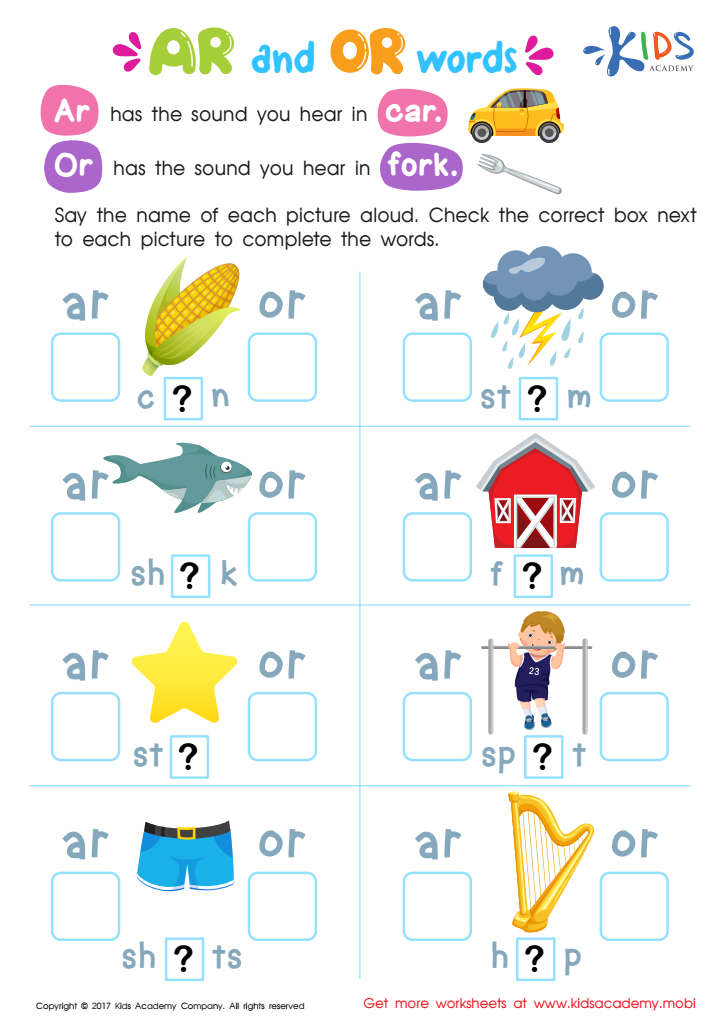
Ar and Or Words Phonics Worksheet
 Assign to My Students
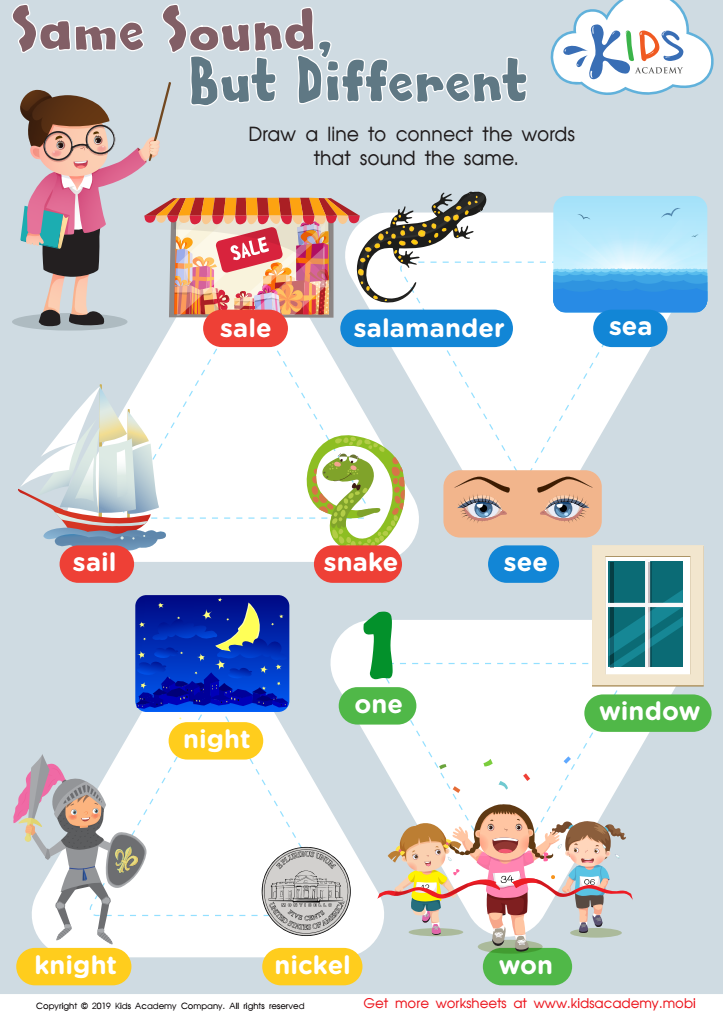
Sound Different Worksheet
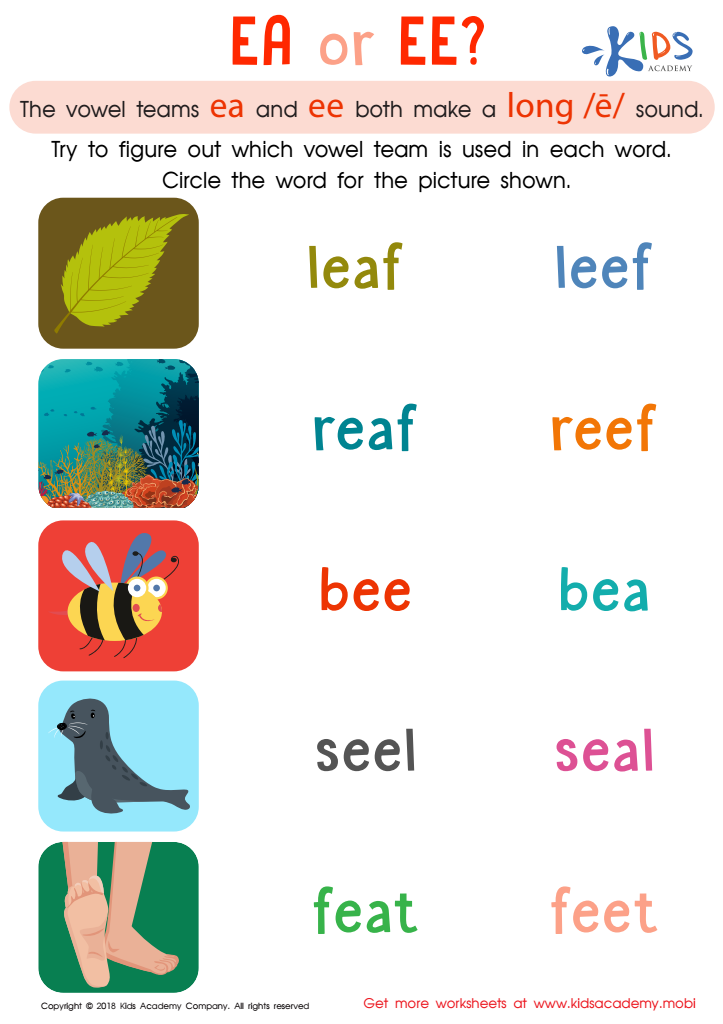
Reading: EA and EE Worksheet





.jpg)


Sound discrimination is a crucial skill for children aged 3-8, significantly impacting their language development and academic success. It refers to the ability to distinguish between different sounds, which is foundational for effective communication and literacy. For parents and teachers, understanding the importance of this skill is essential for guiding children's learning.
Firstly, sound discrimination enhances phonemic awareness, which is vital for reading. Children who can differentiate sounds are more likely to understand that words are made up of individual phonemes, aiding in deciphering written language. Furthermore, strong sound discrimination skills contribute to better listening abilities that facilitate following directions and engaging in conversations, which are critical in both social and academic contexts.
Additionally, early attention to sound discrimination can help identify potential learning difficulties. Recognizing a child’s struggles allows for timely interventions, ensuring they receive the support needed to thrive.
For these reasons, fostering sound discrimination through targeted activities—like rhymes, games, and songs—is essential. By prioritizing these skills, parents and teachers empower children, laying a solid foundation for their future learning and communication success. Ultimately, cultivating sound discrimination fosters confidence and sets the stage for lifelong reading and learning abilities.








