
Spatial reasoning Normal Worksheets for Ages 3-8
5 filtered results
Difficulty Level
Grade
Age
-
From - To
Subject
Activity
Standards
Discover our Spatial Reasoning Worksheets for Ages 3-8, designed to enhance essential cognitive skills in young learners. These engaging and interactive printable worksheets help children develop their ability to understand and manipulate spatial relationships, a foundational skill for math and problem-solving. Through colorful visuals and age-appropriate activities, kids will enjoy exploring shapes, patterns, and directions while honing their creativity and critical thinking. Ideal for home or classroom use, our worksheets cater to various learning styles and ensure a fun, educational experience. Support your child's growth in spatial reasoning with our comprehensive collection designed just for them!
Favorites
With answer key
Interactive
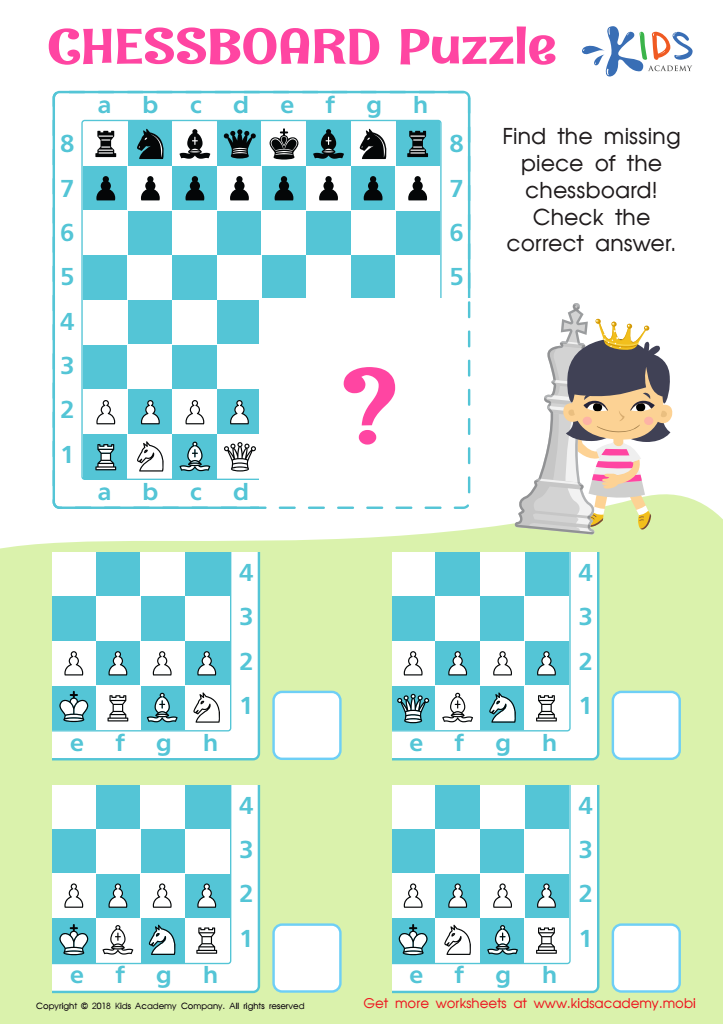
Chessboard Puzzle Worksheet
Test your child's chess prowess with this simple worksheet. They must find the missing pieces to complete the white side of an empty chessboard. The black pieces are already arranged properly on the board. Correct answers are provided so you can see how they did!
 Assign to My Students
Chessboard Puzzle Worksheet
Worksheet
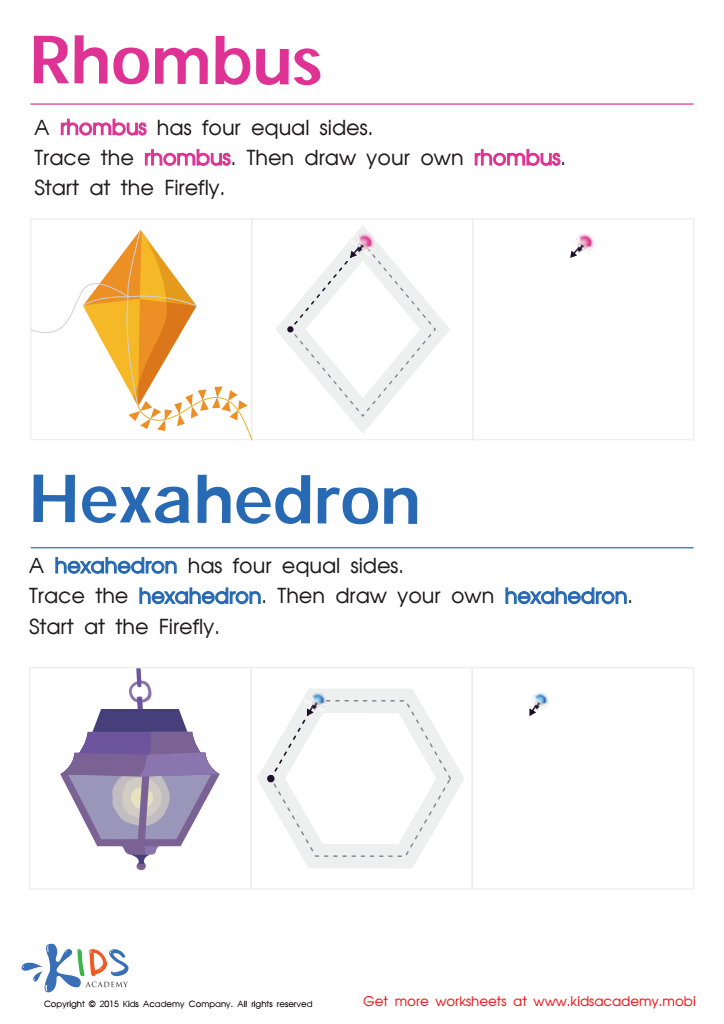
Draw a Rhombus And a Hexahedron Printable
Trace, draw and recognize shapes like rhombus, hexahedron and more! Start with the firefly to trace a rhombus, then use the yellow kite to remember the shape. Use the light to trace and draw a hexahedron. Learn with the best!
Draw a Rhombus And a Hexahedron Printable
Worksheet
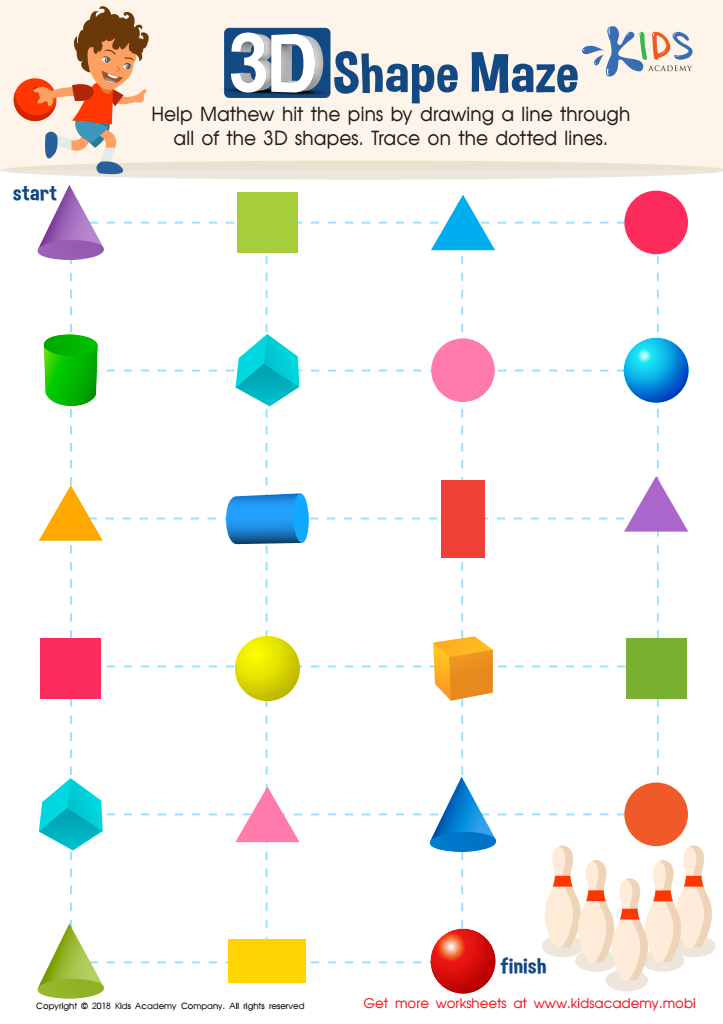
Shapes Maze Geometry Worksheet
Boost your child's geometry skills with this shapes maze worksheet! Help Matthew bowl a strike by guiding him through the maze to draw a line through every 3D shape. It's a fun and challenging way to practice foundational math skills!
Shapes Maze Geometry Worksheet
Worksheet
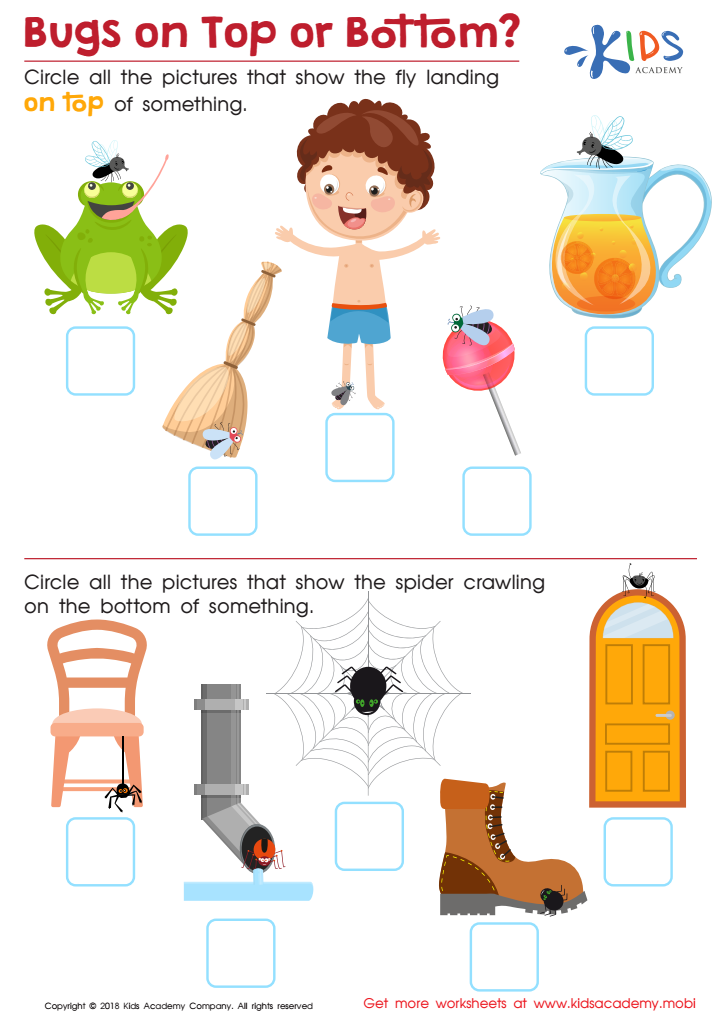
Bugs on Top or Bottom? Worksheet
Preschoolers need to learn directional skills such as top and bottom. This PDF worksheet helps them recognize bugs on the top or bottom using fun visuals. It builds their spatial reasoning while teaching prepositional words in an engaging way.
Bugs on Top or Bottom? Worksheet
Worksheet
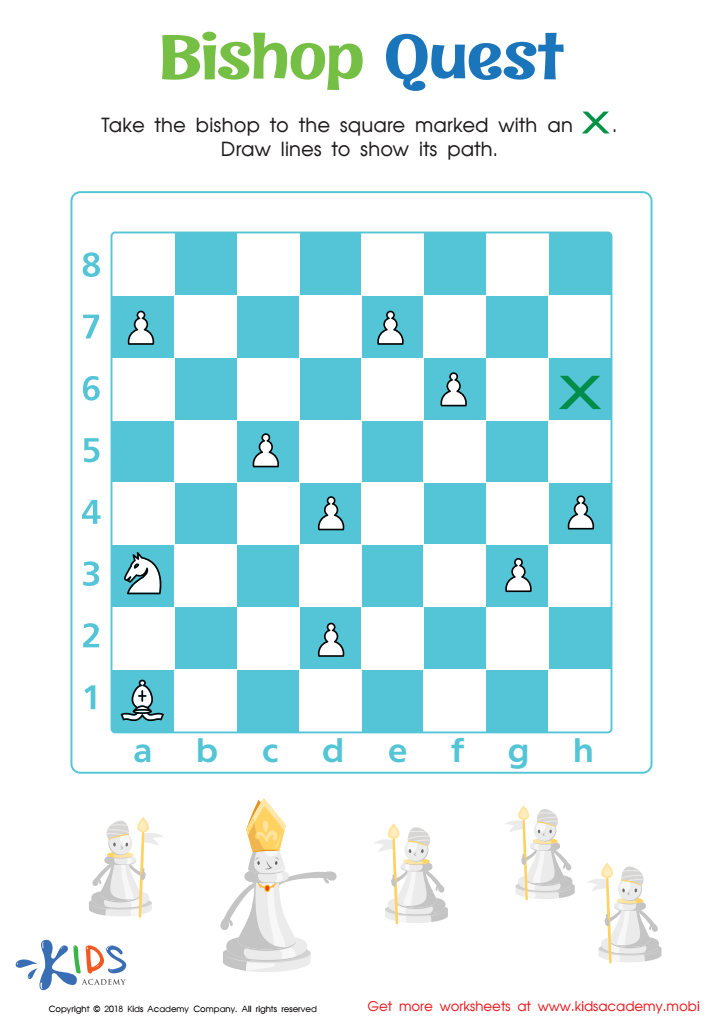
Bishop Quest Worksheet
Show kids the board and ask them to identify the bishop. Then ask them to move it to the square marked 'x', drawing lines to show its path. This worksheet helps teach kids how to move the bishop on a chessboard.
Bishop Quest Worksheet
Worksheet
Join Kids Academy for Free
Who is primarily going to use this learning content?



.jpg)


.jpg)
Spatial reasoning is a crucial cognitive skill that affects a child's ability to understand and interact with the world around them. For children aged 3-8, this skill is foundational for learning in various domains, including math, science, and art. Parents and teachers should prioritize spatial reasoning development because it enhances a child's problem-solving abilities and fosters critical thinking.
Early exposure to spatial tasks, such as puzzles, building blocks, and shape recognition games, strengthens neural pathways associated with visualization and spatial manipulation. These skills are increasingly important as children progress through education, supporting mathematical concepts like geometry and measurement, which often require a strong grasp of spatial relationships.
Furthermore, spatial reasoning correlates with success in STEM fields, which are crucial for future job markets. By nurturing this skill early on, caregivers can help promote competence and confidence in subjects that require systematic and analytical thinking.
In addition, engaging in spatial reasoning activities encourages collaboration, communication, and creativity among peers, building a well-rounded educational experience. Thus, by caring about spatial reasoning, parents and teachers are not only contributing to academic success but also shaping lifelong skills that prepare children for a rapidly evolving world.








