Filters

102 filtered results

Clear all filters
Favorites
With answer key
Interactive

102 filtered results

Difficulty Level

Grade


Check out this FREE "Spelling practice" Trial Lesson for age 3-8!

Read Words with Silent Letters (h,k,w,b)

Favorites
With answer key
Interactive
  • 3-8
  • Spelling practice
  • Normal
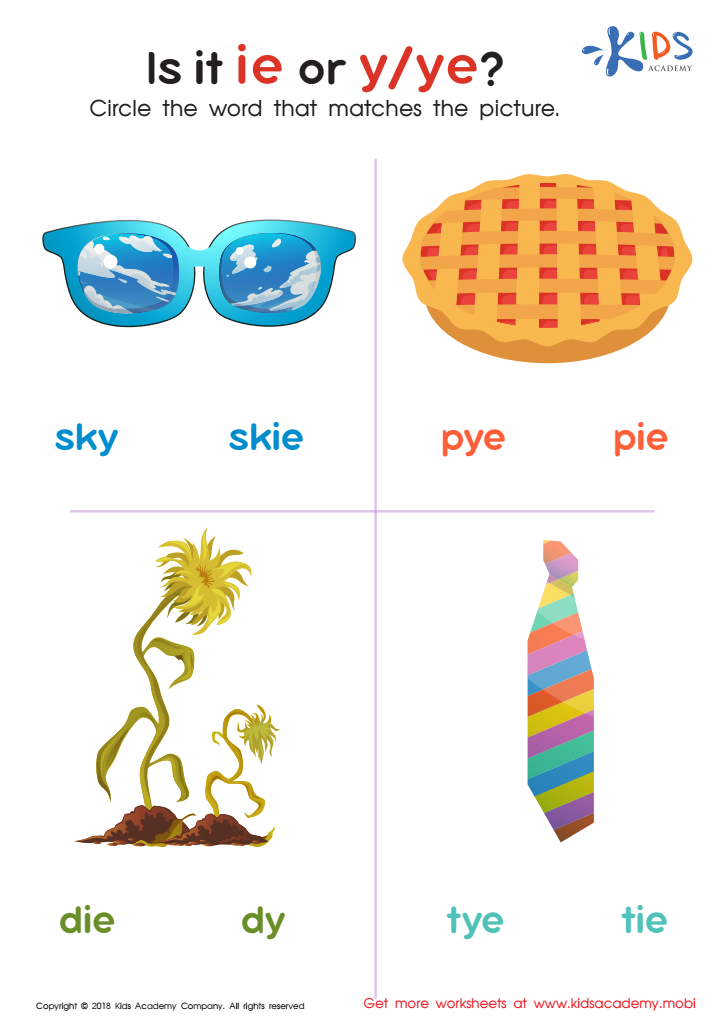
Is It IE or Y/Ye? Worksheet

Is It IE or Y/Ye? Worksheet

Test your child's picture identification skills by pointing at common items in your house and asking them to name them. Then, look at the objects in this worksheet with your little one. Point at each one, ask for the name, then ask which spelling is correct. Help them circle the correct word.
Is It IE or Y/Ye? Worksheet
Worksheet
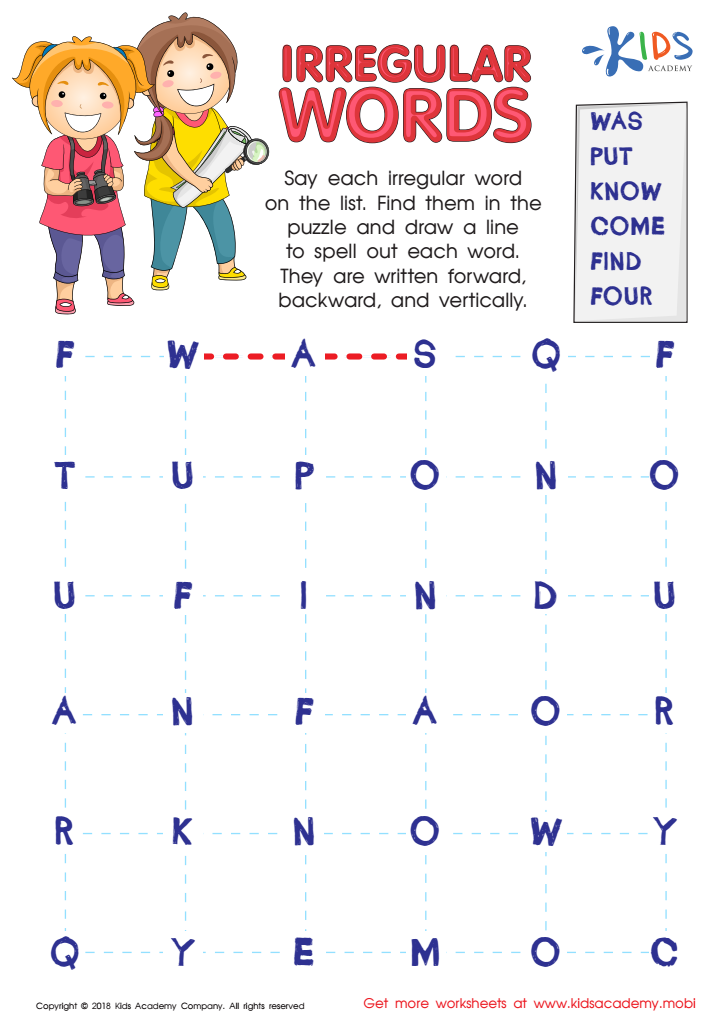
Irregular Words Worksheet

Irregular Words Worksheet

This fun word search worksheet helps kids practice reading irregular words and build their sight word banks. They'll also get practice with visual discrimination and fine motor skills as they hunt down the words.
Irregular Words Worksheet
Worksheet
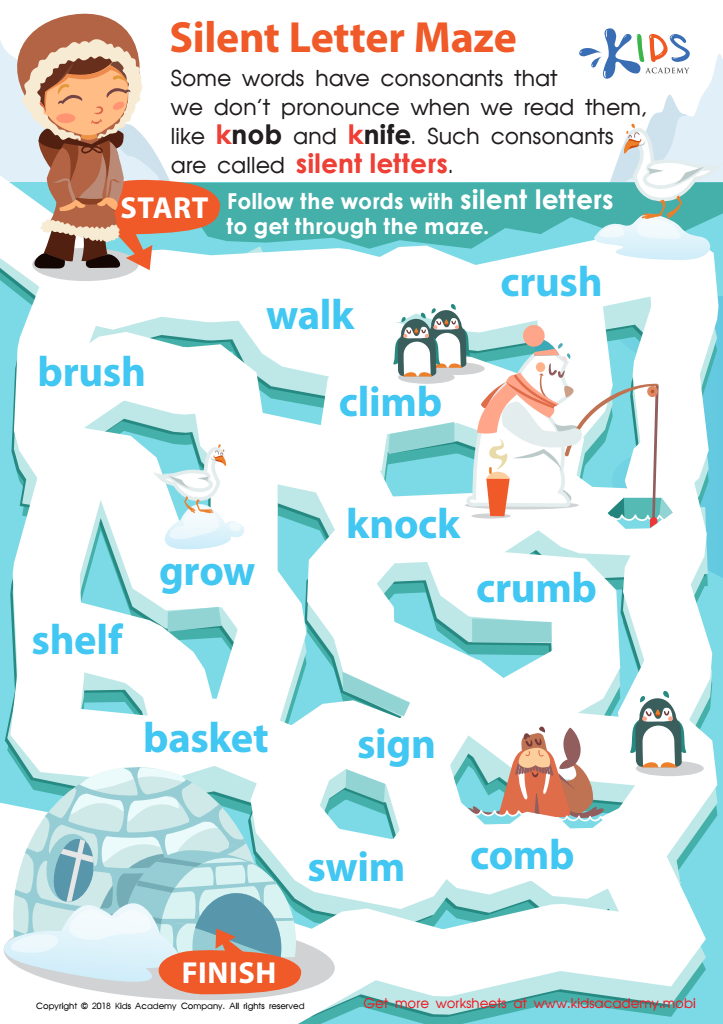
Silent Letter Maze Worksheet

Silent Letter Maze Worksheet

Learning to read can be tricky, especially with words with irregular pronunciations. Explain to your child that some words have consonants we do not pronounce when reading. Ask them for examples like 'knife' and 'knob'. These consonants are called silent letters. Download this pdf to practice words with silent letters and complete the maze.
Silent Letter Maze Worksheet
Worksheet
Phonics and Word Recognition: Assessment 1 ELA Worksheet

Phonics and Word Recognition: Assessment 1 ELA Worksheet

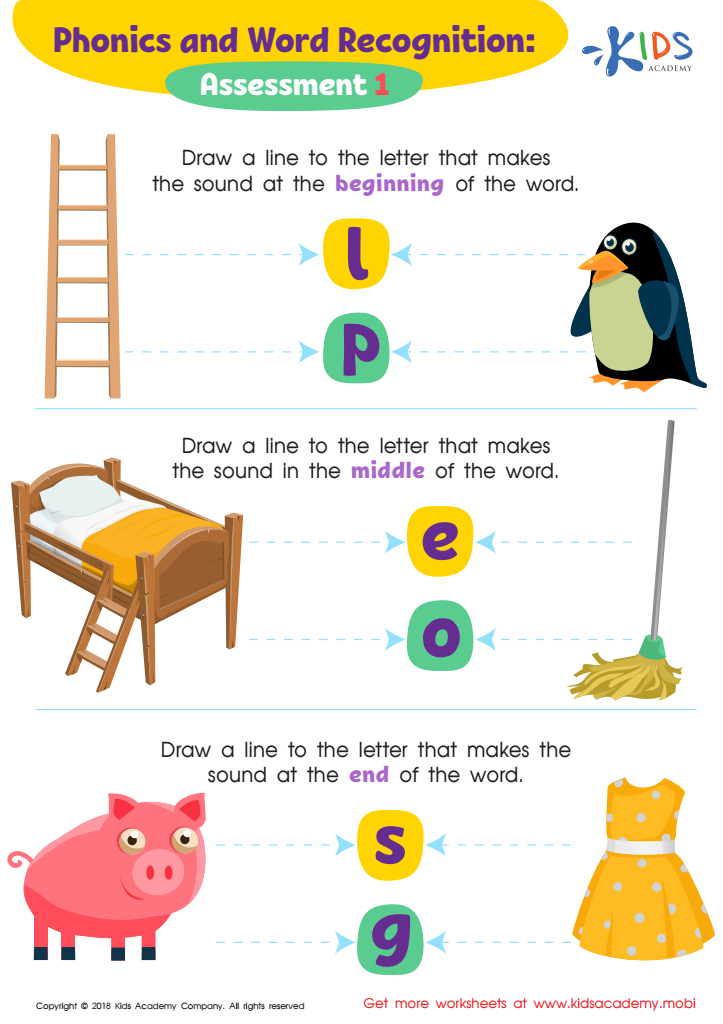
This fun worksheet tests your child's sound recognition skills for each part of a word. Ask your child to name each image and trace the line to match it with the corresponding letter. Listen for beginning sounds on 1st, middle sounds on 2nd, and ending sounds on 3rd. Encourage learning with this colorful and interactive activity!
Phonics and Word Recognition: Assessment 1 ELA Worksheet
Worksheet
Ir ur er words worksheet

IR UR ER Words Worksheet

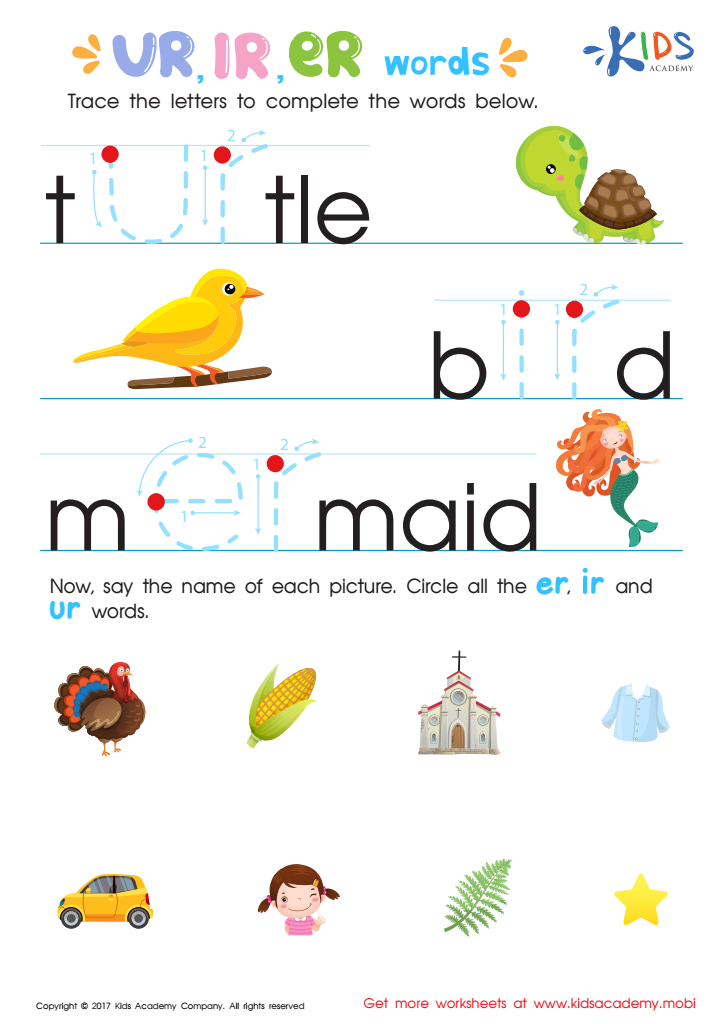
Trouble spelling words with the same initial vowel sound? Our worksheet is here to help! With its exercises to help your child learn to read and spell turtle, bird, and mermaid, it'll make differentiating these tricky digraphs a snap.
IR UR ER Words Worksheet
Worksheet
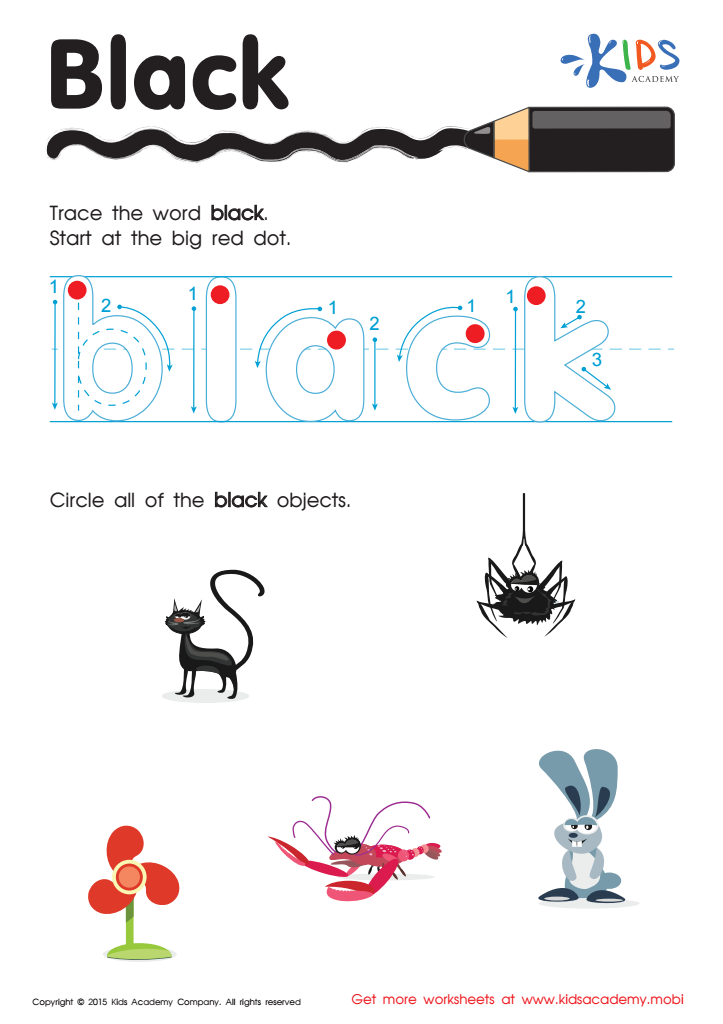
Handwriting PDF Worksheets | Tracing Color Words | Black

Black Tracing Color Words Printable

Tracing is essential for kids to learn good handwriting and boost their fine motor skills. This handwriting worksheet lets kids trace the word "black" letter by letter using a black crayon and spot all the black items. With this free printable, they'll have fun while writing! For more practice, check out the link.
Black Tracing Color Words Printable
Worksheet


... 4 5

Spelling practice for children ages 3-8 is vital for several reasons that parents and teachers should consider. Firstly, this age range is crucial for language development, where foundational skills like phonics and vocabulary are established. Engaging in regular spelling activities helps children recognize letter sounds and word structures, facilitating reading and writing skills.

Moreover, spelling strengthens cognitive abilities, enhancing memory and critical thinking. The act of spelling entails recalling information, which supports overall brain development and improves students' ability to process and organize language. By mastering spelling, children gain confidence, motivating them to read and communicate more effectively.

Additionally, strong spelling skills can positively influence a child's academic performance. As children progress in school, their competence in spelling will reflect directly on their writing assignments and assessments.

Furthermore, spelling practice promotes early literacy foundations. It also prepares children for more complex language tasks as they transition to higher grades. By emphasizing the importance of spelling, teachers and parents can create a supportive learning environment that values communication, empowers children, and lays the groundwork for lifelong success in literacy and beyond.