
Story analysis Normal Worksheets for Ages 3-8
6 filtered results
Difficulty Level
Grade
Age
-
From - To
Subject
Activity
Standards
Our “Story Analysis Normal Worksheets for Ages 3-8” offer a fantastic way to engage young learners in critical thinking and comprehension skills. Designed specifically for early readers, these worksheets help children dissect and understand stories in a fun and interactive manner. Kids will practice identifying key elements like characters, setting, plot, and moral lessons. Suitable for use at home or in the classroom, these activities foster a love for reading while building foundational analytical skills that promote literacy. Dive into our diverse selection and support your child's literacy journey with Kids Academy’s story analysis worksheets!
Favorites
With answer key
Interactive
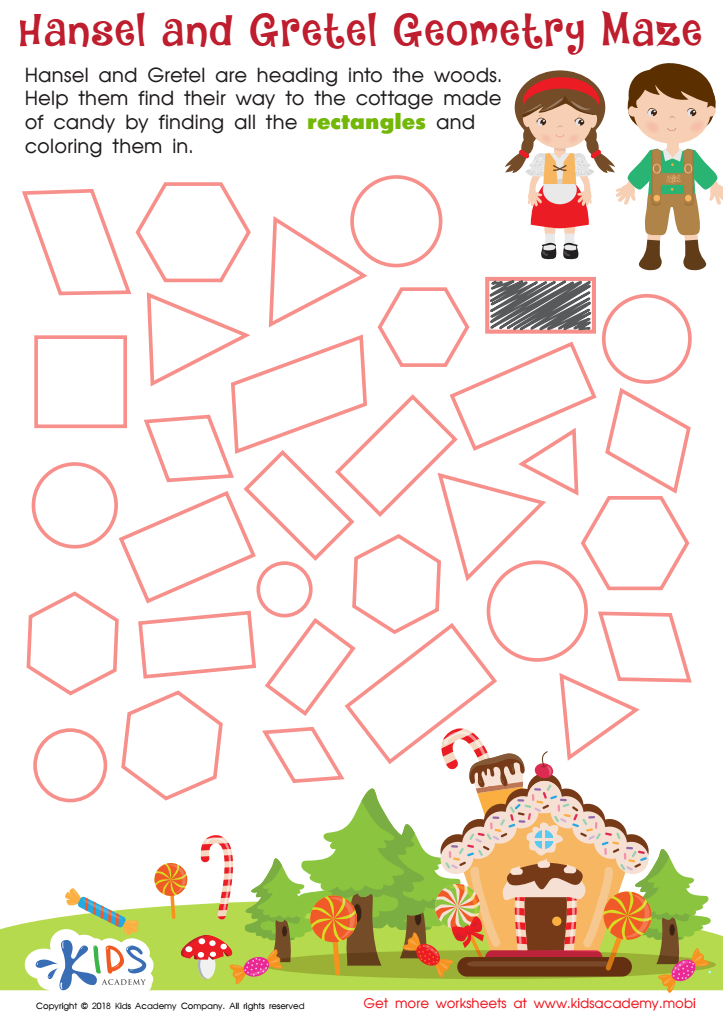
Hansel and Gretel Geometry Maze Worksheet
Your kids will have fun helping Hansel and Gretel get through a colorful forest of shapes! This free PDF reinforces the properties of rectangles, building skills in visual discernment and laying the foundations for geometry. They'll be too busy enjoying the story to realize they're learning!
 Assign to My Students
Hansel and Gretel Geometry Maze Worksheet
Worksheet
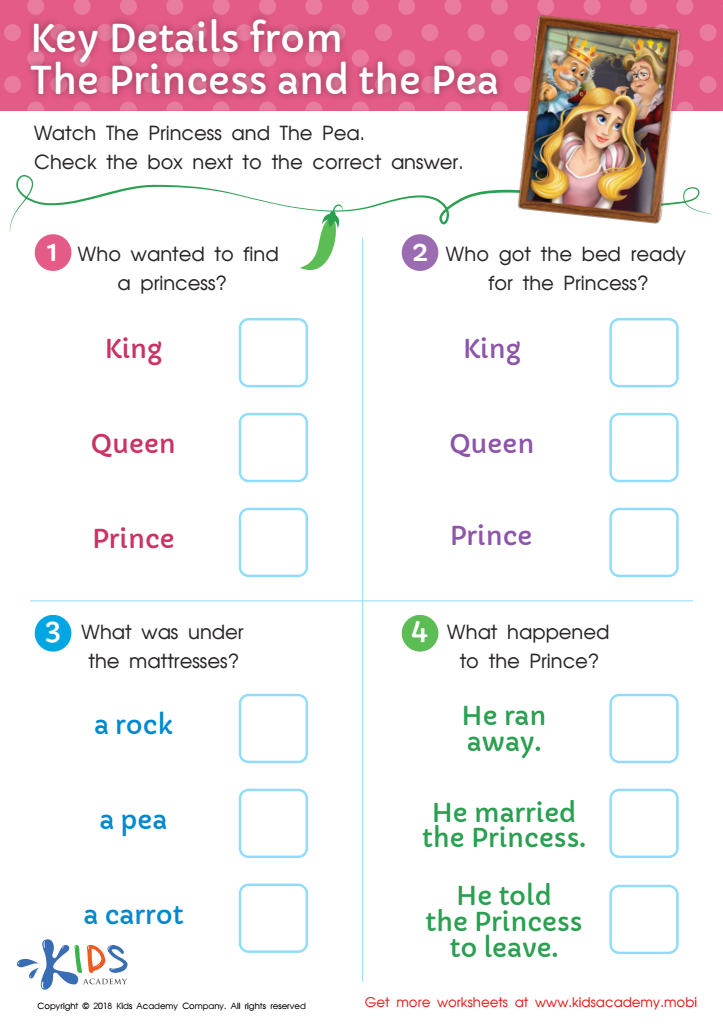
Key Details from the Princess and the Pea Worksheet
After reading The Princess and the Pea, ask your students questions to assess their comprehension of the story. Check their knowledge of key details. This printable can be used to help evaluate their understanding. Encouraging the recall of story events helps build important reading skills.
Key Details from the Princess and the Pea Worksheet
Worksheet
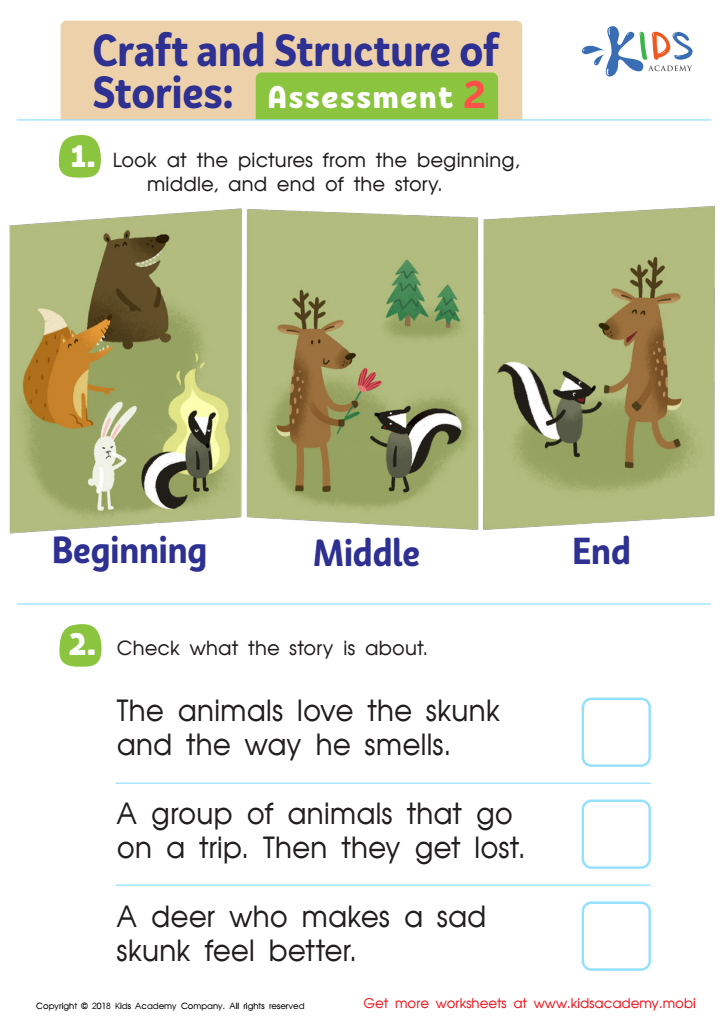
Craft and Structure of Stories: Assessment 2 Worksheet
Help your child assess their story sequencing and reading comprehension skills using this cute worksheet! It encourages them to look at the three pictures on the page, each representing a scene from the beginning, middle and end. Ask them what the story is about, then let them check the box next to the correct answer. This is a great way to ensure they understand the main events of a story.
Craft and Structure of Stories: Assessment 2 Worksheet
Worksheet
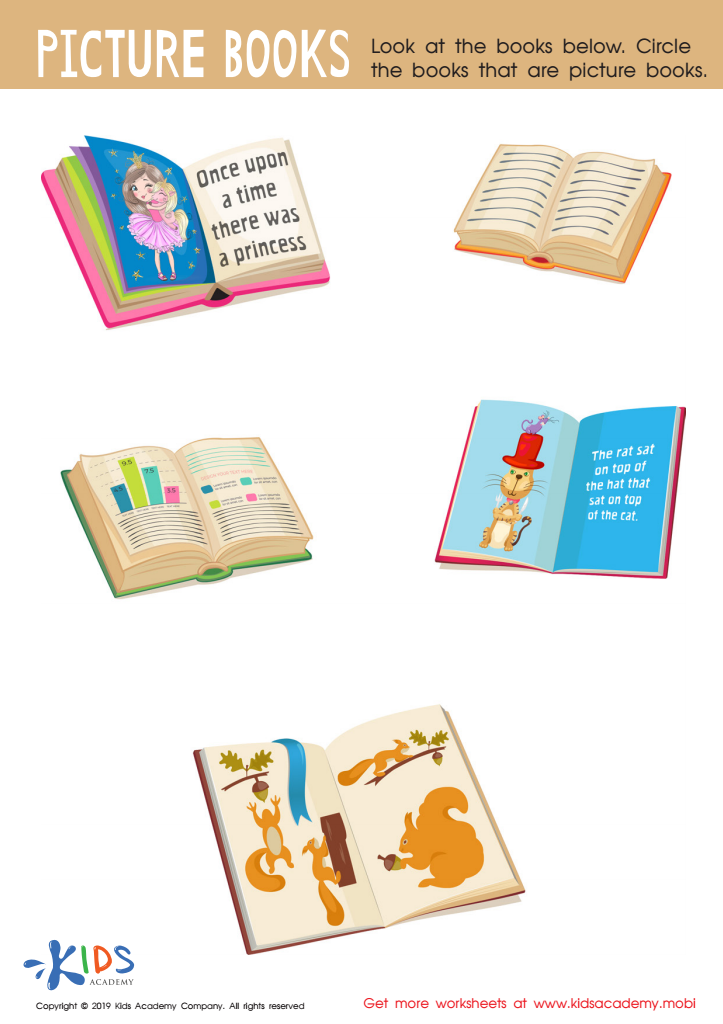
Picture Books Worksheet
Kids will love this exercise! Get their imaginations going with five colorful picture books. Ask them to circle the books that are picture books and have them enjoy the exciting stories, along with the colorful images. Reading can become that much more enjoyable!
Picture Books Worksheet
Worksheet
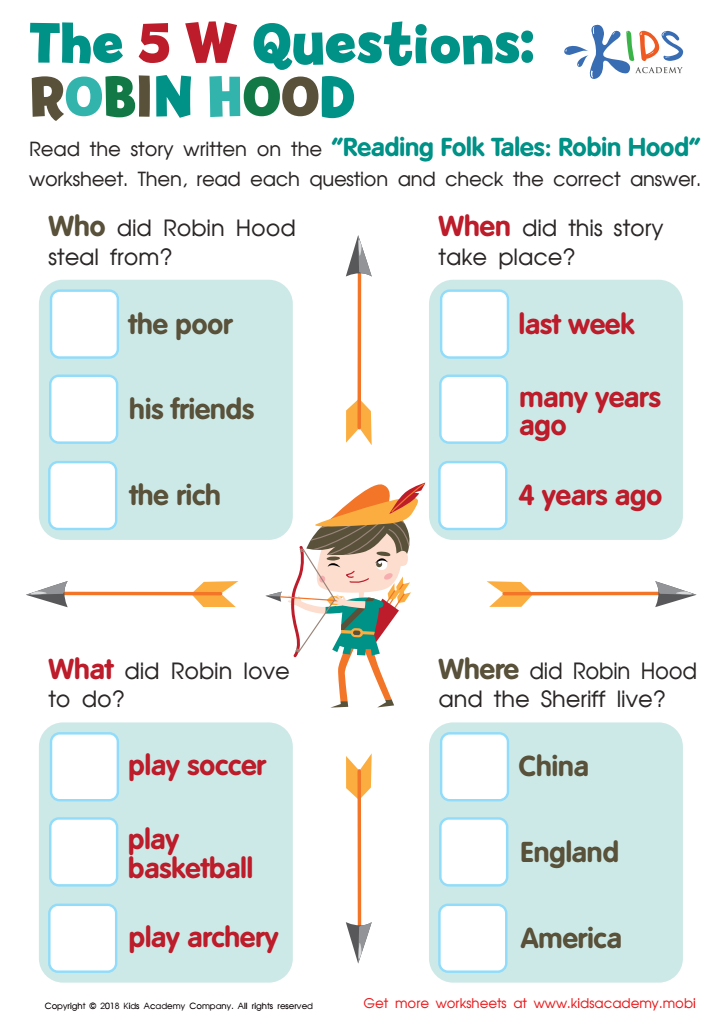
The 5 W Questions: Robin Hood Worksheet
Before embarking on this Robin Hood adventure, ensure your child reads and comprehends the 'Reading Folk Tales: Robin Hood' worksheet. Have them consider the story's lessons, and observe the details. Read the questions and help your kids select the correct answers.
The 5 W Questions: Robin Hood Worksheet
Worksheet
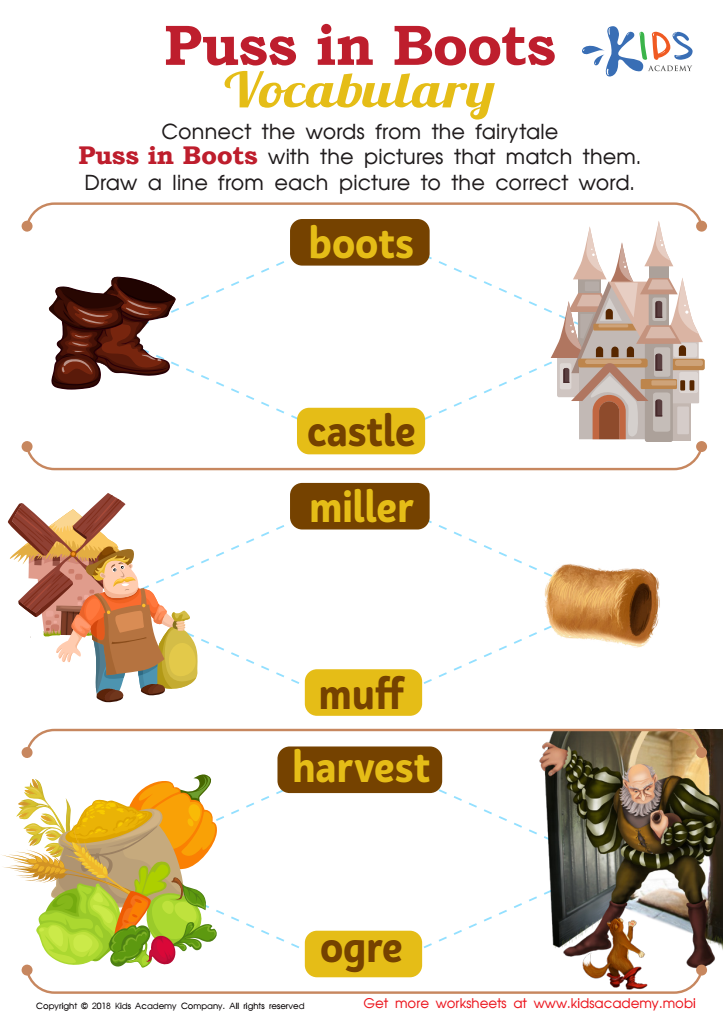
Puss in Boots Vocabulary Worksheet
Let your kids enjoy story-telling while learning at the same time. Help them learn from the fairytale, Puss in Boots, by connecting words from the worksheet with the matching pictures. Ask them to draw a line between each picture and corresponding word to build their vocabulary.
Puss in Boots Vocabulary Worksheet
Worksheet
Join Kids Academy for Free
Who is primarily going to use this learning content?








Story analysis is crucial for children aged 3-8 as it fosters cognitive and emotional development in several ways. During these formative years, children start to shape their understanding of the world, and analyzing stories helps them process information effectively. Parents and teachers should care about story analysis because it aids in enhancing literacy skills, including vocabulary, comprehension, and critical thinking.
When children dissect stories, they learn to identify and understand essential elements like characters, settings, plots, and morals. This analytical process helps them build narrative skills that are foundational for reading and writing proficiency. Furthermore, story analysis encourages empathy and emotional intelligence. By examining characters' motivations and feelings, children develop the ability to understand and relate to others' emotions and viewpoints, promoting social skills that are vital for meaningful interactions.
Additionally, story analysis nurtures a child’s imagination and creativity. Discussing alternative endings or imagining new scenarios stimulates creative thinking, which is beneficial for problem-solving and innovation. Engaging children in thoughtful discussions about stories reinforces listening and speaking skills, contributing to overall communication development.
In conclusion, parents and teachers should prioritize story analysis for young children as it not only bolsters essential academic skills but also enhances emotional growth and imaginative capabilities, laying a solid foundation for future learning and personal development.








