Syllable identification Normal Worksheets for Ages 3-8
7 filtered results
-
From - To
Enhance your child's literacy skills with our engaging Syllable Identification Worksheets, designed for ages 3-8. These printable activities offer a fun and interactive approach to understanding syllables, helping young learners improve their phonemic awareness and reading readiness. Each worksheet is crafted to make learning enjoyable through colorful illustrations and relatable word examples. Encourage your child's participation as they practice clapping out syllables, identifying syllable count, and completing fun exercises. Perfect for classroom use or at-home learning, our worksheets provide essential support in developing foundational reading skills. Get started today and watch your child master syllable identification with ease and confidence!
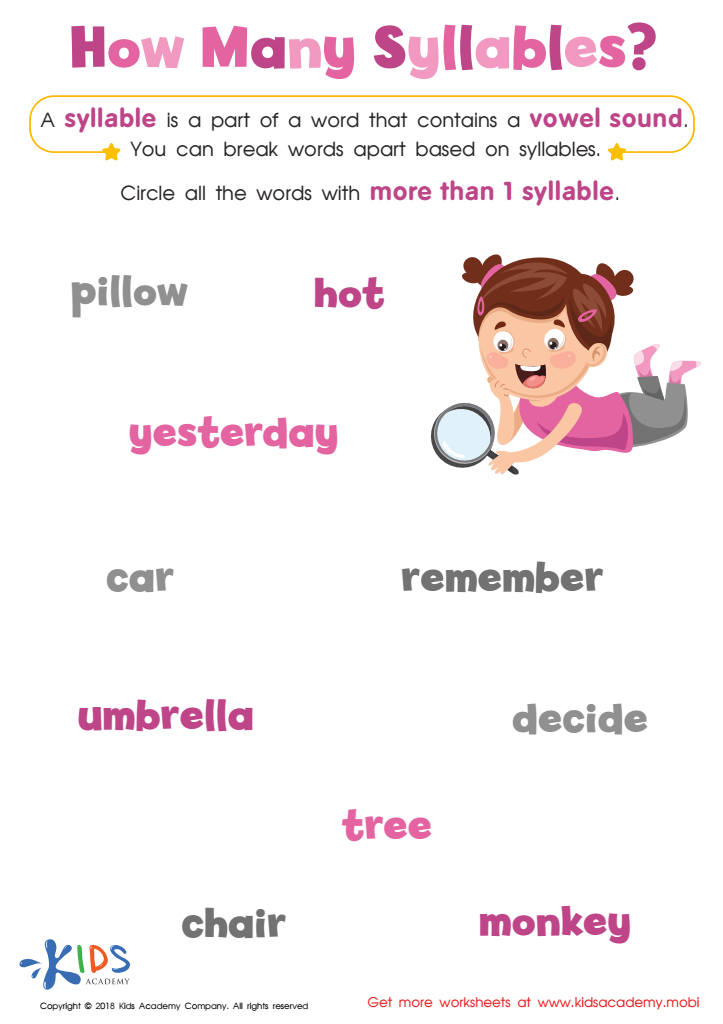
Reading: How Many Syllables Worksheet
 Assign to My Students
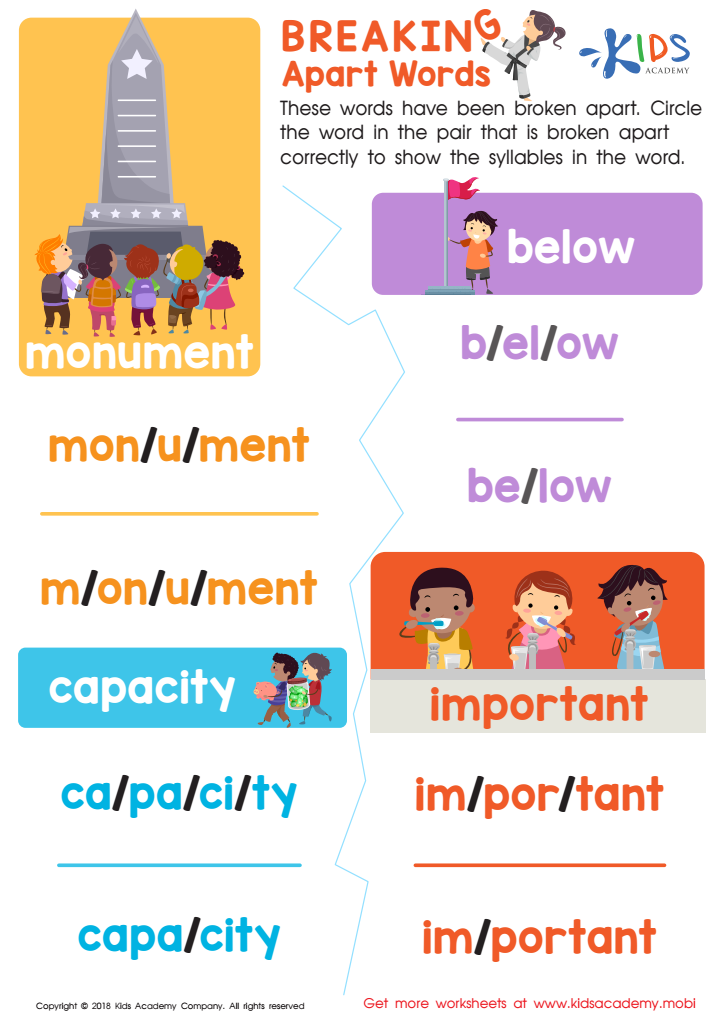
Breaking Apart Words Worksheet
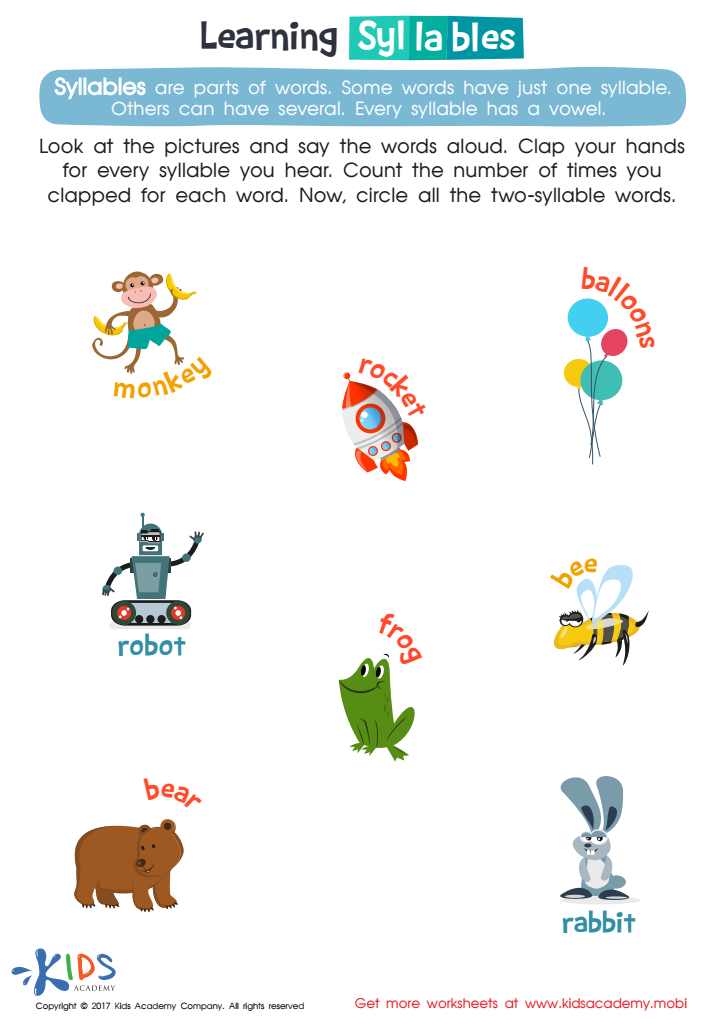
Learning Syllables Word Structure Worksheet
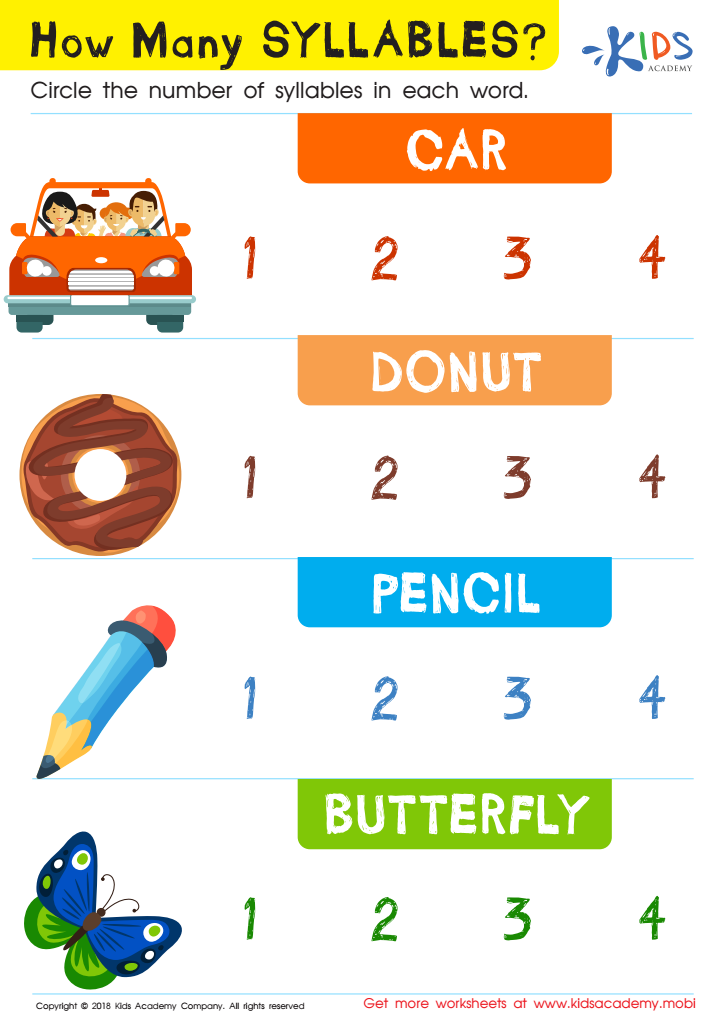
How Many Syllables? Worksheet
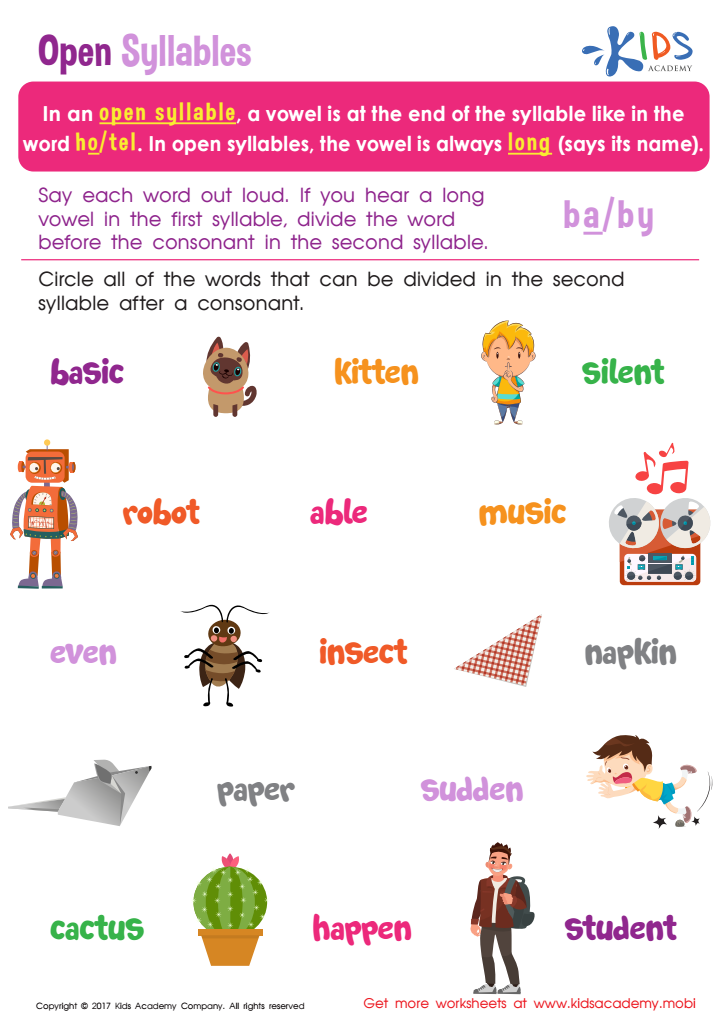
Open Syllable Printable Worksheet
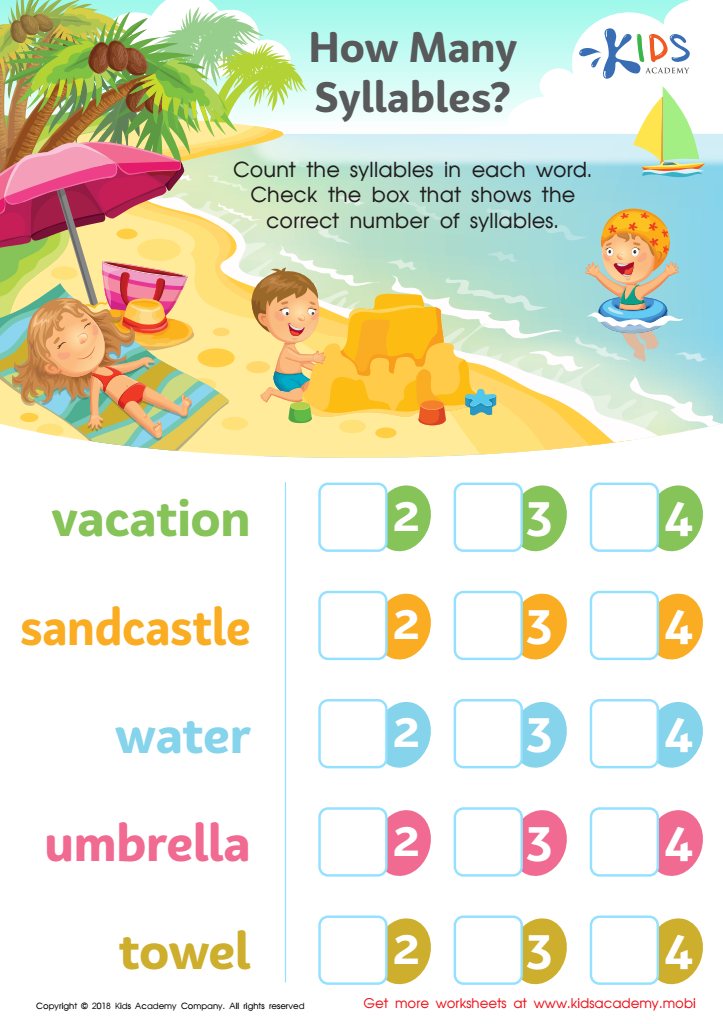
How Many Syllables Worksheet
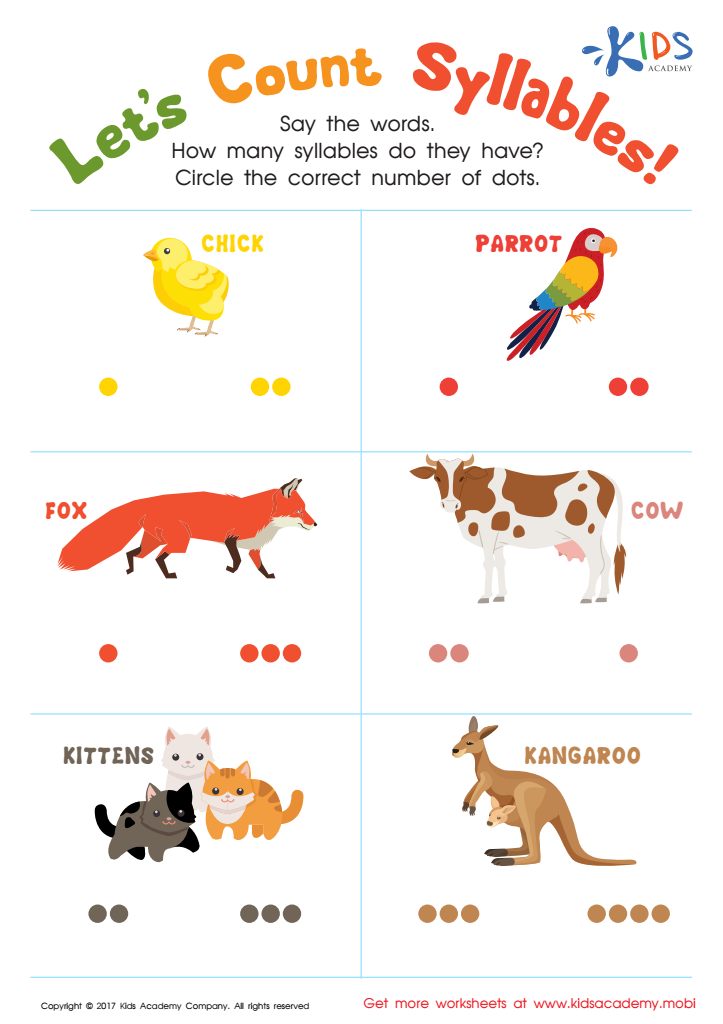
Lets Count Syllables Worksheet








Syllable identification is a foundational skill critical for early literacy development in children aged 3-8. Recognizing syllables helps children break down words into smaller, manageable units, enhancing their reading and writing abilities. For parents and teachers, promoting syllable identification fosters phonemic awareness—the ability to hear and manipulate sounds within words, which is essential for decoding skills.
Children who can identify syllables are better equipped to pronounce unfamiliar words and later transitions to spelling and writing. Early mastery of syllable recognition contributes to overall language development, empowering children to express themselves effectively. Beyond academics, these skills boost children’s confidence as they become fluent in their communication.
Additionally, engaging with syllable identification encourages fun, interactive activities like clapping games, which not only make learning enjoyable but also strengthen the bond between parents and their children or teachers and their students. When adults prioritize these early literacy skills, they pave the way for sustained academic success.
In summary, caring about syllable identification is crucial because it lays a solid foundation for reading proficiency, promotes language skills, and fosters a love of learning, ultimately setting children up for a lifetime of academic achievement.








