
Synonym identification Normal Worksheets for Ages 3-8
3 filtered results
Difficulty Level
Grade
Age
-
From - To
Subject
Activity
Standards
Explore our engaging Synonym Identification worksheets tailored for children aged 3-8! These normal difficulty worksheets help young learners enhance their vocabulary and critical thinking skills. Each activity encourages children to recognize and understand synonyms through fun, interactive exercises. Perfect for preschoolers and early grade students, these printable worksheets are designed to make learning enjoyable and effective. Whether at home or in the classroom, our tools provide a solid foundation for mastering word meanings and sharpening language abilities. Foster your child's love for words and boost their confidence with our effective synonym identification resources!
Favorites
With answer key
Interactive
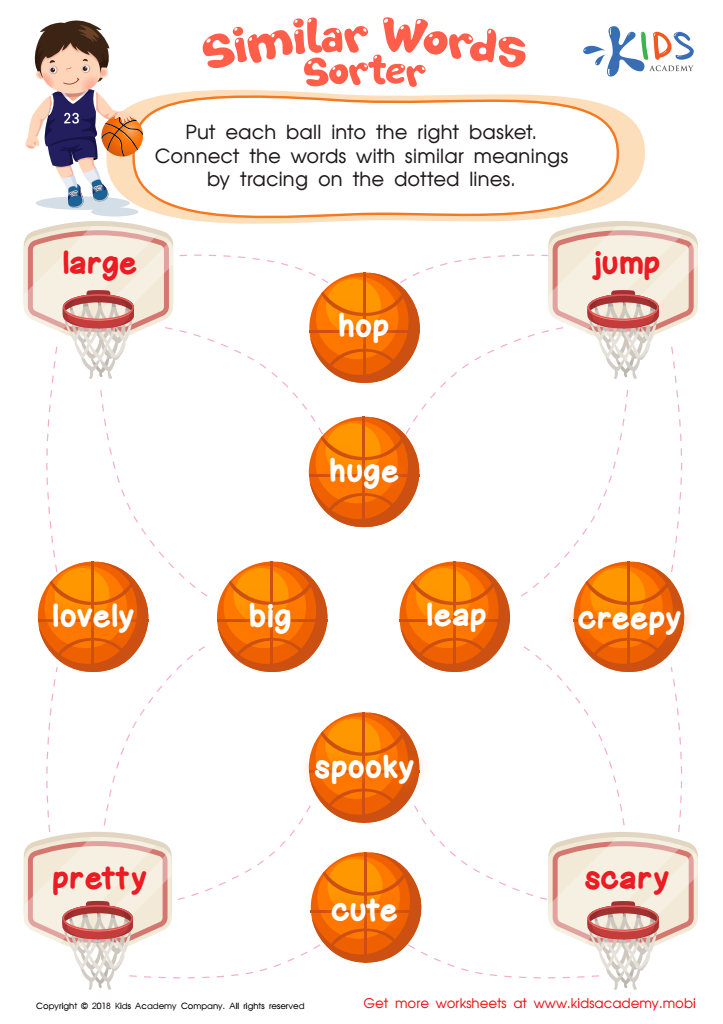
Similar Words Worksheet
Test your child's knowledge of synonyms by having them name five words for "up"! This tracing sheet is a fun way to do it: your child must trace the dotted lines to put each ball in its right basket. To do so, they must know the synonyms and trace them to the correct baskets.
 Assign to My Students
Similar Words Worksheet
Worksheet
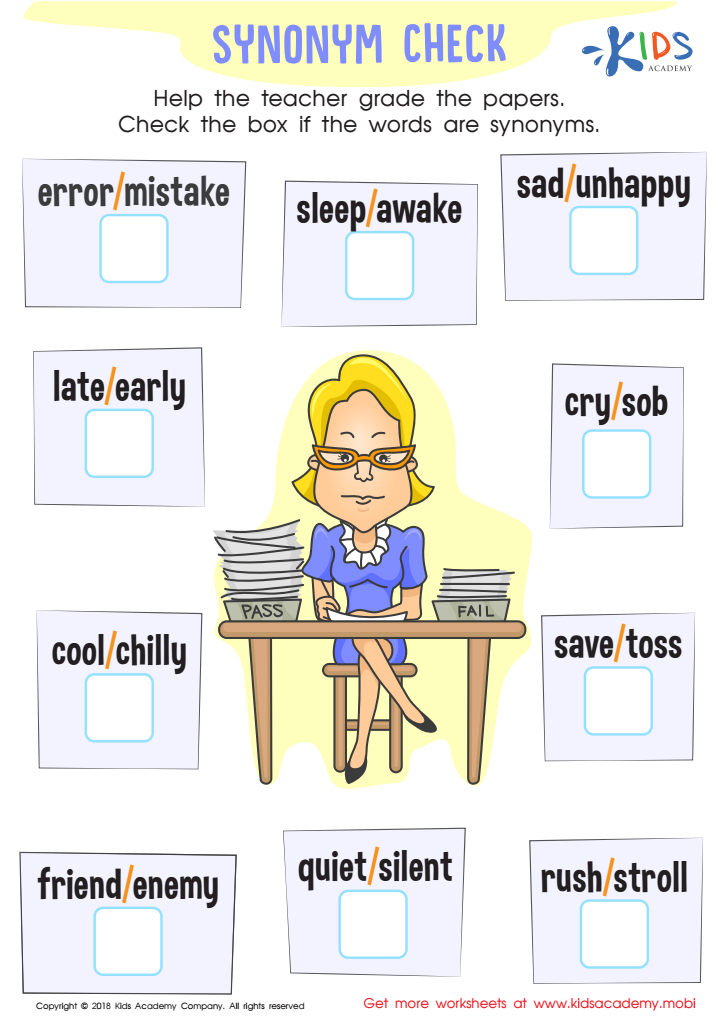
Synonym Check Worksheet
Ask your kids what a synonym is, and listen to their definitions. If needed, explain it's a word that has a similar meaning to another. Give examples, then ask them to do the same. For this worksheet, get them to help grade the papers. Have them check the boxes if the words are synonyms.
Synonym Check Worksheet
Worksheet
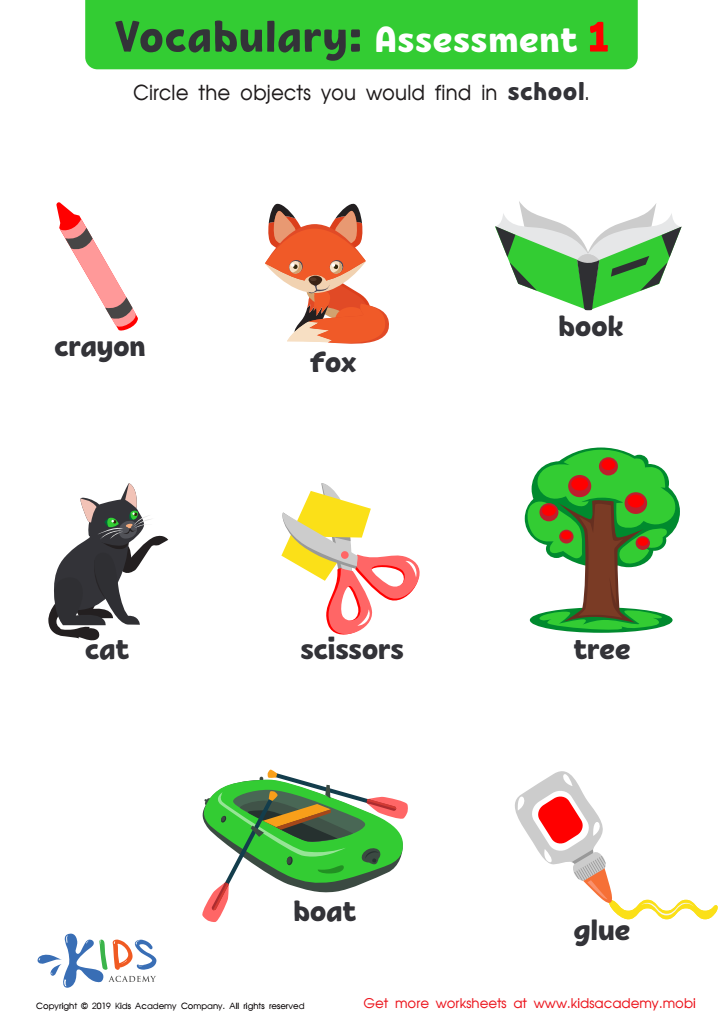
Vocabulary: Assessment 1 Worksheet
Want to check your child's vocabulary? This worksheet has kids identify objects from school through picture clues. It reinforces reading and fine motor skills, while providing an assessment of their reading growth and needs.
Vocabulary: Assessment 1 Worksheet
Worksheet
Join Kids Academy for Free
Who is primarily going to use this learning content?







Synonym identification is important for children aged 3-8 because it fosters language development and enhances their communication skills. Understanding that different words can have the same or similar meanings helps kids become more versatile speakers and writers. When children know synonyms, they can express themselves more precisely and clearly, avoiding repetitive language and making their speech and writing more engaging.
Additionally, synonym identification supports reading comprehension. Children who can recognize synonyms are better able to understand text, infer meanings, and grasp context without getting confused by unfamiliar words. This skill contributes to smoother, more enjoyable reading, which in turn fosters a love for literature and lifelong learning.
Cognitive development is also a key aspect. Learning about synonyms stimulates critical thinking as children learn to compare and contrast different words and contexts. This kind of mental exercise enhances their ability to make connections, categorize information, and expand their vocabulary, making learning in general more efficient and effective.
Moreover, engaging young children in synonym activities can be a fun and interactive way to boost their confidence in using language. Teachers and parents showing interest in synonym identification not only improve children's language abilities but also help them build a strong foundation for future academic success.








