Time-telling skills Normal Worksheets for Ages 3-8
3 filtered results
-
From - To
Discover our engaging collection of time-telling worksheets designed specifically for children aged 3-8. At Kids Academy, we focus on nurturing foundational skills in young learners. Our printable worksheets offer fun, interactive, and educational activities to teach kids how to read analog and digital clocks. Perfect for preschoolers up to third graders, these resources help children understand hours, minutes, and the concept of time through colorful and age-appropriate tasks. Enhance your child's learning experience with our time-telling worksheets and watch them master this essential life skill with confidence and ease. Access them today and turn learning time into fun time!
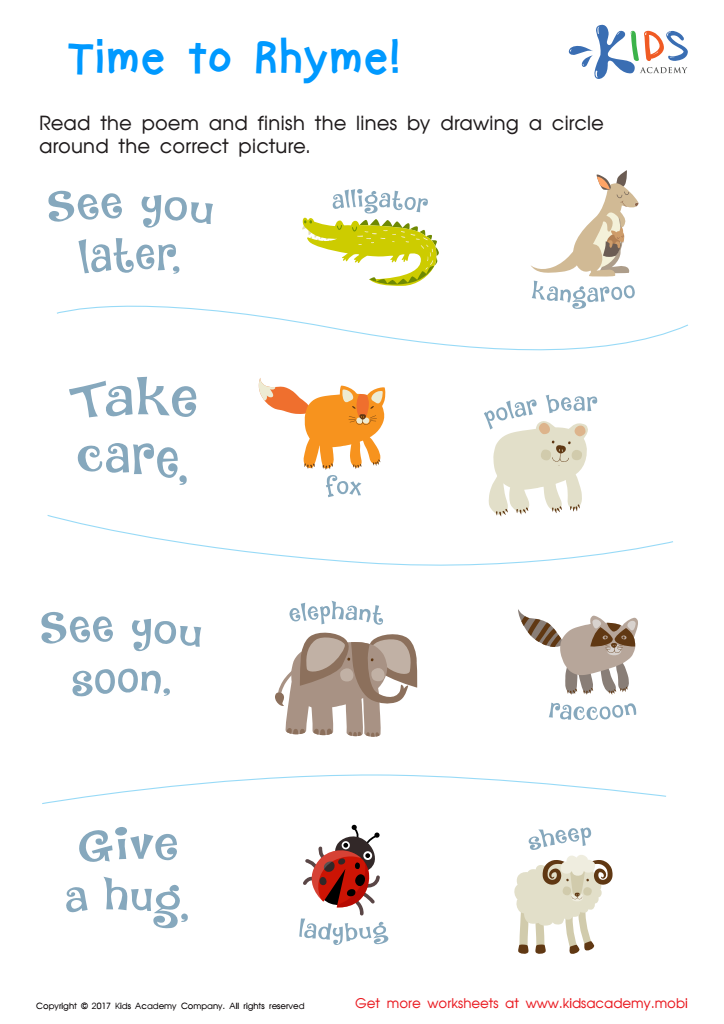
Time to Rhyme Rhyming Worksheet
 Assign to My Students
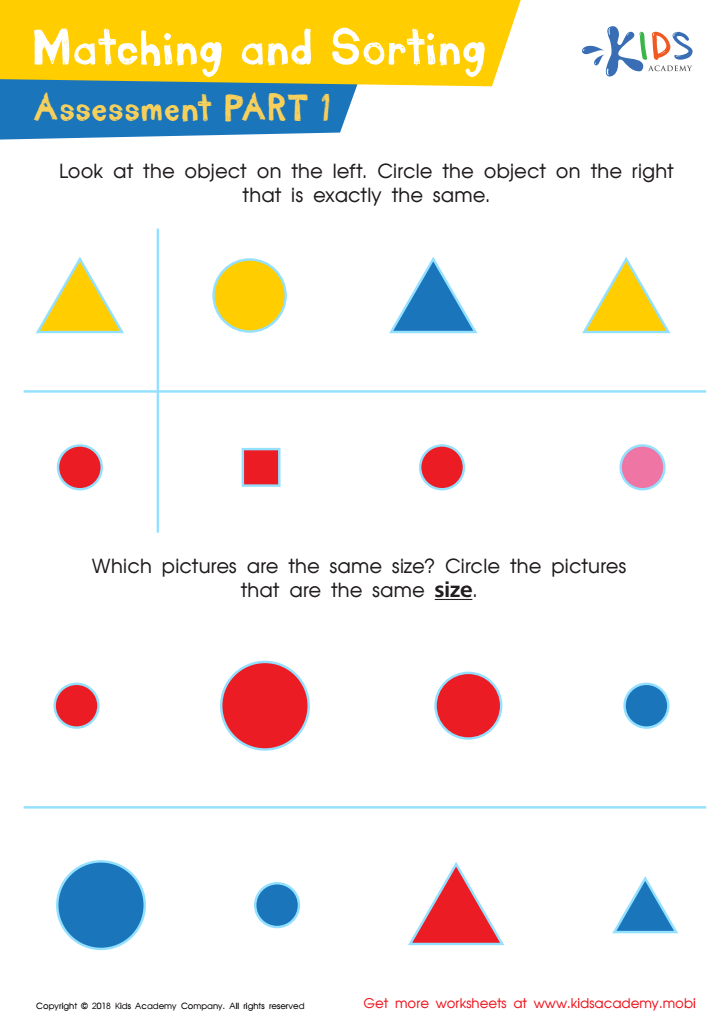
Matching and Sorting for Kindergarten: Assessment 1 Worksheet
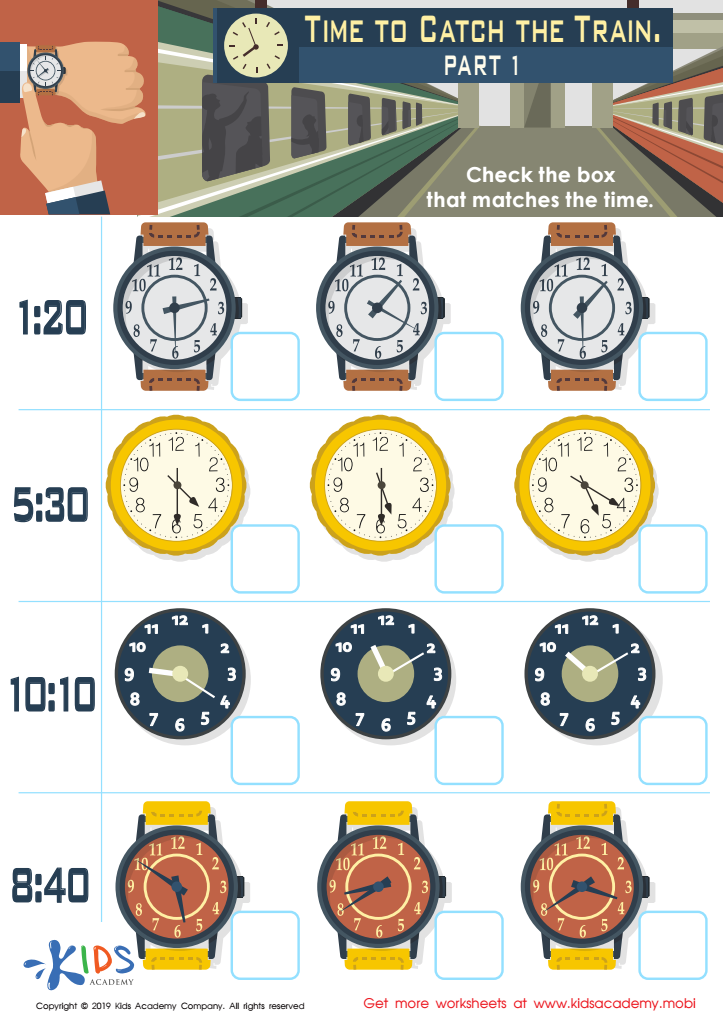
Time to Catch the Train Part 1 Worksheet


.jpg)

.jpg)


Time-telling skills are crucial for young children aged 3 to 8 as they form the foundation for developing a wide array of essential life skills. Firstly, understanding time helps children grasp daily routines and schedules, fostering a sense of security and predictability. For instance, knowing when it's bedtime or snack time creates structure in their lives, preventing confusion and promoting consistency.
Additionally, time-telling boosts children’s number recognition and arithmetic abilities. Reading an analog clock or understanding digital time enhances cognitive skills like counting, sequencing, and pattern recognition, all vital for later mathematical proficiency.
Importantly, time comprehension teaches responsibility and punctuality. When children learn to read a clock, they gradually understand the importance of being on time for school, playdates, and other commitments. These habits, ingrained early, transcend into adulthood, fostering responsible, timely behavior in the professional and personal realms.
Furthermore, and in a social context, time-telling skills enable children to effectively engage in conversations about activities, plans, and events, enhancing communication skills.
In summary, teaching children to tell time is a fundamental aspect of their cognitive development, time management, and social interaction, preparing them for a well-structured, responsible, and communicative life.








