Understanding constellations Normal Worksheets for Ages 3-8
3 filtered results
-
From - To
Explore the fascinating world of constellations with our "Understanding Constellations" normal worksheets designed for children aged 3-8. These engaging activities introduce young learners to the wonders of the night sky through fun and interactive exercises. From identifying familiar star patterns to coloring celestial images, our worksheets encourage creativity and spark curiosity about astronomy. Perfect for early education, these resources strengthen essential skills such as critical thinking, observation, and fine motor development. Enhance your child's learning experience today with these captivating worksheets that bring the magic of constellations alive in a playful and educational way!
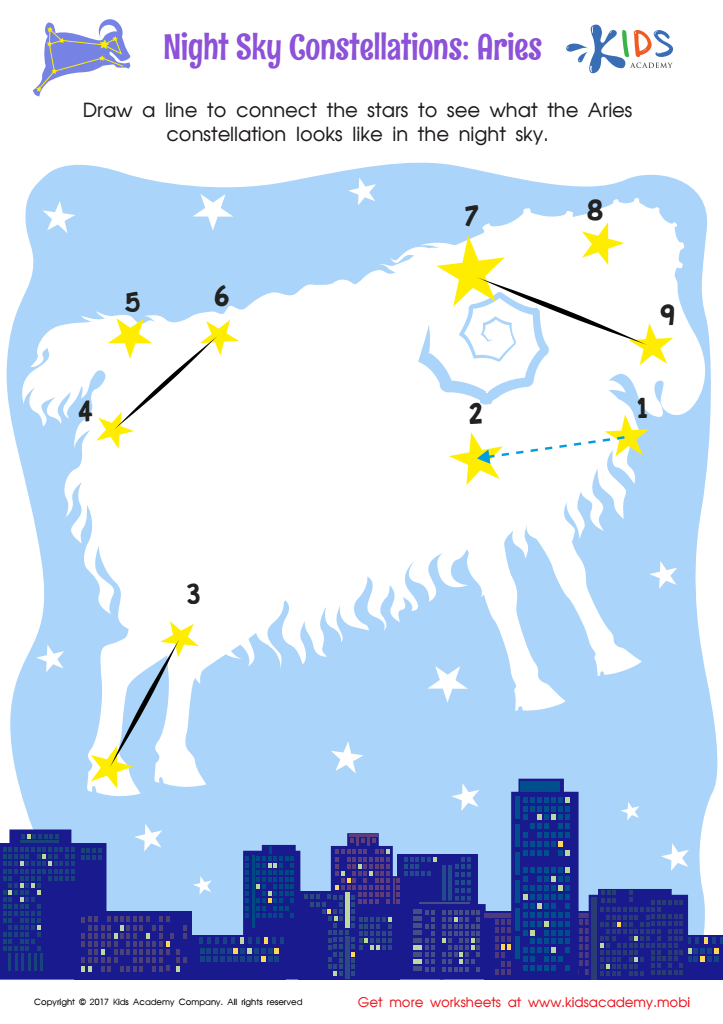
Night Sky Constellations: Aries Worksheet
 Assign to My Students
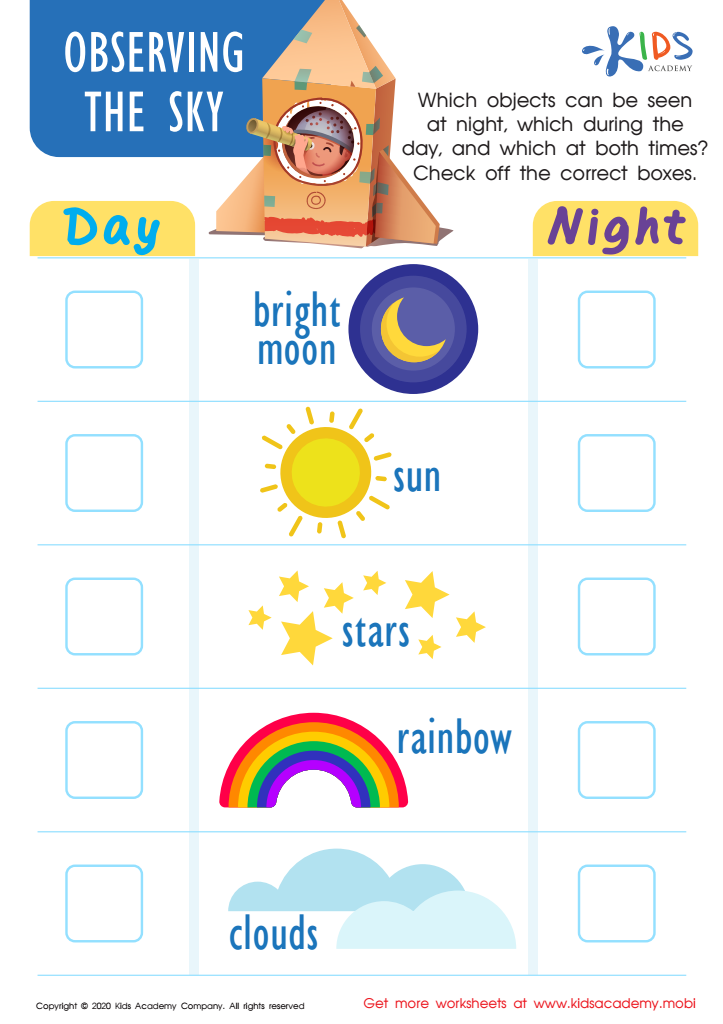
Observing the Sky Worksheet
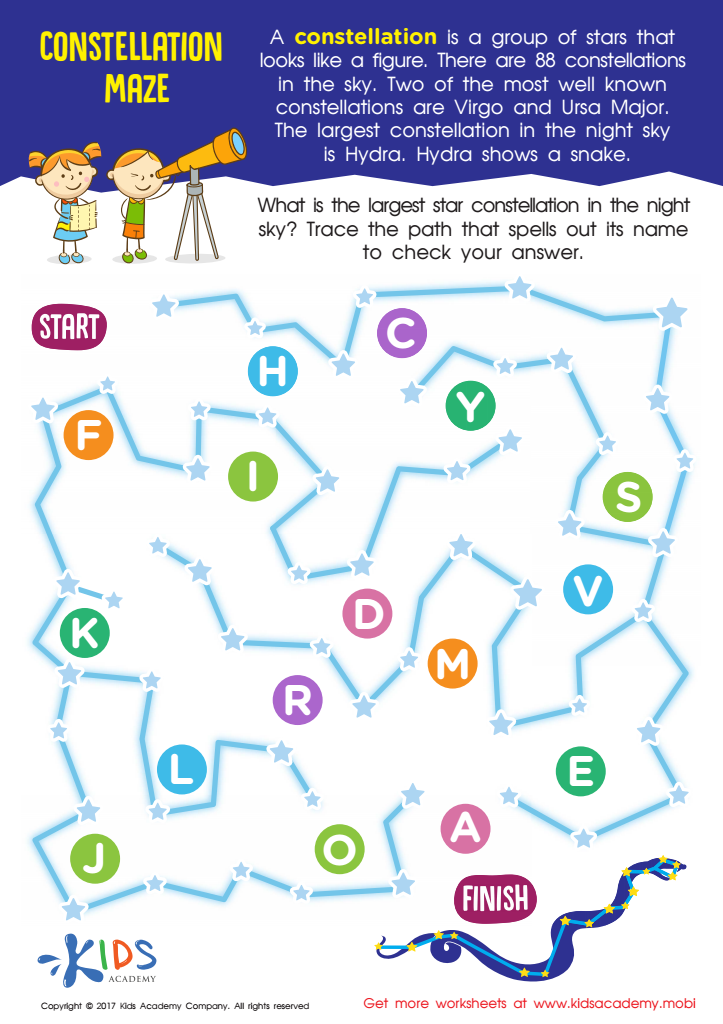
Constellations Worksheet




.jpg)


Understanding constellations can be a remarkable opportunity for young children aged 3-8 to explore the wonders of the universe. Parents and teachers should care about fostering this interest for several reasons.
Firstly, engaging with constellations stimulates children's curiosity and imagination. As they learn about the stars and their patterns, they discover stories and myths behind various constellations, feeding their creativity and love for storytelling. This imaginative play enhances cognitive development and encourages critical thinking.
Secondly, learning about constellations promotes early science and astronomy education. Children gain an appreciation for nature and the environment, fostering a sense of wonder about the cosmos. This knowledge can inspire future interests in science, technology, engineering, and mathematics (STEM) fields.
Moreover, exploring constellations can strengthen parent-child or teacher-student bonds. Stargazing together offers meaningful experiences, fostering communication and shared learning. It encourages outdoor play and helps children develop observational skills.
Lastly, understanding constellations reinforces spatial awareness and spatial reasoning, crucial for young learners. By connecting land and sky, children begin to comprehend their place in the universe, building a foundation for lifelong learning and exploration. Encouraging this curiosity nurtures a generation equipped to ask questions and seek knowledge about the world around them.








