Understanding forces Normal Worksheets for Ages 3-8
6 filtered results
-
From - To
Welcome to our "Understanding Forces Normal Worksheets" for children ages 3-8! These engaging worksheets are designed to introduce young learners to fundamental concepts of force in a fun and interactive manner. Each worksheet features vibrant illustrations and age-appropriate activities that stimulate curiosity and critical thinking. Children will explore concepts such as pushing, pulling, and motion through hands-on exercises, enhancing their observational skills and understanding of physical concepts. Ideal for both home and classroom use, these worksheets foster independent learning while developing essential motor, cognitive, and comprehension skills. Download today to make learning about forces exciting and accessible for your little ones!
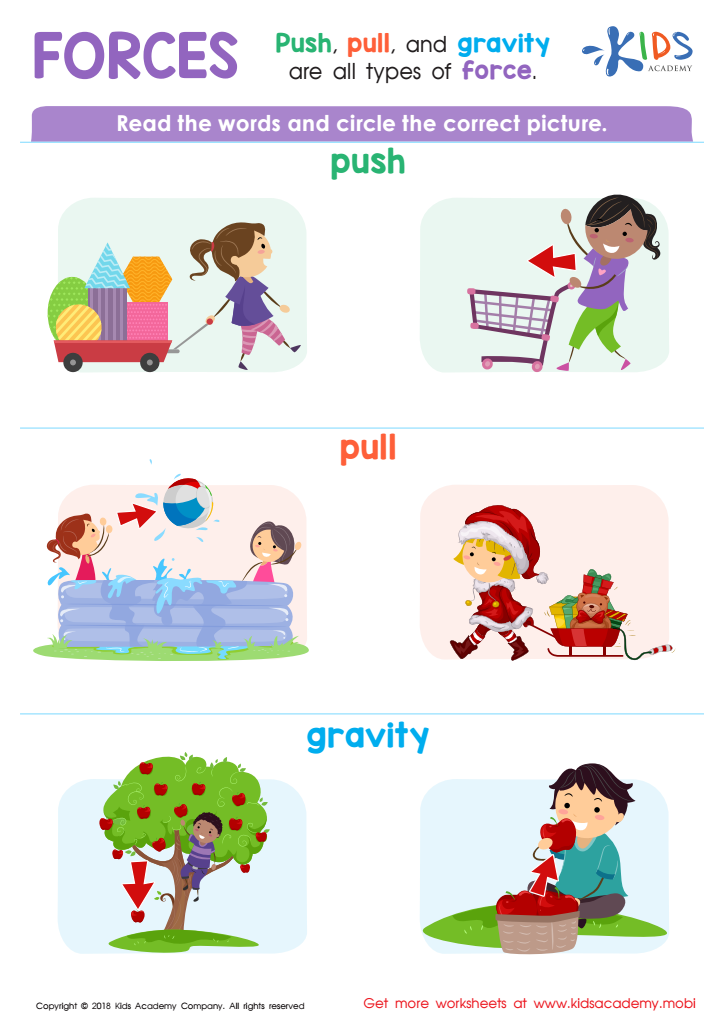
Forces Worksheet
 Assign to My Students
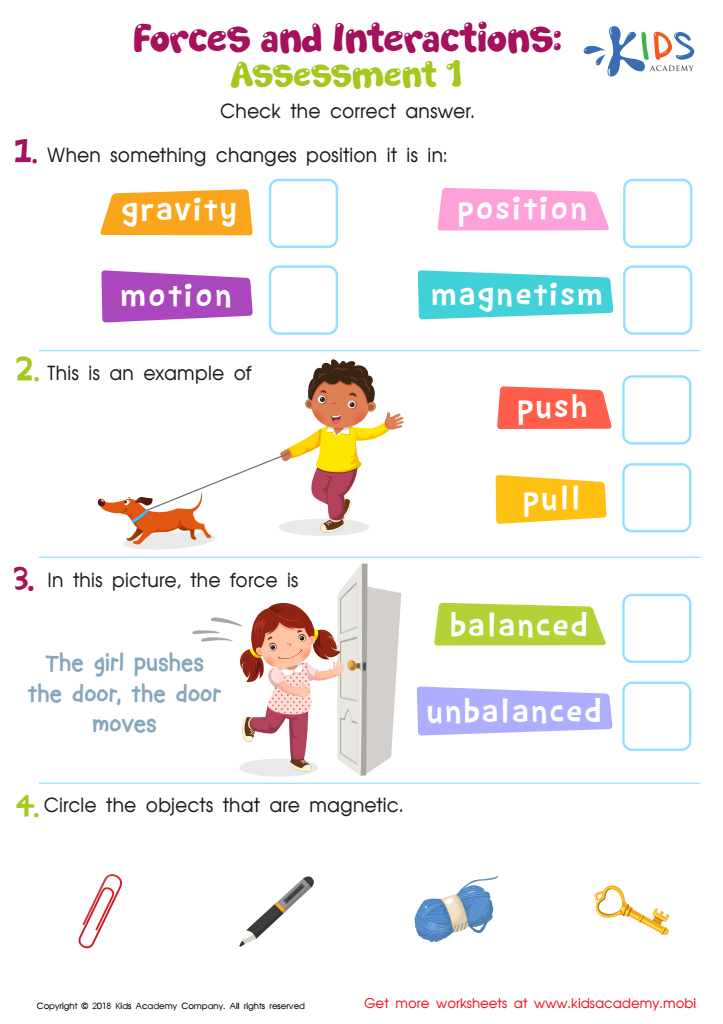
Forces and Interactions Printable
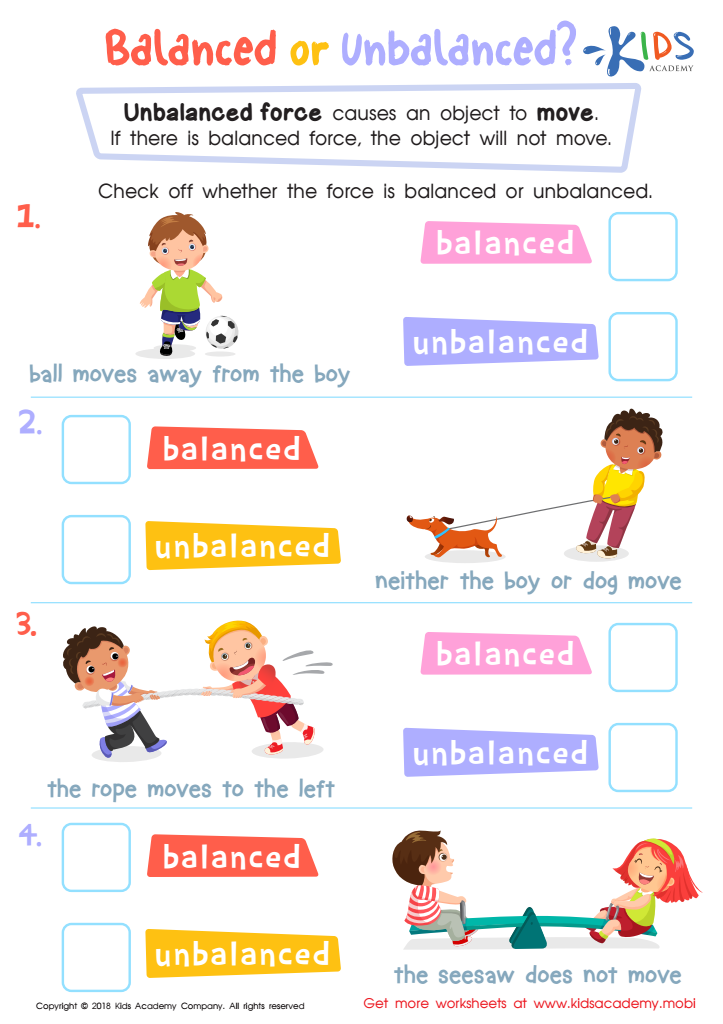
Balanced or Unbalanced Science Worksheet
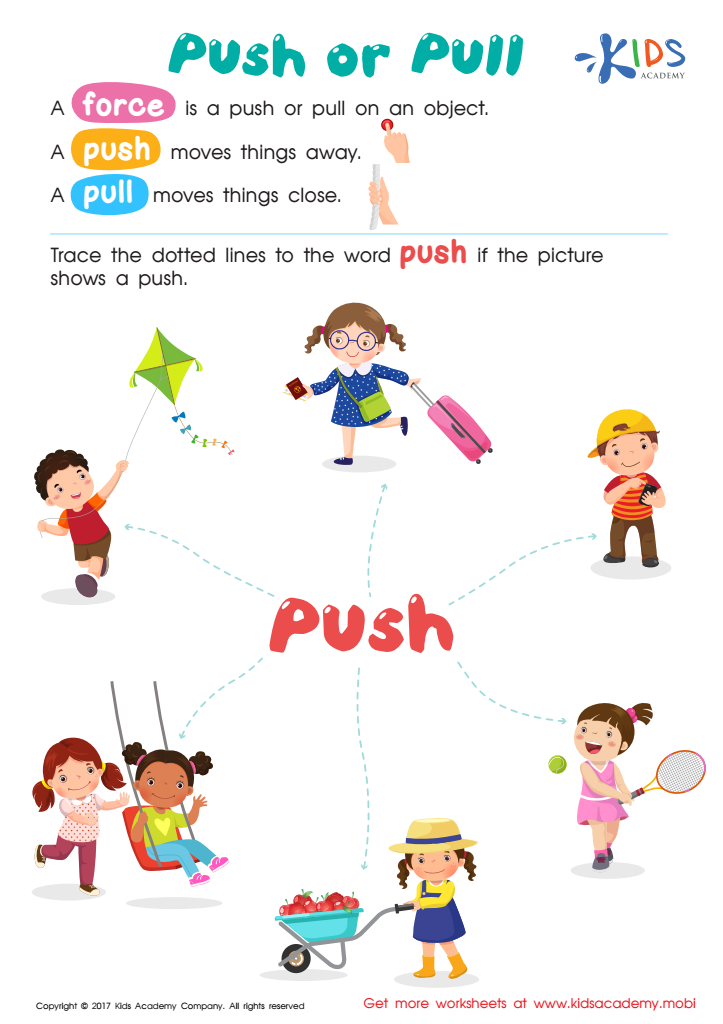
Push or Pull Worksheet
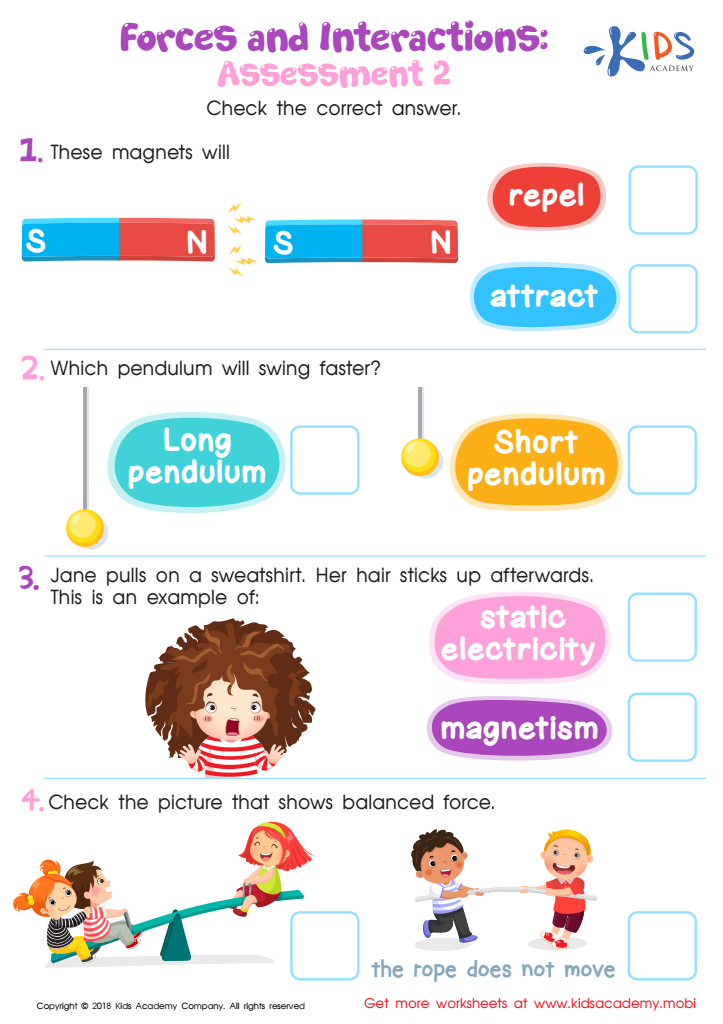
Forces and Interactions Worksheet For 3rd Grade
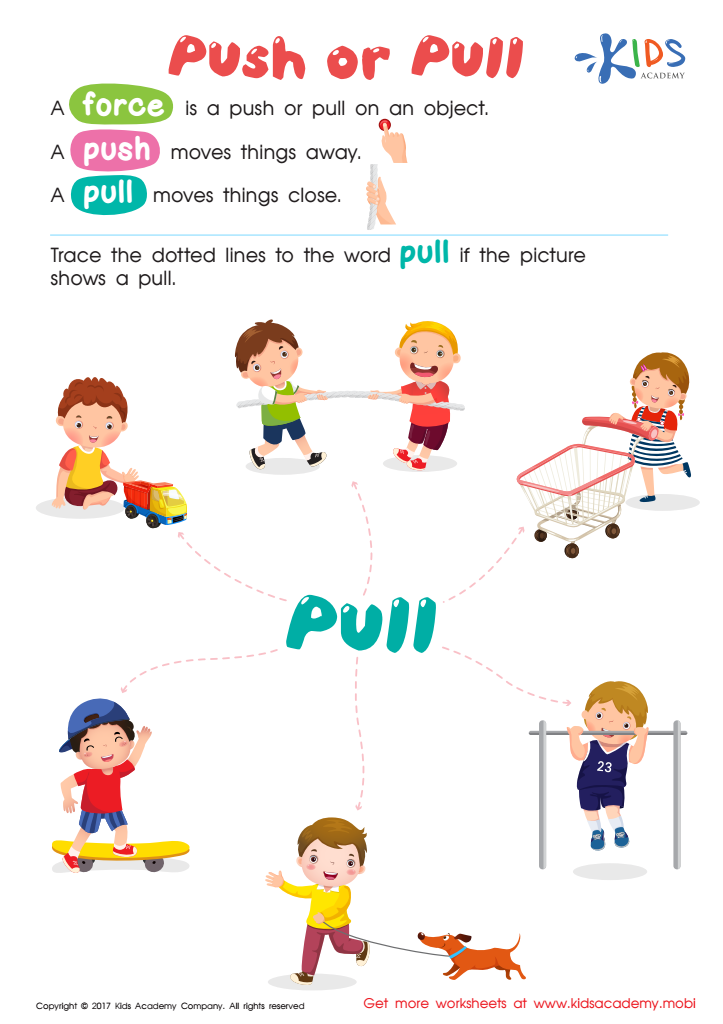
Pull or Push Worksheet







Understanding forces is crucial for children aged 3-8 as it lays the foundation for their physical and cognitive development. At this age, children are naturally curious, and exploring forces—like push and pull—encourages inquiry and critical thinking. Teaching these concepts helps young learners intuitively grasp cause-and-effect relationships, fostering scientific reasoning from an early age.
For example, when children push a toy car to make it move or observe how objects fall, they are directly engaging with the concept of force. This hands-on learning not only enhances their motor skills but also ignites their creativity and problem-solving abilities. It encourages them to ask questions and explore their environment, leading to deeper engagement and understanding.
Moreover, understanding forces is essential for grasping more complex scientific concepts later in life. It supports the development of basic math skills as children begin to measure distance, weight, and speed during their experiments.
Parents and teachers play a pivotal role in creating enriching learning experiences, guiding children through play-based activities that illustrate forces. By caring about this foundational knowledge, they help cultivate a love for science and an inquisitive mindset that will benefit students academically and cognitively as they grow.








