Understanding light sources Normal Worksheets for Ages 3-8
4 filtered results
-
From - To
Welcome to our “Understanding Light Sources” worksheets designed for children ages 3-8! These engaging resources introduce young learners to the concept of light sources in a fun and interactive manner. Through vibrant illustrations and simple, age-appropriate activities, children will explore natural and artificial light sources found in their everyday environments. Our worksheets encourage critical thinking and promote observation skills while enhancing their understanding of how light affects the world around them. Ideal for classroom or home use, these worksheets are perfect for developing early science skills in young minds. Dive into the wonders of light and spark your child's curiosity today!
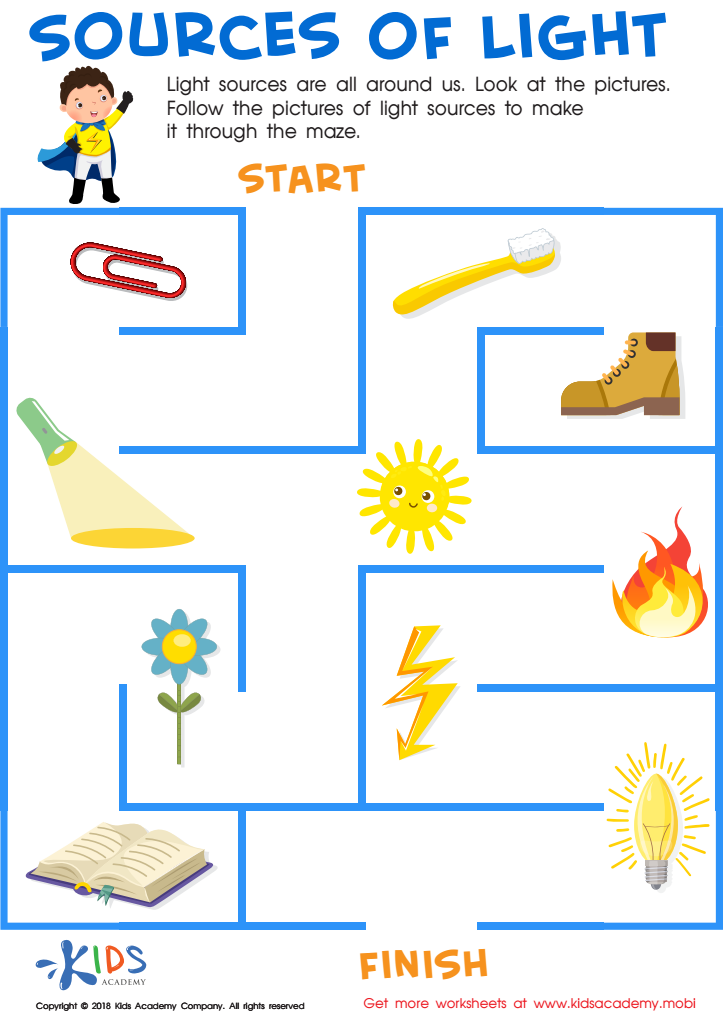
Sources of Light Worksheet
 Assign to My Students
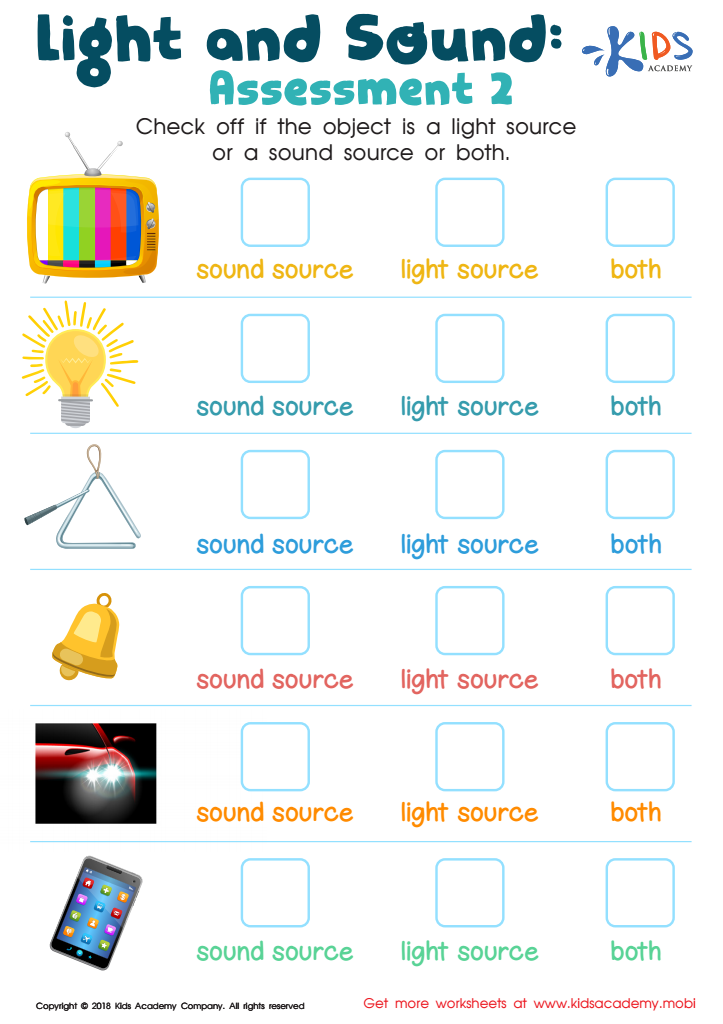
Light and Sound: Assessment 2 Worksheet
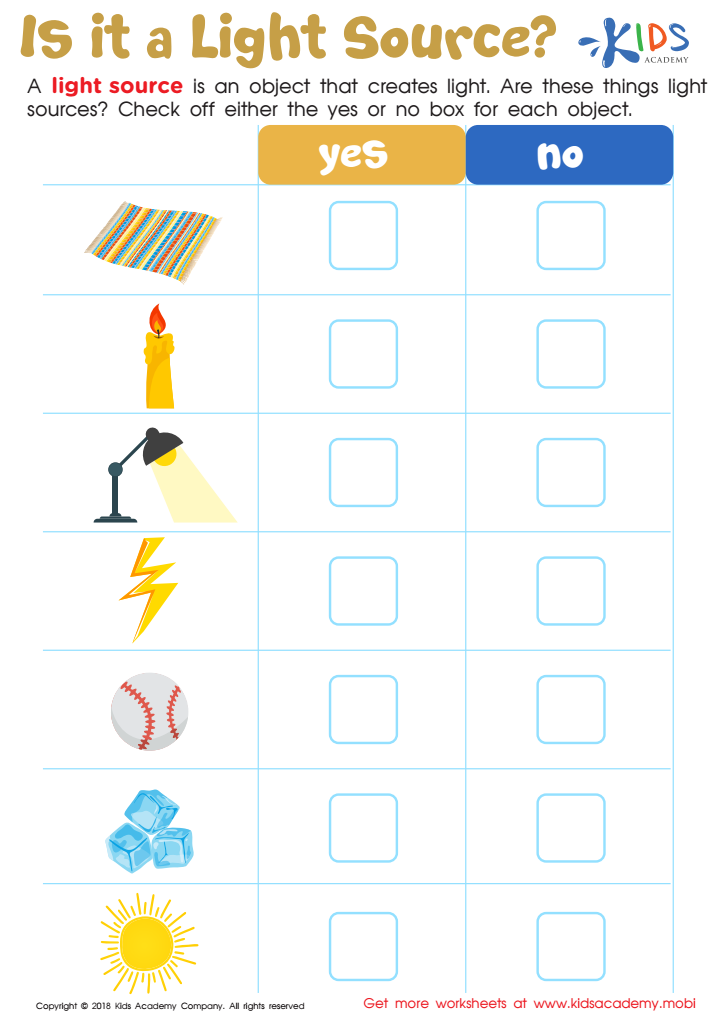
Is It a Light Source? Worksheet
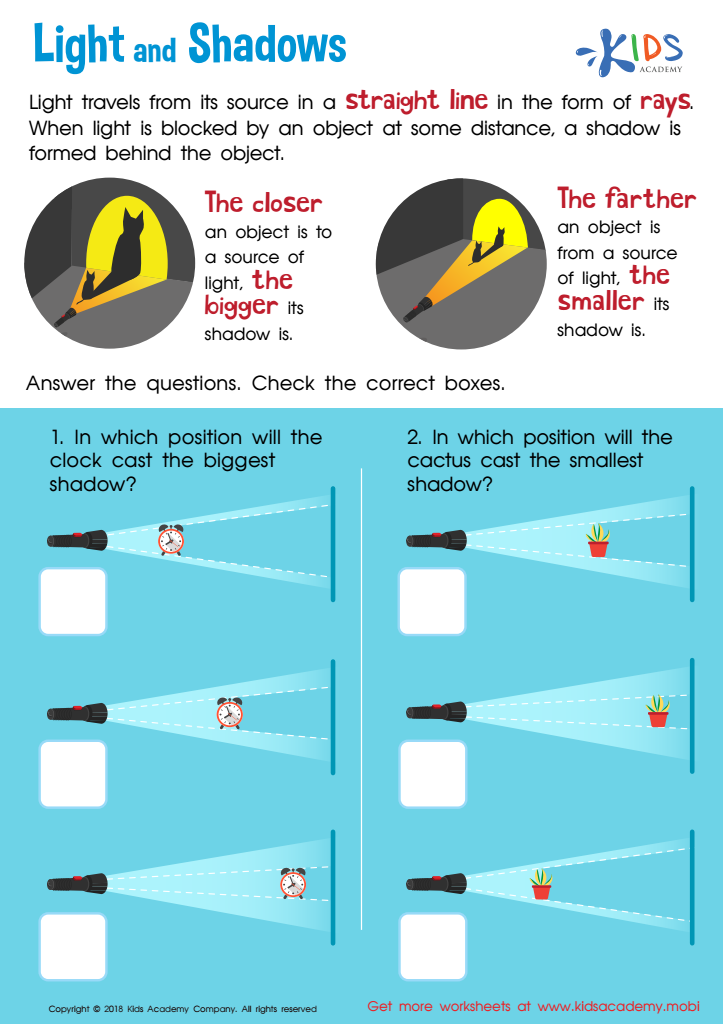
Light and Shadow Worksheet for Grade 3








Understanding light sources is crucial for children ages 3-8 as it lays the foundation for essential scientific concepts while also stimulating their curiosity about the world. At this inquisitive age, children are naturally drawn to exploring how things work, and light is a fundamental aspect of their daily lives. By learning about light sources—such as the sun, light bulbs, and candles—they gain insight into how light affects the environment, safety, and simple science concepts such as reflections and shadows.
Additionally, understanding light sources enhances sensory development and encourages observational skills. Children start to recognize differences between natural and artificial light, fostering critical thinking. This knowledge also supports playful learning experiences, where children can engage in activities like shadow puppets and light games, which combine creativity and discovery.
Moreover, parents and teachers who facilitate discussions and activities around light sources can nurture a child's scientific literacy and inspire future learning in STEM (Science, Technology, Engineering, and Mathematics) fields. This foundational knowledge empowers children, making them more aware of their surroundings, which is vital in developing life skills. Ultimately, an understanding of light sources enriches a child's educational experience while also promoting safety and awareness in everyday situations.








