Understanding number relationships Normal Worksheets for Ages 3-8
3 filtered results
-
From - To
Explore our "Understanding Number Relationships Worksheets" designed specifically for children aged 3-8! These engaging, age-appropriate activities help young learners develop essential number sense by exploring concepts such as counting, number comparison, and basic addition and subtraction. Our worksheets promote hands-on learning, enabling students to recognize patterns and relationships among numbers through fun and interactive exercises. Perfect for home or classroom use, these resources enhance early math skills while keeping kids entertained. Foster a love for mathematics in your child as they learn through play with our expertly crafted worksheets, ensuring they build a strong foundation for future learning in an enjoyable way!
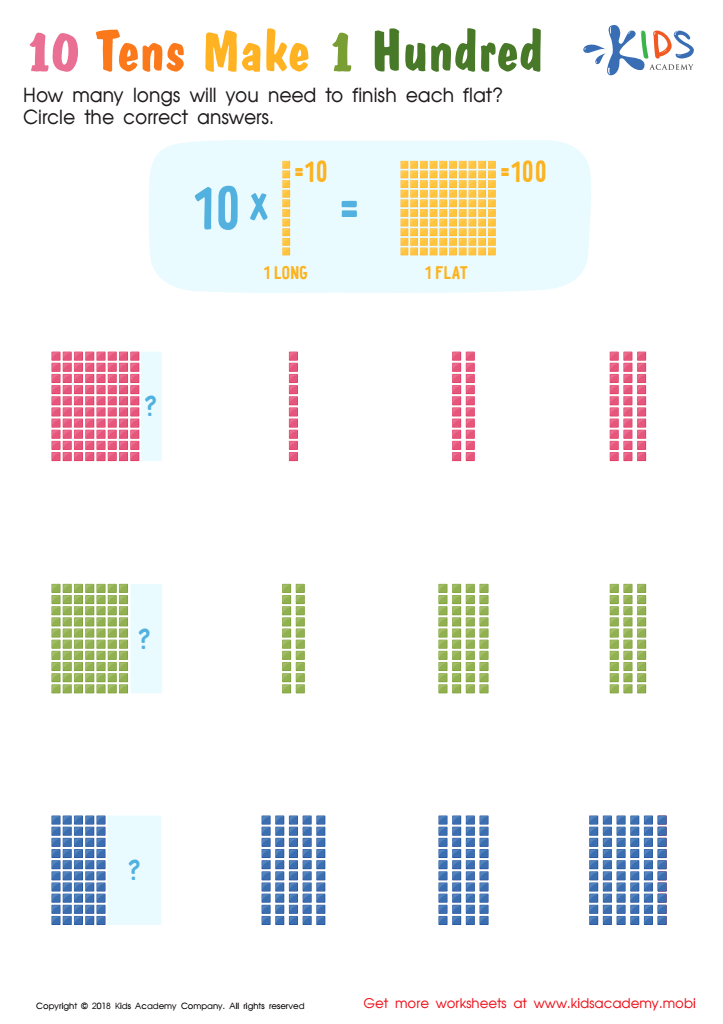
10 Tens Make 1 Hundred Worksheet
 Assign to My Students
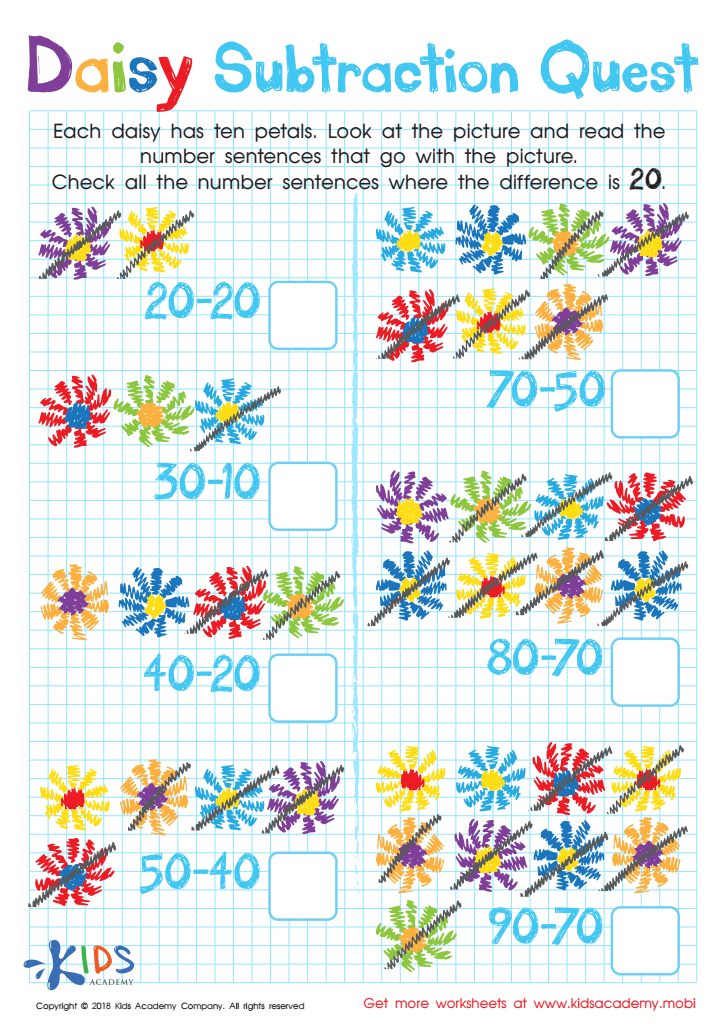
Daisy Subtraction Quest Worksheet
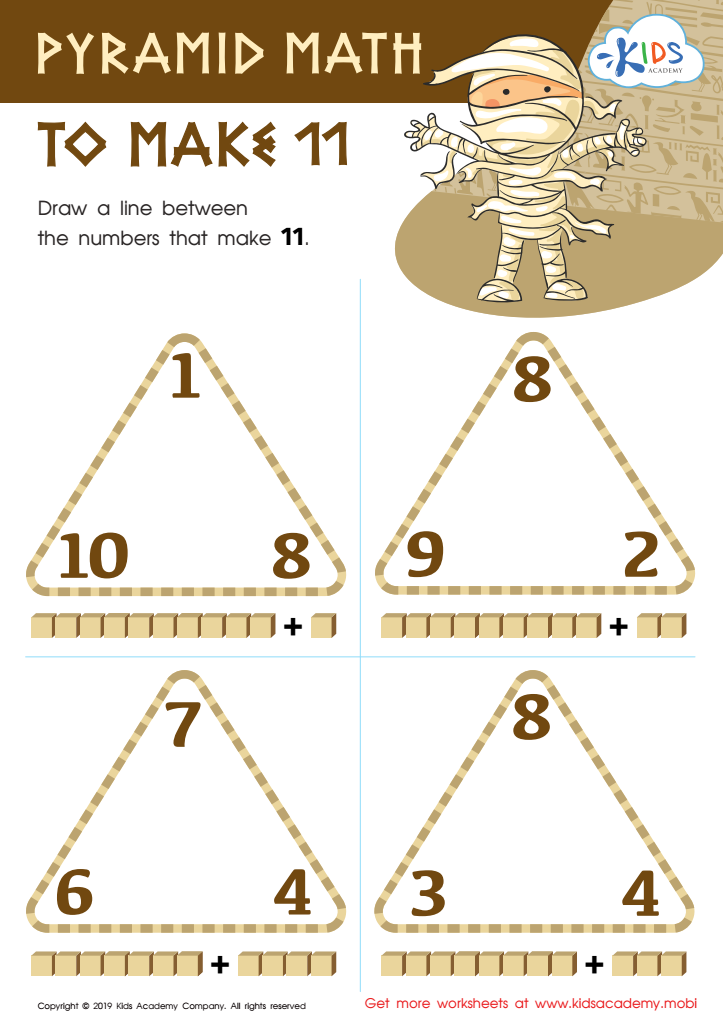
Pyramid Math to Make 11 Worksheet








Understanding number relationships is fundamental for children aged 3-8, laying a strong foundation for their future mathematical learning. At this developmental stage, children begin to explore numbers not just as isolated symbols, but as concepts linked to quantities, patterns, and operations. Recognizing these relationships enhances their ability to compare and categorize objects, which is a precursor to more complex mathematical operations.
For parents and teachers, promoting an awareness of number relationships helps in fostering critical thinking and problem-solving skills. When children grasp how numbers relate to each other, they can develop a deep understanding of addition, subtraction, and even multiplication in later years. This foundational knowledge can lead to improved performance in math and greater confidence.
Engaging with number relationships can also make learning more enjoyable. Simple activities, such as counting snacks or playing number games, encourage exploration and discussion that can strengthen a child's communication skills. Ultimately, a strong grasp of number relationships helps children navigate their world more effectively, promoting lifelong skills that extend beyond academics. When parents and teachers collaborate to nurture this understanding, they equip children not only for future academic success but for everyday life scenarios where numerical awareness is key.








