Understanding perspectives Normal Worksheets for Ages 3-8
3 filtered results
-
From - To
Welcome to our “Understanding Perspectives” Normal Worksheets for ages 3-8! Designed to foster critical thinking and empathy in young learners, these worksheets guide children through various viewpoints and experiences, helping them grasp the concept of perspective. Engaging activities encourage creativity while challenging them to think about how others might see the world differently. Ideal for both classrooms and home learning, our resources promote essential social skills and emotional intelligence in a fun, interactive way. Download our worksheets today and watch your child develop a deeper understanding of themselves and the diverse perspectives of their peers!
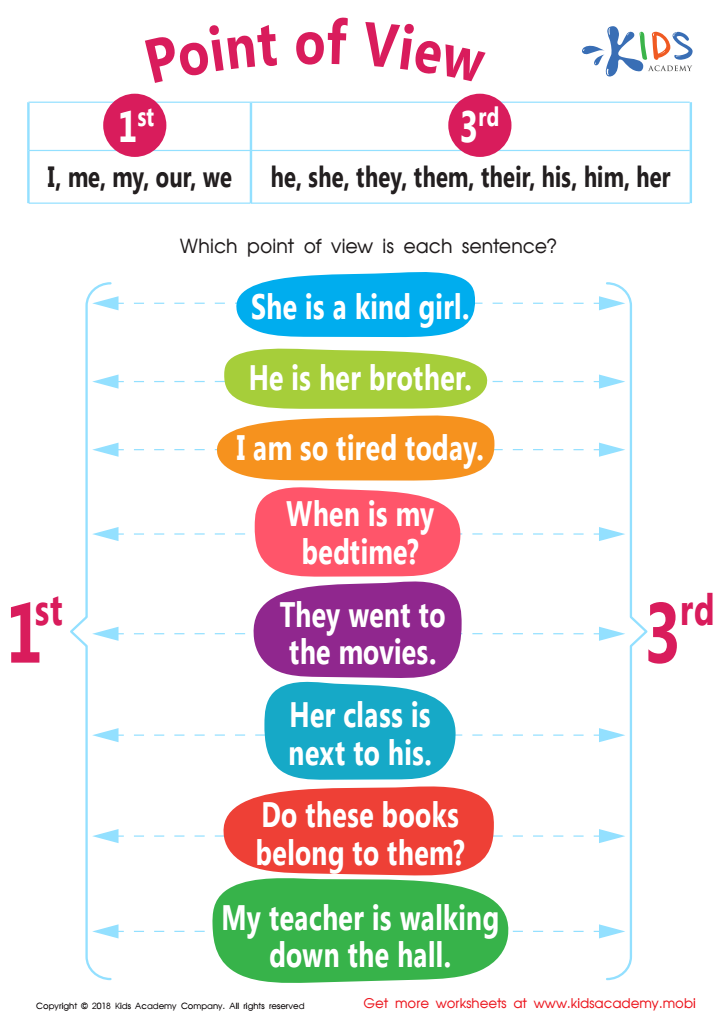
Point of View Worksheet
 Assign to My Students
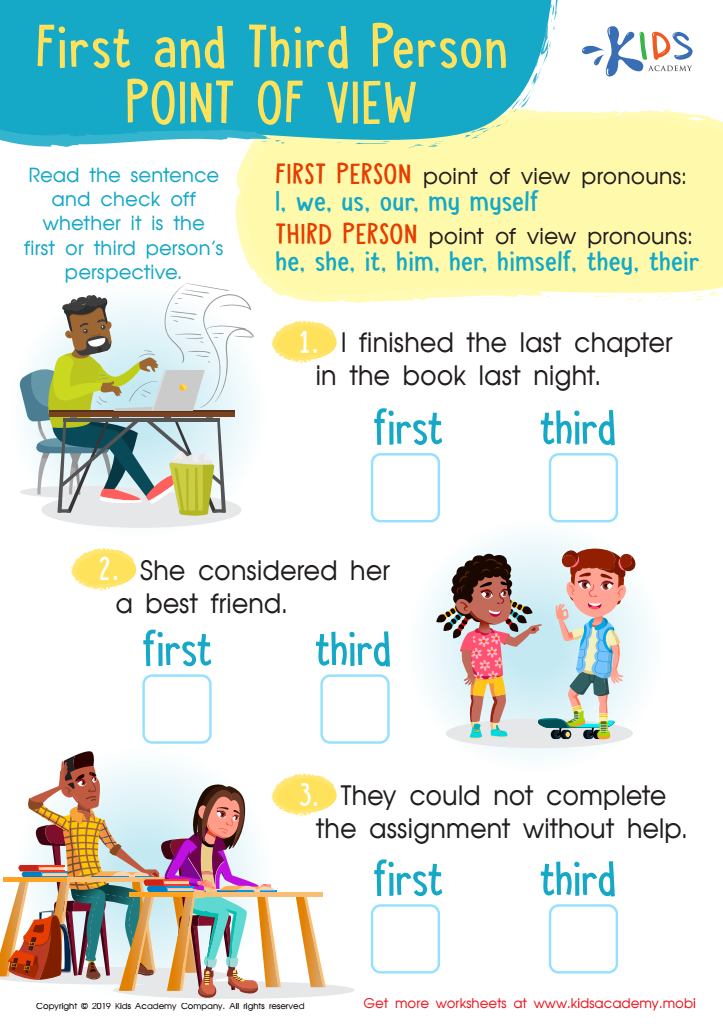
First and Third Person Point of View Worksheet
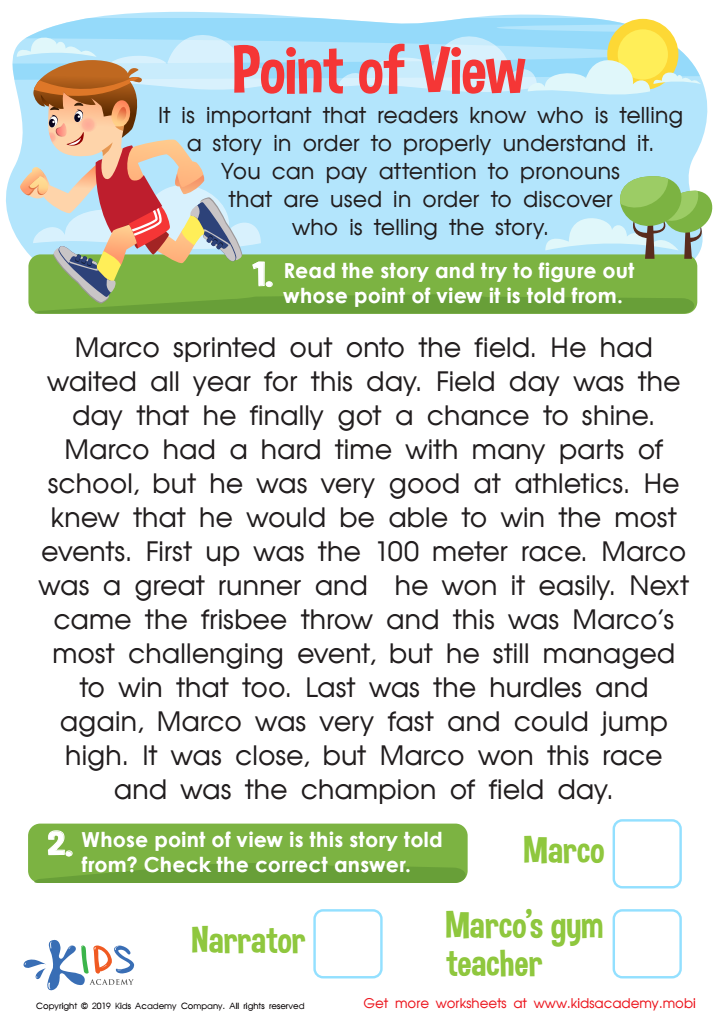
Point of View Worksheet







Understanding perspectives is crucial for children aged 3-8 as it lays the foundation for empathy, social skills, and effective communication. During these formative years, children are just beginning to navigate social interactions and learn how their behaviors affect others. Teaching them to recognize and appreciate different viewpoints helps them grasp the concept that others may have thoughts and feelings that differ from their own.
This understanding fosters healthier relationships, reduces conflicts, and encourages cooperation among peers. It helps children develop critical thinking skills as they learn to consider alternatives and engage in discussions with respect. Moreover, appreciating diverse perspectives promotes inclusivity, allowing children to be more accepting of differences in culture, backgrounds, and experiences.
Parents and teachers play a vital role in this process by modeling perspective-taking through discussions and interactions. Engaging in storytelling, role-playing, or various collaborative activities can enhance children's ability to see situations from multiple angles. By nurturing this skill at a young age, adults can guide children toward becoming compassionate, open-minded individuals who thrive in diverse environments, both socially and academically. Ultimately, fostering an understanding of perspectives fuels emotional intelligence and lays the groundwork for successful, lifelong interpersonal relationships.








