
Understanding pollination Normal Worksheets for Ages 3-8
4 filtered results
Difficulty Level
Grade
Age
-
From - To
Subject
Activity
Standards
Discover the wonders of nature with our "Understanding Pollination" worksheets, specifically designed for children aged 3-8! These engaging and educational resources provide young learners with a fun way to explore the essential process of pollination. Through colorful illustrations and playful activities, children can grasp the importance of bees, butterflies, and other pollinators in our ecosystem. Our worksheets promote critical thinking, enhance vocabulary, and encourage curiosity about the natural world. Perfect for home or classroom use, these age-appropriate materials foster a love for science and the environment. Start your child's journey into the intriguing world of plants and pollination today!
Favorites
With answer key
Interactive
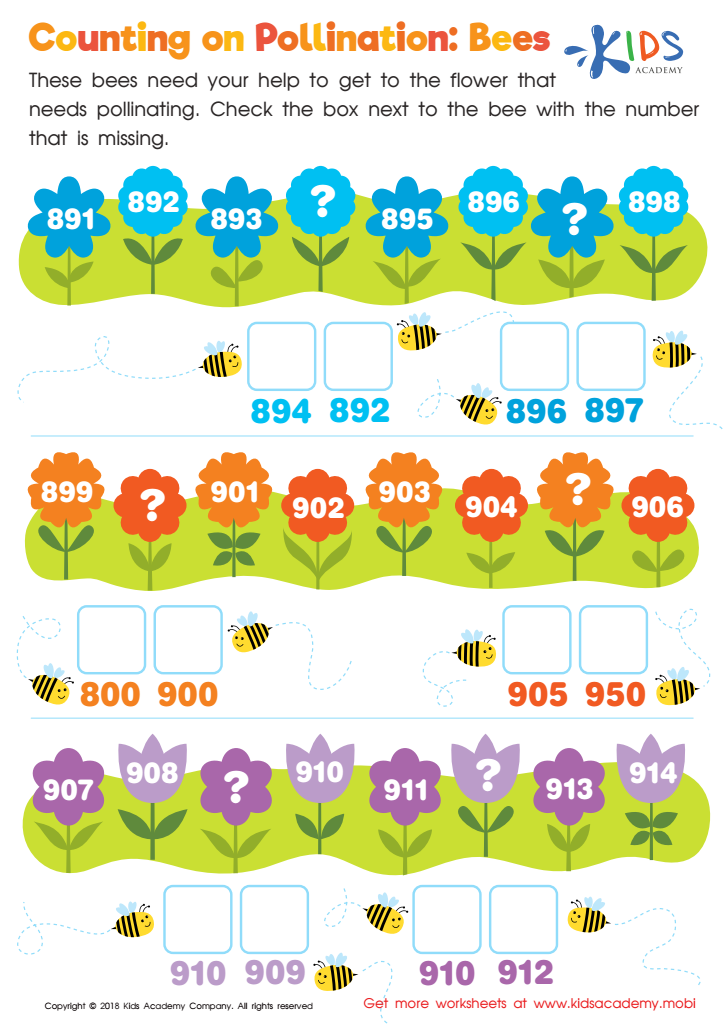
Counting on Pollination: Bees Worksheet
This downloadable worksheet helps kids improve their math skills while having fun - they'll help the bees pollinate the flowers by finding the missing number. It's an entertaining way to practice number patterns, sequences and number line skills, aiding in fast and efficient math computations.
 Assign to My Students
Counting on Pollination: Bees Worksheet
Worksheet
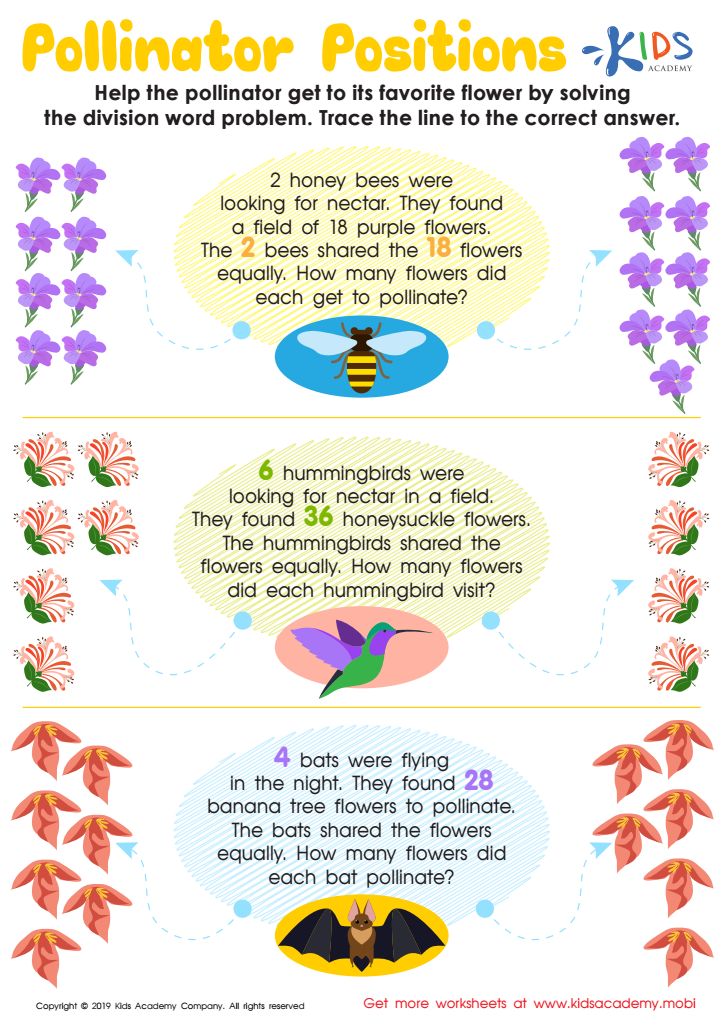
Pollinator Positions Worksheet
Kids will love learning about pollinators and how vital they are. Help their favorite friends get to the right flowers with this fun PDF. Children can solve the problems without even knowing they're doing division; just read the word problems and use the highlighted numbers. Finish by tracing the lines to the correct quotient!
Pollinator Positions Worksheet
Worksheet
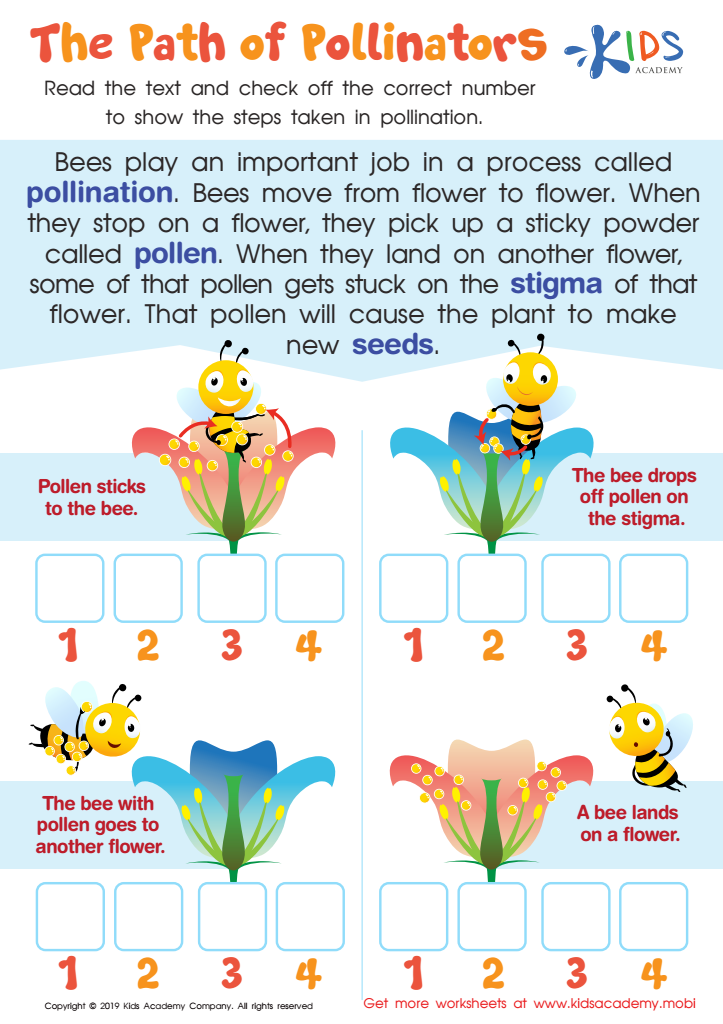
The Path of Pollinators Worksheet
Bees play a vital role in pollination: they transfer pollen between flowers, allowing them to produce new seeds. Without bees, we'd have less flowers and vegetation. Explain the process to your students and have them check off the right number to show the steps in pollination.
The Path of Pollinators Worksheet
Worksheet
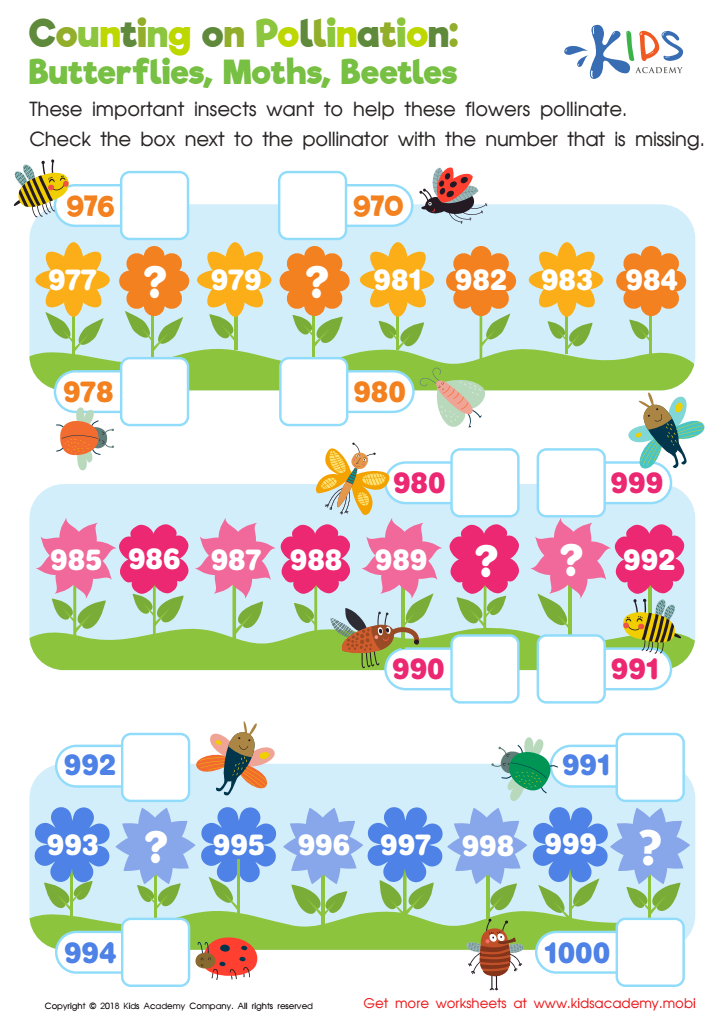
Counting on Pollination: Butterflies, Moths, Beetles Worksheet
A number line can help boost computation accuracy and efficiency. It can also be used with more advanced numbers. Help your child practice by having them identify missing numbers in sequences. This fun worksheet lets them help the pollinators in the process, as they strengthen their number sense.
Counting on Pollination: Butterflies, Moths, Beetles Worksheet
Worksheet
Join Kids Academy for Free
Who is primarily going to use this learning content?


.jpg)



Understanding pollination is essential for parents and teachers to help young children grasp how nature works. Pollination is a fundamental process where plants reproduce, producing fruits and seeds, which is crucial for food production. When children learn about pollination, they develop an appreciation for the environment and understand the importance of plants in our ecosystem.
For ages 3-8, engaging with concepts like pollination can spark curiosity about nature. This age group is naturally inquisitive, and learning about bees, butterflies, and other pollinators can encourage a love for science, math, and exploration. Activities such as planting flowers or conducting simple experiments can make these concepts fun and interactive.
Additionally, understanding pollination helps raise awareness about the challenges our planet faces, such as the decline of pollinators due to habitat loss and pesticides. Teaching kids about the role of pollinators fosters a sense of responsibility toward caring for the environment, encouraging them to be stewards of nature.
Creating this foundational knowledge equips children with information that they carry into adulthood, empowering them to make informed decisions that can positively affect the world around them. In essence, learning about pollination helps nurture informed, caring individuals who value and protect their surroundings.








