Visual interpretation Normal Worksheets for Ages 3-8
5 filtered results
-
From - To
Our "Visual Interpretation Normal Worksheets for Ages 3-8" are designed to enhance young learners' observation and reasoning skills through engaging activities. Perfect for preschool to early elementary students, these worksheets encourage kids to analyze pictures, patterns, and sequences, promoting critical thinking and visual literacy. Easy-to-follow and colorful, they make learning fun and effective, strengthening essential skills that set the stage for future academic success. With a focus on age-appropriate content, each worksheet helps build foundation skills in a playful, educational way, ideal for both classroom use and at-home learning. Explore today for interactive, skill-building fun!
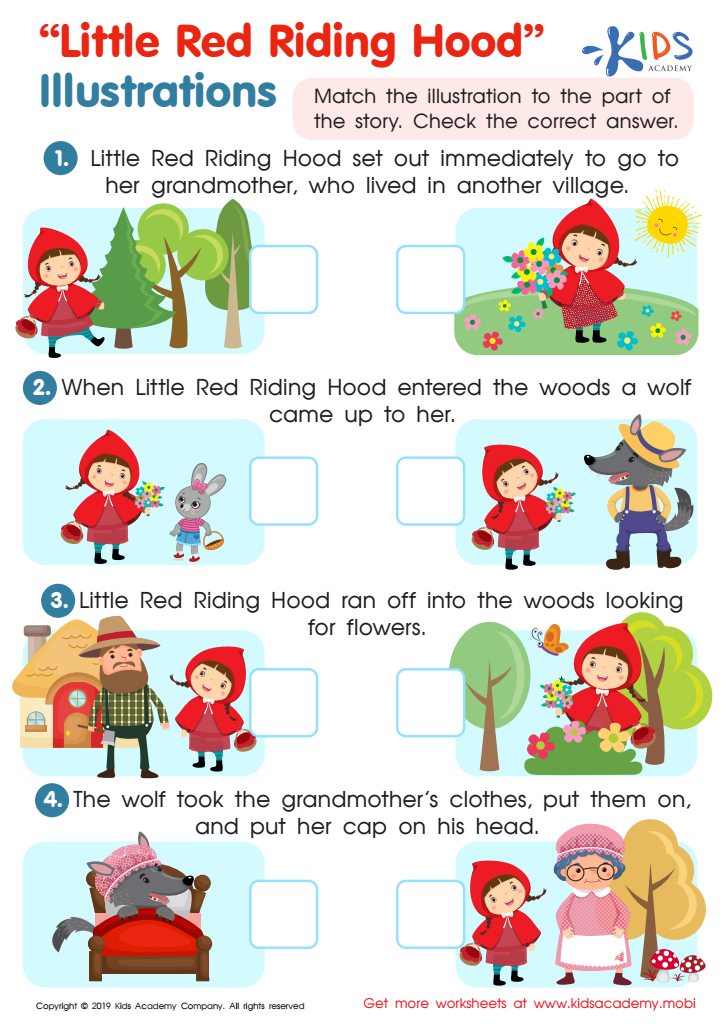
Little Red Riding Hood: Illustrations Worksheet
 Assign to My Students
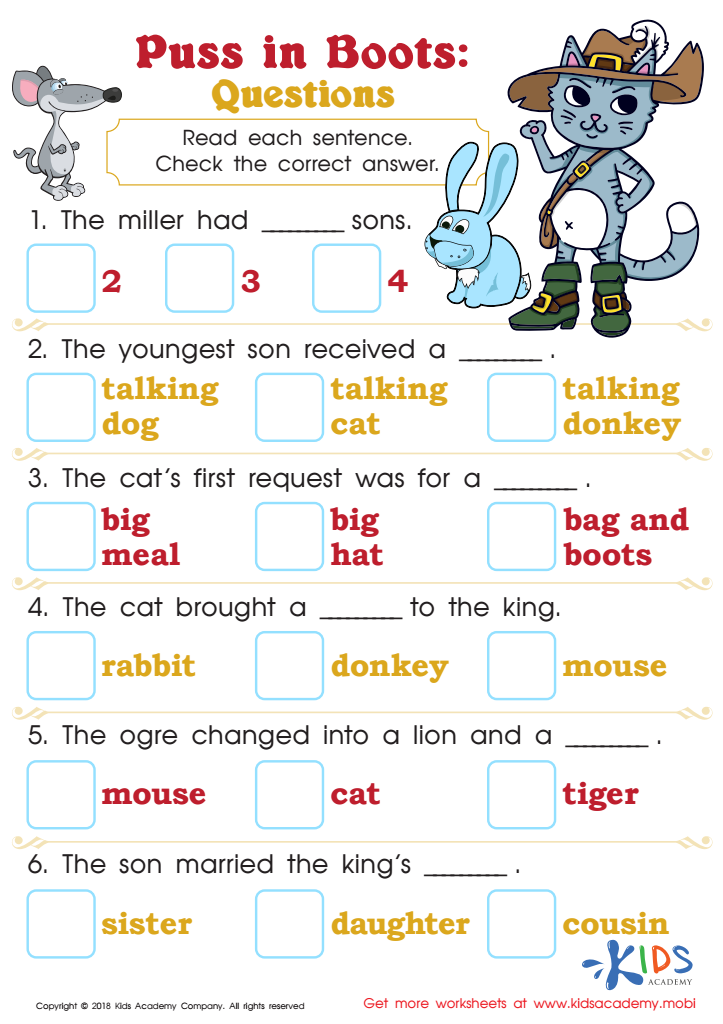
Puss in Boots: Questions Worksheet
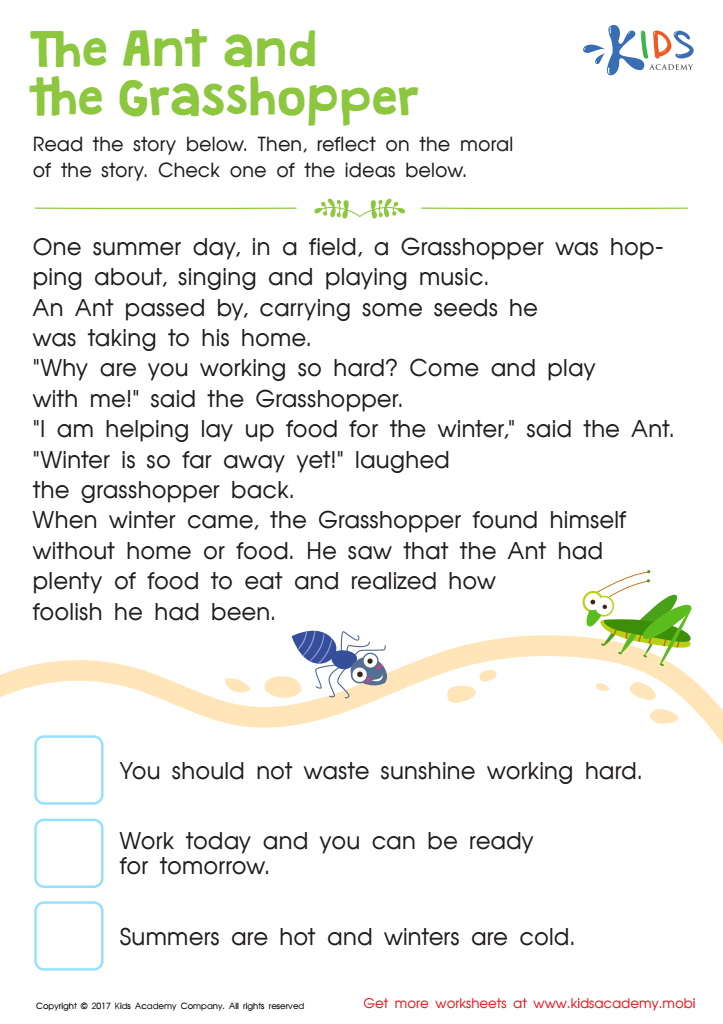
The Ant and The Grasshopper Printable
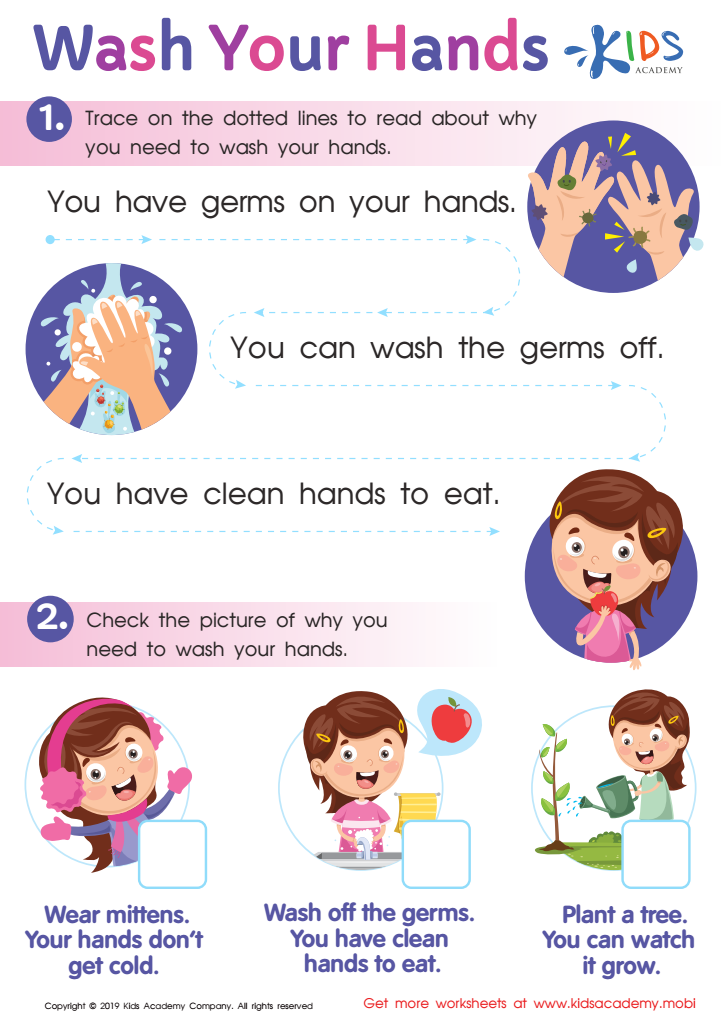
Wash Your Hands Worksheet
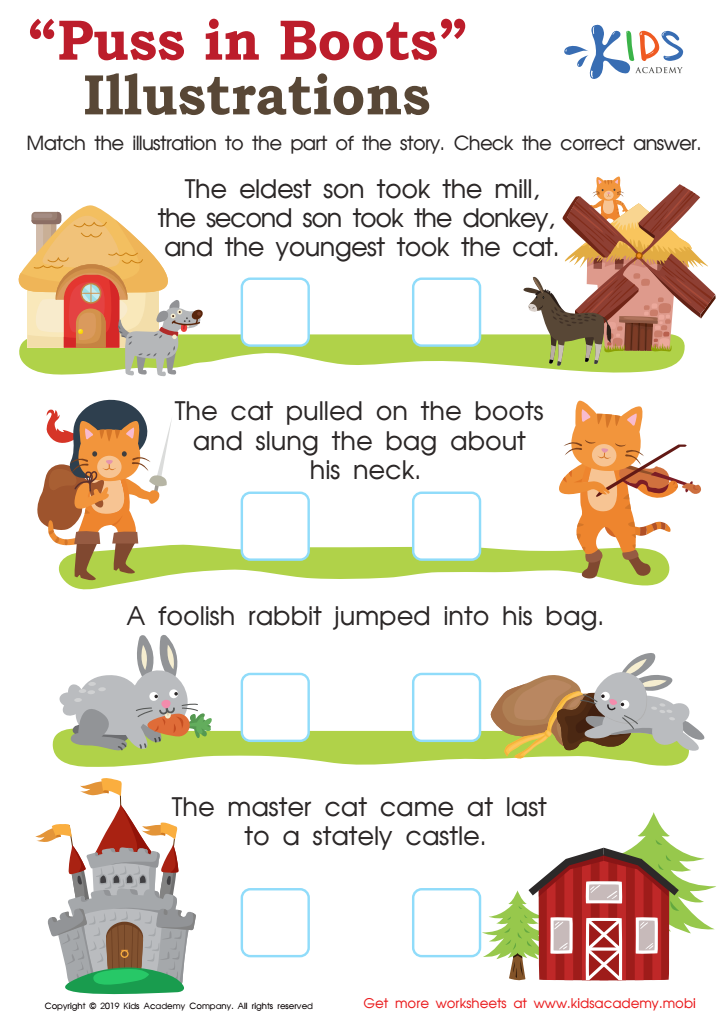
Puss in Boots Illustrations Worksheet







Visual interpretation skills are essential for children ages 3-8 as they lay the foundation for cognitive development, academic success, and overall well-being. At this developmental stage, children are beginning to decode and understand the world around them through visual stimuli. Strong visual interpretation abilities enable them to process and make sense of images, shapes, and patterns, which are fundamental for early literacy and numeracy skills.
For instance, recognizing letters and numbers relies heavily on visual discrimination, a component of visual interpretation. These skills are also critical for learning to read; children must discern minute differences between similar letters (like 'b' and 'd') and words. Furthermore, visual interpretation enhances problem-solving and critical-thinking abilities by helping children understand relationships between objects and ideas in both real-world contexts and academic scenarios.
Additionally, fostering strong visual interpretation in young children supports social development. It aids them in reading non-verbal cues, such as facial expressions and body language, which are crucial for effective communication and empathetic interactions.
As parents and teachers, understanding and nurturing this development can provide a well-rounded educational experience, making learning more accessible and enjoyable for young minds. Employing visuals in teaching strategies, such as picture books, educational games, and hands-on activities, can significantly enrich their sensory experiences, thereby supporting robust cognitive growth.








