
Word association skills Normal Worksheets for Ages 3-8
3 filtered results
Difficulty Level
Grade
Age
-
From - To
Subject
Activity
Standards
Enhance your child's vocabulary and cognitive development with our engaging "Word Association Skills Normal Worksheets" designed for ages 3-8. These printable worksheets provide fun and interactive exercises that help children identify relationships between words, improving their language skills and critical thinking abilities. Perfect for early learning settings and home education, each activity is age-appropriate and tailored to foster creativity and understanding. With colorful illustrations and simple instructions, children will enjoy exploring words in various contexts. Start enriching your child's learning journey today with our educational resources that promote effective word association and language comprehension skills!
Favorites
With answer key
Interactive
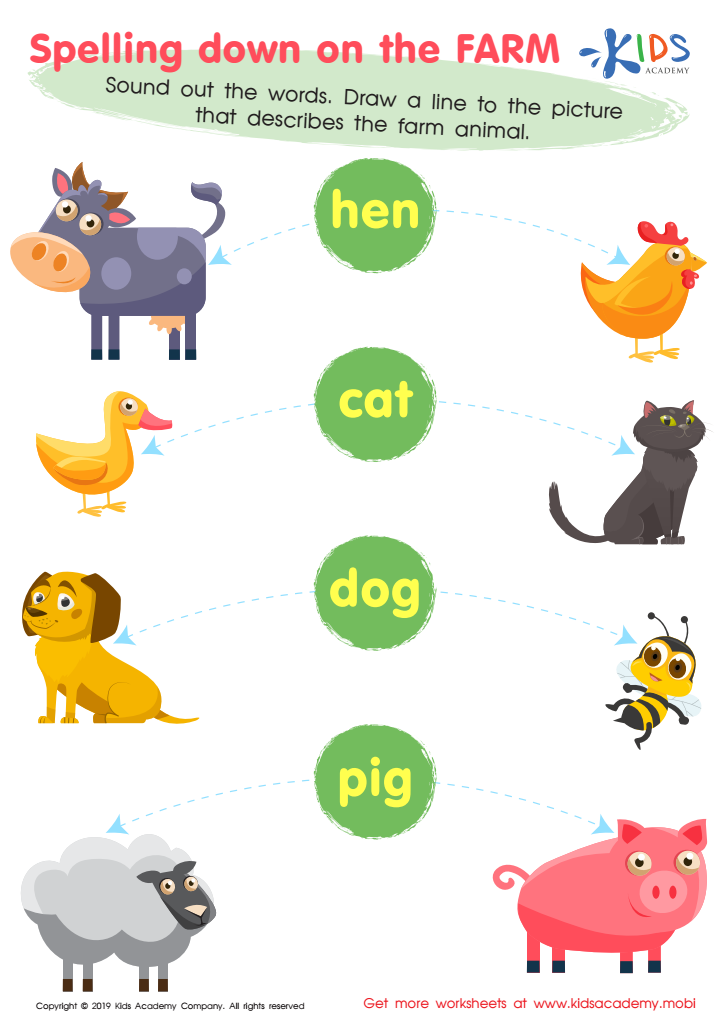
Spelling Down on the Farm Worksheet
Want to help your kids nail their spelling? Introduce them to this farm animal worksheet! Get them to look at the animals in the tracing sheet, name them and then sound out the words. Have them draw a line to the picture that describes it. You'll be surprised at how quickly their skills improve.
 Assign to My Students
Spelling Down on the Farm Worksheet
Worksheet
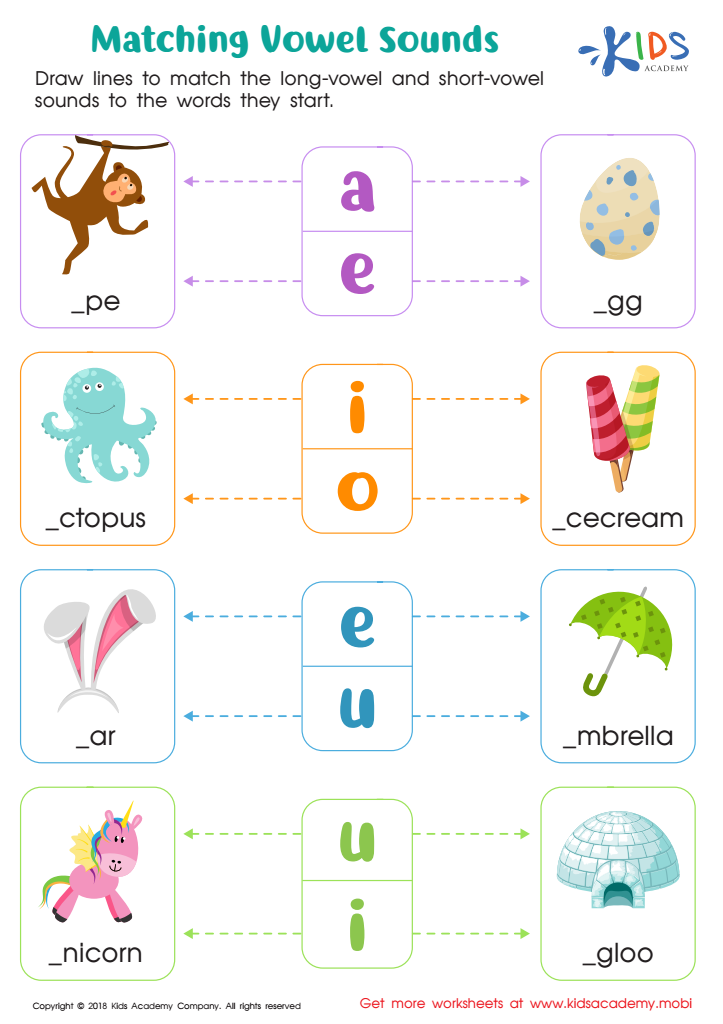
Matching Vowel Sounds Worksheet
Teach your child phonics with a fun worksheet! Ask your child to name a vowel sound and listen if it's long or short. Differentiating between long and short vowel sounds can be tricky, but this matching worksheet makes it easy for kids to understand. Have fun and master phonics - the worksheet will help them understand the difference between long and short vowel sounds!
Matching Vowel Sounds Worksheet
Worksheet
Join Kids Academy for Free
Who is primarily going to use this learning content?








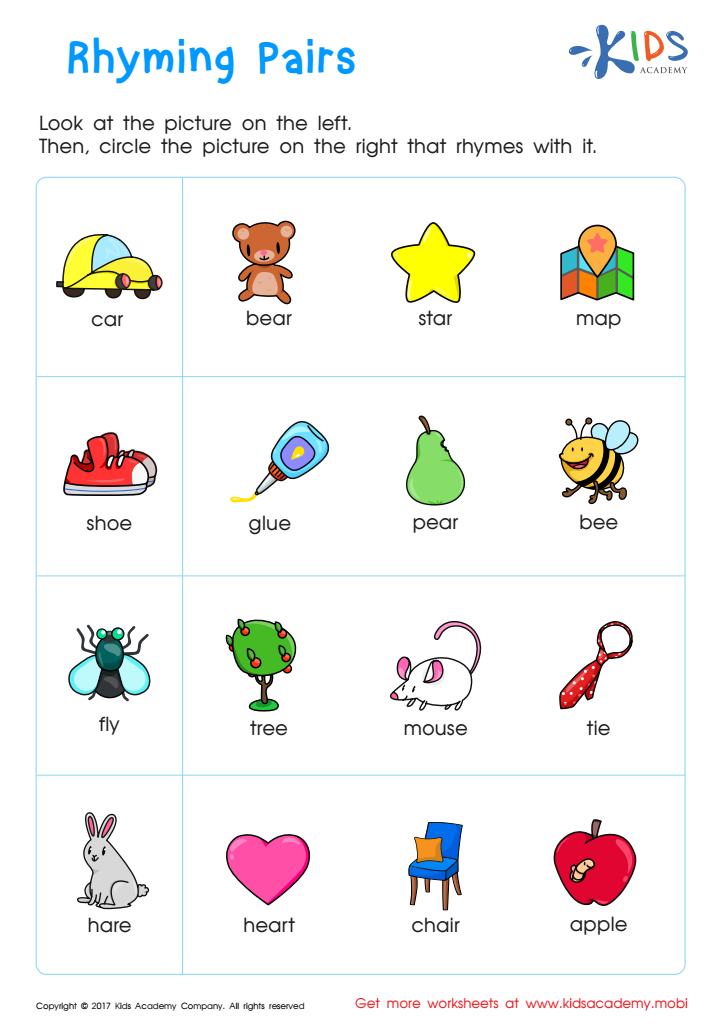
Word association skills are crucial for children aged 3-8 as they form the building blocks of language development and cognitive growth. When parents and teachers nurture these skills, they help children understand relationships between words, enhancing critical thinking and expanding vocabulary. This growth in vocabulary not only aids in better expression but also improves reading comprehension, paving the way for academic success.
Engaging in word association activities, such as rhyming games or storytelling, also fosters social interaction and communication skills. As children learn to connect words with emotions, objects, and experiences, they build empathy and improve their ability to articulate feelings and ideas. This equips them to navigate social situations effectively.
Moreover, word association encourages creativity. As children explore various word connections, they stimulate imaginative thinking. Such skills can lead to stronger problem-solving abilities, as they learn to view challenges from different perspectives.
In summary, prioritizing word association skills during early childhood not only lays the foundation for literacy but also supports holistic development—cognitively, socially, and emotionally. Thus, parents and teachers must actively engage children in word-focused activities to promote a love for language and learning.








