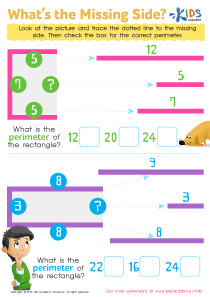
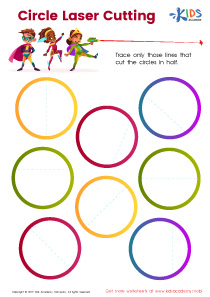
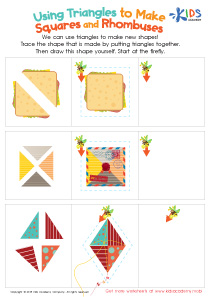
Pattern recognition Normal 2D Shapes Worksheets for Ages 3-8
3 filtered results
-
From - To
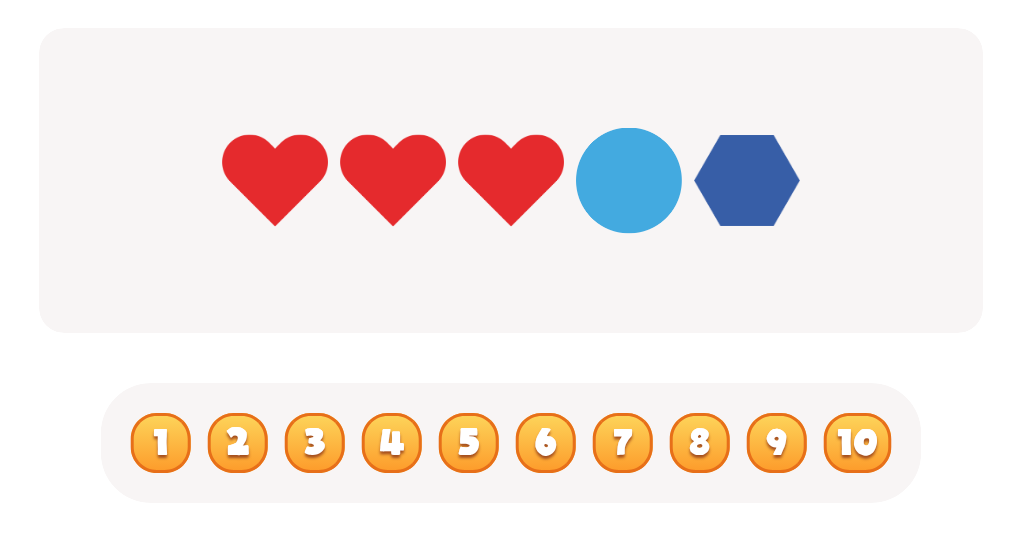
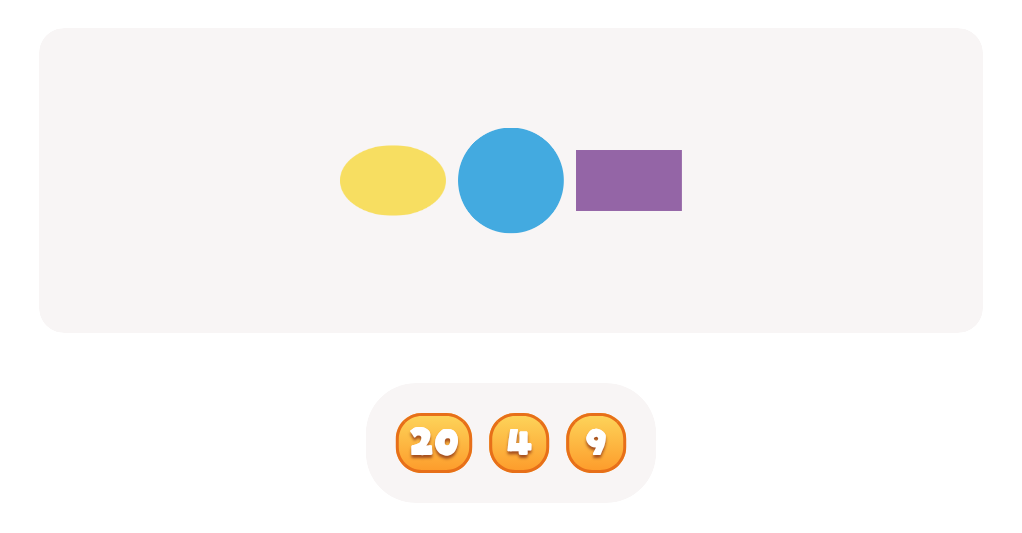
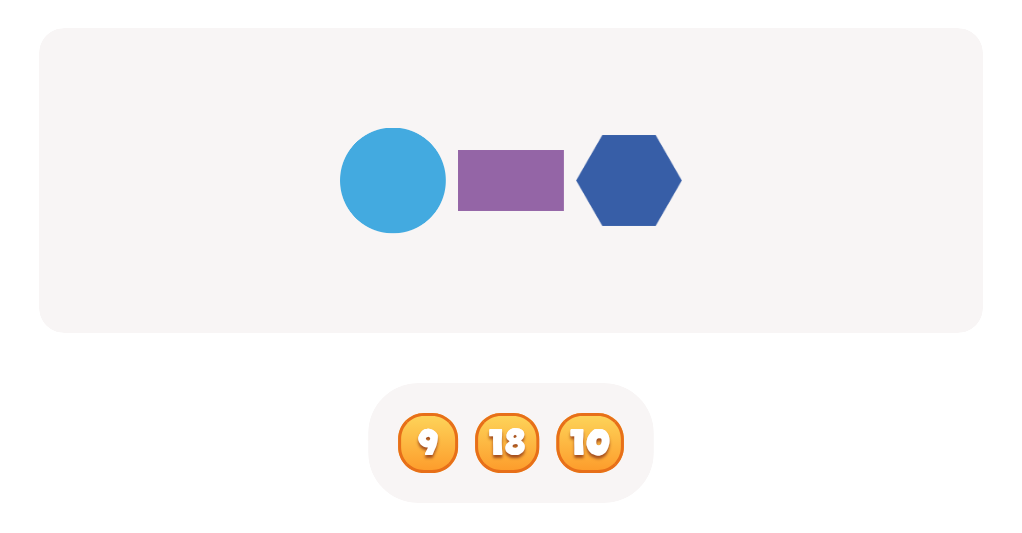
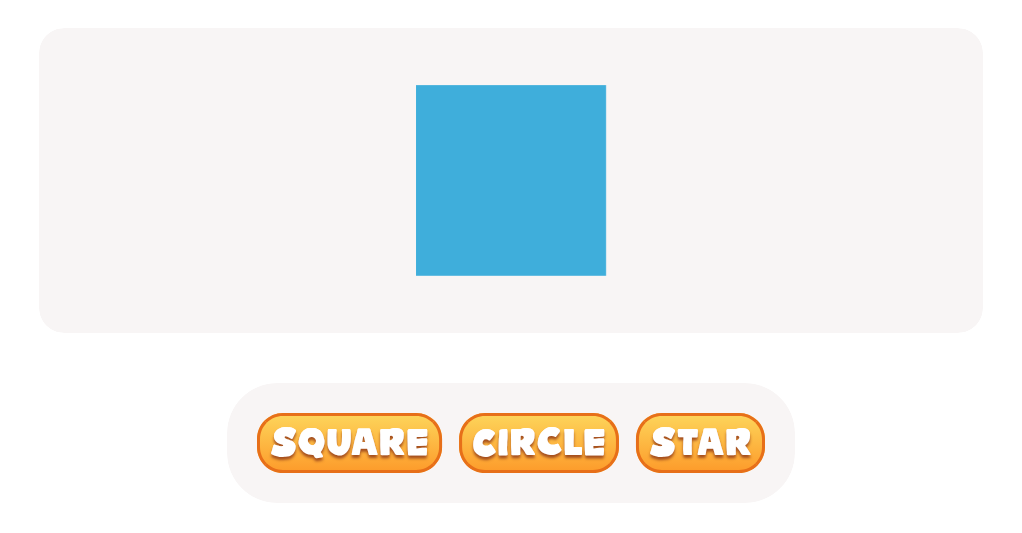
Explore our engaging "Pattern Recognition Normal 2D Shapes Worksheets" designed specifically for children aged 3 to 8. These worksheets help young learners identify, differentiate, and understand common 2D shapes while enhancing their pattern recognition skills. With vibrant illustrations and interactive exercises, kids will enjoy mastering concepts like circles, squares, triangles, and more. Perfect for use at home or in the classroom, these worksheets promote cognitive development, critical thinking, and problem-solving abilities. Encourage your child's growth and confidence in math with fun, educational tasks that make learning about shapes an exciting experience! Download now and inspire a love of learning!
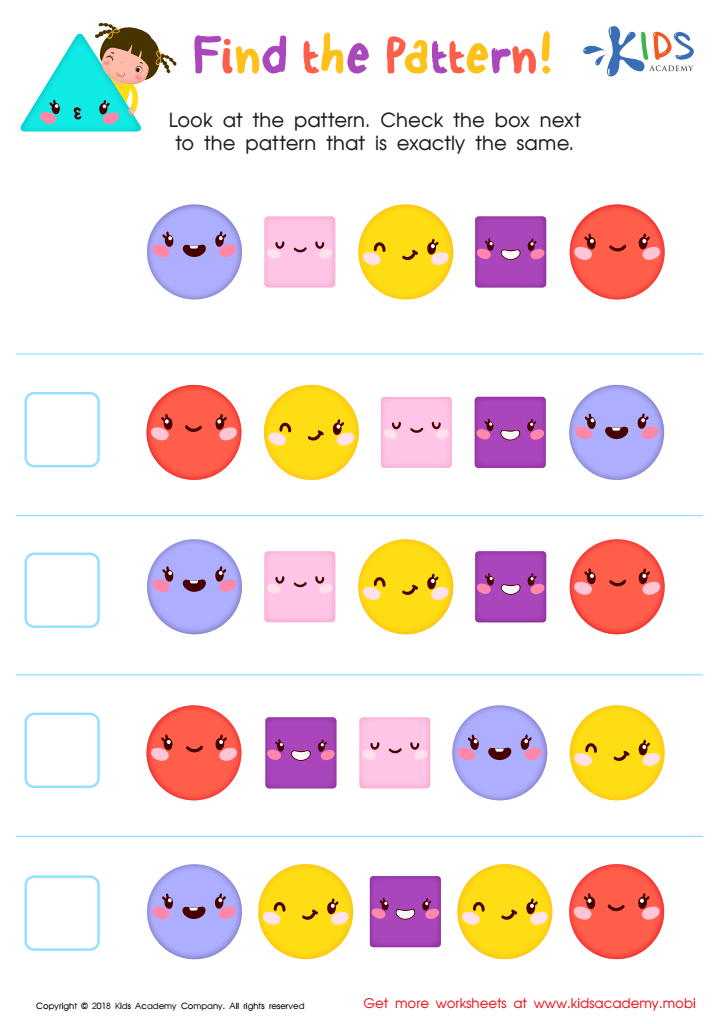
Find the Pattern Worksheet
 Assign to My Students



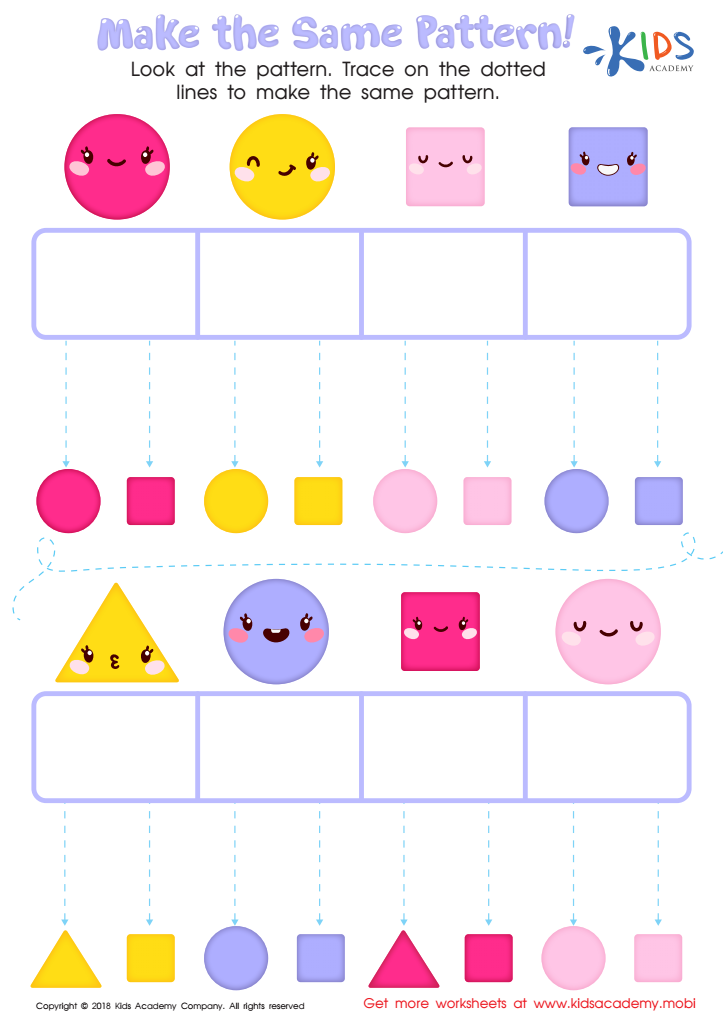
Make the Same Pattern Worksheet
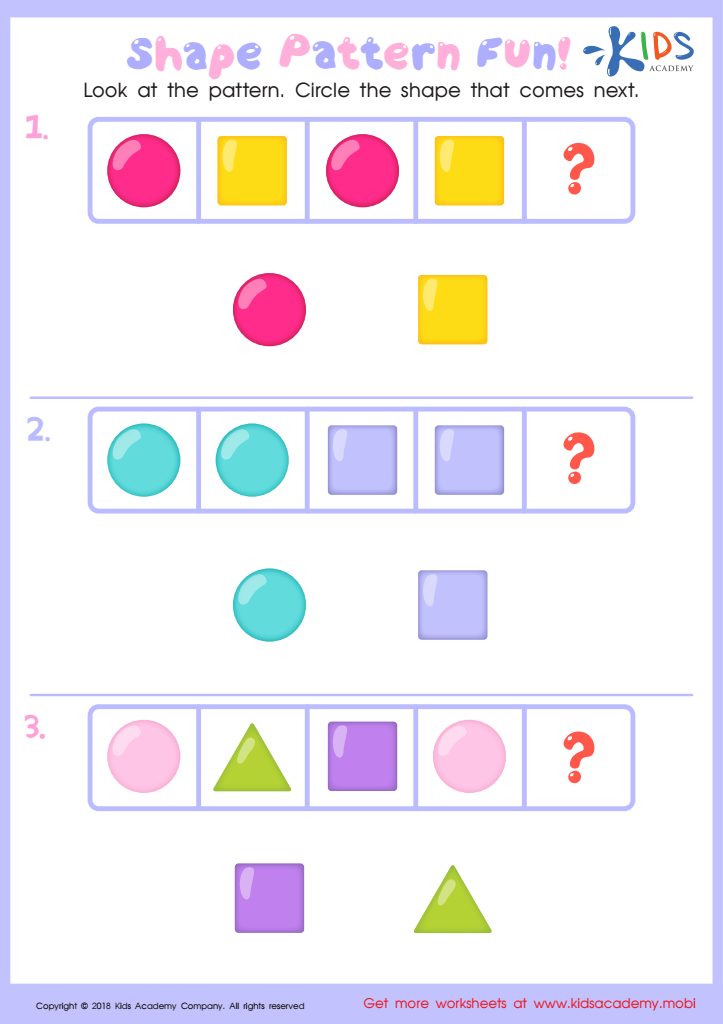
Shape Pattern Fun Worksheet








Pattern recognition and understanding normal 2D shapes are crucial developmental milestones for children aged 3 to 8, and both parents and teachers should place great importance on them. These skills form the foundation for mathematical reasoning, critical thinking, and problem-solving. Recognizing patterns helps children identify relationships, make predictions, and develop logical thinking skills, which are essential in both academic settings and everyday life.
Understanding 2D shapes not only enhances spatial awareness but also helps children make connections across various subjects, from art and design to geometry. When children can identify shapes and patterns, they can engage more effectively in hands-on activities, enhancing their creativity and cognitive abilities.
Moreover, these concepts are linked to language development. Discussing shapes and patterns allows children to expand their vocabulary and practice verbal reasoning. Teachers can use shapes and patterns in games and interactive learning experiences to foster engagement and motivation.
Ultimately, fostering skills in pattern recognition and 2D shape identification ensures that children are well-prepared for future educational challenges. Parents and teachers should prioritize these learning areas, as they set the stage for lifelong learning and curiosity.