Normal Addition & Subtraction Worksheets for Ages 3-8 - Page 8
171 filtered results
-
From - To
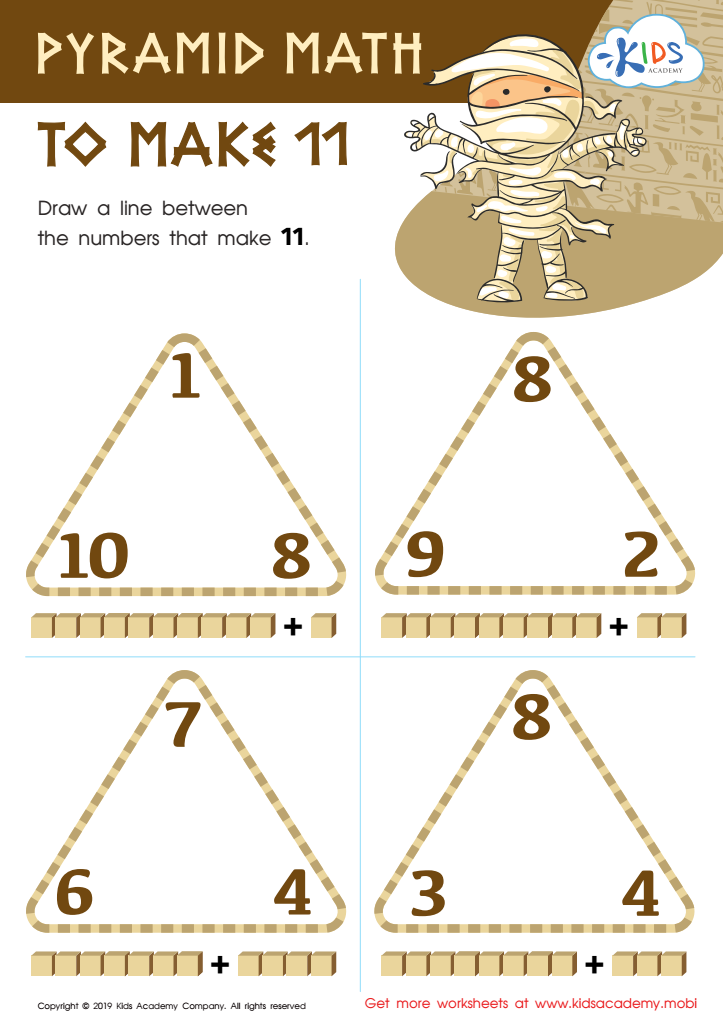
Pyramid Math to Make 11 Worksheet
 Assign to My Students
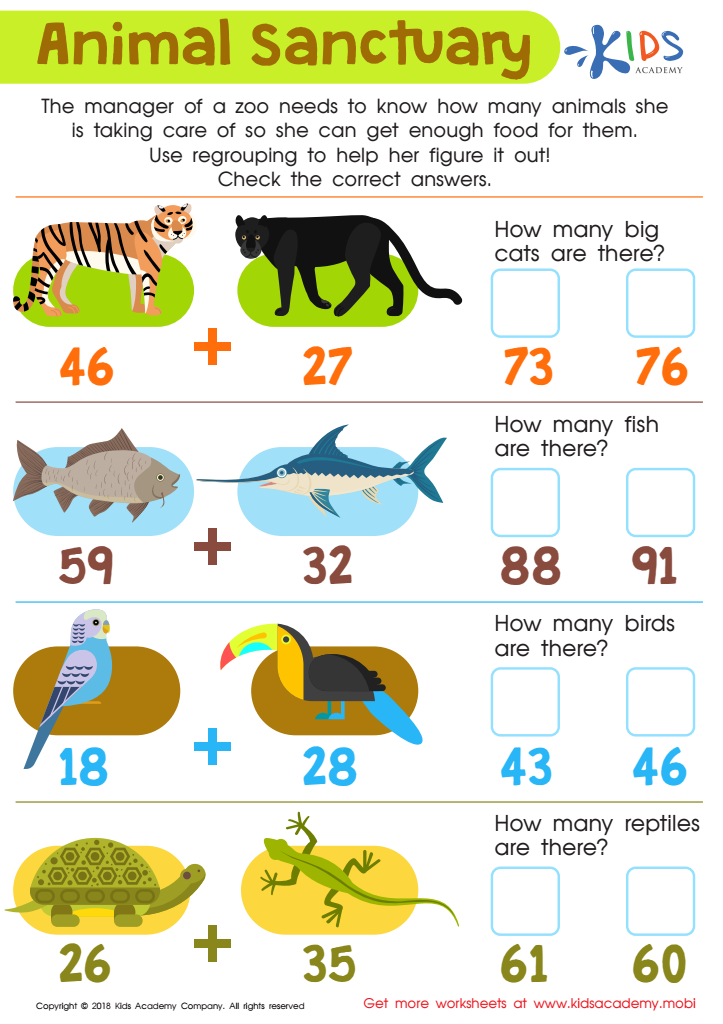
Animal Sanctuary Worksheet
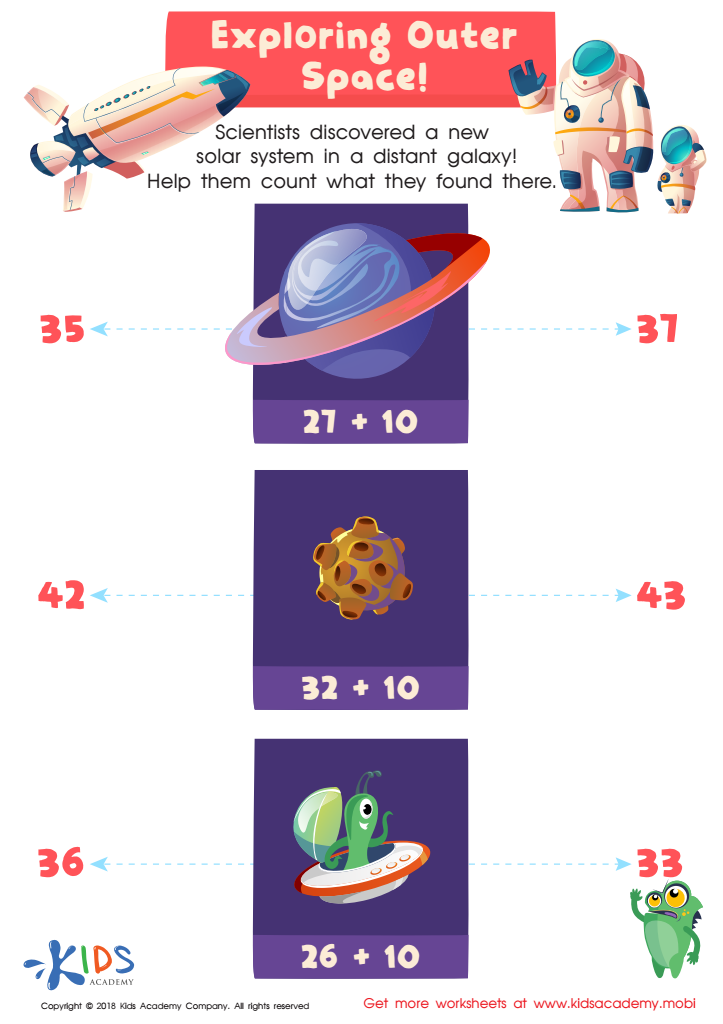
Exploring Outer Space Worksheet








Parents and teachers should prioritize teaching normal addition and subtraction to children ages 3-8 because these fundamental skills form the cornerstone of early mathematical understanding, which is crucial for later academic success and practical everyday tasks. Mastering basic addition and subtraction equips young learners with the essential tools they need for problem-solving, logical thinking, and number sense.
At this developmental stage, children's brains are exceptionally receptive to learning new concepts. By introducing these basic arithmetic operations early, we foster a strong numerical foundation. This foundation not only prepares them for more complex math in later grades but also enhances their confidence in handling various tasks such as counting, measuring, and using money.
Moreover, early proficiency in addition and subtraction supports cognitive development, including memory, concentration, and the ability to recognize patterns. It also instills a sense of achievement and boosts self-esteem as children successfully tackle math problems.
For parents and teachers, actively engaging in teaching these skills enables them to identify any learning difficulties early on and address them promptly. Activities such as using manipulatives, playing math-related games, and incorporating daily experiences can make learning these concepts fun and relatable. Thus, prioritizing normal addition and subtraction at a young age is not just about math; it's about empowering children with a robust start in life.








