
Counting skills Normal Counting Worksheets for Ages 3-8
7 filtered results
Difficulty Level
Grade
Age
-
From - To
Subject
Activity
Standards
Help your child excel in math with our expertly designed Counting Skills Normal Counting Worksheets for ages 3-8. At Kids Academy, we focus on making learning fun and engaging, providing age-appropriate exercises that enhance number recognition and basic arithmetic. Our worksheets encourage young learners to count objects, identify number sequences, and develop a strong foundation in counting principles. Ideal for both classroom and home use, our resource supports early learners in mastering essential counting skills through playful, interactive activities. Unlock your child's potential today with Kids Academy's quality educational materials!
Favorites
With answer key
Interactive
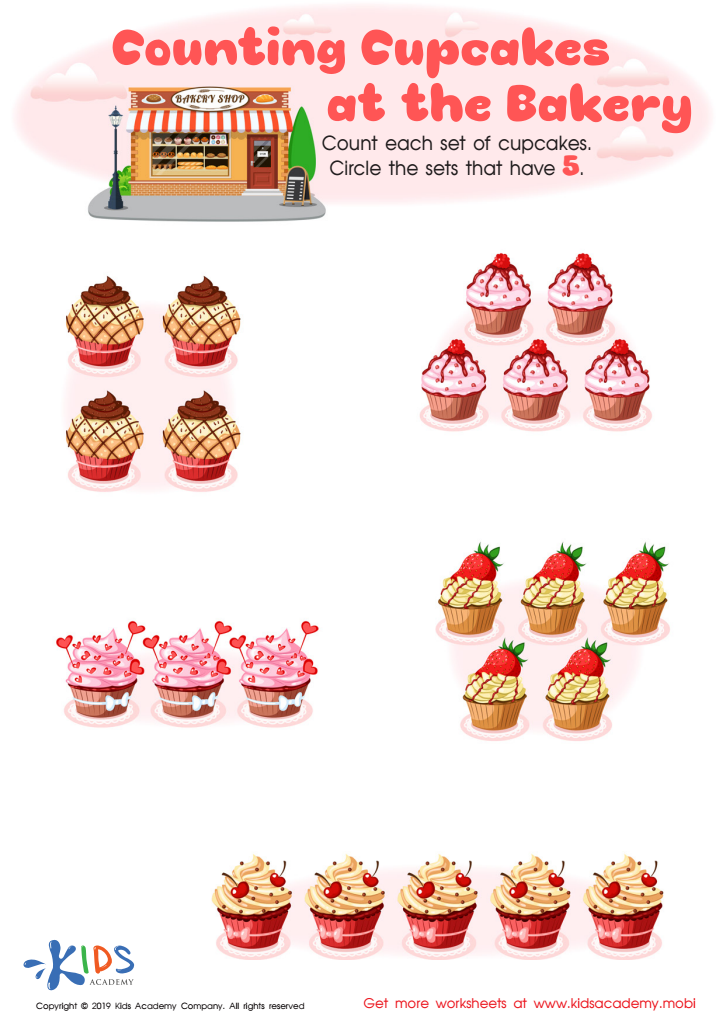
Counting Cupcakes Worksheet
This fun worksheet for preschoolers uses cupcakes to teach counting. Kids must circle the groups of cupcakes that add up to 5. The delicious treats make learning fun and engaging!
 Assign to My Students
Counting Cupcakes Worksheet
Worksheet


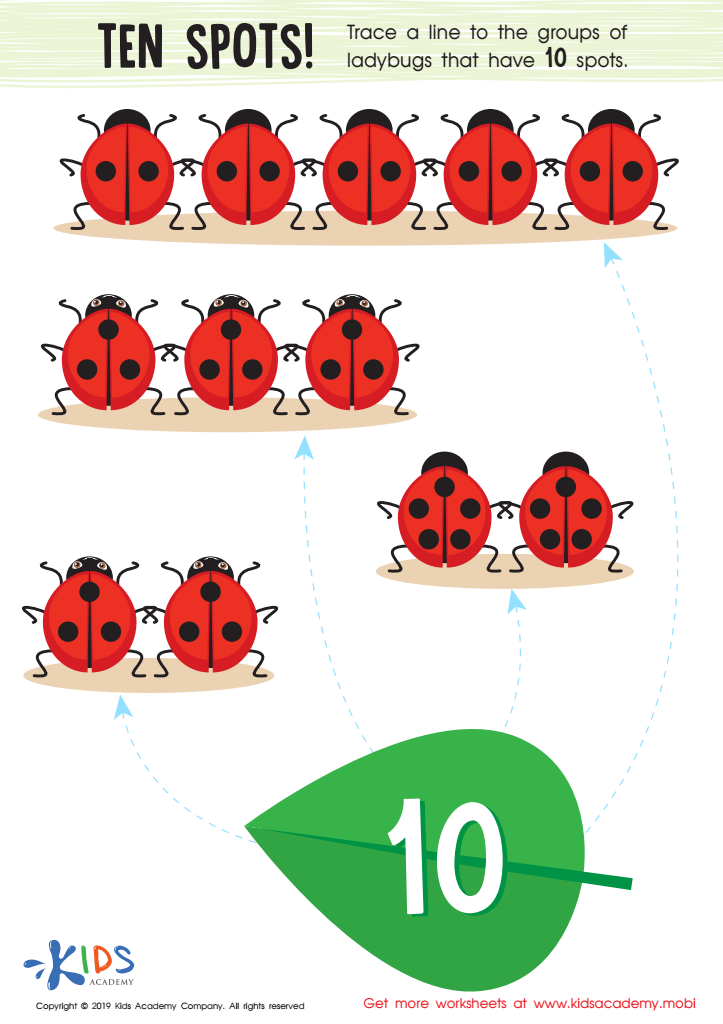
Ten Spots Worksheet
Kids love ladybugs! Ask them to tell you what stands out most--the spots. Show them a picture and help them count the spots. Trace a line to the group with 10 spots for a fun counting lesson.
Ten Spots Worksheet
Worksheet
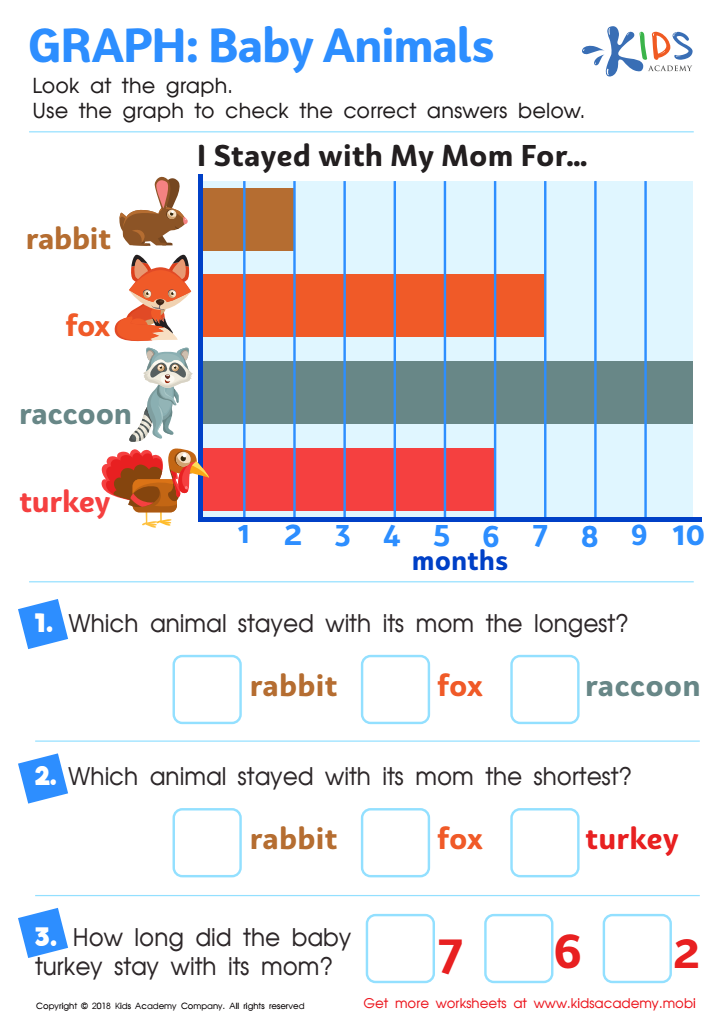
Graph: Baby Animals Worksheet
Graphs are essential for learning in math, science and ELA. This worksheet featuring baby animals is a fun way to practice reading graphs. Look at the graph and answer the questions below it. Check the boxes for the right answers based on the data.
Graph: Baby Animals Worksheet
Worksheet
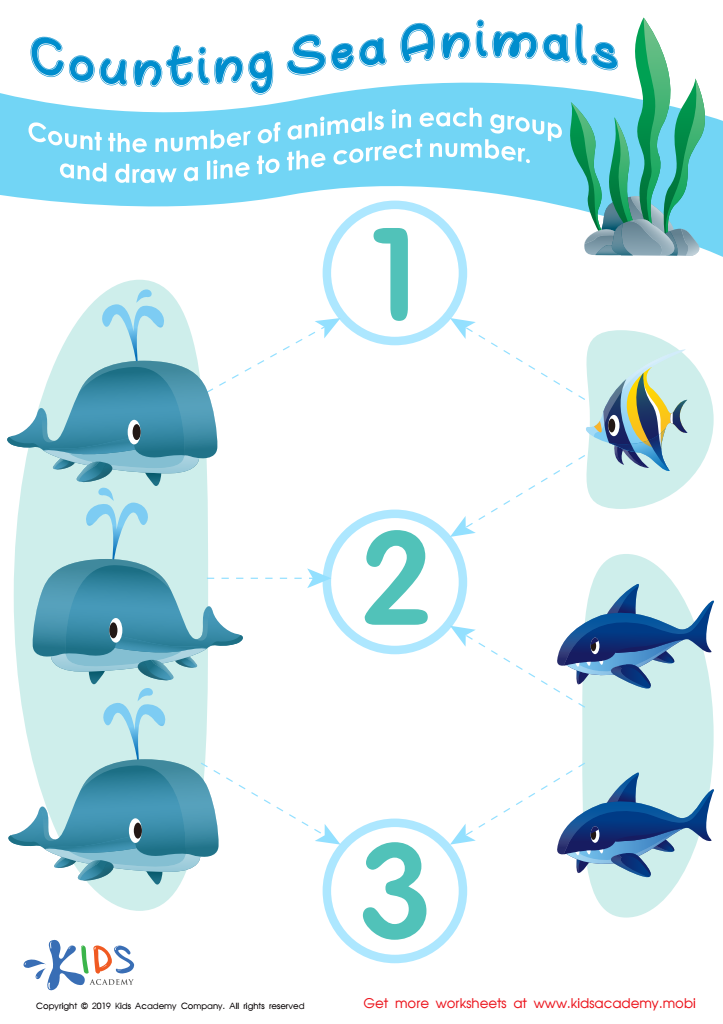
Counting Sea Animals Worksheet
Kids adore sea creatures for their captivating, unknown nature. Let them use this free worksheet to practice counting, where they match numbers to groups of animals. Through traceable lines, they'll easily connect numbers to sea creatures and learn math with vibrant, underwater fun!
Counting Sea Animals Worksheet
Worksheet
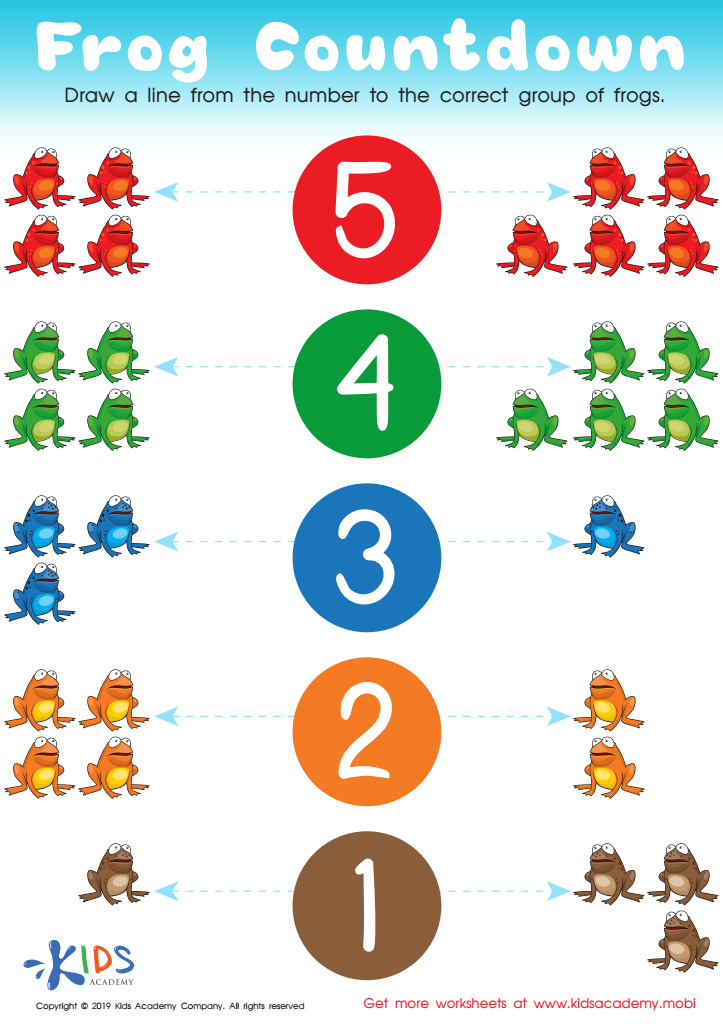
Frog Countdown Worksheet
Make learning fun for kids with traceable printouts! This exercise has kids counting frogs and drawing a line to match the number. Expand their knowledge with activities like this, beyond the basics they learn in school. Help them explore new ways of learning and make it enjoyable.
Frog Countdown Worksheet
Worksheet
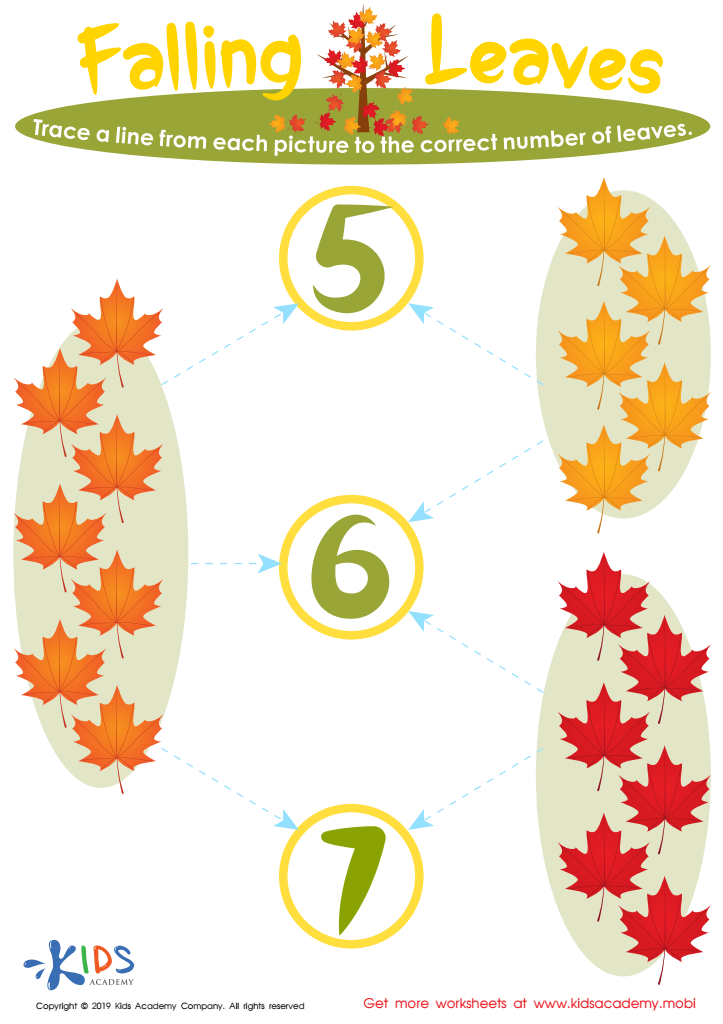
Falling Leaves Worksheet
Do your kids know the seasons? Ask them to name each one, then test their counting skills with a fun worksheet. Have them count from 1 to 10, then trace a line from each picture to the corresponding number of leaves. It's a great way to check their counting ability!
Falling Leaves Worksheet
Worksheet
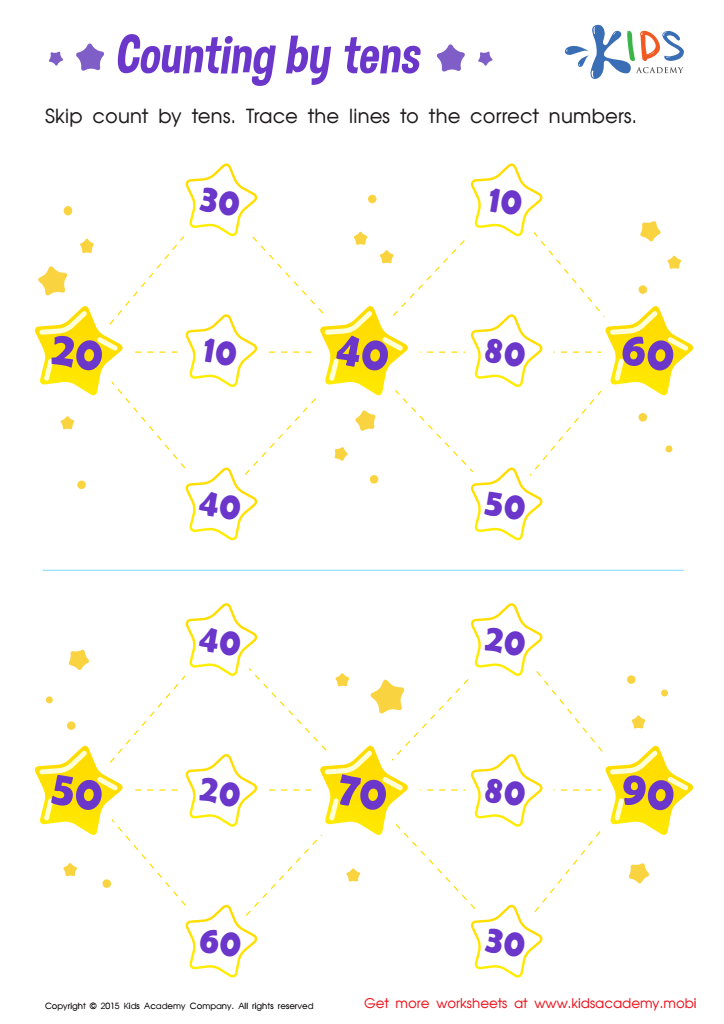
Learn Dozens: Counting by Tens Printable
Kindergartners need to learn skip counting - counting in number groups - to increase number sense and be ready for more advanced math. Our kindergarten worksheet featuring a starry trip to outer space will help your child practice this valuable skill. Your child will choose correct answers to trace the lines to the stars, building fluency in skip counting. They'll also strengthen problem solving and see the pattern it creates. Get your little learner to the next level with this skip counting worksheet!
Learn Dozens: Counting by Tens Printable
Worksheet
Join Kids Academy for Free
Who is primarily going to use this learning content?








Counting skills are essential building blocks for young children's mathematical development. Parents and teachers should prioritize fostering these skills between the ages of 3 and 8 because they set the foundation for more complex mathematical concepts. When children learn to count, they gain an understanding of numbers, which is critical for everyday tasks such as telling time, handling money, and following a sequence of steps.
Between ages 3 and 8, children are particularly receptive to learning through play and exploration. Encouraging counting skills during these formative years helps them develop number recognition, sequencing, and the ability to perform simple arithmetic processes like addition and subtraction. This early exposure ensures that children are not just memorizing numbers but truly comprehending their meaning and relationship.
Furthermore, strong counting skills are linked to better overall academic performance. Studies have shown that early numeracy skills correlate with higher achievement in later mathematics and other academic areas. By nurturing counting skills, parents and teachers are supporting cognitive development, problem-solving abilities, and logical thinking.
Additionally, counting fosters social and emotional growth. It builds confidence as children experience success in their ability to understand and manipulate numbers. This, in turn, promotes a positive attitude towards mathematics, laying a strong foundation for lifelong learning and curiosity in various disciplines.








