Counting practice Normal Geometry Worksheets for Ages 3-8
3 filtered results
-
From - To
Introducing our Counting Practice Normal Geometry Worksheets for Ages 3-8! Perfect for young learners, these engaging worksheets combine fun with fundamental mathematical concepts. Our collection features vibrant, easy-to-follow activities that improve counting skills and geometric awareness. Tailored for ages 3-8, these worksheets enhance learning through interactive shapes and playful challenges. Whether at home or in the classroom, these resources are ideal for building a strong arithmetic foundation. Start exploring our Counting Practice Normal Geometry Worksheets today and watch your child excel in math while having a blast! Easy download and print for convenient learning.
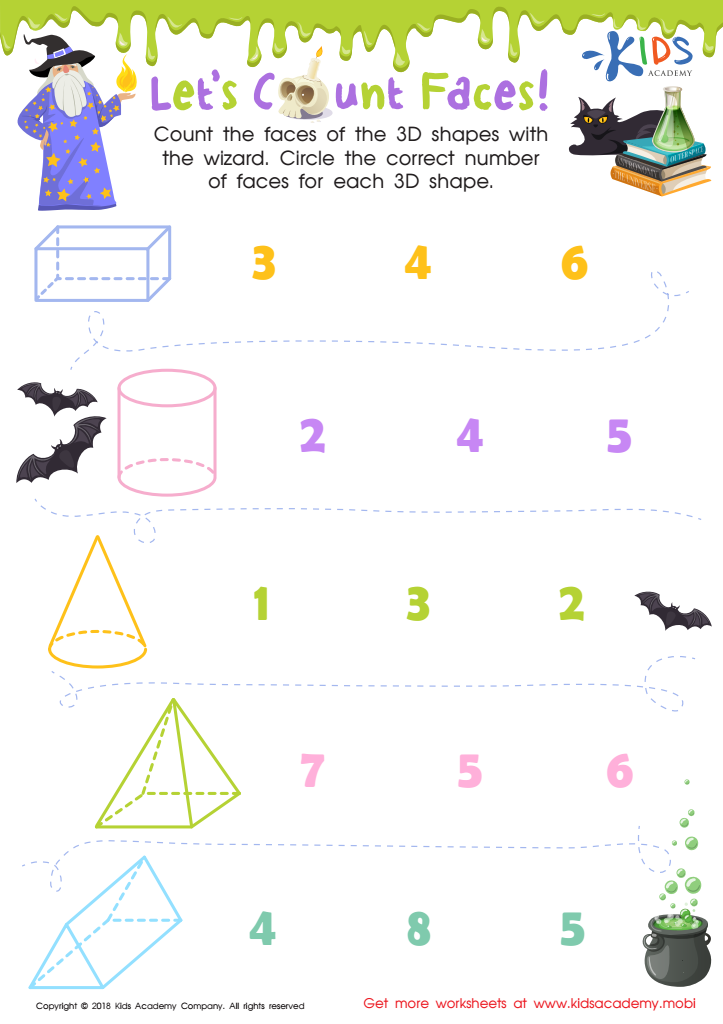
Let's Count Faces! Worksheet
 Assign to My Students











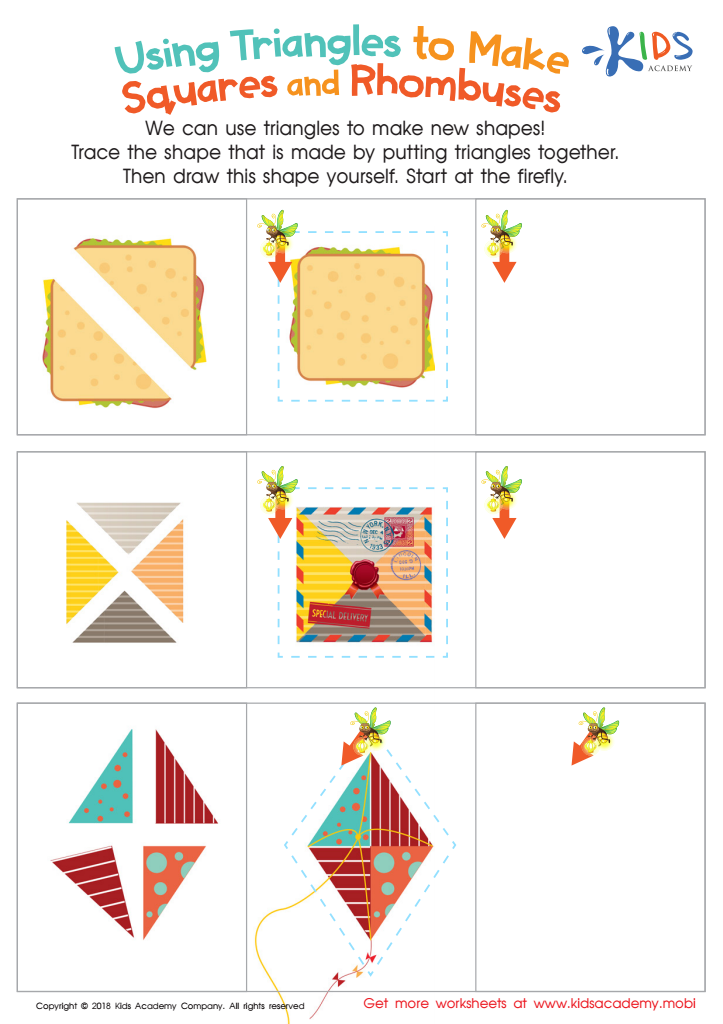
Using Triangles to Make Squares and Rhombuses Worksheet
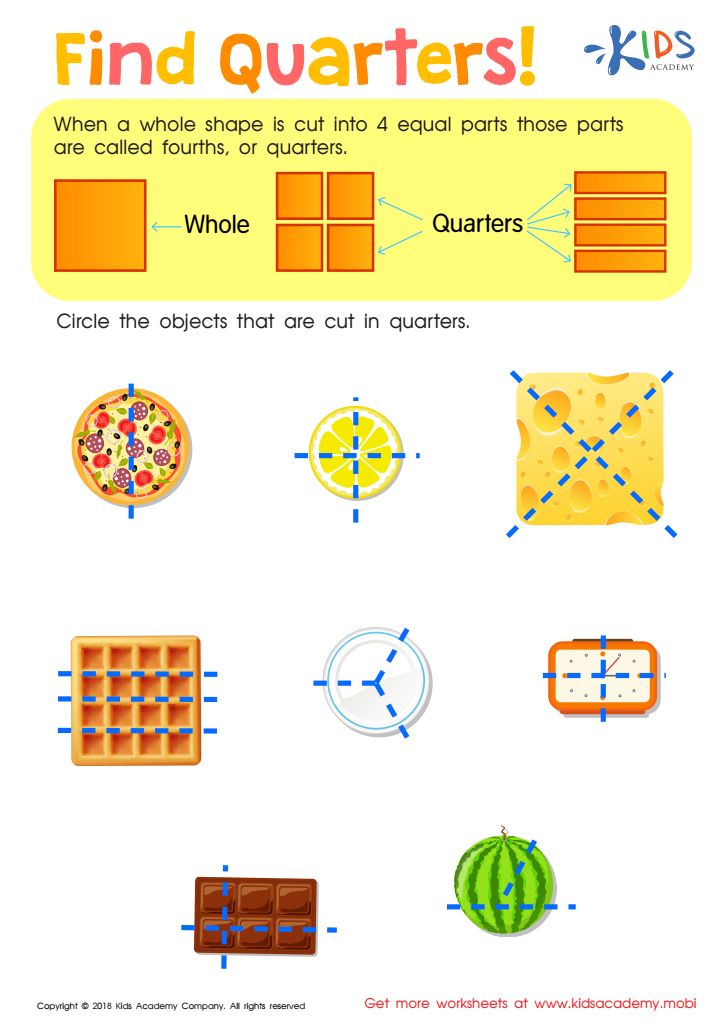
Find Quarters Worksheet








Understanding and practicing counting and basic geometry during early childhood, ages 3-8, is immensely crucial for cognitive and foundational development. When parents and teachers emphasize these skills, they are essentially setting the stage for a child's academic success and overall intellectual growth.
Counting practice at this age builds foundational numeracy, enabling children to understand the quantity, order, and the basics of arithmetic. It aids in developing number sense, a crucial skill that will underpin all future mathematics learning. From counting objects around them to recognizing numbers, these activities also improve memory, attention span, and logical thinking, all necessary for problem-solving.
Normal geometry, through activities like shape recognition, patterning, and spatial understanding, bolsters a child's ability to comprehend not just mathematics but the world around them. It supports their capacity to distinguish shapes and understand their properties, while also developing spatial awareness and reasoning. This understanding morphs seamlessly into essential skills like mapping, architecture, and even everyday tasks such as navigating spaces and organizing items.
Moreover, engaging in these practices nurtures a child's motivation and confidence in their capabilities. As they 'crack the code' of numbers and shapes, they get to experience success, bolstering their enthusiasm for learning and readiness to tackle more complex subjects in the future. Hence, prioritizing counting and basic geometry lays a cornerstone for holistic educational development.








