
Following instructions Normal Geometry Worksheets for Ages 3-8
4 filtered results
Difficulty Level
Grade
Age
-
From - To
Subject
Activity
Standards
Our "Following Instructions Normal Geometry Worksheets for Ages 3-8" are designed to nurture young learners' understanding of basic geometric concepts while sharpening their ability to follow instructions. Ideal for early childhood education, these engaging worksheets blend fun and learning, guiding children through tasks such as shape identification, patterns, and simple geometry exercises. With clear instructions and vibrant illustrations, our worksheets help develop essential math skills, critical thinking, and fine motor skills. Perfect for classroom use or at-home practice, they ensure that learning geometry becomes an enjoyable experience for children. Unlock your child's potential with our interactive and educational geometry worksheets!
Favorites
With answer key
Interactive
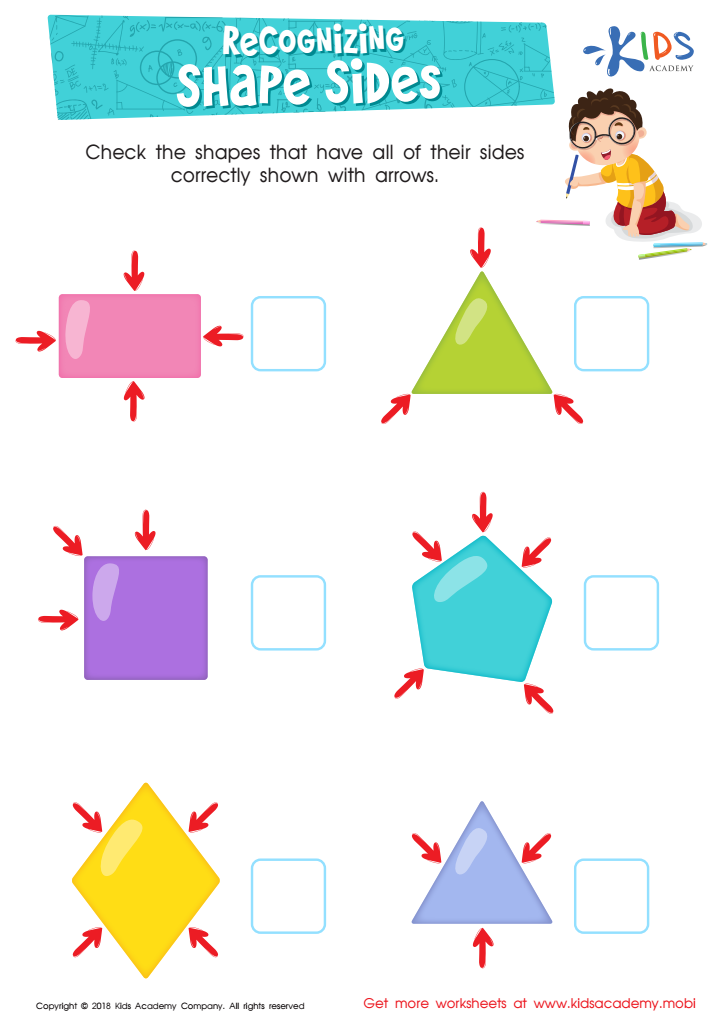
Recognizing Shape Sides Worksheet
This exercise will help your child recognize shape sides. Go over the difference between sides and angles first, then have them check the shapes with arrows to show the sides. They'll quickly get the hang of it and find it much easier after completing the colorful worksheet.
 Assign to My Students
Recognizing Shape Sides Worksheet
Worksheet











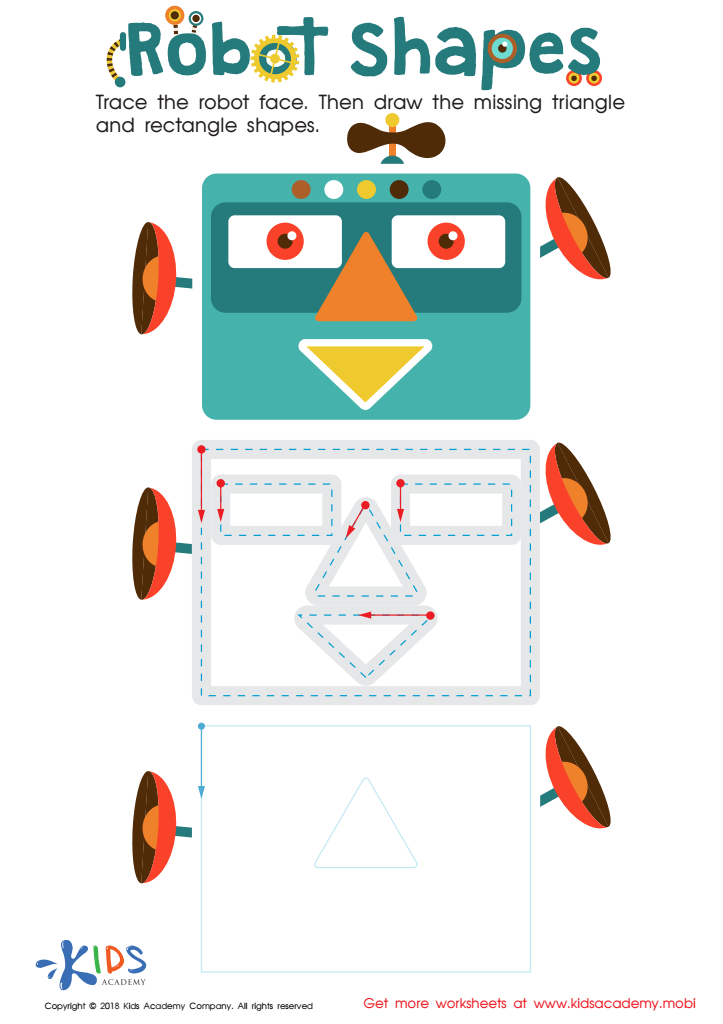
Robot Shapes Worksheet
Help your preschooler get started with math skills while having fun with this shape tracing worksheet featuring a cute robot! Ask them to study the first image, trace the dotted lines to draw the shapes in the second, and color the third. With this activity, they'll learn shapes while enjoying the funny robot pictures!
Robot Shapes Worksheet
Worksheet
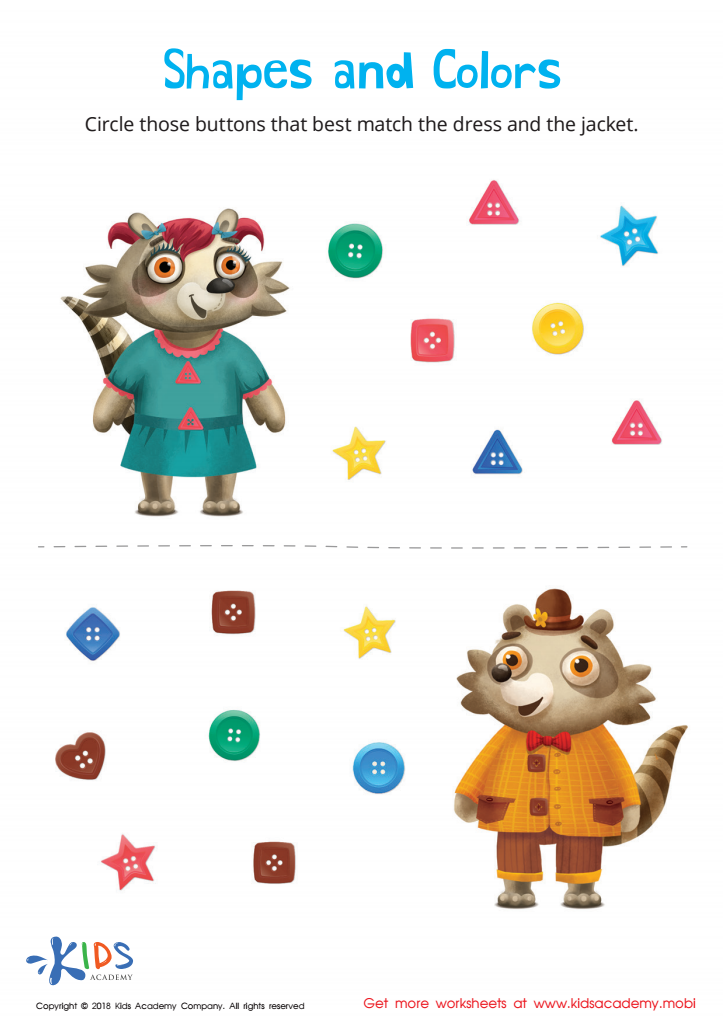
Shapes and Colors Worksheet
This worksheet is a fun way to teach toddlers shapes and colors! It has them match buttons on adorable racoon characters. Encourage your child to note the shape and color of the buttons then sort through and circle the matches. This helps build important attention to detail skills!
Shapes and Colors Worksheet
Worksheet
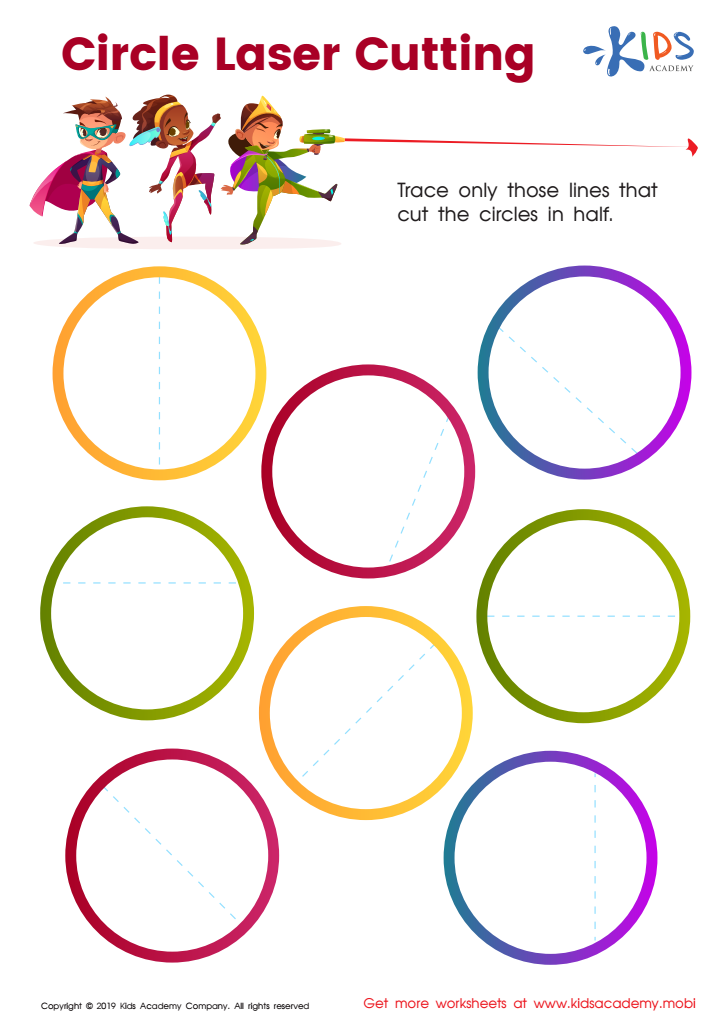
Circle Laser Cutting Worksheet
Encourage your kids to learn geometry! Remind them that when shapes are cut into two equal parts, they are called halves. Have them look at the circles in the worksheet, and trace the lines that cut the circles in half. Geometry is an essential part of education, and although it may not be exciting, it's a valuable skill to have.
Circle Laser Cutting Worksheet
Worksheet
Learning Skills
Join Kids Academy for Free
Who is primarily going to use this learning content?








Following instructions in normal geometry is crucial for children aged 3-8 as it fosters essential cognitive and analytical skills. Firstly, early exposure to basic geometric principles helps solidify foundational concepts such as shapes, sizes, and spatial relationships. These concepts are pivotal for more advanced mathematical learning and problem-solving skills later on. For instance, recognizing that a triangle has three sides or understanding the difference between a square and a rectangle can improve their ability to follow and understand more comprehensive instructions in the future.
Shapes and spatial awareness are also linked to language development. When children describe shapes or follow geometric instructions, they use descriptive language that enhances their vocabulary and communication skills.
Moreover, following instructions in geometry teaches discipline, attention to detail, and accuracy. These traits are invaluable across various facets of academic learning and everyday life. Accurate instruction-following is also crucial in ensuring the child succeeds in collaborative tasks, as clear communication and understanding of roles become important.
In summary, engaging children in geometry isn't just about learning shapes; it's about stepping stones to broader educational and personal development. Teachers and parents promoting these skills through structured instructions equip children with the tools for both academic excellence and practical life skills.








