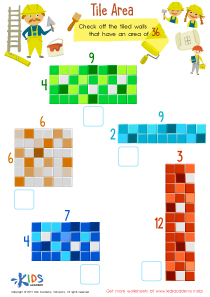
Hand-eye Coordination Normal Numbers Worksheets for Ages 3-8
3 filtered results
-
From - To
Our Hand-eye Coordination Normal Numbers Worksheets for ages 3-8 provide a fun and effective way to enhance early math skills while developing crucial hand-eye coordination. Perfectly crafted for young learners, these engaging activities include number tracing, matching, and counting exercises that reinforce number recognition and fine motor skills. Colorful designs and interactive elements keep children excited and motivated to learn. These worksheets are a great resource for parents and educators looking to support early childhood development and make learning numbers an enjoyable experience. Unlock your child’s potential today with our expertly designed hand-eye coordination worksheets.
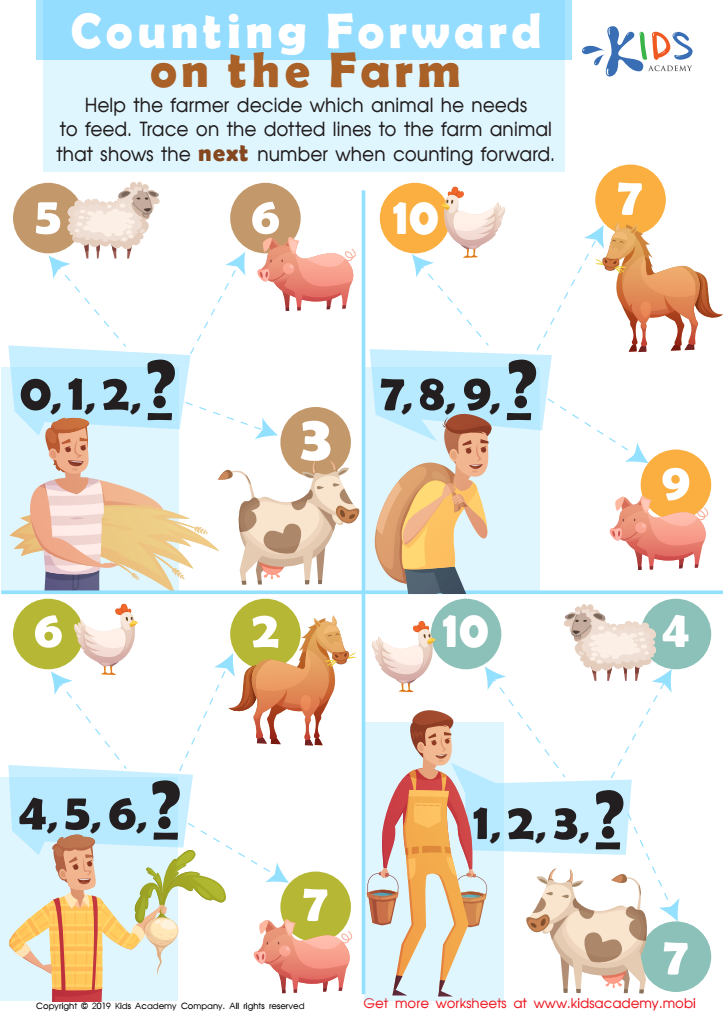
Counting Forward On the Farm Worksheet
 Assign to My Students
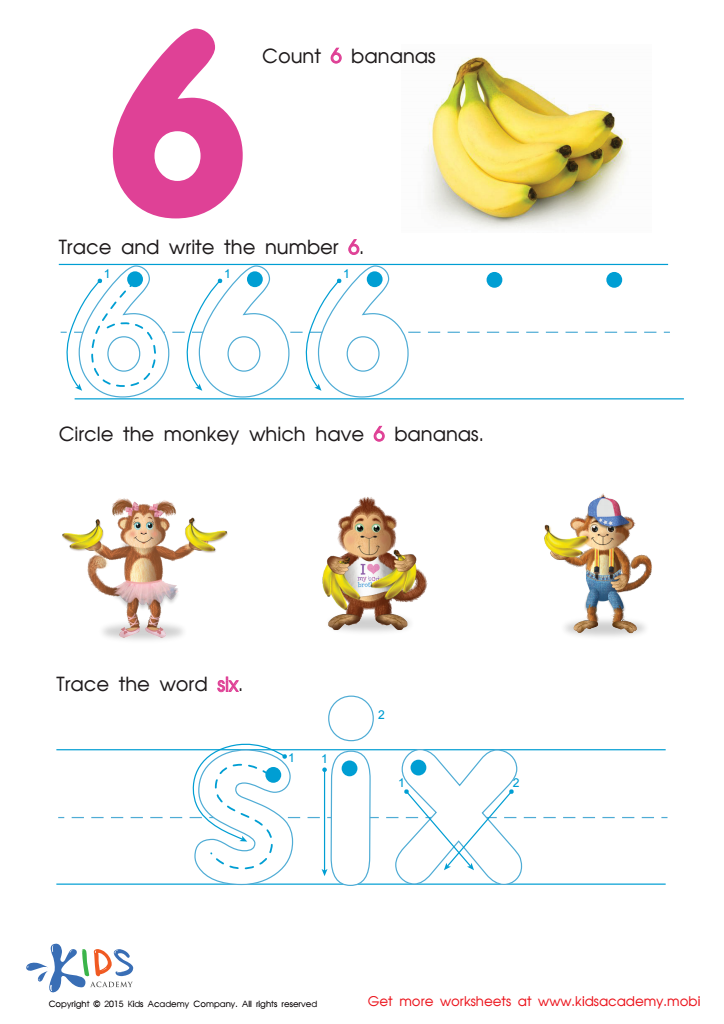
Tracing And Writing Number 6 Worksheet
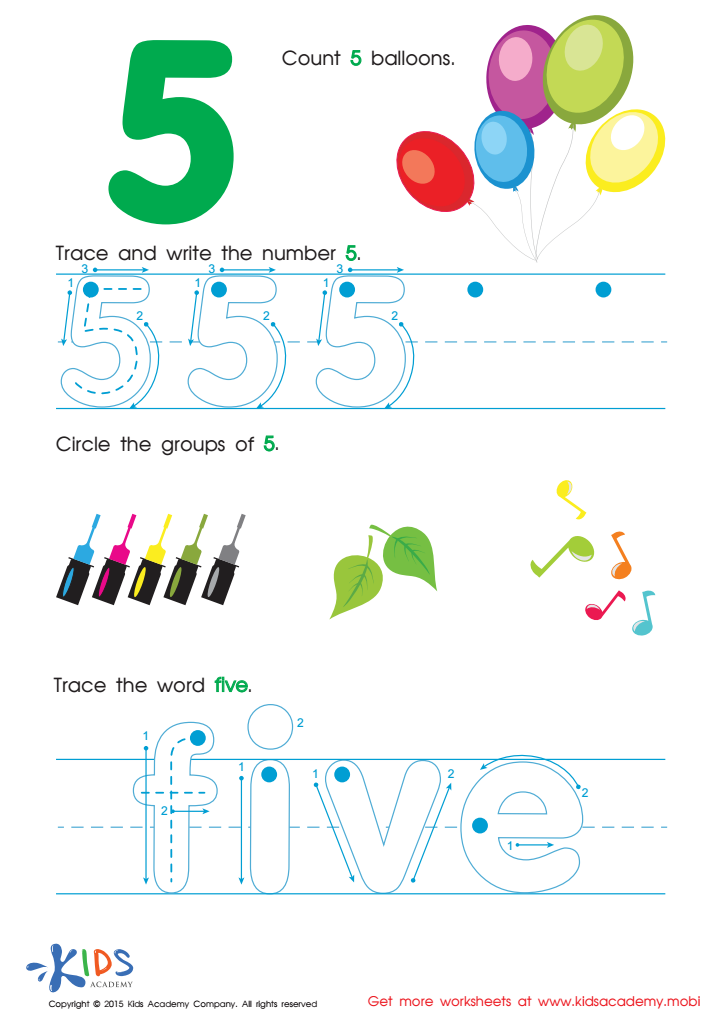
Practice Writing Number 5 Worksheet








Hand-eye coordination is a critical developmental milestone for children ages 3-8 and is fundamental for their overall growth and learning. This skill, which involves using the eyes to direct attention and the hands to execute a task, plays a vital role in daily activities and academic success.
For young learners, hand-eye coordination is essential in developing fine motor skills necessary for tasks like writing, drawing, and crafts. This coordination contributes to a child’s ability to properly grip and control a pencil, skillfully manipulate scissors, and handle small objects, which are all crucial for success in school projects and assignments.
In addition to academic achievements, hand-eye coordination is important for physical activities. It enhances a child's participation in sports, games, and recreational play by improving their ability to catch, throw, and hit objects accurately. These physical activities are not only essential for maintaining a healthy lifestyle but also for fostering social skills as children interact and play with their peers.
Moreover, good hand-eye coordination is linked with brain development. Tasks that require this skill can boost cognitive abilities by encouraging the brain to develop neural connections.
Hence, by supporting and encouraging the development of proper hand-eye coordination, parents and teachers can aid children's physical, cognitive, and social developments ensuring they build a solid foundation for future skills and activities.