Basic Mathematics Normal Math Worksheets for Ages 3-8
5 filtered results
-
From - To
Our "Basic Mathematics Normal Math Worksheets for Ages 3-8" provide an engaging and educational experience designed for young learners. Tailored to develop essential math skills, these worksheets cover fundamental concepts including counting, addition, subtraction, number recognition, and shape identification. Each printable worksheet is crafted to make learning enjoyable and effective, catering to the unique needs of children aged 3-8. Whether practicing at home or in the classroom, our resources ensure that foundational math skills are built with confidence and enthusiasm. Start your child's math journey with worksheets that make learning exciting and accessible. Visit Kids Academy for more!
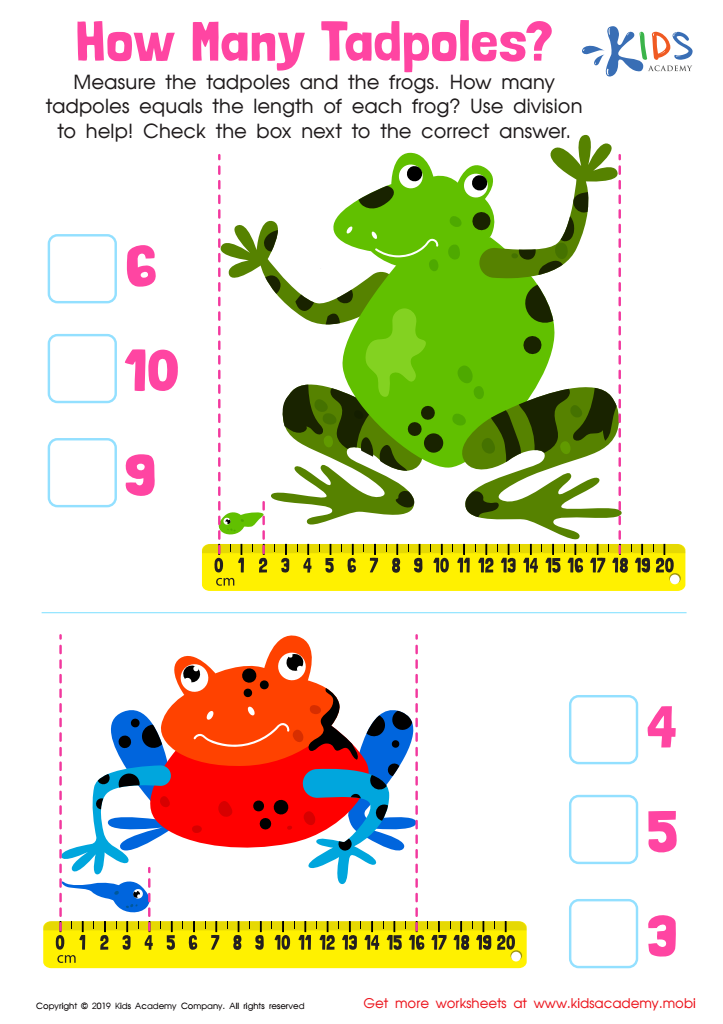
How Many Tadpoles Worksheet
 Assign to My Students
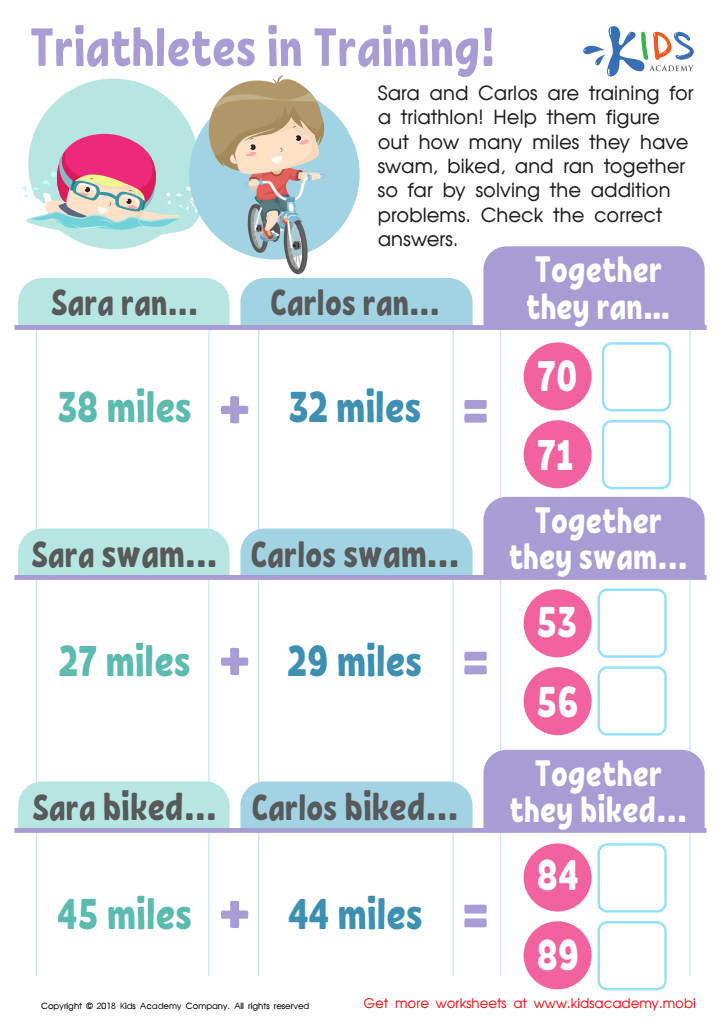
Triathletes in Training Worksheet
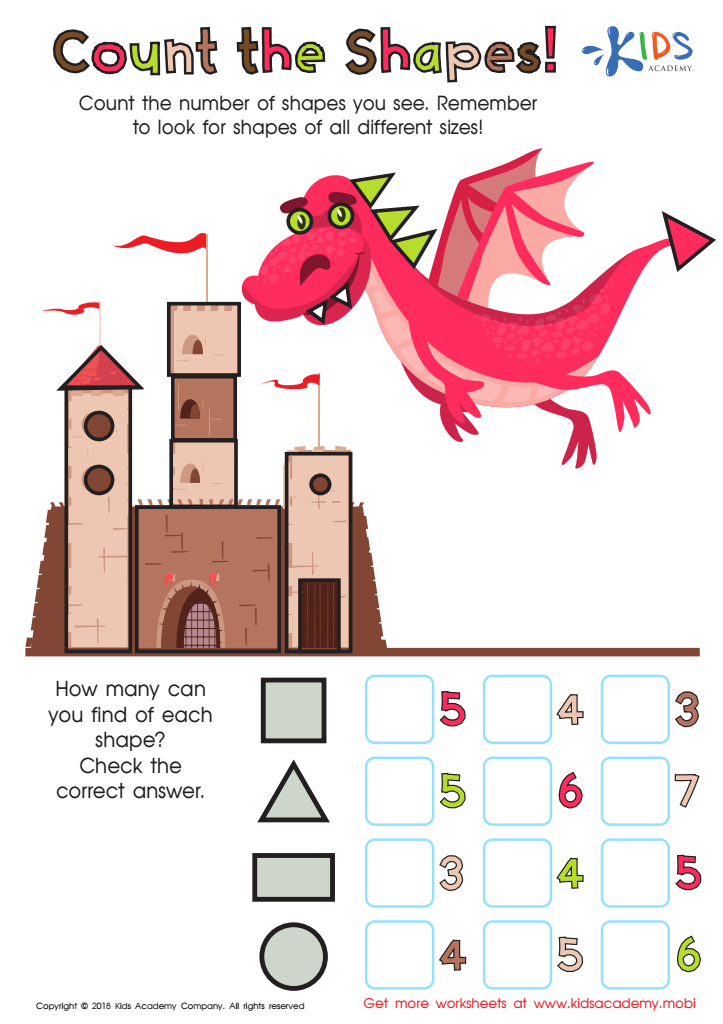
Count the Shapes Worksheet
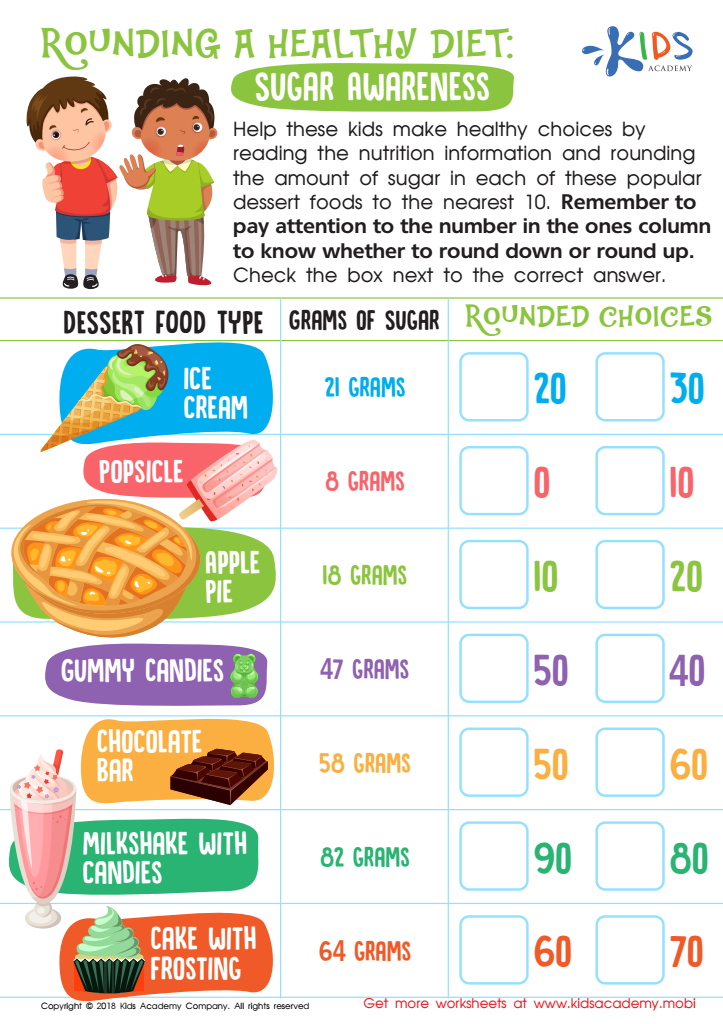
Rounding Healthy Diet Worksheet
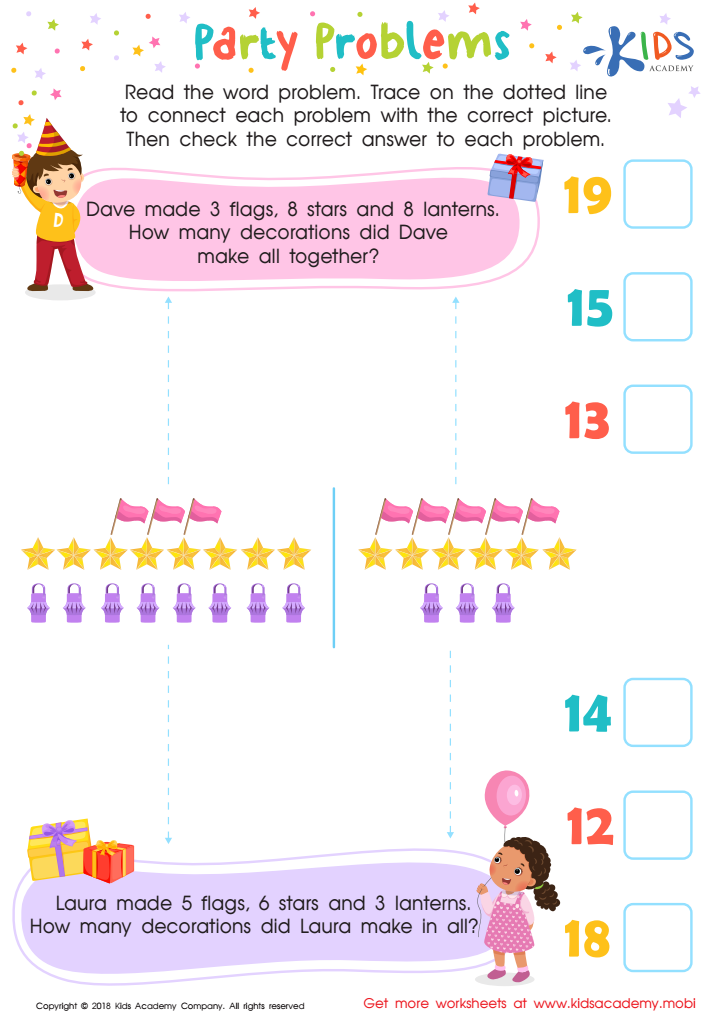
Party Problems Worksheet







Understanding Basic Mathematics at an early age is crucial for young children, typically between the ages of 3 to 8, as it lays the foundational skills essential for cognitive development and future academic success. Math isn't just about numbers; it encompasses problem-solving skills, logical thinking, and the ability to understand and manipulate abstract concepts. By grasping basic mathematical principles, children develop the ability to reason, make connections, and recognize patterns in their environment.
For parents and teachers, fostering this mathematical literacy is instrumental in building children's confidence and curiosity. Engaging activities that integrate math concepts, such as counting games, simple addition and subtraction, and understanding shapes and sizes, can be both fun and educational. When children experience math as an enjoyable and integral part of their daily lives, they are more likely to develop a positive attitude towards learning more complex mathematical subjects in the future.
Moreover, early proficiency in basic math skills is linked to better performance in school and helps prevent math-related anxiety. Parents and teachers play a pivotal role in creating a supportive learning environment that encourages exploration and resilient problem-solving. Ultimately, early childhood exposure to math equips children with critical life skills that are applicable beyond the classroom, forming a foundation for lifelong learning and success.








