Comparing Fractions Normal Math Worksheets for Ages 3-8
4 filtered results
-
From - To
Dive into the exciting world of fractions with our "Comparing Fractions Normal Math Worksheets for Ages 3-8". These engaging, age-appropriate exercises are designed to help young learners grasp the basics of fractions through fun, interactive tasks. Our worksheets make comparing fractions easy and enjoyable, enhancing mathematical thinking and problem-solving skills. Perfect for both classroom and at-home practice, they offer sequential challenges that build number sense and confidence. Ideal for early-grade students, these resources align with common core standards, ensuring your child is school-ready. Uncover the joy of learning math with Kids Academy and watch your child’s knowledge grow!
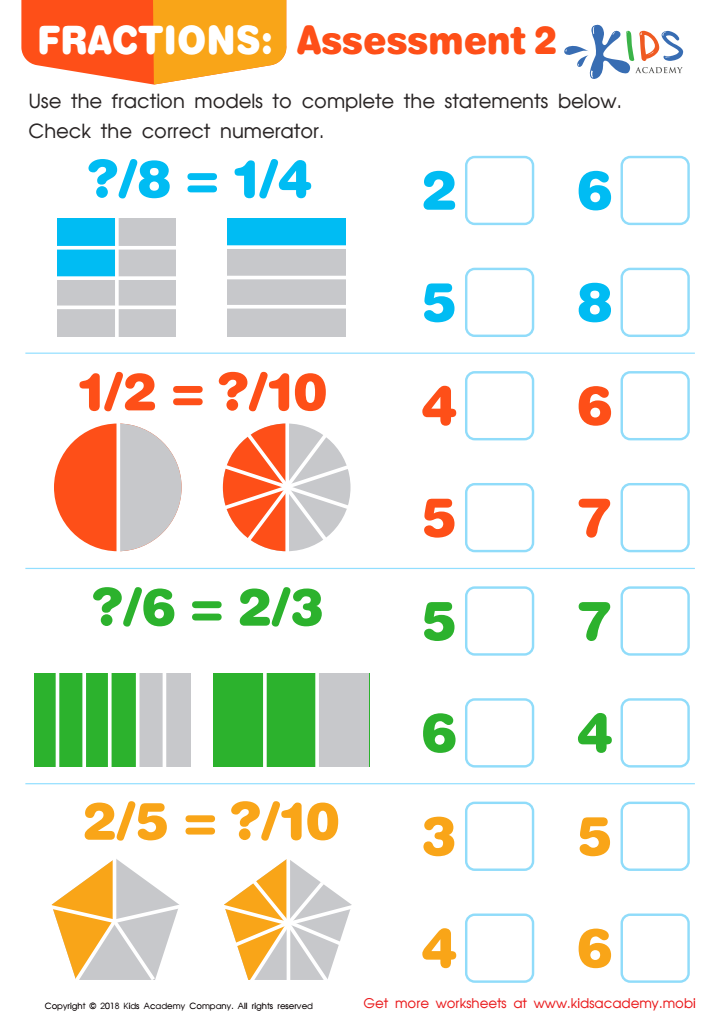
Fractions: Assessment 2 Worksheet
 Assign to My Students
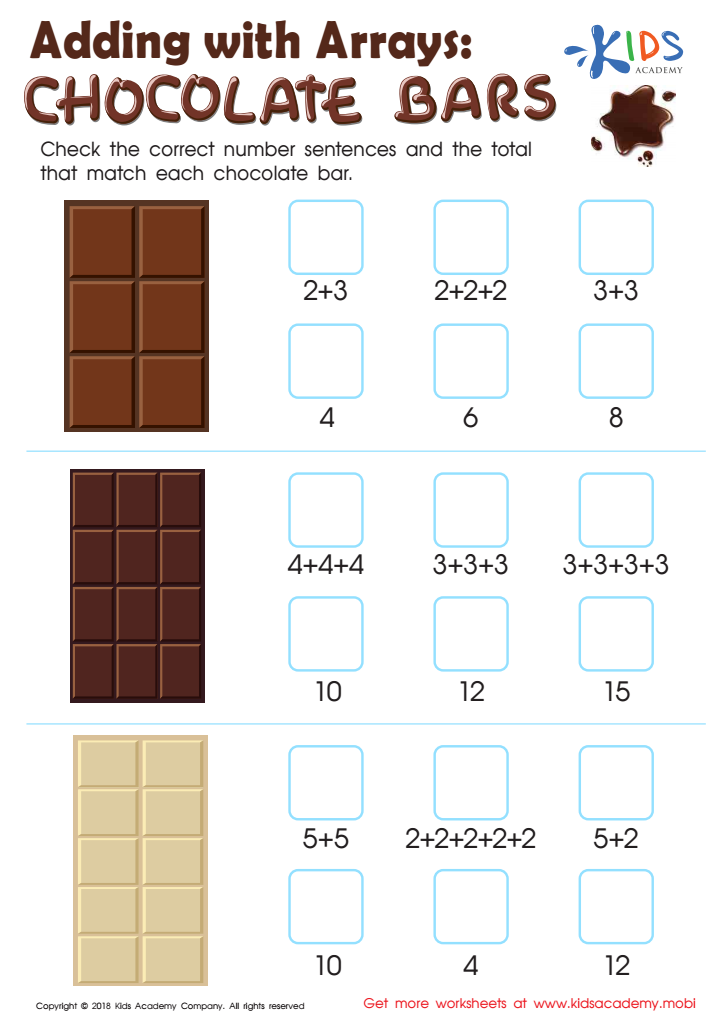
Adding with Arrays: Chocolate Bars Worksheet
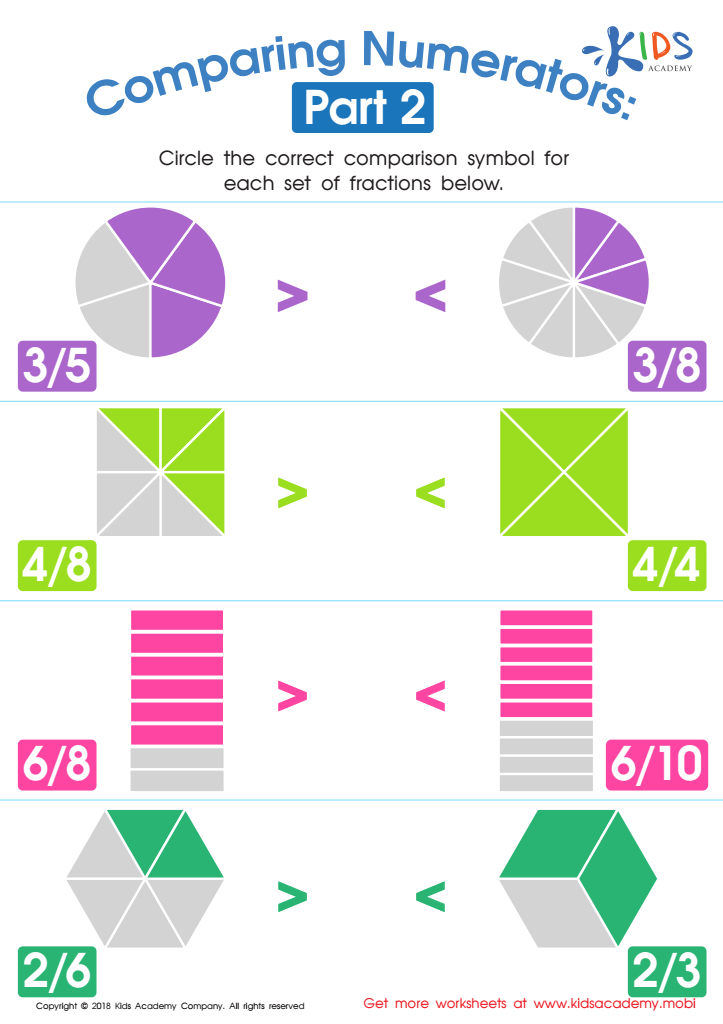
Comparing Numerators Part 2 Worksheet
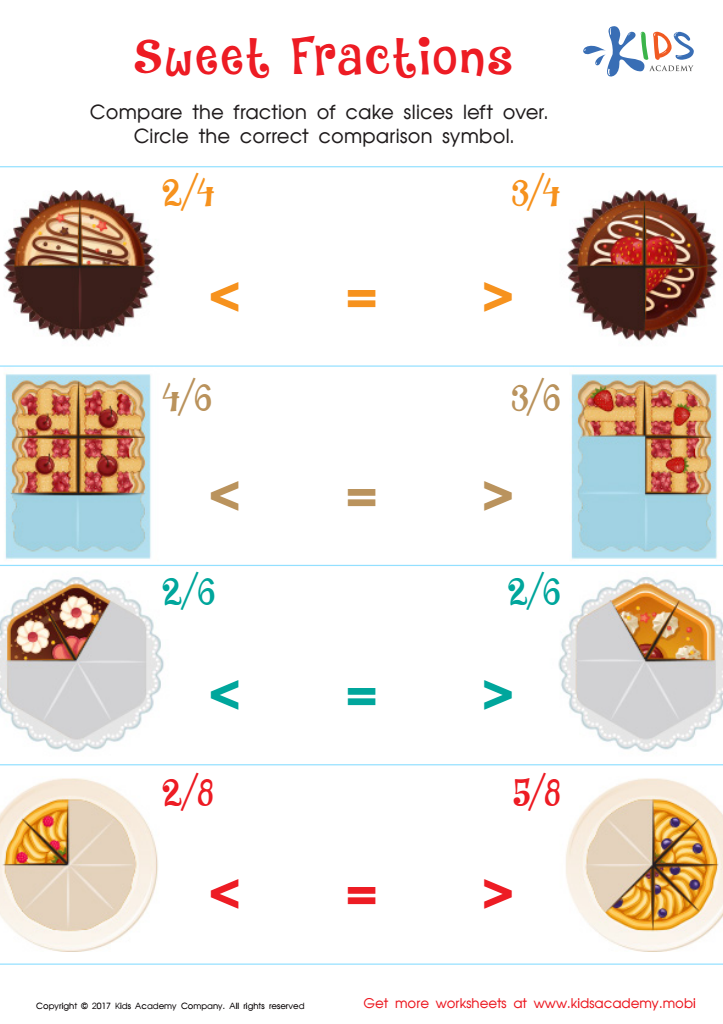
Compare Fractions Worksheet








Parents and teachers should care about introducing the concept of comparing fractions to children ages 3-8 because it lays a crucial foundation for mathematical understanding. Even at an early age, children begin to develop essential cognitive skills that underlie more complex mathematical concepts they’ll encounter later in their education. Early exposure to fractions helps them visualize and understand parts of a whole, a fundamental idea in mathematics.
Teaching fractions normalizes the idea that numbers can represent parts, which is vital when they later study topics like algebra, ratios, and proportions. Additionally, it helps them grasp everyday concepts, like dividing a pizza among friends or understanding that one half of a cake is bigger than one quarter of the same cake. This contextual learning helps solidify their grasp of fraction comparisons and the relative size of numbers.
Developing these skills early also enhances problem-solving abilities and logical thinking. When children compare fractions, they practice making decisions based on quantitative reasoning. These skills are not just academic—they're life skills that become useful in daily tasks such as cooking, shopping, and comparing quantities.
For parents and teachers, fostering an early comprehension of fractions therefore ensures that children build strong, versatile mathematical foundations, which can lead to greater academic confidence and success.








