
Enhancing logical thinking Normal Math Worksheets for Ages 3-8
4 filtered results
Difficulty Level
Grade
Age
-
From - To
Subject
Activity
Standards
Enhance your child's logical thinking skills with our engaging Normal Math Worksheets designed for ages 3-8! These carefully crafted worksheets promote critical reasoning, problem-solving, and analytical abilities through fun-filled activities. Your little learners will explore patterns, comparisons, and simple classifications, all while building a solid math foundation. Ideal for both classroom and home use, our worksheets cater to various learning levels, ensuring a personalized experience. Watch your children gain confidence as they tackle exciting challenges that spark curiosity and creativity. Instill a love for learning in your young mathematicians today! Start their journey towards logical thinking with our quality resources!
Favorites
With answer key
Interactive
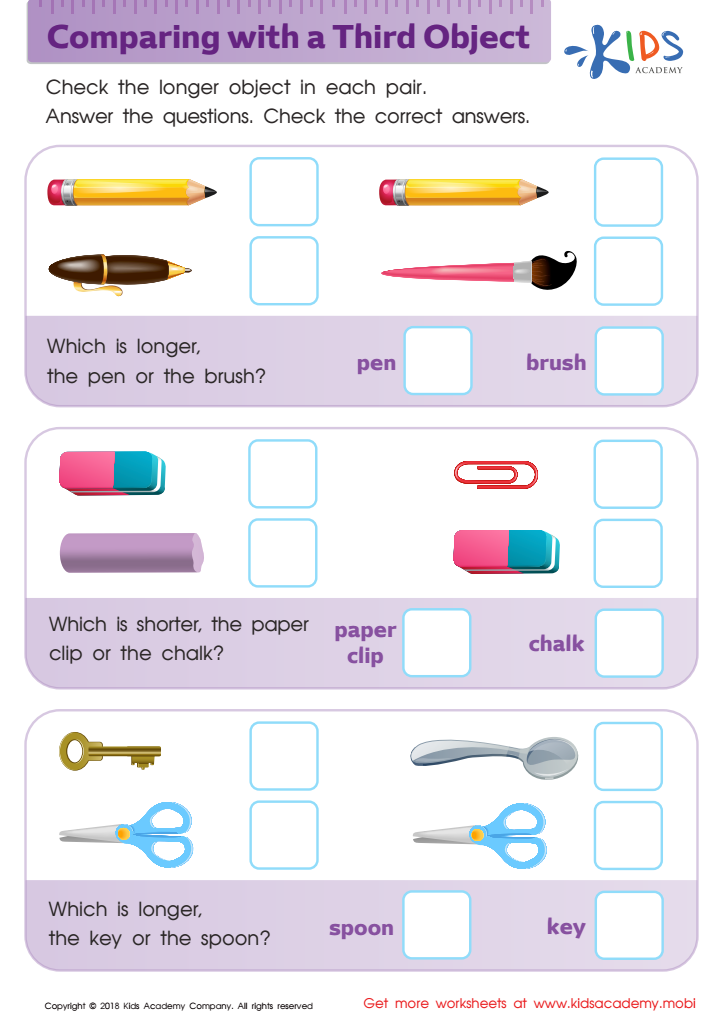
Comparing with a Third Object Worksheet
Help your child master measurement skills with this free downloadable math worksheet! Ask them to compare each pair of objects, checking the box for the longer one. Then, read the question and compare the objects across the pairs before ticking the box and continuing to the next group of pictures.
 Assign to My Students
Comparing with a Third Object Worksheet
Worksheet
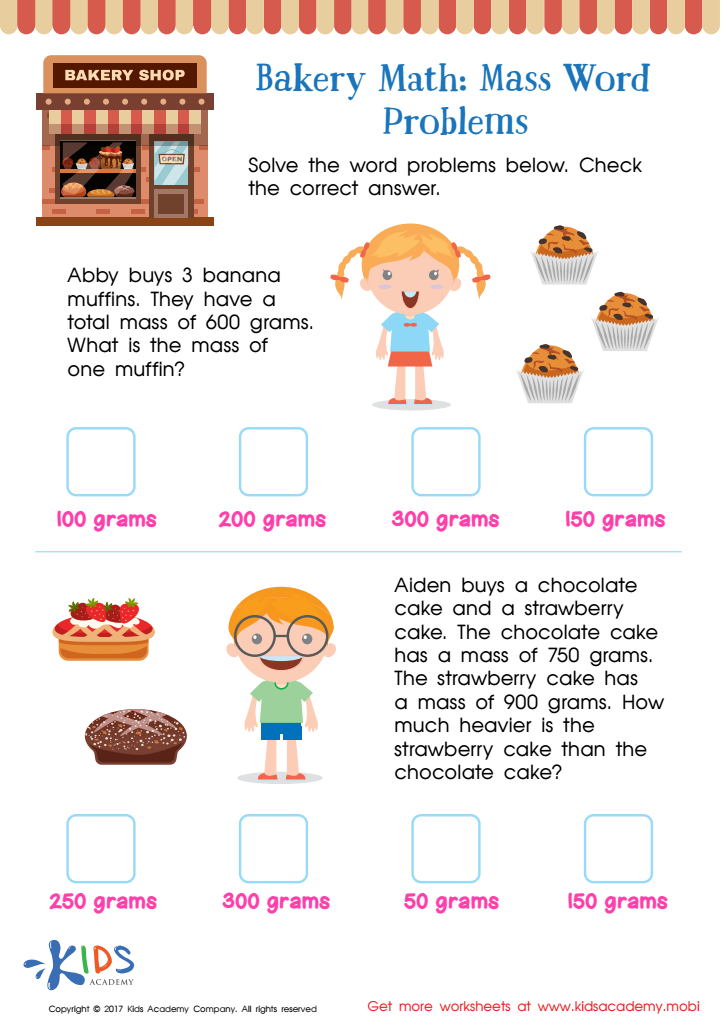
Mass Word Problems Worksheet
This worksheet challenges kids with tricky mass word problems. It offers valuable practice with grams. Through division and subtraction, children gain experience handling mass.
Mass Word Problems Worksheet
Worksheet
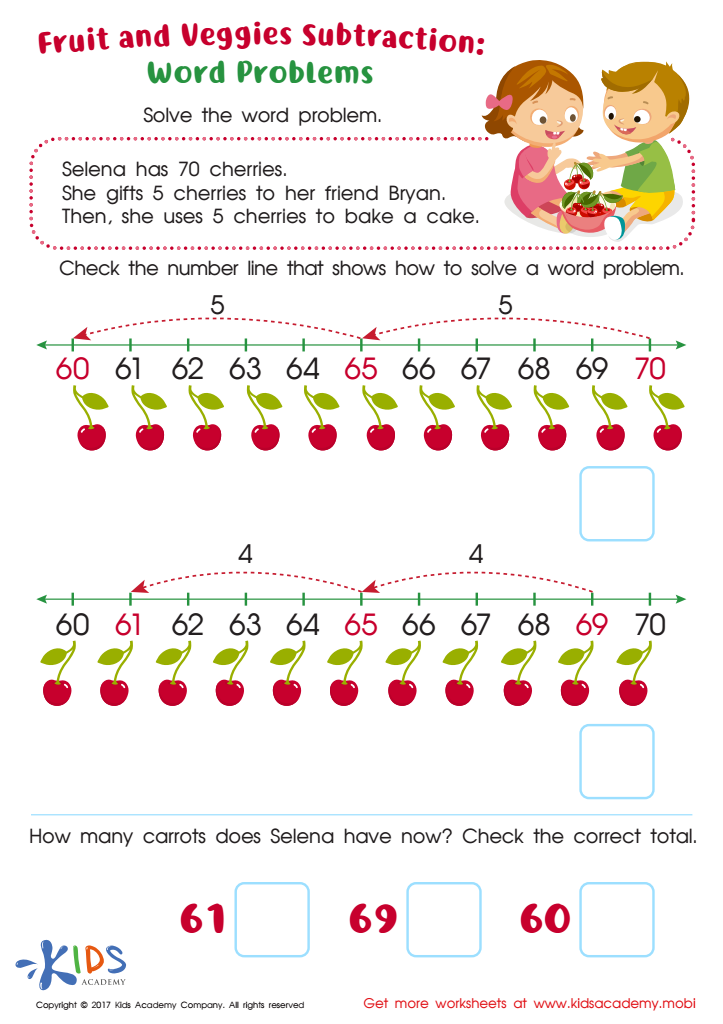
Subtraction Word Problems Free Printable
Try out this free printable subtraction worksheet! Your child can use number lines to solve challenging word problems – it's a great way to boost their problem-solving skills.
Subtraction Word Problems Free Printable
Worksheet
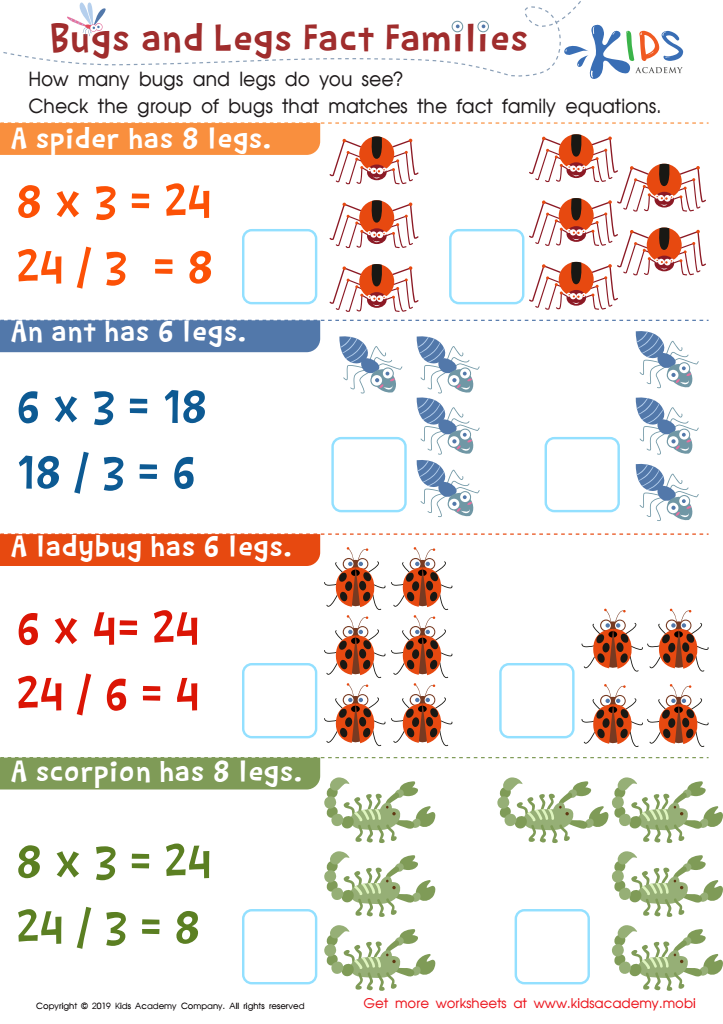
Bugs and Legs Fact Families Worksheet
This free worksheet uses bugs and insects to help young math students learn about fact families and recognize patterns in multiplication and division. It's a fun and colorful way to gain automaticity and efficiency in computation skills, without even realizing it's math!
Bugs and Legs Fact Families Worksheet
Worksheet
Join Kids Academy for Free
Who is primarily going to use this learning content?








Enhancing logical thinking through math for children aged 3-8 is crucial for several reasons. First, early math skills help shape a child's cognitive development, fostering problem-solving abilities and analytical reasoning that are vital not just in academics but in everyday life. When children engage in logical thinking activities, they learn to identify patterns, classify objects, and establish relationships, which lay the foundation for more complex mathematical concepts as they grow.
Moreover, developing logical thinking at a young age supports enhanced communication skills. As children articulate their thought processes while solving problems, they improve their vocabulary and learn to express their reasoning clearly. This skill not only serves mathematics but translates across subjects and social interactions.
Additionally, early exposure to logical thinking can significantly boost a child's confidence in their capabilities. When children succeed in solving logical problems, they experience a sense of accomplishment, which encourages a positive attitude towards learning.
Lastly, fostering logical thinking in the formative years can help bridge educational disparities by equipping all children with critical thinking skills that will benefit them in future learning and life challenges. For parents and teachers, prioritizing these activities is an investment in a child's overall education and future success.








