Enhancing math skills Normal Math Worksheets for Ages 3-8
10 filtered results
-
From - To
Elevate your child's math abilities with our "Enhancing Math Skills" worksheets, specifically designed for kids aged 3 to 8. Our engaging, age-appropriate activities foster essential mathematical skills such as counting, addition, and subtraction through fun and interactive formats. Each worksheet encourages problem-solving and critical thinking while keeping young learners motivated and entertained. With a variety of colorful themes and formats, your child will enjoy hours of math exploration. Ideal for teachers and parents alike, our resources support early childhood education by aligning with developmental milestones. Download, print, and watch your child's confidence and skills soar!
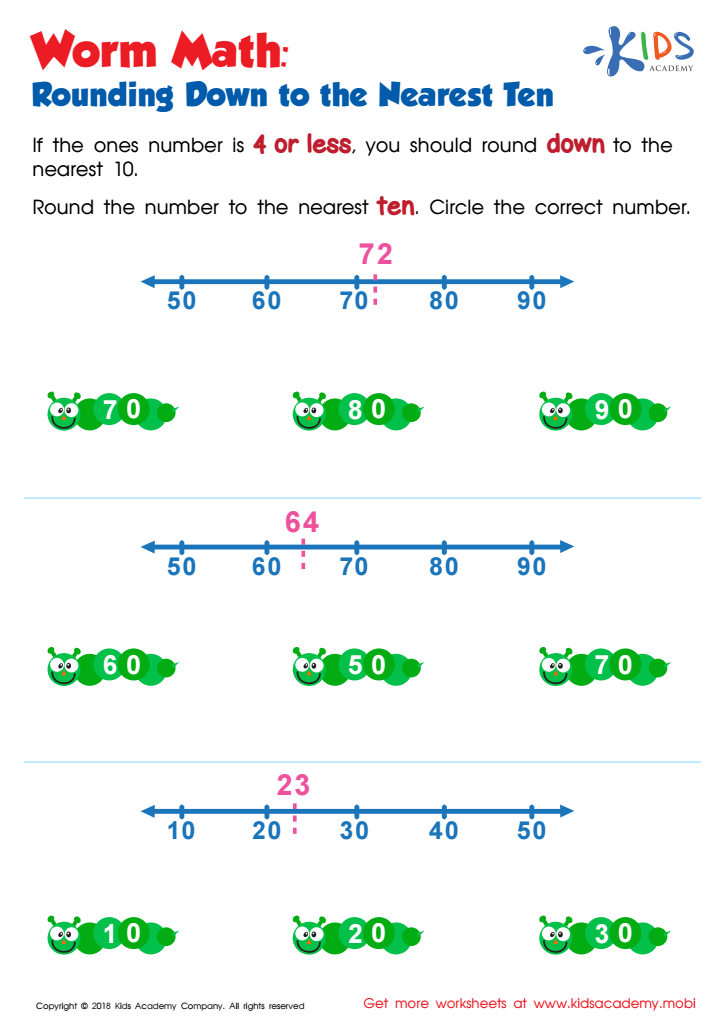
Worm Math Rounding Down to the Nearest Ten Worksheet
 Assign to My Students
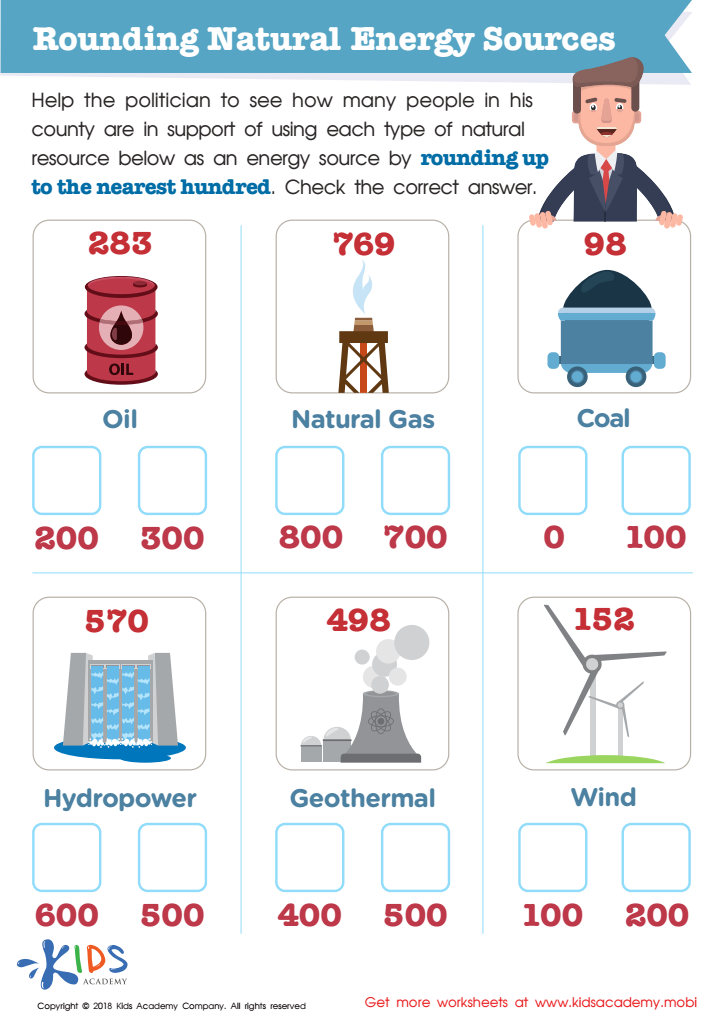
Rounding Natural Energy Sources Worksheet
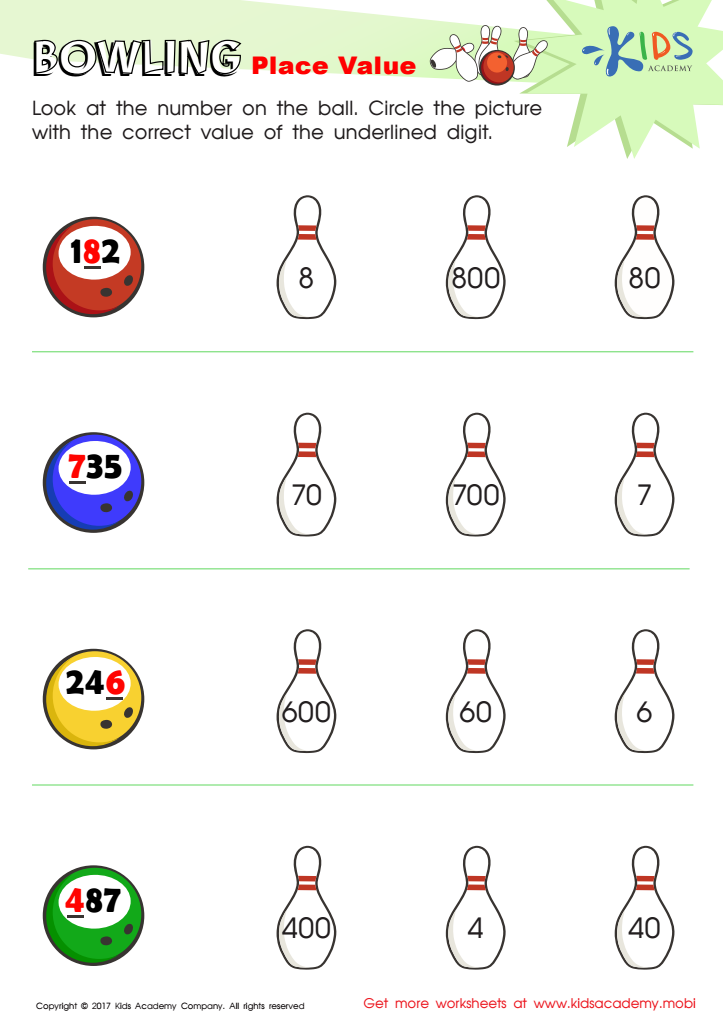
Place Value Worksheet
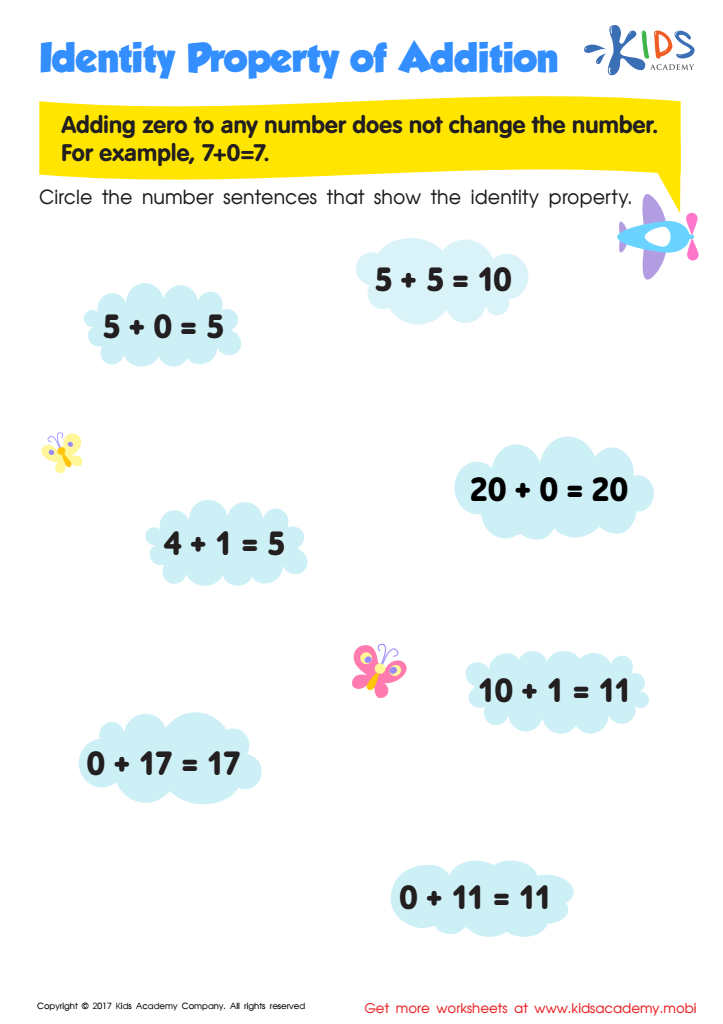
Identity Property of Addition Worksheet
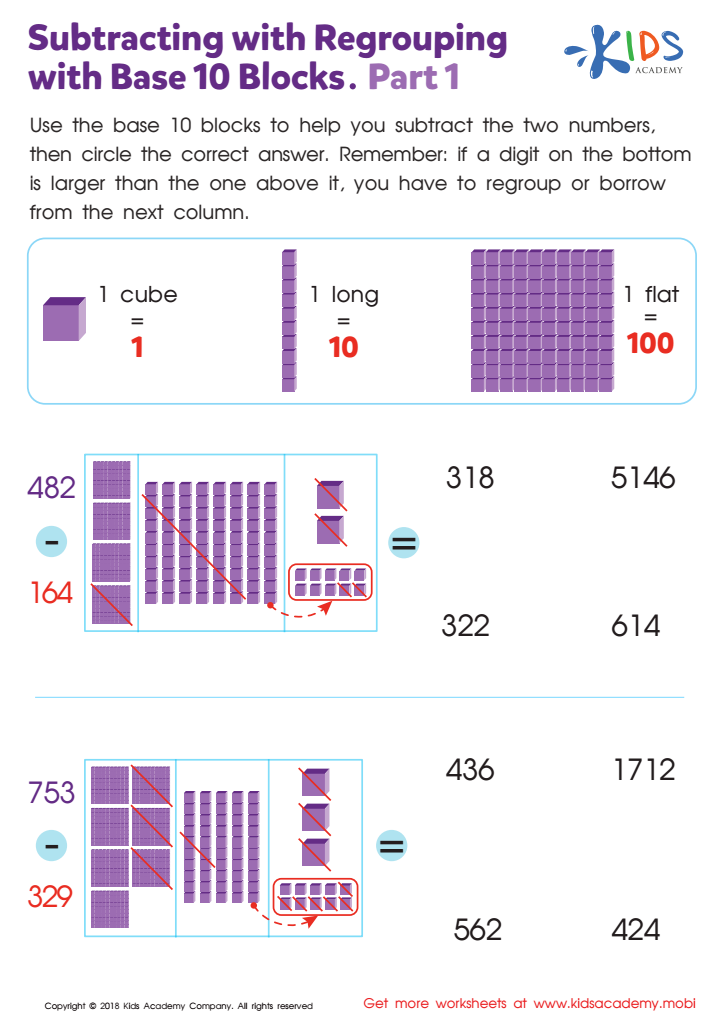
Subtracting with Regrouping with Base 10 Blocks. Part1 Worksheet
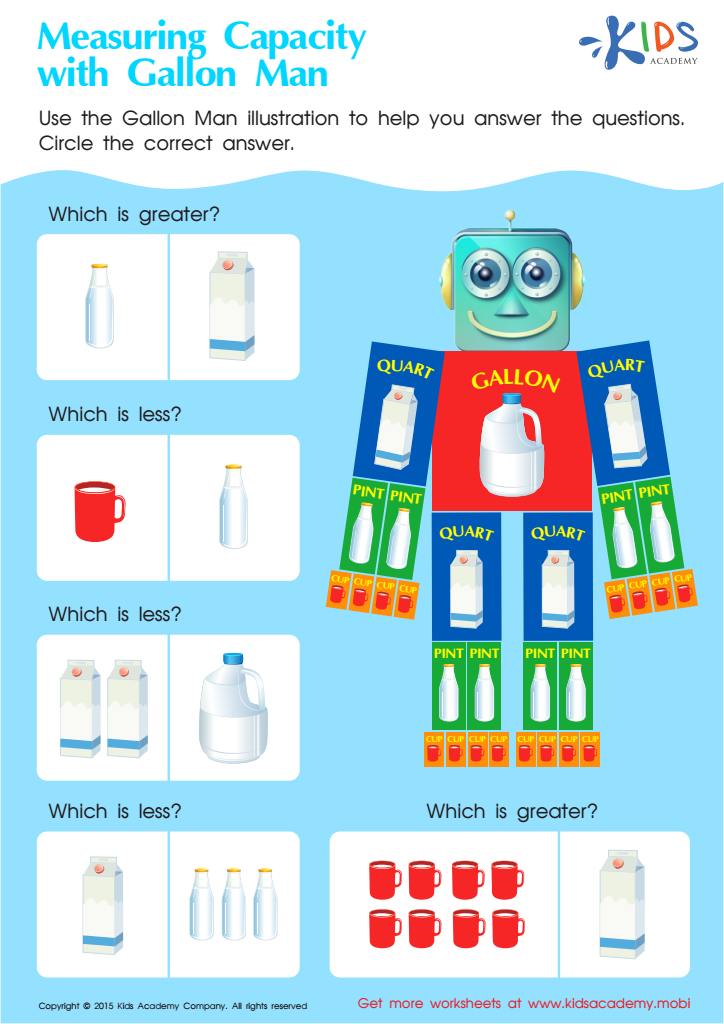
Measurement: Measuring Capacity with Gallon Man Worksheet
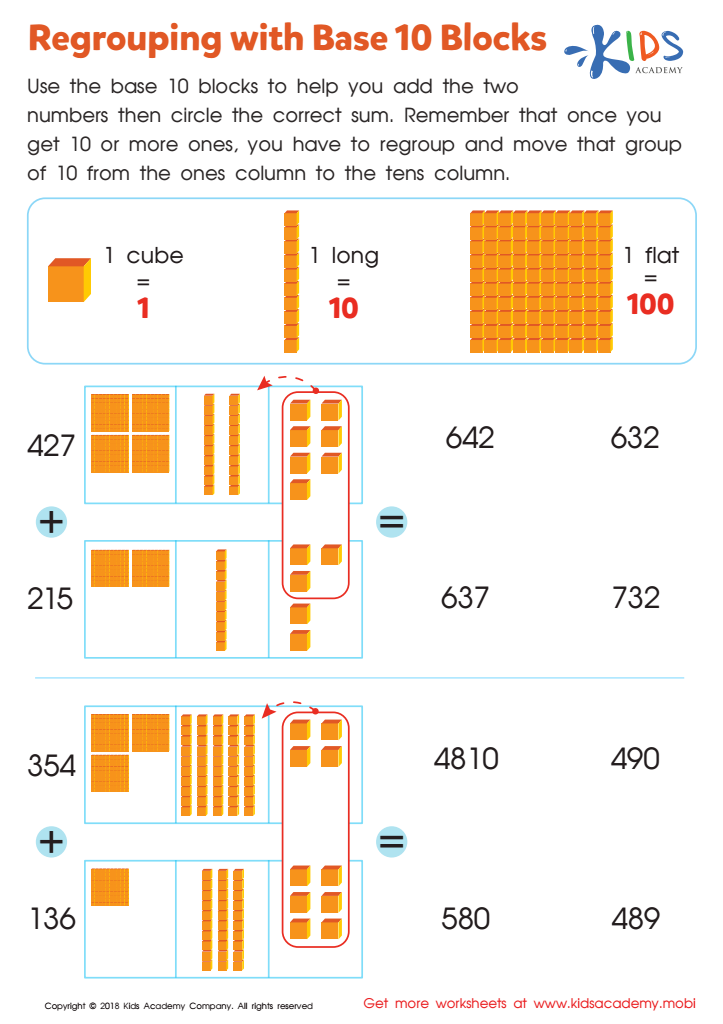
Regrouping with Base 10 Blocks Worksheet
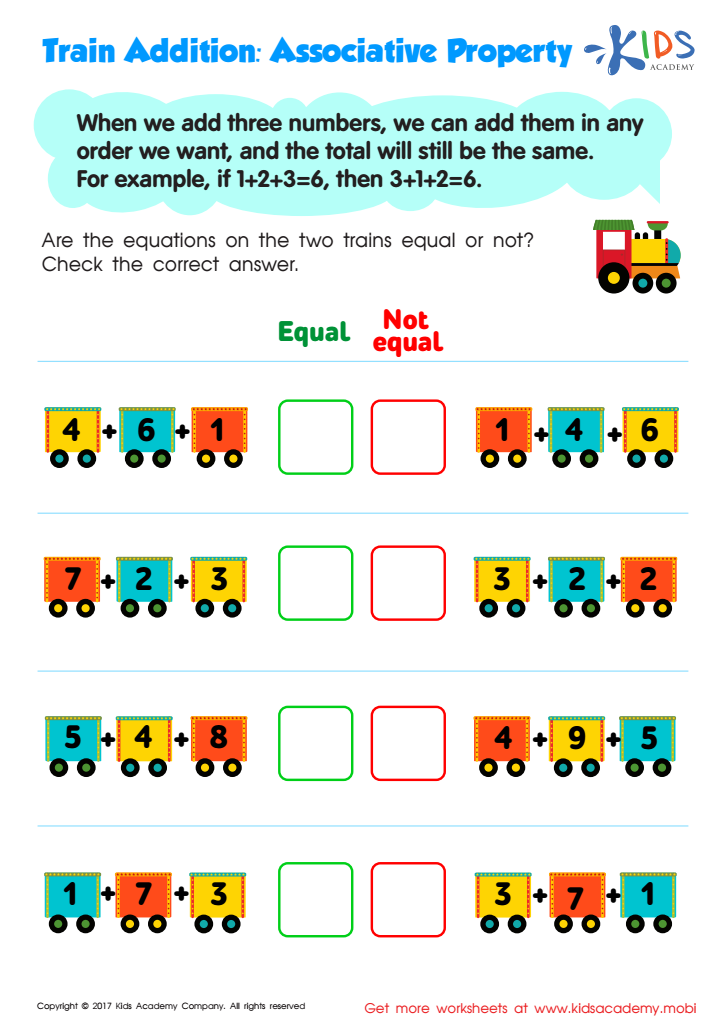
Train Addition: Associative Property Worksheet





.jpg)

Enhancing math skills in children aged 3-8 is crucial for several reasons. Early mathematical concepts lay the foundation for future learning and overall academic success. Children at this age are naturally curious and eager to explore numbers, shapes, and patterns in their environment. By fostering a positive relationship with math during these formative years, parents and teachers can build confidence in children's skills and cultivate a growth mindset.
Engaging kids in meaningful math experiences helps them develop critical thinking, problem-solving abilities, and logical reasoning. These skills not only support math learning but are also essential for everyday decision-making. Furthermore, early math competence is linked to success in later grades, influencing future subjects like science, technology, engineering, and even literacy.
Parents and teachers play a pivotal role in creating enriching, playful learning opportunities. Simple activities such as counting objects during playtime, measuring ingredients while cooking, or exploring geometric shapes through block play can enhance mathematical understanding. Doing so also builds a strong home-to-school learning connection, making math not just a subject but a fun, integral part of daily life. Ultimately, fostering math skills early not only prepares children for future academic challenges but also equips them for real-life problem-solving.








