Math problem-solving Normal Math Worksheets for Ages 3-8
5 filtered results
-
From - To
Our Math Problem-Solving Worksheets for ages 3-8 make learning math engaging and fun. Developed by education experts, these worksheets focus on foundational skills such as counting, addition, subtraction, and logic. Each sheet presents age-appropriate challenges that help young learners build confidence and develop critical thinking. Colorful and intuitive designs keep children motivated, while progressive difficulty levels ensure continuous learning. Perfect for both classroom and home use, our resources support children in mastering key math concepts. Get your child started on the path to math success with our high-quality, printable problem-solving worksheets today!
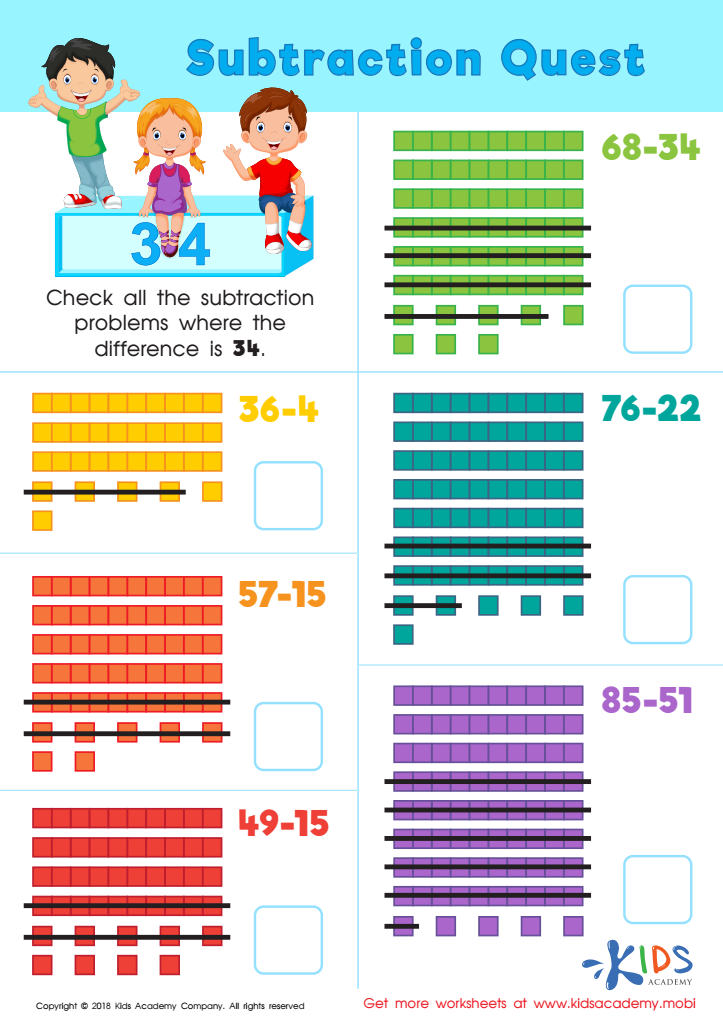
Subtraction Quest Worksheet
 Assign to My Students
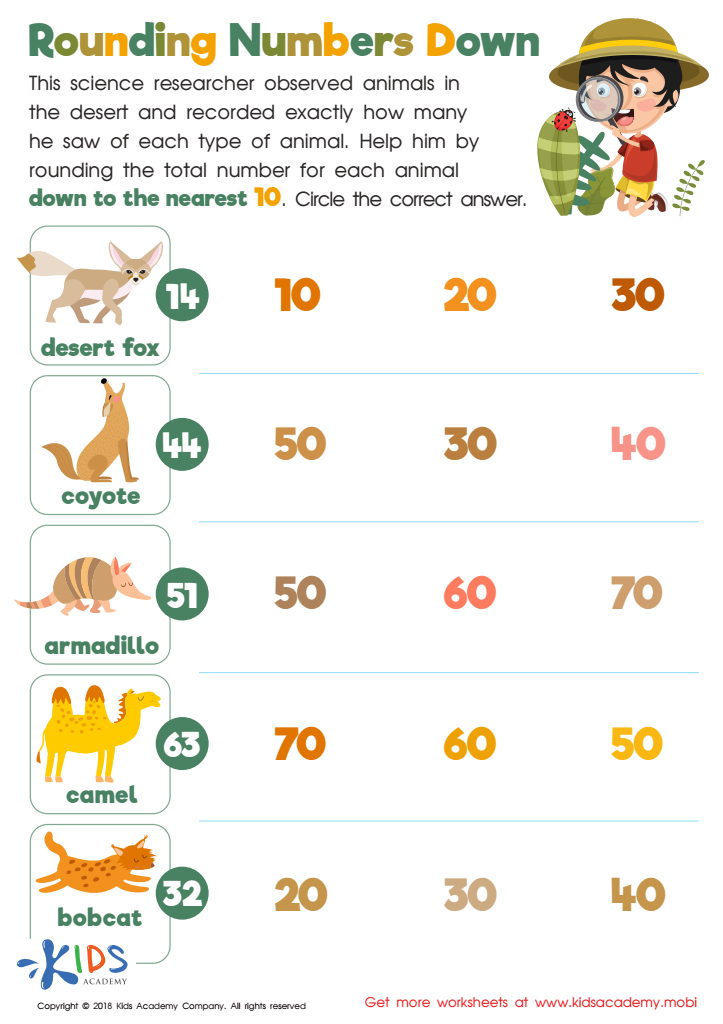
Rounding Numbers Down Worksheet
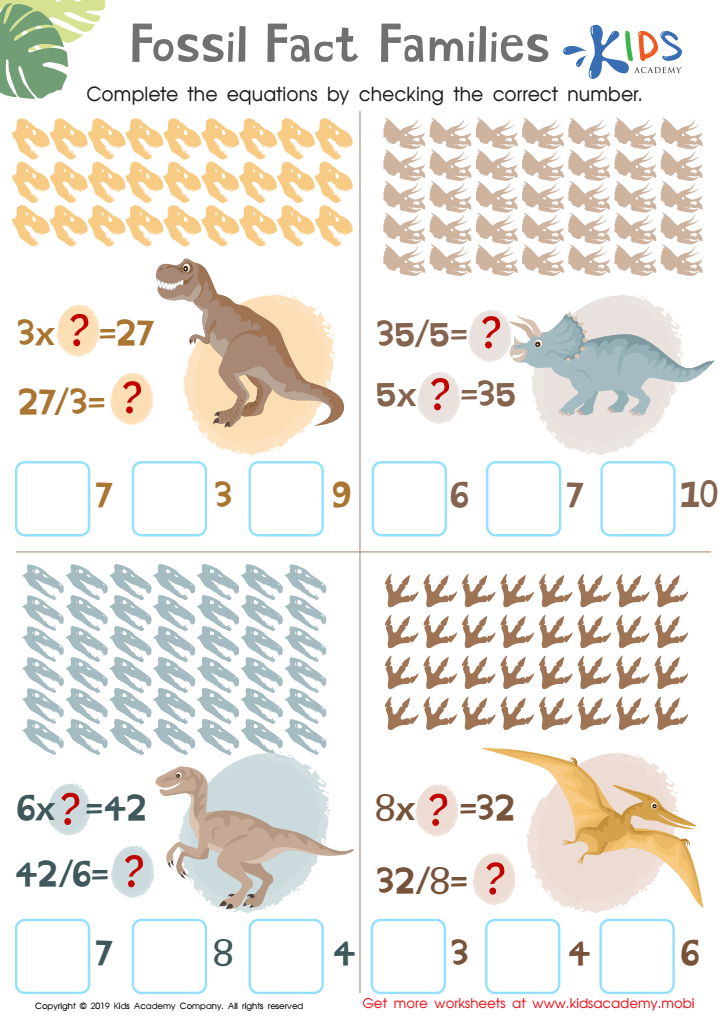
Fossil Fact Families Worksheet
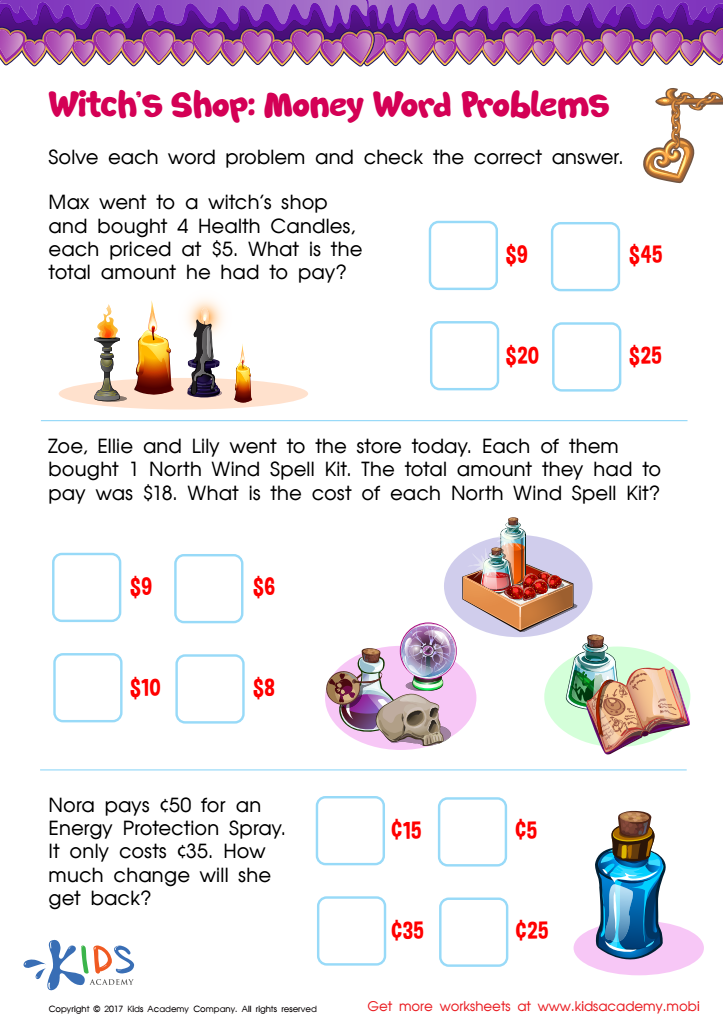
Money Word Problems Printable
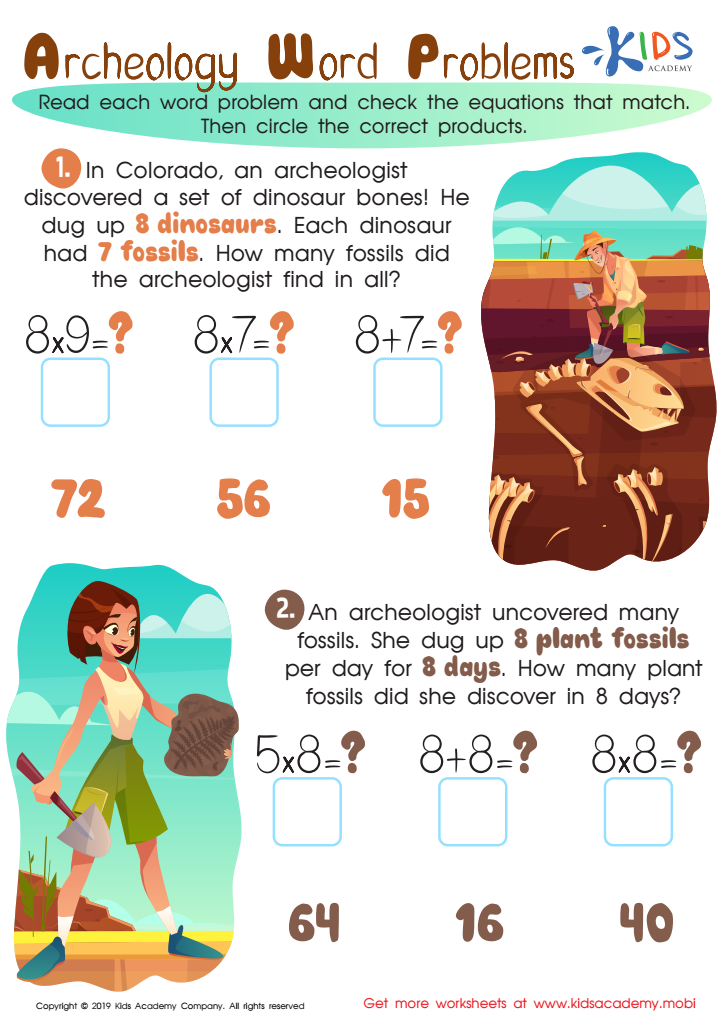
Archeology Word Problems Worksheet








Parents and teachers should care deeply about math problem-solving for young children aged 3-8 because this period is critical for cognitive development. Introducing math in early education lays the foundation for logical thinking, reasoning, and problem-solving skills that are essential for daily life and academic success. At this age, children’s brains are exceptionally receptive to new concepts, and engaging them with math activities helps to foster a positive attitude towards the subject.
Math problem-solving activities stimulate curiosity and encourage children to experiment and explore different strategies. This not only enhances their numeracy skills but also builds confidence and perseverance. Understanding basic math concepts early provides children with the tools to tackle more complex problems as they grow, ensuring a smoother educational journey.
Furthermore, math proficiency is closely linked to better performance in other subjects, such as science and reading. For instance, recognizing patterns and sequences in math can improve reading skills by helping children to predict and understand narratives.
Involving children in enjoyable and interactive math problems can also create meaningful bonding experiences with parents and teachers, reinforcing learning in a supportive environment. Ultimately, prioritizing math problem-solving from an early age equips children with essential skills that benefit their future academic and everyday activities.








