Recognizing number patterns Normal Math Worksheets for Ages 3-8
4 filtered results
-
From - To
Unlock the magic of math for your little ones with our "Recognizing Number Patterns" worksheets, designed for children ages 3-8. These engaging activities help young learners develop essential math skills by identifying and predicting number sequences. Our expertly crafted worksheets provide a fun and interactive way to understand numerical patterns, fostering a strong foundation in early mathematics. Perfect for home or classroom use, these resources support cognitive development and critical thinking. Dive into the world of numbers and patterns, and watch your child's confidence soar as they master key concepts with ease.
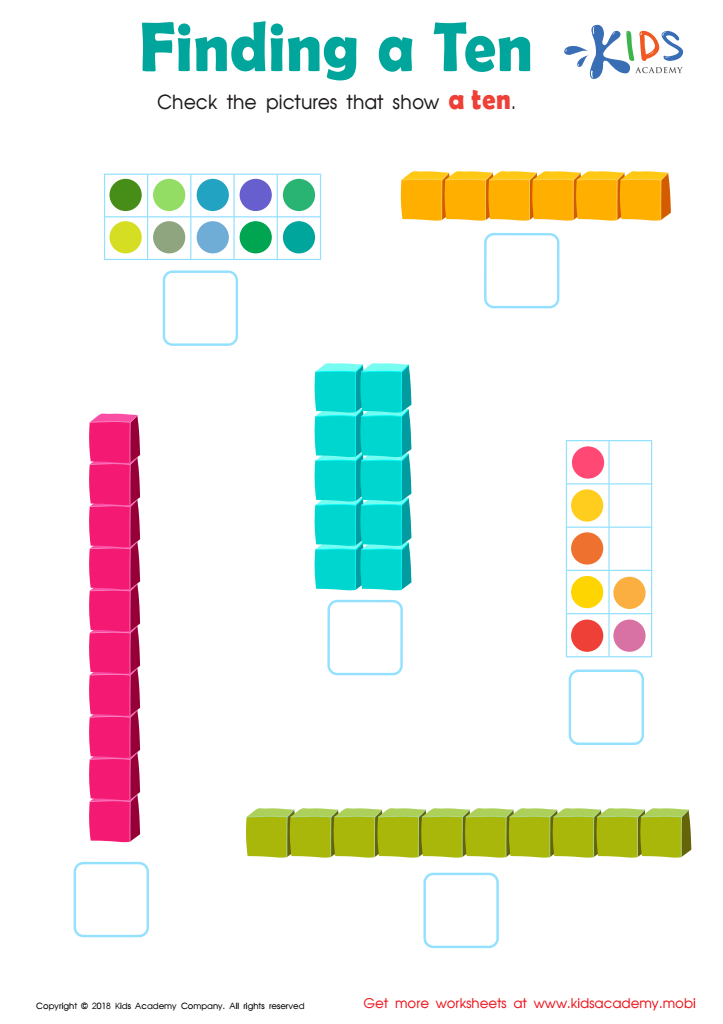
Finding a Ten Worksheet
 Assign to My Students
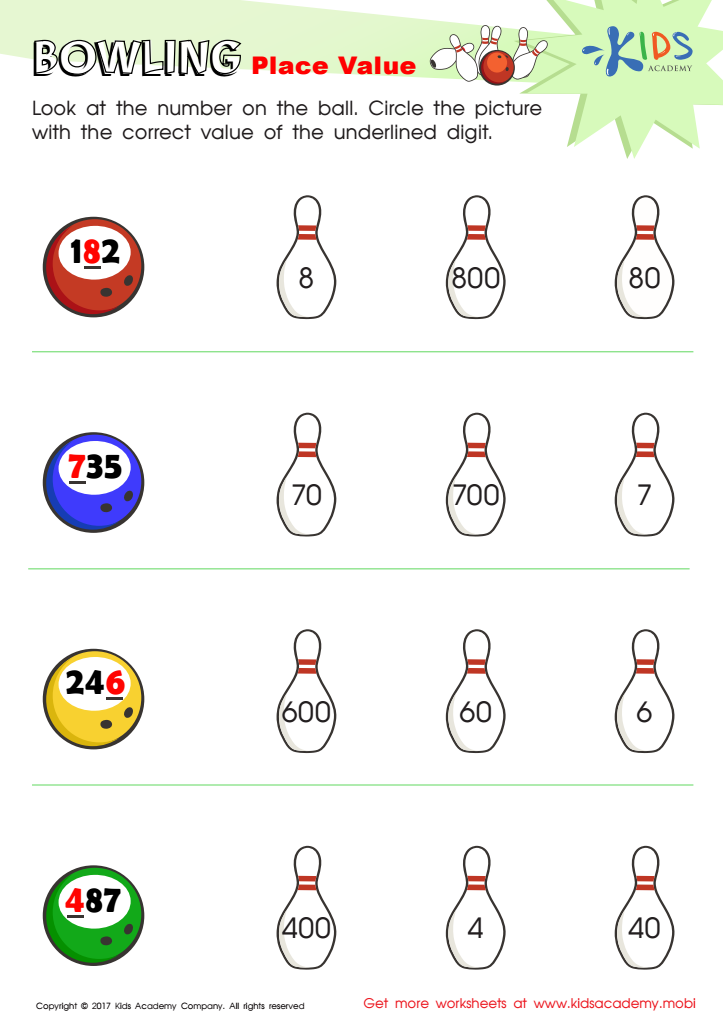
Place Value Worksheet
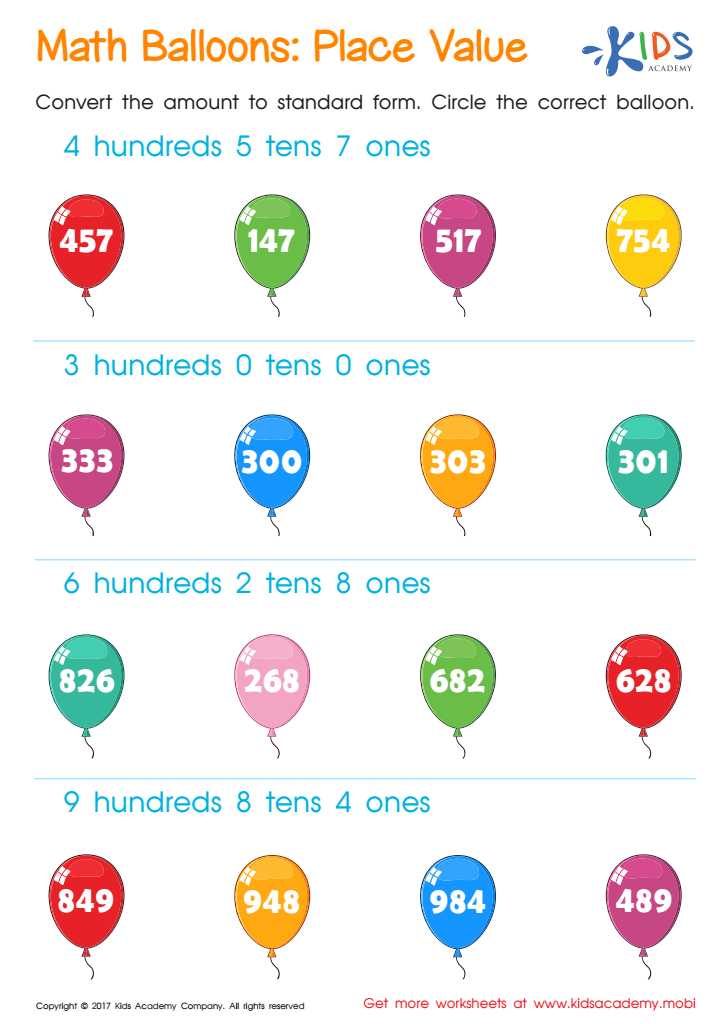
Place Value Printable Worksheet
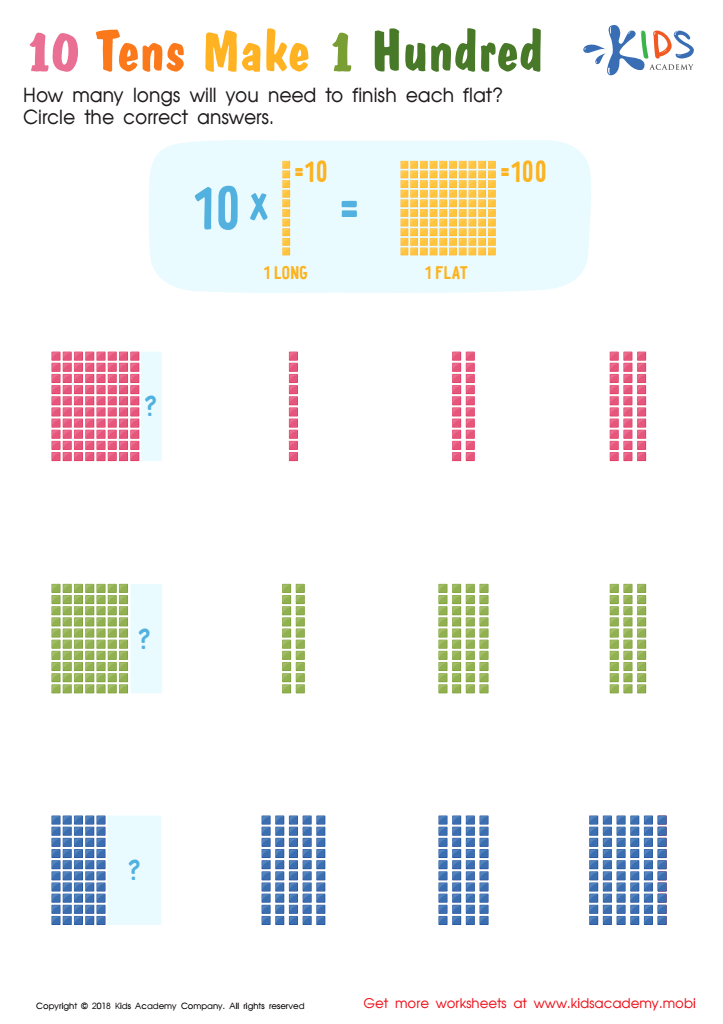
10 Tens Make 1 Hundred Worksheet






Recognizing number patterns is an essential skill for young children, particularly those between the ages of 3-8, as it lays the foundation for more advanced mathematical concepts. For young learners, number patterns help to develop their ability to think logically and make connections. When children identify patterns, they learn to predict what comes next, which is crucial for problem-solving and critical thinking skills. For instance, recognizing that numbers follow a sequential order or that counting by twos, fives, or tens can reveal a consistent pattern is vital in early math learning.
Moreover, understanding number patterns builds a child's confidence in handling numbers and boosts their ability to grasp the concepts of addition, subtraction, multiplication, and division in the future. Patterns are everywhere in math – from the arrangement of numbers to the shapes and sequences in objects. For parents and teachers, fostering an environment where children can explore and recognize these patterns will support their overall academic development.
Additionally, the process of discovering patterns enhances a child’s attention to detail and memory skills. Engaging in experiences that highlight number patterns can make learning math enjoyable, translating into a positive attitude toward the subject. Such foundational skills are not only important for mathematics but also play a significant role in daily life problem-solving situations.








