
Spatial reasoning Normal Math Worksheets for Ages 3-8
3 filtered results
Difficulty Level
Grade
Age
-
From - To
Subject
Activity
Standards
Enhance your child's spatial reasoning skills with our engaging Normal Math Worksheets, designed specifically for ages 3-8. Our age-appropriate activities introduce young learners to essential concepts such as shapes, patterns, and positional understanding through fun exercises. Each worksheet promotes critical thinking and problem-solving, allowing your child to explore math in a hands-on way. These printable resources cater to various learning styles, ensuring that every child can grasp these important skills at their own pace. Foster confidence and creativity in your little one while laying the groundwork for future math success. Visit us now to inspire and encourage your child’s mathematical journey!
Favorites
With answer key
Interactive
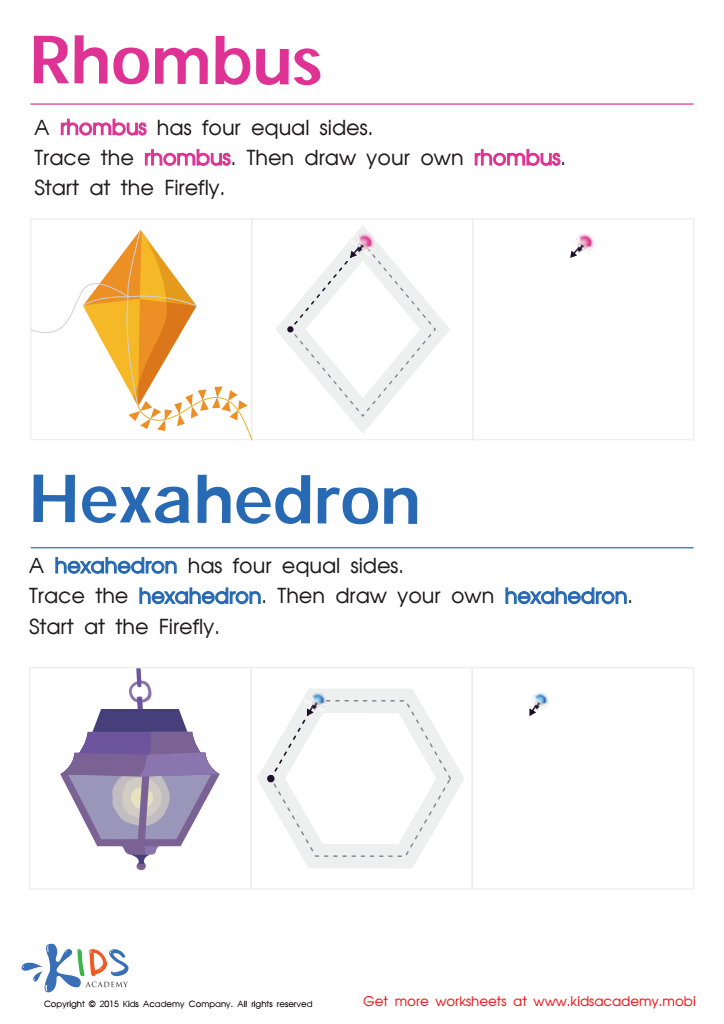
Draw a Rhombus And a Hexahedron Printable
Trace, draw and recognize shapes like rhombus, hexahedron and more! Start with the firefly to trace a rhombus, then use the yellow kite to remember the shape. Use the light to trace and draw a hexahedron. Learn with the best!
 Assign to My Students
Draw a Rhombus And a Hexahedron Printable
Worksheet
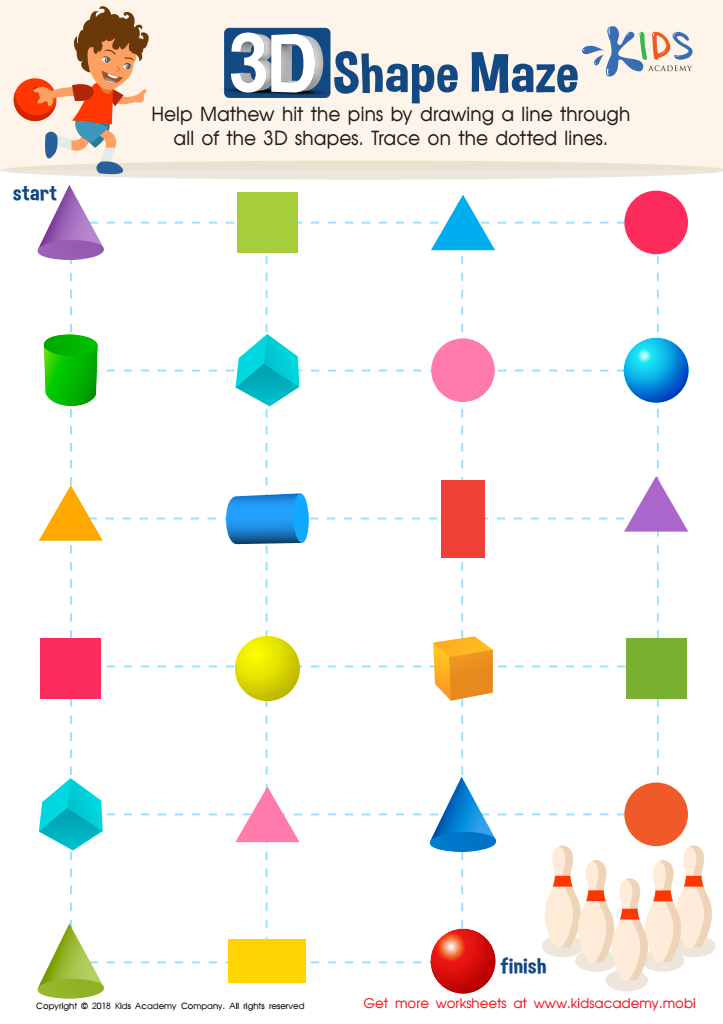
Shapes Maze Geometry Worksheet
Boost your child's geometry skills with this shapes maze worksheet! Help Matthew bowl a strike by guiding him through the maze to draw a line through every 3D shape. It's a fun and challenging way to practice foundational math skills!
Shapes Maze Geometry Worksheet
Worksheet
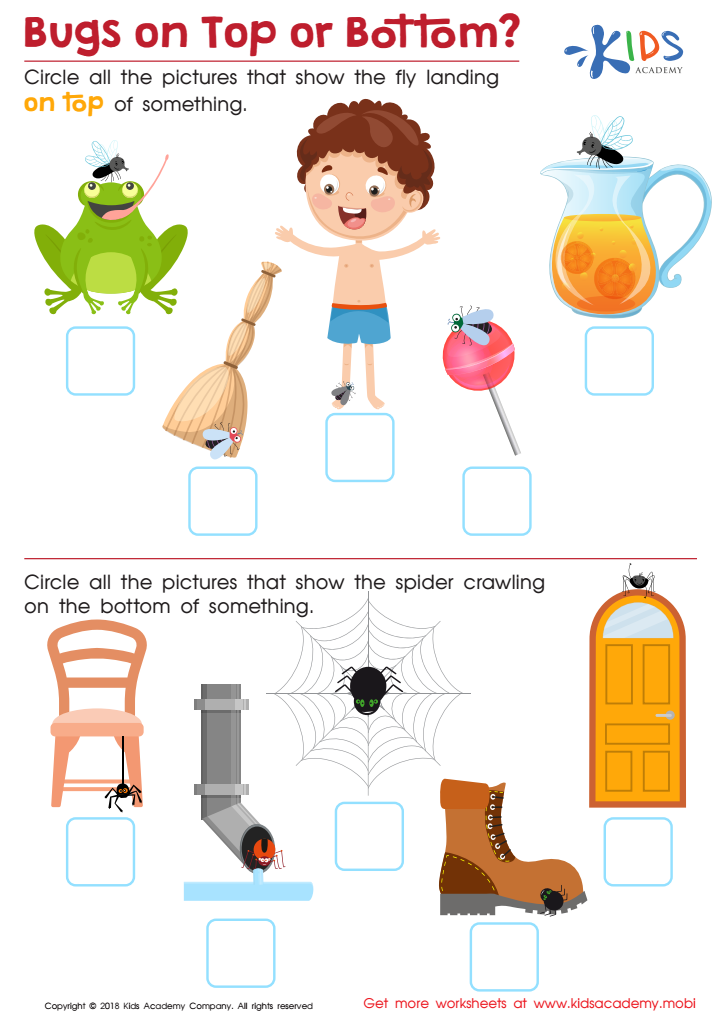
Bugs on Top or Bottom? Worksheet
Preschoolers need to learn directional skills such as top and bottom. This PDF worksheet helps them recognize bugs on the top or bottom using fun visuals. It builds their spatial reasoning while teaching prepositional words in an engaging way.
Bugs on Top or Bottom? Worksheet
Worksheet
Join Kids Academy for Free
Who is primarily going to use this learning content?








Spatial reasoning is a crucial foundational skill for young learners, significantly impacting their future academic success in mathematics and science. It involves understanding and manipulating concepts related to space, shapes, and dimensions. For children aged 3-8, this development fosters problem-solving skills and critical thinking abilities, essential for mastering more complex math concepts later on.
Encouraging spatial reasoning can enhance skills like visualization, spatial orientation, and the ability to analyze relationships between objects. Activities such as puzzle-solving, building with blocks, and engaging in shape-based games help sharpen these skills and link to everyday experiences, making learning relevant and enjoyable.
Parents and teachers should recognize the importance of integrating spatial reasoning into early math curricula. Engaging children in discussions about shapes, symmetry, and patterns enriches their understanding and lays the groundwork for understanding fractions, geometry, and algebra in later years. Moreover, fostering such skills can boost confidence and interest in STEM (science, technology, engineering, and mathematics) fields, which are increasingly vital in our global society.
Investing in spatial reasoning not only benefits math capabilities but also nurtures a well-rounded and inquisitive mindset in young children, preparing them for future academic and life challenges.








