Understanding base ten Normal Math Worksheets for Ages 3-8
3 filtered results
-
From - To
Explore our engaging "Understanding Base Ten Normal Math Worksheets" designed for young learners aged 3-8. These worksheets help children grasp the foundational concepts of the base ten number system through fun and interactive activities. Each worksheet is carefully crafted to enhance understanding of place value, number composition, and decomposition, setting the stage for future math success. Ideal for homeschooling or classroom use, these resources promote hands-on learning and critical thinking. Discover a variety of exercises that cater to different learning styles, making numeracy accessible and enjoyable for every child. Start building strong math skills today with our comprehensive worksheets!
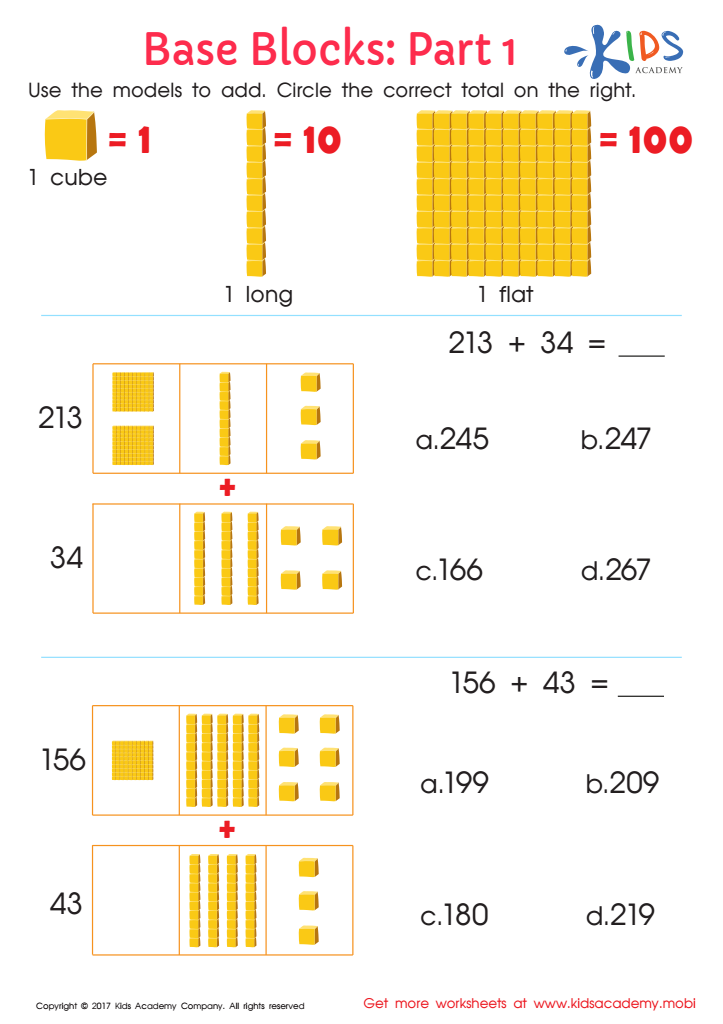
Base Ten Blocks Worksheet: Part 1
 Assign to My Students
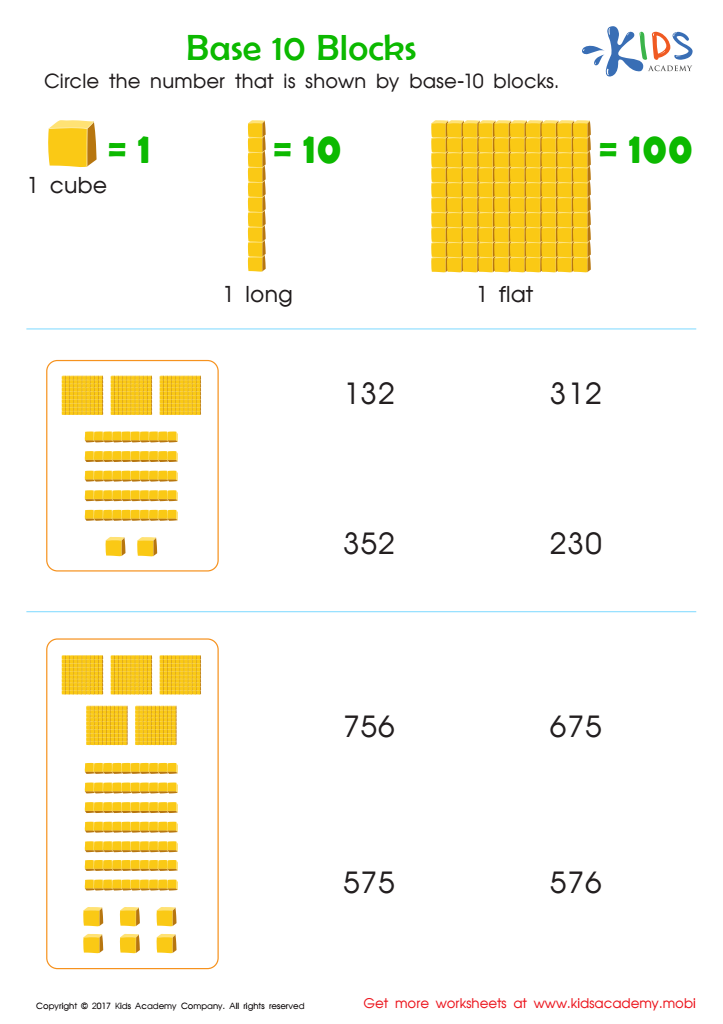
Base Ten Blocks Worksheet
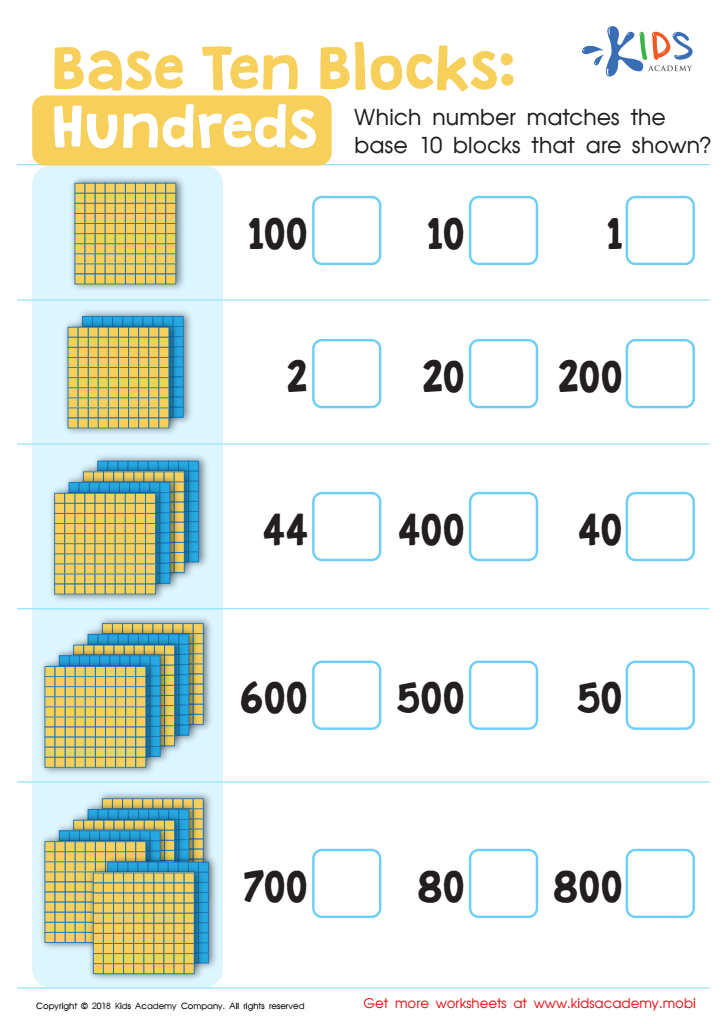
Base Ten Blocks: Hundreds Worksheet







Understanding base ten concepts is crucial for children aged 3-8 as it lays the groundwork for all future mathematical learning. This system, fundamentally based on the number ten, helps children grasp how numbers are constructed and manipulated. By engaging with base ten, young learners can develop a deeper conceptual understanding of place value, which is essential for addition, subtraction, and more complex operations later on.
Parents and teachers should care about this foundational skill because it not only aids in developing mathematical reasoning but also enhances problem-solving capabilities. For instance, using physical manipulatives like blocks or counters can make abstract concepts tangible, turning learning into a fun and interactive experience. Understanding base ten equips children with the ability to break down larger numbers into manageable parts, making calculations simpler and more intuitive.
Furthermore, an early mastery of base ten principles can boost confidence and foster a positive attitude towards math, reducing anxiety around the subject as children progress into higher grades. Investing time in these early math skills ensures that children are well-prepared for future academic challenges and equips them with essential life skills that extend beyond the classroom.








